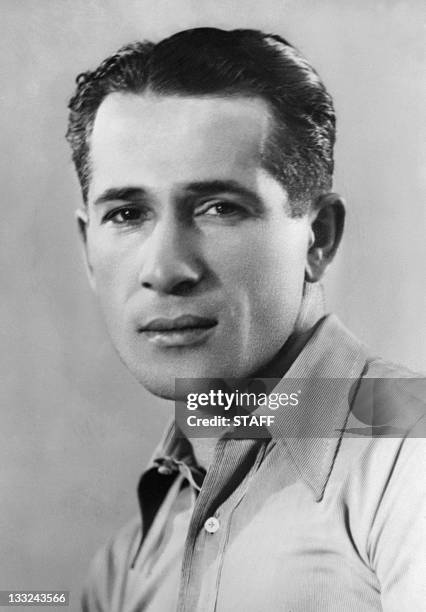
Guillermo Stábile
 Argentina
association football player•association football coach
Also known as: El Filtrador
Birthday
January 17, 1905
Birth Sign
Capricorn
Birthplace
Buenos Aires, Argentina
Age
Died at 61
Height
5 ft 9 in (175 cm)
About
Guillermo Stábile was an Argentine footballer and manager who is celebrated for his significant contributions to the sport. He is famously known as the top scorer of the first FIFA World Cup in 1930, with 8 goals in 4 matches, a record for goals-per-game by a Golden Boot winner. Stábile's career transitioned from playing for clubs like Huracán and Genoa to managing the Argentine national team from 1939 to 1960. In this role, he achieved remarkable success, winning the Copa América six times, a record for any manager. He also guided Racing Club to three consecutive Argentine league titles. Stábile is distinctive for his dual legacy as a clinical striker and a tactical innovator who championed attacking play. He is recognized by the IFFHS as one of the most successful national team managers ever and was retroactively named to the FIFA World Cup 1930 All-Star Team. His legacy is honored through ongoing retrospectives as the centennial of the 1930 World Cup nears.
Early Life & Background
Guillermo Stábile was born on January 17, 1905, in Buenos Aires, Argentina. His formative years were spent in the working-class Parque Patricios neighborhood of the city. From these vibrant streets, he began his journey in football, developing an intense passion for the sport as a child. He honed his skills by playing informal football games in the neighborhood streets and with various local clubs. This early dedication to the game was profound; Stábile committed himself entirely to football from a very young age, choosing not to pursue higher education.
Stábile's talent soon led him to more structured environments. At the age of 14, he took his first significant step in organized football, joining the youth team of Sportivo Buenos Aires. His promising abilities were quickly recognized, leading to a move to the more renowned youth system of Club Atlético Huracán. It was with Huracán that he made his much-anticipated first-team debut in 1924, at the age of 19.
Upon joining Huracán's senior squad, Stábile immediately established himself as a prolific and impactful scorer. His goal-scoring prowess was a key factor in the club's success during this period, as he helped Huracán clinch two Argentine Primera División titles in rapid succession, first in 1925 and again in 1928. These impressive domestic achievements and his consistent ability to find the back of the net earned him considerable recognition. Consequently, Stábile secured a coveted spot on the Argentina national team roster for the inaugural FIFA World Cup, held in 1930. Though he was initially listed as a substitute for the tournament, he would go on to make an indelible mark on football history, emerging as the top scorer of the first FIFA World Cup with an astonishing 8 goals in just 4 matches. This remarkable goals-per-game record for a Golden Boot winner firmly cemented his status as a rising star and marked his breakthrough onto the international stage.
Career Growth
Stábile's breakthrough came unexpectedly at the 1930 World Cup. After starting forward Roberto Cherro withdrew due to anxiety, Stábile stepped in and scored a hat-trick on his debut against Mexico. He finished the tournament with 8 goals, winning the first Golden Boot in World Cup history. After the World Cup, he moved to Italy, playing for Genoa from 1930 to 1932 and Napoli from 1932 to 1934. He then played for Red Star Olympique in France before returning to Huracán for a final season in 1935–36. As a manager, Stábile led Argentina's national team from 1939 to 1960, winning the Copa América six times (1941, 1945, 1946, 1947, 1955, 1957). He also managed Racing Club de Avellaneda to three consecutive league titles in 1949, 1950, and 1951. He managed stars like Llamil Simes, Mario Boyé, Rubén Bravo, and Alfredo Di Stéfano early in their careers. Stábile appeared on the cover of El Gráfico multiple times, notably after the 1941 and 1947 South American Championship victories.
Career Timeline
Public Image & Style
Stábile is revered in Argentina as a national hero and pioneer of the national team's success. Known as a powerful, clinical center-forward with a lethal left foot, he earned the nickname "El Filtrador" (The Sieve) for his goal-scoring ability. As a manager, he was a tactical innovator who emphasized attacking football. Internationally, he is remembered as the first World Cup Golden Boot winner. Huracán fans sing songs about him during matches, and the club frequently posts about him as a legend. The Argentine Football Association also honors him as one of the most successful managers in its history. FIFA official accounts reference him during World Cup history posts. He is featured in the 2020 Netflix documentary series The World Cup: A History.
Fame & Fandom (iFAMOUS Rankings)
Guillermo Stábile currently holds no placement in the iFANN Global Top 1,000 rankings or any Top-100 scope list. The iFANN Global Fame Engine has evaluated his standing and determined he does not yet secure a published ordinal position among the world's most famous figures. This absence of a rank reflects the unique nature of his legacy: a foundational pillar of football history rather than a subject of contemporary viral fame cycles. His influence permeates the sport through statistical permanence and historical reverence rather than fluctuating public sentiment scores.
The audience surrounding Stábile operates without a formalized name. Decades after his death, there is no documented fandom label, subreddit, or organized fan club that claims an official title for his supporters. Unlike modern icons who inspire specific hashtags or digital movements, Stábile's following exists within the broader, diffuse community of Argentine football enthusiasts and historians. There are no recorded instances of fan-funded projects, birthday billboards, or social media campaigns dedicated solely to him. His reputation survives through the quiet endurance of records broken only by peers like Lionel Messi and the continued singing of tributes by Huracán fans during matches. The lack of a named fanbase underscores how his status transcends typical celebrity worship; he is less a personality to be followed and more a historical constant to be remembered.
Interesting Facts and Legends
Guillermo Stábile's career was defined by sudden necessity and historic precision. He played exclusively in the 1930 World Cup because the starting forward, Roberto Cherro, suffered from severe nerves that prevented him from taking the field. In his very first match against Mexico, Stábile immediately silenced doubts by scoring a hat-trick. That tournament saw him net eight goals in just four games, establishing a 2.0 goals-per-game average that remains the highest ever recorded for a World Cup Golden Boot winner.
His legend extends beyond the pitch into tactical innovation and record-breaking longevity. As a manager, he guided Argentina for 21 years, a tenure that still stands as a national team record. He secured six Copa América titles under his leadership, setting a competition benchmark for any manager. His impact on European soccer was equally profound, making him one of the first Argentine stars to play abroad when he joined Genoa in 1930. Even decades later, his stature remained undeniable; the IFFHS ranked him as the 10th best national team coach of the 20th century. Standing at 1.75 meters (5 ft 9 in), he was known as 'El Filtrador' for his ability to penetrate defenses with lethal efficiency.
Notable Quotes
“I was not supposed to play in that World Cup. I was a substitute. But football is full of opportunities, and I took mine.”
“To be the top scorer of the first World Cup is an honor that no one can take away from me. But I am prouder of the six titles I won as a coach.”
“Argentina has a footballing soul. As a player and a coach, I only tried to reflect that soul on the pitch.”
Family & Personal Life
Guillermo Stábile was married to Adela, whose maiden name is not widely recorded. They married in the early 1930s and had two children: a son, Guillermo Stábile Jr., and a daughter, Nélida Stábile. The family lived in Buenos Aires throughout his life. Stábile's descendants manage his estate and legacy. His family has been involved in preserving his memory, including the unveiling of a plaque at Huracán's stadium in 2023. Adela was his only known long-term partner, and they remained together until his death in 1966.
Notable Connections
Stábile's career intersected with many Argentine football greats. He played alongside Luis Monti and Francisco Varallo in the 1930 World Cup. He replaced Roberto Cherro in the starting lineup. As a manager, he coached Alfredo Di Stéfano during the 1947 South American Championship. He also managed Racing Club stars like Llamil Simes and Mario Boyé.
Relationships & Dating History
Guillermo Stábile was married to Adela, whose full maiden name is not widely recorded. They married in the early 1930s and had two children: Guillermo Jr. and Nélida. The couple remained together until Stábile's death in 1966. Adela was his only known long-term partner. There are no records of other public relationships or marriages.
- MarriedAdela Stábile1930 - 1966They were married for several decades and had two children together. She was his only known long-term partner.
Death & Aftermath
Died
December 26, 1966 (aged 61)
Death Place
Unknown
Cause of Death
Unknown
Net Worth (Estate Value)
$2 Million
iFANN Editorial Team estimate
Per iFANN's editorial analysis, Guillermo Stábile's estate is valued at $2 Million. Going by 2026 estimates, this figure represents the current worth of assets managed by his descendants. Posthumous earnings continue to flow from licensing agreements with FIFA, the Argentine Football Association, and video game publishers such as EA Sports and Konami for historical content. Royalties generated by books, documentaries, and archival footage form a steady stream of income. Merchandise featuring retro jerseys and memorabilia bearing his name also contributes significantly to the total. The family retains control over the intellectual property rights to his name and likeness. Interest in his legacy has surged with the approaching centennial of the 1930 World Cup, driving new licensing opportunities. This valuation reflects the enduring commercial power of his historical significance.
Awards Won (12)
Stábile won the Golden Boot as top scorer of the 1930 FIFA World Cup, the first in history. As a manager, he won the South American Championship (Copa América) six times, a competition record. He also won the Argentine Primera División twice as a player and three times as a manager.
1930 · Top Scorer
1930 FIFA World Cup
1957 · Manager
Argentina National Team
1955 · Manager
Argentina National Team
1947 · Manager
Argentina National Team
1946 · Manager
Argentina National Team
1945 · Manager
Argentina National Team
1941 · Manager
Argentina National Team
Known For
1930 FIFA World Cup
1930 · Player (top scorer)
Argentina National Team Manager
1939 · Manager (6 Copa América titles)
Racing Club de Avellaneda
1949 · Manager (3 consecutive league titles)
Keywords
Quick Facts
- Profession
- association football player, association football coach
- Born
- +1905-01-17
- Birthplace
- Buenos Aires
- Died
- +1966-12-26
- Death Place
- Buenos Aires
- Gender
- Male
- Birth Sign
- Capricorn
Personal Details
- Height
- 5 ft 9 in (175 cm)
- Spouse
- Adela Stábile
- Children
- 2
Frequently Asked Questions
How many goals did Guillermo Stábile score in the 1930 World Cup?
Did Guillermo Stábile play for Italy?
How many Copa América titles did Guillermo Stábile win?
When did Guillermo Stábile die?
What club did Guillermo Stábile play for?
Social Media
Similar People
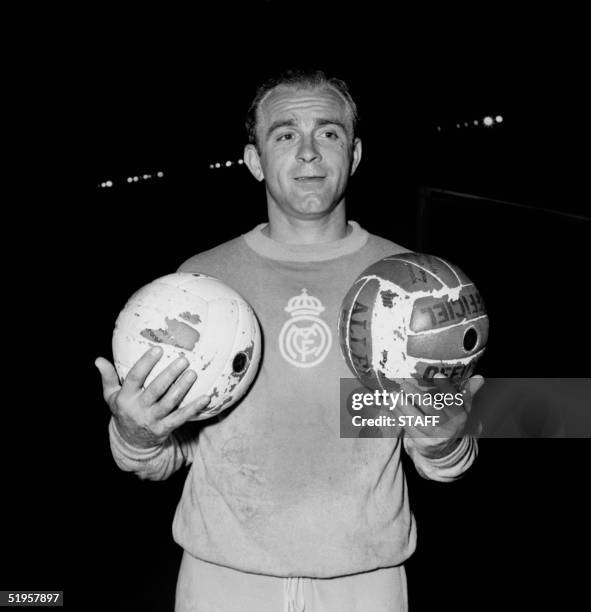
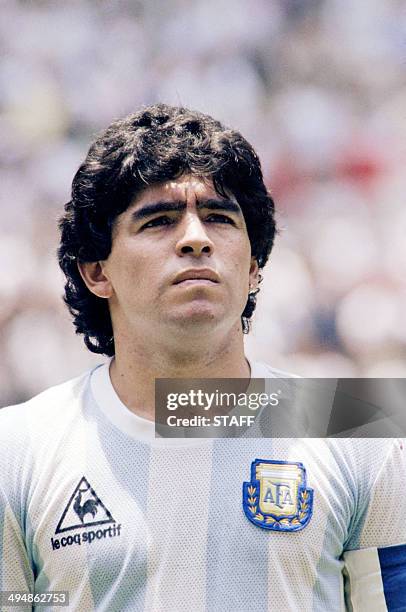
Join the community
fans discussing