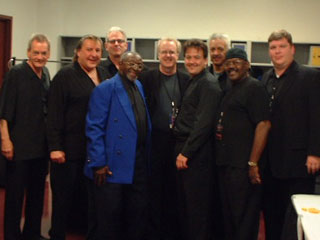
The Funk Brothers
 United States
The uncredited heartbeat of Motown
13
Members
About
The Funk Brothers, as of today, are celebrated as the greatest session band in popular music history, though they disbanded in 1972 when Motown moved to Los Angeles. Their legacy lives on through the hundreds of hits they backed, and the 2002 documentary Standing in the Shadows of Motown brought them long-overdue recognition. They are remembered for their extraordinary musicianship and the anonymous labor that powered the Motown Sound.
They are known for their immense success, having played on more No. 1 records than Elvis, the Beatles, and the Rolling Stones combined. Their current status is that of a disbanded group, with most members deceased. Their sound, a blend of R&B, gospel, jazz, and funk, remains a blueprint for soul music.
Fans, including musicians and Motown enthusiasts, continue to honor their memory through the documentary, tribute concerts, and the Musicians Hall of Fame induction.
Formation Story
The Funk Brothers came together organically in the late 1950s in Detroit. Berry Gordy, who founded Motown in 1959, recruited the city's finest jazz, blues, and R&B musicians to play on his recordings. There were no auditions; the musicians were chosen based on their reputations in Detroit's vibrant club scene and their ability to adapt quickly to Gordy's demanding production schedule.
They played their first note on a Motown record in 1959, and soon became the house band at Hitsville U.S.A., a converted house on West Grand Boulevard. The studio was in the basement, and the musicians worked long hours, often cutting multiple songs in a day. They developed a telepathic musical rapport, with James Jamerson's basslines, Benny Benjamin's drums, and Earl Van Dyke's keyboards creating a tight, rhythmic foundation.
By the mid-1960s, they were churning out hits like "My Girl" and "Baby Love." They were paid standard session rates and received no royalties, but they took pride in their craft. When Motown moved to Los Angeles in 1972, the Funk Brothers were left behind, effectively disbanding the group.
Members
Musical Style
The Funk Brothers' sound evolved from a light, pop-oriented approach in the early 1960s to a heavier, funk-infused style by the late 1960s. Their playing was built on a foundation of R&B, gospel, jazz, and early funk, creating what became known as the Motown Sound. The rhythm section, led by James Jamerson's melodic bass and Benny Benjamin's syncopated drums, was the core. Guitarists like Joe Messina and Robert White added clean, rhythmic chords, while keyboardists Earl Van Dyke and Johnny Griffith filled in with gospel-influenced parts.
As the decade progressed, their sound grew more complex, with deeper bass grooves and more intricate arrangements. Tracks like "Papa Was a Rollin' Stone" showcased a mature, funk-heavy style that anticipated disco. Their production approach emphasized live, cohesive performances, often recorded in a single take.
Discography
| Title | Year |
|---|---|
| Standing in the Shadows of Motown | 2002 |
Tours
Standing in the Shadows of Motown Reunion Concerts
2002-2004
Cultural Impact
The Funk Brothers' cultural impact is immeasurable. They created the sonic foundation of Motown, which broke down racial barriers during the Civil Rights era by bringing Black music to white audiences on an unprecedented scale. Their anonymous labor became a symbol of the unrecognized work behind popular music.
The 2002 documentary Standing in the Shadows of Motown brought their story to a new generation, sparking renewed appreciation for session musicians across all genres. The film's success led to formal recognition, including a Grammy Lifetime Achievement Award and a Hollywood Walk of Fame star. Their influence can be heard in countless records, from soul to rock to hip-hop.
Fandom Culture
The Funk Brothers did not have a traditional fandom during their active years, as they were anonymous session musicians. However, after the 2002 documentary, they gained a devoted following among music historians, musicians, and Motown enthusiasts. Fans honor their legacy through tribute concerts, online communities, and the official documentary website. There is no official fandom name, lightstick, or fan color, but their story has inspired a deep appreciation for the craft of session playing.
Awards Won (4)
Lifetime Achievement Award
Best Compilation Soundtrack Album
for: Standing in the Shadows of Motown
Milestones
Played their first note on a Motown record
Played on Motown's 100-plus R&B and 50-plus Pop number-one singles
Motown moved to Los Angeles, disbanding the group
Documentary 'Standing in the Shadows of Motown' released
Soundtrack album won a Grammy Award
Inducted into the Musicians Hall of Fame and Museum
Trivia
The Funk Brothers were paid standard session rates and received no royalties, despite playing on some of the best-selling records in music history. James Jamerson reportedly played his legendary bassline on "My Girl" while lying on the floor of the studio, allegedly because he was intoxicated. The group's name "Funk Brothers" was reportedly coined by the musicians themselves as a self-deprecating joke about their low status in the Motown hierarchy. They recorded at Hitsville U.S.A., a converted house at 2648 West Grand Boulevard, where the studio was located in the basement.
Keywords
Sources
Quick Facts
- Formed
- 1959
- Origin
- Detroit
- Label
- Motown
- Genres
- soul, funk, pop music
- Members
- 13
- Status
- Disbanded
Group Info
- Formed
- 1959
- Debut
- 1959
- Origin
- Detroit, Michigan, United States
- Company
- Motown Records
- Label
- Motown
- Status
- Disbanded (1972)
Join the community
fans discussing