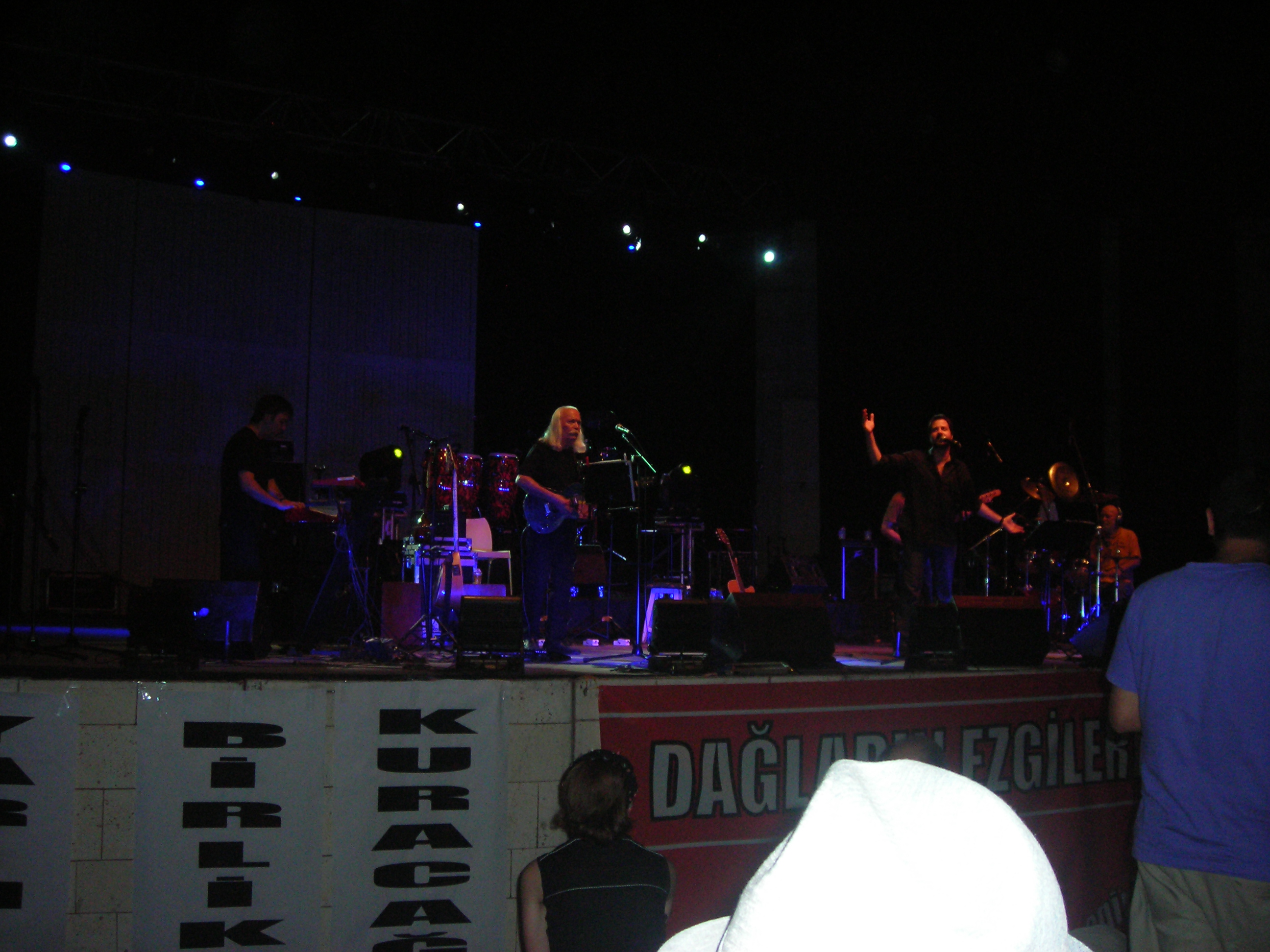
Moğollar
Pioneers of Anatolian Rock
5
Members
About
Moğollar is a Turkish psychedelic folk-rock group that is renowned for pioneering the Anadolu Pop genre. They are celebrated for their innovative fusion of traditional Anatolian folk music with Western rock instrumentation, a sound that has profoundly influenced Turkish music. The group, which continues to perform and record, released their latest double LP, Anatolian Sun, in 2023. Their distinctive blend of ancient melodies and modern rock continues to resonate with fans, securing their legacy as pioneers of a unique musical movement.
Formation Story
Moğollar coalesced organically in Istanbul in late 1967, officially forming on December 1st of that year. The five young musicians who founded the group, Aziz Azmet on vocals, Murat Ses on keyboards, Cahit Berkay on guitar and multi-instruments, Hasan Sel on bass, and Engin Yörükoğlu on drums, were already active in the city's vibrant rock scene. Feeling limited by their existing bands, they shared a mutual dissatisfaction and a collective desire to explore a more original sound, deciding to break away and create something new. There were no formal auditions or training camps; instead, the band came together through shared connections and a common artistic vision. The name "Moğollar," meaning Mongols, was suggested by a Dutch fanzine writer, intending to evoke a wild, untamed energy akin to Western contemporaries like The Animals or The Beatles.
The band quickly made its debut with the single Eastern Love / Artık Çok Geç, released on February 1, 1968, through Sayan Plak. Initially, their repertoire consisted mostly of English-language covers and original rock songs, but they swiftly began to develop their own distinctive voice. Later that same year, Moğollar achieved early recognition by placing third in the Golden Microphone competition with their innovative arrangement of the folk song Şahdamar.
The pivotal moment in Moğollar's artistic journey arrived in 1969 when they embarked on an extensive tour across Anatolia. This journey proved to be a profound creative awakening. Traveling from city to city and through rural Turkey, the band encountered a vast array of traditional folk melodies, rhythms, and instruments that had largely remained unintegrated into popular music. This immersive experience radically changed their artistic direction, inspiring them to become the first Turkish pop band to seamlessly blend microtonal folklore and traditional rural instruments with Western rock. They began writing songs that married electric arrangements with instruments like the bağlama, cura, yaylı tanbur, and kemenche, forging a sound that was both modern and deeply rooted in Turkish heritage. Shortly after this transformative tour, in 1970, Taner Öngür joined the band, replacing Hasan Sel on bass. It was Öngür who coined the term "Anadolu Pop" for this unique fusion, and Moğollar rapidly became its foremost ambassadors.
Members
Former Members
Engin Yörükoğlu (Engin Yörükoğlu)
Drums, Percussion · 1967–2010
Aziz Azmet (Aziz Azmet)
Lead Vocals · 1967–1970
Murat Ses (Murat Ses)
Keyboards · 1967–1972
Hasan Sel (Hasan Sel)
Bass · 1967–1969
Aydın Daruga (Aydın Daruga)
Member · 1967–?
Ayzer Danga (Ayzer Danga)
Drums · 1971
Ersen Dinleten (Ersen Dinleten)
Vocals · 1970, 1972
Utku Ünal (Utku Ünal)
Member
Neco (Neco)
Member
Kılıç Danışman (Kılıç Danışman)
Member
Musical Style
Moğollar's music is built on the fusion of Western rock instrumentation with Turkish folk traditions. Their early work featured electric guitars, Hammond organs, and drum kits alongside bağlama, cura, yaylı tanbur, and kemenche. They used complex time signatures and modal scales drawn from Anatolian folk music, creating a psychedelic yet earthy sound. Songs often featured long instrumental passages and improvisation, reflecting both the jam-band ethos of the 1960s and the meditative quality of Turkish folk music.
Lyrically, Moğollar drew from folk poetry, love songs, and social commentary. Their music evolved over the decades: the early 1970s output was rooted in folk-rock and psychedelia; the mid-1970s saw a turn toward progressive rock and jazz fusion with Düm-Tek; and their later work incorporated modern production while retaining Anatolian melodies. The 2023 album Anatolian Sun revisits their classic songs with a stripped-down, direct-to-disc approach, emphasizing raw musicianship and spontaneity.
Discography
| Title | Year |
|---|---|
| Anatolian Sun | 2023 |
| Umut Yolunu Bulur | 2009 |
| Moğollar | 1976 |
| Düm-Tek | 1975 |
| Danses et Rythmes de la Turquie d'Hier à Aujourd'hui | 1971 |
Tours
Anatolia Tour
1969
European Tour
1971
Cultural Impact
Moğollar are widely regarded as the founders of Anatolian rock, a genre that became a cornerstone of Turkish popular music. They inspired countless Turkish musicians to explore their folk heritage within a rock framework, and their work with iconic vocalists like Cem Karaca, Selda Bağcan, and Barış Manço helped shape the sound of an era. The band's music also crossed borders: they were the first Turkish psychedelic band to gain overseas recognition, winning the Grand Prix du Disque in France.
Their influence extends beyond Turkey. The song Haliç'te Güneşin Batışı was sampled by J Dilla on his 2001 debut album Welcome 2 Detroit, introducing Moğollar's sound to hip-hop audiences. In 2007, their track Garip Çoban was used in a Sony PlayStation 3 advertising campaign. The band's legacy continues to grow with reissues and international reissues, and they remain a touchstone for collectors of psychedelic and world music.
Fandom Culture
Moğollar does not have a formal fandom name, lightstick, or official fan colors. Their fanbase consists of Anatolian rock enthusiasts, Turkish music lovers, and international collectors of psychedelic and folk rock. Fans celebrate the band through online communities, vinyl collecting, and tribute concerts. The band's enduring popularity in Turkey is reflected in sold-out shows and continued media coverage, even after more than 55 years.
Awards Won (3)
Album
for: Danses et Rythmes de la Turquie d'Hier à Aujourd'hui
Milestones
Band formed in Istanbul.
Debut single 'Eastern Love / Artık Çok Geç' released.
Landmark Anatolia tour transforms musical direction.
Won Grand Prix du Disque for debut album.
Band disbanded.
Reformed by Cahit Berkay, Taner Öngür, and Engin Yörükoğlu.
Emrah Karaca joins as vocalist; 'Garip Çoban' used in PS3 ad.
Engin Yörükoğlu dies.
Release of 'Anatolian Sun' on Night Dreamer Records.
Trivia
1. The name Moğollar (Mongols) was suggested by a Dutch fanzine writer to give the band a wild, untamed image.
2. They were the first Turkish pop band to blend microtonal folk melodies and traditional rural instruments with Western rock.
3. Bassist Taner Öngür coined the term Anadolu Pop to describe their fusion style.
4. Their debut album was released in France under the name Les Mogols.
5. Current vocalist Emrah Karaca is the son of Cem Karaca, who collaborated with the band in the 1970s.
Keywords
Sources
Quick Facts
- Type
- Rock Band
- Formed
- 1967
- Origin
- Istanbul
- Label
- Emre Plak
- Genres
- Anatolian rock, Psychedelic rock, Folk rock
- Members
- 17
- Status
- Active
Group Info
- Formed
- 1967-12-01
- Debut
- 1968-02-01
- Debut Song
- Eastern Love / Artık Çok Geç
- Origin
- Istanbul
- Label
- Emre Plak
- Status
- Active
Social Media
Also Known As
Join the community
fans discussing