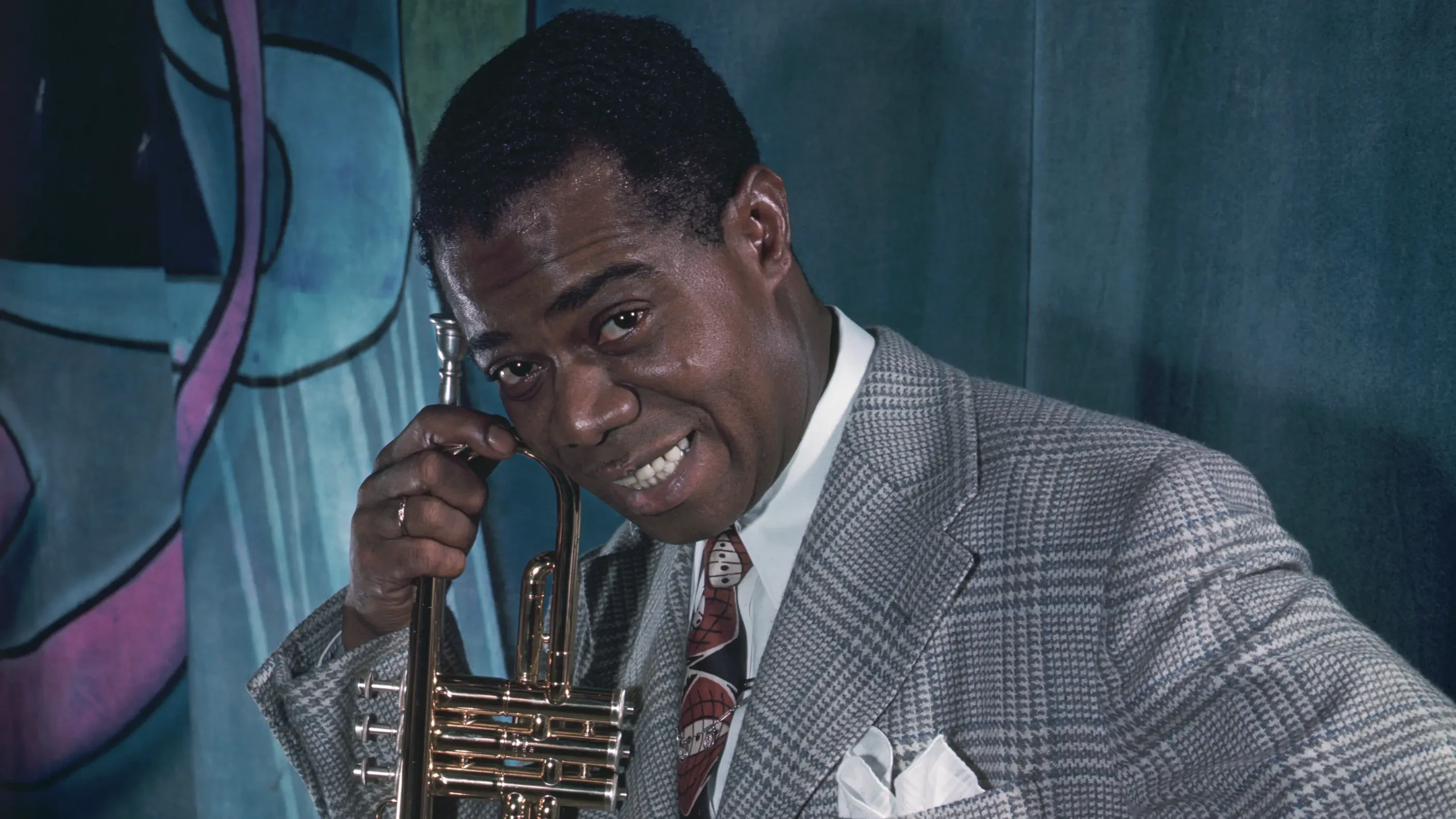
Louis Armstrong and His Hot Five
 United States
The studio band that invented the jazz solo
10
Members
About
The Hot Five exists today as a catalog, not a band. Its entire output fits on a handful of CDs, and every note of it was recorded in a single Chicago studio between 1925 and 1928. Yet those recordings are the reason jazz has a solo tradition at all.
Louis Armstrong is the constant. He led both lineups, sang on the vocal numbers, and wrote or co-wrote several of the originals. The first Hot Five, with Kid Ory, Johnny Dodds, Lil Hardin Armstrong, and Johnny St. Cyr, recorded the sides that made Armstrong a star in Black Chicago and beyond. The second, built around Earl Hines and Zutty Singleton, pushed the music toward something more modern and more arranged.
Fans today come to the Hot Five through Armstrong's later fame, through jazz history syllabi, or through the Louis Armstrong House Museum in Queens, which keeps the legacy alive with exhibits and centennial events. The group has no lightstick, no fandom name, and no reunion tour. What it has is West End Blues, Potato Head Blues, Heebie Jeebies, and a claim on the birth of modern jazz that nobody seriously disputes.
Formation Story
The Hot Five did not come together the way bands usually do. There was no audition, no open call, no lineup announcement. In 1925, Okeh Records wanted to cash in on Louis Armstrong's growing reputation as a hot cornet player, and the label's Richard M. Jones suggested cutting a series of small-group sides under Armstrong's own name. Armstrong was already in Chicago, playing with the Carroll Dickerson Orchestra at the Sunset Cafe, and he simply picked the best musicians he knew from the local scene.
The first lineup was a New Orleans reunion of sorts. Kid Ory had led one of the most popular bands in the city before moving north. Johnny Dodds had played with King Oliver alongside Armstrong. Lil Hardin, Armstrong's wife, was a trained pianist and the person who had pushed him to leave Oliver's Creole Jazz Band and strike out on his own. Johnny St. Cyr rounded things out on banjo. They were all working musicians with day jobs in other bands, and the Hot Five was a side project that paid union scale.
The debut session happened on November 12, 1925, at Okeh's Chicago studio. The first sides included My Heart and Yes! I'm in the Barrel, credited to Louis Armstrong and His Hot Five. A second batch followed in February and June 1926, and it was on the June date that Armstrong cut Heebie Jeebies, the record that spread the story of scat singing across the country. The legend goes that Armstrong dropped his lyric sheet and improvised nonsense syllables on the spot. He always said he had been scatting live for years.
By 1927 the group had expanded into the Hot Seven for a few sessions, adding Pete Briggs on tuba and Baby Dodds on drums. The final Hot Five sessions came in 1928 with a completely new rhythm section and Earl Hines on piano. Hines was the only pianist Armstrong ever said could match him idea for idea. Those last recordings, capped by West End Blues on June 28, 1928, closed the book on the Hot Five. Armstrong moved on to bigger orchestras and eventually to the All Stars. The studio band that made his name was already gone.
Members
Sub-Units
Lil's Hot Shots (1925)
Louis ArmstrongKid OryJohnny DoddsLil Hardin ArmstrongJohnny St. Cyr
Louis Armstrong and His Hot Seven (1927)
Louis ArmstrongKid OryJohnny DoddsLil Hardin ArmstrongJohnny St. CyrPete BriggsBaby Dodds
Musical Style
New Orleans jazz in the early 1920s was a group conversation. The cornet carried the melody, the clarinet danced around it, and the trombone filled the low end with smears and slides. The Hot Five started there. On the earliest sides, you can hear the horns weaving together the way they did in the dance halls back home.
What changed, almost immediately, was Armstrong. His solos got longer, louder, and more structured. He built phrases that told a story, with a beginning, a middle, and a punchline. By Potato Head Blues in 1927, the solo was the point of the record, not a decoration on top of the ensemble. That shift is the single biggest reason jazz moved from folk music to art music.
The 1928 sessions with Earl Hines pushed further. Hines played piano like a trumpet, with ringing single-note lines and unexpected accents. Zutty Singleton brought a full drum kit into the mix, replacing the tuba-and-snare setup of the earlier sessions. The rhythm section swung harder, the harmonies got richer, and the arrangements tightened up. Listen to West End Blues and you can hear the future: swing, big band, bebop, all of it waiting in the wings.
Discography
| Title | Year |
|---|---|
| West End Blues | 1928 |
| Weather Bird | 1928 |
| Potato Head Blues | 1927 |
| Struttin' with Some Barbecue | 1927 |
| Heebie Jeebies | 1926 |
| Cornet Chop Suey | 1926 |
| My Heart | 1925 |
| Yes! I'm in the Barrel | 1925 |
| The Complete Hot Five & Hot Seven Recordings | 2000 |
Cultural Impact
Before the Hot Five, the jazz soloist was a supporting player. After the Hot Five, the soloist was the star. That is the whole story in one sentence, and it changed American music permanently.
Armstrong's recordings with the group became the textbook for every horn player who followed. Duke Ellington studied them. Miles Davis studied them. Bix Beiderbecke reportedly wore out his copy of the Hot Five sides trying to figure out how Armstrong did it. The vocabulary Armstrong laid down on those Okeh records, the bent notes, the high-register runs, the rhythmic placement behind the beat, became the shared language of jazz.
The influence reached beyond jazz. Heebie Jeebies helped popularize scat singing, which became a staple of vocal jazz and later showed up in pop and hip-hop. Armstrong's stage persona, the handkerchief, the grin, the gravel voice, made him one of the first Black American entertainers to cross over into mainstream white culture on his own terms. That crossover was complicated and sometimes painful, but it opened doors that had been nailed shut.
The Hot Five also helped establish Chicago as the center of the jazz world in the 1920s. Musicians from New Orleans, including Armstrong himself, migrated north and created a new sound that was faster, hotter, and more solo-driven than anything happening back home. The records they made in that Okeh studio are the primary documents of that migration.
Fandom Culture
There is no official fandom name for the Hot Five, no lightstick, no fan chant. The group broke up in 1928 and its leader died in 1971. What exists instead is a community of collectors, historians, and listeners who treat these recordings the way other fans treat a beloved album.
The Louis Armstrong House Museum in Corona, Queens, is the closest thing to a fan headquarters. It holds Armstrong's personal archive, including 5,000 photographs, scrapbooks, and reel-to-reel tapes he made himself. The museum runs educational programs, hosts centennial celebrations, and maintains an active social media presence that shares archival material with newer fans. In 2025 and 2026, the museum marked the centennial of the Hot Five sessions with exhibits and special events.
Online, the fandom lives in jazz forums, record collector groups, and streaming playlists. The Hot Five catalog still pulls steady numbers on Spotify, and the recordings get rediscovered every time a new remaster or box set comes out. It is a quiet fandom, but a durable one.
Awards & Accolades
View 8 records, honours and achievementsMilestones
Hot Five forms in Chicago and records its first sides for Okeh on November 12
Heebie Jeebies popularizes scat singing and becomes one of the best-selling records of the decade
Potato Head Blues showcases Armstrong's fully formed solo style
Final sessions with Earl Hines produce West End Blues, widely considered the masterpiece of the era
West End Blues inducted into the Grammy Hall of Fame
Hot Five recordings added to the Library of Congress National Recording Registry
Trivia
Lil Hardin Armstrong was more than the pianist. She wrote several of the group's tunes, including Struttin' with Some Barbecue, and she was the one who convinced Louis to leave King Oliver and become a bandleader. Without her, the Hot Five might never have existed.
The group recorded under a fake name, Lil's Hot Shots, for Vocalion in 1925 because Armstrong was under contract to Okeh. Those sessions were also the first electrically recorded sides he ever made, using the new microphone-based technology instead of the old acoustic horn.
Kid Ory, the trombonist, was actually the older statesman of the group. He had been leading bands in New Orleans since before Armstrong was a teenager, and he gave the Hot Five a direct link to the earliest days of jazz.
Keywords
Sources
Quick Facts
- Origin
- United States
- Genres
- jazz
- Status
- Disbanded
- Active Years
- 1925-1928
- Label
- Okeh Records
- Live Performances
- 2
Group Info
- Formed
- 1925
- Debut
- 1925-11-12
- Debut Song
- My Heart
- Origin
- Chicago, Illinois, United States
- Company
- Okeh Records
- Label
- Okeh Records
- Status
- Disbanded (1928)
Also Known As
Join the community
fans discussing