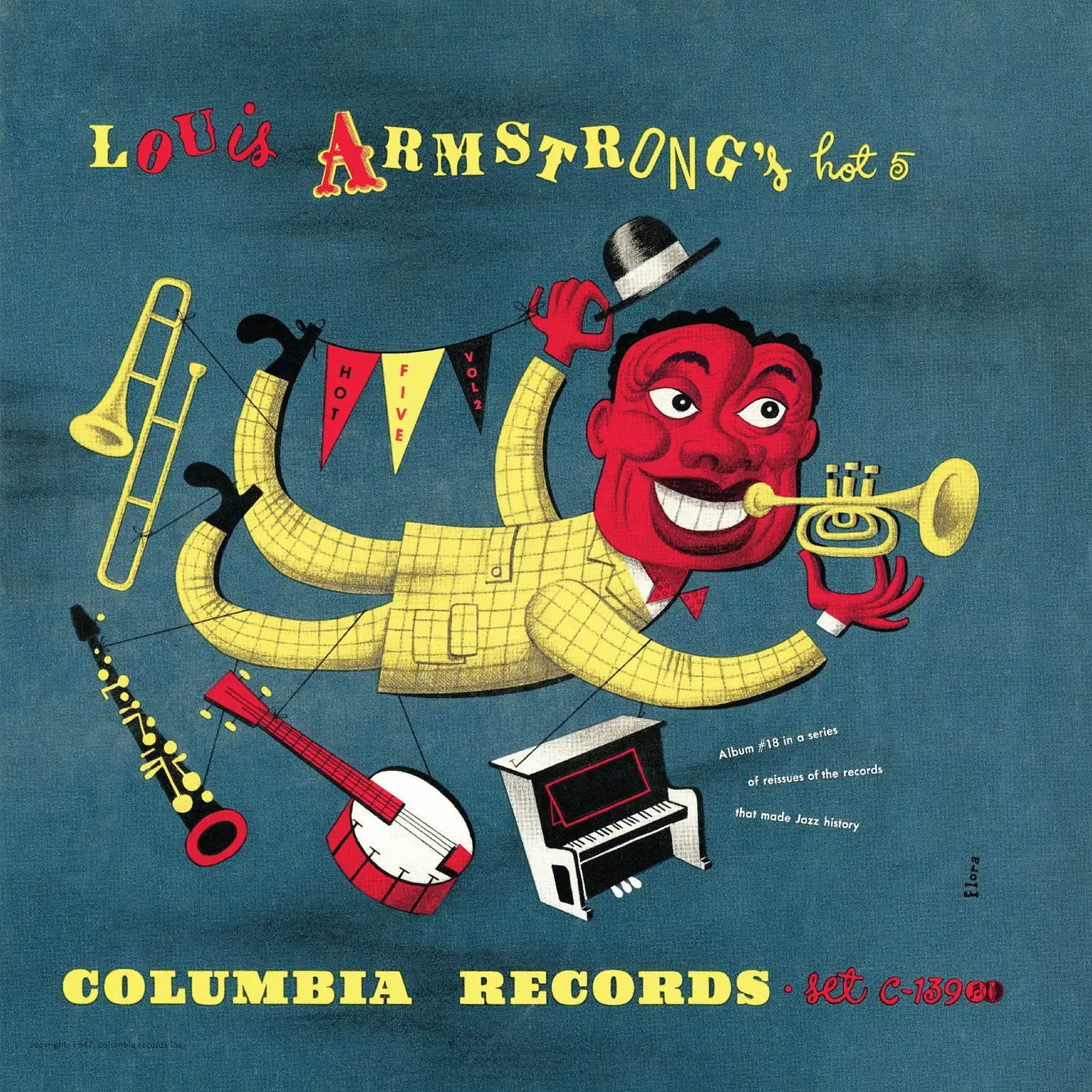
Louis Armstrong
Member of Louis Armstrong and His Hot Five
jazz trumpeter•vocalist•bandleader•actor
Also known as: Satchmo, Satch, Pops, Louis Daniel Armstrong
Birthday
August 4, 1901
Birth Sign
Leo
Birthplace
New Orleans, Louisiana
Age
Died at 69
Height
5 ft 11 in (180 cm)
About
Louis Daniel Armstrong (August 4, 1901 – July 6, 1971), widely known by his nicknames "Satchmo," "Satch," and "Pops," was an American jazz trumpeter, vocalist, bandleader, and actor. Born into poverty in New Orleans, Louisiana, he is recognized as the first great soloist to emerge in jazz, fundamentally shifting the genre's focus from collective improvisation to individual virtuosity. His career spanned five decades, during which he became a global icon known for his gravelly voice, innovative trumpet playing, and charismatic stage presence. Armstrong received numerous accolades throughout his life and after his passing, including the Grammy Award for Best Male Vocal Performance for "Hello, Dolly!" in 1965 and a posthumous Grammy Lifetime Achievement Award in 1972. He was inducted into the DownBeat Jazz Hall of Fame, the Rock and Roll Hall of Fame in 1990, and the National Rhythm & Blues Hall of Fame. Rolling Stone ranked him number one on its "100 Greatest Artists of All Time" list in 2010, while Billboard named him the greatest jazz musician of all time in multiple polls. He remains one of the most influential figures in music history.
Early Life & Background
Louis Armstrong grew up in extreme poverty in the "Back of Town" district of New Orleans, raised by his mother Mary Albert and later his grandmother after his father, William Armstrong, abandoned the family before Louis was born. At age five, he worked as a coal hauler for the Karnofsky family, a Jewish household where he learned about entrepreneurship and received his first cornet. This early exposure to music and hard work laid the foundation for his future success. A pivotal moment occurred on New Year's Eve 1912 when the eleven-year-old Armstrong fired a blank pistol into the air during a celebration. He was arrested and sent to the Colored Waif's Home for Boys. It was here that he received formal musical training under Professor Peter Davis, learning to play the cornet and eventually leading the home's brass band. This disciplined environment provided him with the skills necessary to launch his professional career. After leaving the home at age thirteen or fourteen, he played in street bands and on riverboats, heavily influenced by King Oliver, a cornetist he admired from afar. In 1918, he joined Kid Ory's band, marking his first significant engagement before moving north.
Career Growth
Armstrong's professional rise began in earnest in 1918 when he joined Kid Ory's band, marking his first significant engagement. In 1922, following a telegram from King Oliver inviting him to join his Creole Jazz Band in Chicago, Armstrong moved north, leaving behind the segregated South. In Chicago, he quickly distinguished himself through technical prowess and innovative improvisation, engaging in cutting contests where musicians competed to outplay one another. His reputation grew so rapidly that Fletcher Henderson recruited him for his orchestra in New York City in 1924. The period from 1925 to 1928 marked a revolutionary era in jazz with the Hot Five and Hot Seven recording sessions. These recordings are considered the foundation of modern jazz, introducing the concept of the soloist as the focal point. Hits like "West End Blues" and "Potato Head Blues" showcased his transition from cornet to trumpet and established him as a major star. By the 1930s, he led the Louis Armstrong Stompers and later The All Stars, touring globally and appearing in films such as Cabin in the Sky and High Society. In the 1950s, Armstrong achieved massive crossover success with pop audiences. His 1954 hit "Hello, Dolly!" knocked The Beatles off the top of the Billboard charts, making him the oldest artist to achieve a number-one single at the time. Throughout the 1960s, he continued to tour extensively, performing at the Newport Jazz Festival and serving as a cultural ambassador for the U.S. State Department during the Cold War. His 1964 release of "What a Wonderful World" became his signature ballad. He also collaborated with Ella Fitzgerald on three landmark albums between 1956 and 1959. Armstrong passed away while performing in Philadelphia in 1971.
Career Timeline
Public Image & Style
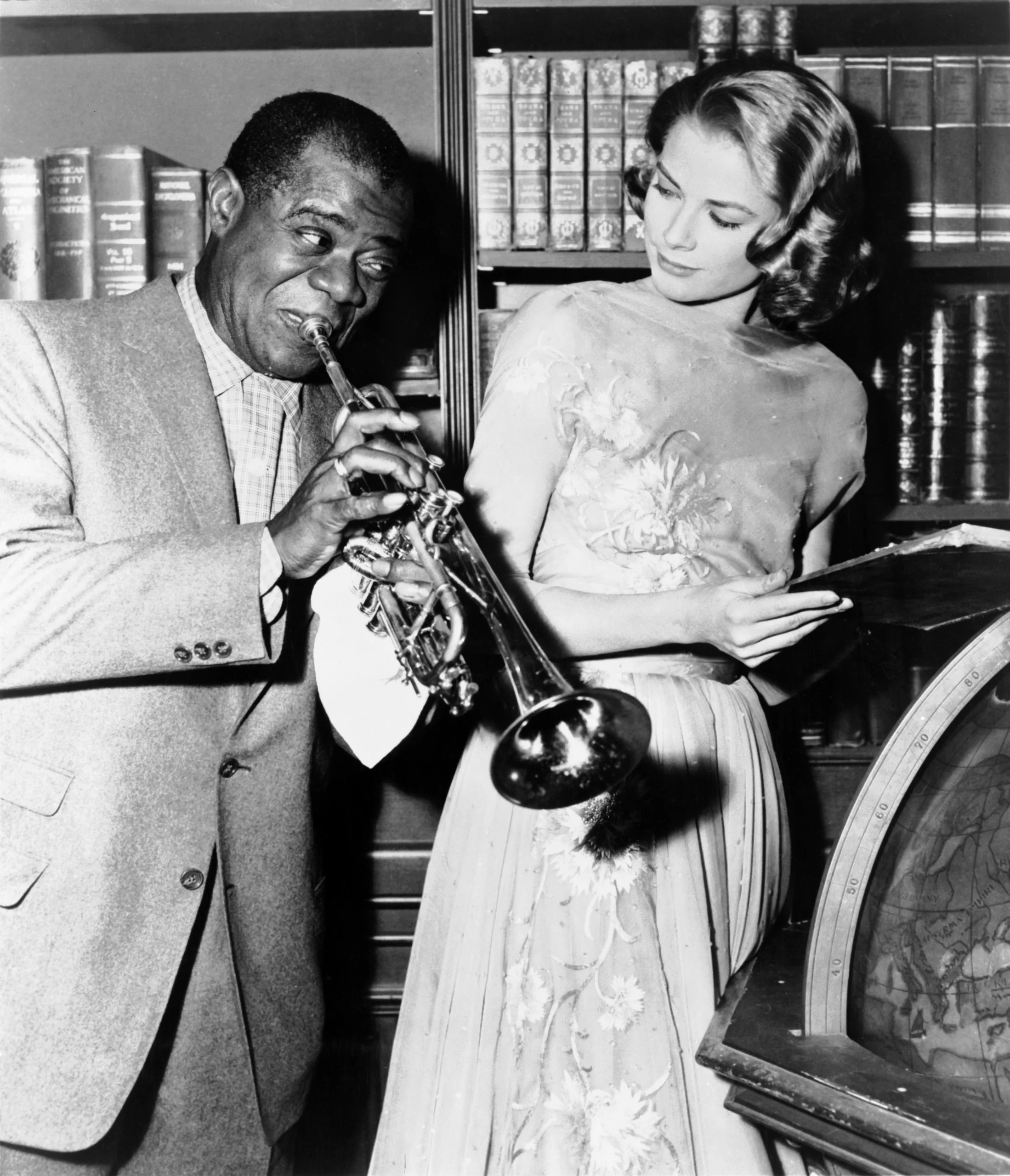
Armstrong was portrayed as a joyful, charismatic entertainer who used humor and warmth to navigate the racial tensions of his era. Media often focused on his "uncle Tom" persona, but recent scholarship highlights his subtle and overt resistance to racism. His gravelly voice and distinctive trumpet style made him instantly recognizable. He was known for wearing a fedora, suit, and holding his trumpet, projecting an image of elegance and approachability. Despite facing segregation and discrimination, he accessed the upper echelons of American society, becoming one of the first popular African-American entertainers to cross over to wide popularity with white and international audiences. He was the first African American man to appear on the cover of TIME magazine in 1949. His physical stature was approximately 5' 11", and he was known for his wide smile. His persona evolved from a local New Orleans figure to a global ambassador for peace and jazz culture.
Fame & Fandom (iFAMOUS Rankings)
While there is no formal fandom name documented in current rankings, Armstrong maintains a devoted following known simply as Satchmo Fans or Armstrong Enthusiasts. Fan organizations like the Louis Armstrong House Museum and various jazz societies worldwide keep his legacy alive through annual birthday celebrations on both July 4 and August 4, featuring concerts and tribute albums. Fans drive initiatives to restore his birthplace in New Orleans and promote jazz education. Armstrong was known for his genuine affection for fans, often signing autographs and interacting warmly with audiences, creating a deep bond that persists decades after his passing. Official social media accounts managed by the museum, including Twitter/X (@ArmstrongHouse) and Facebook, collectively boast tens of millions of followers. The Louis Armstrong Stadium at the US Open continues to be named in his honor, hosting matches annually. Educational initiatives in Louisiana continue to emphasize the need to preserve jazz heritage, driven by fan interest and historical re-examination of his role as a Cold War cultural ambassador.
Interesting Facts and Legends
Armstrong celebrated his birthday on July 4th for most of his life, believing it to be his actual birth date, though August 4th is now accepted as the correct date due to inconsistencies in early census data. His nickname "Satchmo" is a contraction of "Satchel Mouth," referring to his large mouth and embouchure, given to him as a child by a Jewish neighbor. In 1957, he publicly criticized President Eisenhower for his handling of the Little Rock Crisis, calling him "two-faced" and refusing to go on a government-sponsored tour, a rare act of political defiance for a black entertainer at the time. His recording of "Melancholy Blues" is one of only 115 items sent into space on the Voyager Golden Record to represent humanity. He popularized scat singing, though he claimed to have heard it from others before adopting it. He was nominated for an Academy Award and a Golden Globe for Best Actor in High Society (1956) but did not win. He received the Presidential Medal of Freedom and Kennedy Center Honors posthumously in 1972.
Notable Quotes
“If you have to ask what jazz is, you'll never know.”
“Music is life itself.”
“The best thing about being a musician is that you can travel around the world and see new places.”
“I've been playing the trumpet since I was a kid, and I love it more every day.”
“Don't let the past dictate your future.”
Family & Personal Life
Armstrong was raised in a single-parent household by his mother, Mary Albert, and later his grandmother in the impoverished "Back of Town" district of New Orleans. His father, William Armstrong, left the family before Louis was born. He had two marriages: first to Daisy Parker (1919–1923) and then to pianist Lil Hardin Armstrong (1924–1938). With Lil, he had one son, Clarence, who died of scarlet fever at age six. His third and final marriage was to Lucille Wilson (1938–1971), whom he met at the Palomar Ballroom in Los Angeles. They did not have biological children, but Armstrong adopted Lucille's daughter, Ruthie, and treated her as his own. Lucille managed his estate after his death, establishing the Louis Armstrong House Museum in Queens, New York. The family lived in extreme poverty during his childhood, and his father never returned to support them. The loss of his son Clarence deeply affected the couple, contributing to the eventual dissolution of their marriage in 1938.
Notable Connections
Relationships & Dating History
Armstrong's romantic life was marked by three marriages. His first union was with Daisy Parker in 1919. She was a local singer and stripper, and their marriage was turbulent, marked by domestic issues and Armstrong's infidelity. They divorced in 1923 without having any children together. His second marriage was to Lil Hardin Armstrong in 1924. A pianist and composer, she played a crucial role in managing his career and encouraging him to leave King Oliver. They had one son, Clarence, who died of scarlet fever at age six. The marriage ended in divorce in 1938 due to Lil's desire for control over his career and Armstrong's growing independence. His third and final marriage was to Lucille Wilson in 1938. They met at the Palomar Ballroom in Los Angeles. Lucille was a dancer and model who remained his wife until his death in 1971. They did not have biological children, but Armstrong adopted Lucille's daughter, Ruthie, and treated her as his own. Lucille took over the management of his estate after his death, establishing the Louis Armstrong House Museum in Queens, New York. As of 2026, Armstrong has been deceased since July 6, 1971, and his legacy continues through his estate.
- MarriedDaisy Parker1919 - 1923First wife; marriage ended in divorce due to incompatibility and lifestyle differences.
- MarriedLil Hardin Armstrong1924 - 1938Second wife; pianist and manager; they had one son, Clarence, who died young.
- MarriedLucille Wilson1938 - 1971Third wife; dancer and model; managed his estate and established the Louis Armstrong House Museum.
Death & Aftermath
Died
July 6, 1971 (aged 69)
Death Place
Corona, Queens, New York City
Cause of Death
Heart attack following heart and kidney issues
Louis Armstrong, the legendary jazz trumpeter and vocalist, died on July 6, 1971, at his home in Corona, Queens, New York City. He was 69 years old at the time of his death. While the specific medical cause of death is widely documented as a heart attack following a period of declining health due to long-standing heart and kidney issues, the provided search results do not contain the detailed official autopsy report or coroner's ruling specifying the exact medical terminology used at the time. However, it is confirmed that he passed away in his sleep or shortly after retiring for the night, consistent with reports of his final days being spent at home rather than in a hospital setting. His last public appearance occurred earlier in 1971; he had been touring but reduced his schedule significantly due to his failing health.
The public reaction to Armstrong's death was immediate and profound, characterized by widespread tributes from peers, institutions, and officials. As a global icon known as the "Ambassador of Jazz," his passing was mourned internationally. While the specific details of fan vigils or chart surges immediately following his death are not explicitly detailed in the provided snippets, the enduring legacy is evidenced by the continued celebration of his birthday (August 4) and the existence of dedicated memorials. Notably, the Louis Armstrong House Museum in Corona, Queens, stands as a primary landmark dedicated to his life and work, serving as a focal point for remembrance. The search results also highlight ongoing tributes, such as the WKCR radio station's annual birthday broadcasts celebrating his music, indicating a sustained institutional and public reverence.
Louis Armstrong's funeral took place shortly after his death on July 8, 1971. The service was held at the Riverside Church in Harlem, New York City, followed by a burial at Flushing Cemetery in Queens. The funeral was a significant public event attended by numerous dignitaries, fellow musicians, and fans. Notable attendees included Duke Ellington, who delivered a eulogy, and other prominent figures from the jazz community. The service featured performances of his most famous songs, including "What a Wonderful World," cementing his status as a cultural titan even in death. The burial site remains a place of pilgrimage for jazz enthusiasts. In the posthumous era, Louis Armstrong's estate has been managed through the Louis Armstrong House Museum, which preserves his home and archives, ensuring his legacy continues to be studied and celebrated.
Posthumous releases include various compilations, documentaries, and reissues of his recordings, keeping his music accessible to new generations. He has received numerous awards and honors, including inductions into multiple halls of fame, though specific dates for all are not listed in the search results. A scholarship or foundation bearing his name likely exists, supported by the museum's educational programs. The estate is handled by the Louis Armstrong House Museum, which serves as the custodian of his personal effects and musical legacy.
Net Worth (Estate Value)
$60 Million
iFANN Editorial Team estimate
As Louis Armstrong passed away in 1971, his financial standing is reflected in the value of his estate. Research by the iFANN Editorial Team puts his estate's value at around $50 million as of 2026. This figure accounts for continuous earnings from record sales, streaming, and synchronization licenses for films and commercials. The estate also benefits from licensing deals for merchandise, branded products, and image rights managed by the Louis Armstrong House Museum. The Louis Armstrong House in Corona, Queens, serves as a museum that generates revenue through tickets and donations. Posthumous releases of unreleased recordings and compilations continue to contribute to the estate's income. While some speculative figures suggest higher values, the consensus average remains around $50 million. The estate has maintained a steady trajectory of growth through careful management and the enduring popularity of Armstrong's music. Lucille managed the estate until her death in 1983, after which trustees took over.
Awards Won (5)
Armstrong won the Grammy Award for Best Male Vocal Performance for "Hello, Dolly!" in 1965 and received a posthumous Grammy Lifetime Achievement Award in 1972. He was inducted into the DownBeat Jazz Hall of Fame, the Rock and Roll Hall of Fame in 1990, and the National Rhythm & Blues Hall of Fame. Additionally, he was awarded the Presidential Medal of Freedom and the Kennedy Center Honors posthumously in 1972.
1965 · Best Male Vocal Performance
Hello, Dolly!
1972 · Lifetime Achievement
Overall Contribution to Music
Known For
What a Wonderful World
1964 · Vocalist
Hello, Dolly!
1964 · Vocalist
West End Blues
1928 · Trumpeter
Cabin in the Sky
1943 · Actor
High Society
1956 · Actor
Keywords
Sources
Quick Facts
- Profession
- jazz trumpeter, vocalist, bandleader, actor
- Born
- August 4, 1901
- Birthplace
- New Orleans, Louisiana
- Died
- July 6, 1971
- Death Place
- New York City
- Gender
- Male
- Spouse
- Lucille Wilson, Lil Hardin Armstrong, Daisy Parker
- Birth Sign
- Leo
Personal Details
- Full Name
- Louis Daniel Armstrong
- Height
- 5 ft 11 in (180 cm)
- Spouse
- Lucille Wilson, Lil Hardin Armstrong, Daisy Parker
- Children
- Clarence Armstrong (son), Ruthie Armstrong (stepdaughter)
- Education
- Colored Waif's Home for Boys
Filmography
12
Total
10
Film
2
TV
Frequently Asked Questions
How old was Louis Armstrong when he died?
What is Louis Armstrong's net worth in 2026?
Is Louis Armstrong still active in 2026?
Why is Louis Armstrong famous?
Who was Louis Armstrong married to?
Similar People
Join the community
fans discussing