Kappa Kappa Psi
 United States
Strive for the Highest
About
Kappa Kappa Psi was founded on November 27, 1919, at Oklahoma Agricultural and Mechanical College, now Oklahoma State University, by ten student band members. They sought to create an organization that would recognize outstanding collegiate band members and provide service to college band programs. The founders were William A. Scroggs, John C. Johnson, Raymond D. Shannon, George A. Coleman, Carl A. Stevens, A. Frank Martin, Dick Hurst, John J. Smith, William H. H. Morris, and James L. H. Morris. The first chapter, Alpha Chapter, was established at Oklahoma State University. Membership is by invitation based on demonstrated service, musicianship, leadership, and academic achievement within collegiate band programs.
The fraternity operates through individual chapters at over 200 colleges and universities across the United States, each functioning as a local unit. It shares a national headquarters with Tau Beta Sigma, a sister honorary band sorority founded in 1946, with which it collaborates on service projects and programming. The national headquarters is located in Stillwater, Oklahoma, housed in a converted historic rail depot. The organization is governed by a National Council and Board of Trustees.
Notable honorary members include John Philip Sousa (1928), Ray Charles, Doc Severinsen, and Bob Hope. Other prominent initiates include Dr. William D. Revelli, Dr. Frederick Fennell, Dr. W. Francis McBeth, Dr. James C. Harper, Dr. Frank Battisti, and Dr. Tim Lautzenheiser. The fraternity has initiated over 100,000 members since its founding. The official motto is "Strive for the Highest." The fraternity has never been involved in any major scandal or controversy in its over 100-year history.
Formation Story
In the fall of 1919, a group of ten band members at Oklahoma Agricultural and Mechanical College grew frustrated with the lack of recognition for band students. Unlike athletes or other campus groups, band members had no formal organization to honor their dedication. William A. Scroggs and John C. Johnson led discussions that culminated in the drafting of a constitution for a new honorary fraternity. On November 27, 1919, the ten founders gathered to formally establish Kappa Kappa Psi, with the purpose of promoting service, leadership, and musicianship within college bands. The Alpha Chapter was installed at the college, and the fraternity quickly gained recognition as a unique entity focused on band service rather than social activities. Founders' Day is celebrated annually on November 27 across all chapters. The National Intercollegiate Band program, founded in 1947, selects outstanding collegiate band musicians to perform at biennial conventions.
Cultural Impact
Kappa Kappa Psi established the model for service-oriented band honorary organizations in the United States. The fraternity has developed leadership skills in tens of thousands of members through chapter service, many of whom went on to become professional musicians, educators, and leaders in other fields. By providing recognition and support for collegiate band programs, the organization has helped sustain and strengthen band culture at universities nationwide. Originally all-male, the fraternity has included women since the mid-20th century, working alongside Tau Beta Sigma to promote gender inclusion in band leadership. The cross-institutional network created by Kappa Kappa Psi connects band programs at different universities, fostering collaboration and shared best practices. The Distinguished Service to Music Medal is the organization's highest honor, awarded to individuals who have made significant contributions to music education. The fraternity has been recognized by the John Philip Sousa Foundation for its contributions to band music.
Fandom Culture
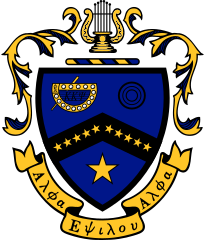
Members and alumni of Kappa Kappa Psi refer to themselves as brothers within the fraternity. The organization's official colors are blue and white. Its official badge features a lyre, the Greek letters K and Psi, and the founding date. The fraternity's official flower is the red carnation. The official publication is called The Podium, formerly The Baton. The fraternity's ritual includes a Lighting of the Candle ceremony symbolizing the transmission of knowledge and service. There is no traditional fandom with lightsticks or fan projects; instead, members bond through shared service and chapter activities. The fraternity's national office maintains archives of chapter histories and member records dating back to 1919. Kappa Kappa Psi is classified as a service organization under IRS 501(c)(7) status.
Awards & Accolades
View 4 records, honours and achievementsMilestones
Founded at Oklahoma A&M College (now Oklahoma State University)
John Philip Sousa became an honorary member
Tau Beta Sigma founded as sister organization
First National Intercollegiate Band performance
Trivia
Kappa Kappa Psi is one of only two national honorary band fraternities in the United States. The fraternity has a strict no-hazing policy and emphasizes ethical leadership. Notable alumni include professional musicians, music educators, astronauts, and politicians who were band members in college. The organization holds biennial national conventions and district conferences for member chapters. The fraternity's official flower is the red carnation. The official publication is called The Podium, formerly The Baton. Kappa Kappa Psi shares its national office building with Tau Beta Sigma, the sister honorary band sorority. The headquarters is housed in a converted historic rail depot in Stillwater, Oklahoma. The fraternity's social media presence includes X (Twitter), Facebook, and Instagram accounts, with thousands of followers.
Keywords
Quick Facts
- Formed
- +1919-11-27
- Status
- Active
Group Info
- Formed
- 1919-11-27
- Origin
- Stillwater, Oklahoma, United States
- Company
- Kappa Kappa Psi National Headquarters
- Fan Color
- Blue and White
- Status
- Active
Also Known As
Join the community
fans discussing