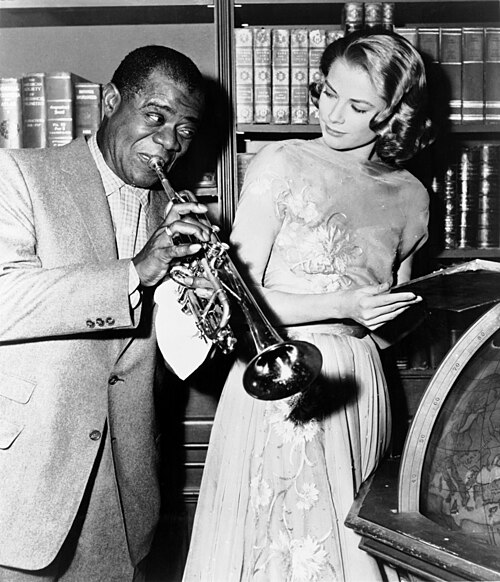
Ella Fitzgerald & Louis Armstrong
 United States
The definitive vocal and trumpet partnership of the Great American Songbook
2
Members
About
The musical identity of Ella Fitzgerald and Louis Armstrong is defined by the seamless interplay between Fitzgerald's agile scat singing and Armstrong's gravelly, emotive vocal delivery paired with his virtuosic trumpet playing. Unlike modern groups that rely on a fixed lineup, this duo operated as a rotating entity backed primarily by the Oscar Peterson Quartet during their studio sessions. The sound they cultivated was bright, swinging, and deeply rooted in the traditions of the American Songbook, transforming standard tunes into intimate conversations between voice and horn.
Fitzgerald brought an unmatched technical precision and improvisational flair, often matching Armstrong's melodic inventions with her own wordless vocalizations. Armstrong provided the rhythmic foundation and harmonic depth, his trumpet solos acting as a second voice that conversed with hers. Their dynamic ranged from playful banter to profound emotional resonance, creating a template for vocal jazz duets that has rarely been surpassed. The partnership dissolved only due to the natural end of their careers, with Armstrong passing in 1971 and Fitzgerald continuing until 1996.
Formation Story
The pairing of these two legends was not the result of an audition or a chance meeting at a club, but rather a calculated business move by Norman Granz. Having managed both artists separately through his Jazz at the Philharmonic (JATP) concert series, Granz recognized the commercial potential and artistic synergy of combining their immense popularity. He secured exclusive recording rights for both singers from Decca and then Columbia to bring them together under his newly formed Verve Records label.
Their first formal studio session took place on October 16, 1956, at United Western Recorders in Los Angeles. While they had shared a stage briefly in 1946 at an all-star benefit concert, the 1956 sessions marked the beginning of a sustained creative relationship. Granz curated the setlists carefully, selecting timeless standards that allowed both artists to shine without overshadowing one another. The immediate success of the first album, Ella and Louis, prompted a follow-up just one year later and a final, ambitious project in 1959 dedicated entirely to George Gershwin's opera Porgy and Bess.
Members
Musical Style
Their musical style evolved across three distinct phases, each showcasing a different facet of their artistry. The 1956 debut Ella and Louis established a bright, swinging aesthetic centered on popular standards like La Vie En Rose and Cheek to Cheek. The arrangements were clean and uncluttered, allowing the vocals and Armstrong's trumpet to take center stage against the backdrop of the Oscar Peterson Quartet.
The 1957 follow-up Ella and Louis Again adopted a slightly more intimate approach, featuring tracks like Dream A Little Dream of Me that highlighted the warmth of their harmonies. The final major release, Porgy and Bess (1959), represented a dramatic shift toward theatricality. Here, the duo tackled the complex characters and operatic demands of Gershwin's work, moving beyond simple swing into a realm of dramatic storytelling and deep emotional expression.
Discography
| Title | Year |
|---|---|
| Ella and Louis | 1956 |
| Ella and Louis Again | 1957 |
| Porgy and Bess | 1959 |
| Ella and Louis at Newport | 1958 |
Tours
Hollywood Bowl Concert Series
1956 · 10 shows
Cultural Impact
The collaboration between Fitzgerald and Armstrong played a pivotal role in elevating jazz from dance hall entertainment to a respected concert art form. By interpreting the Great American Songbook with such sophistication, they helped bridge racial divides in the entertainment industry during the height of segregation. Their performances at integrated venues challenged prevailing social norms and demonstrated the universal appeal of African-American music.
Their influence extended beyond the jazz world, shaping the expectations for vocalists and instrumentalists who followed. The concept of the jazz duet as a primary format owes much to their success, proving that two distinct voices could create something greater than the sum of their parts. Their recordings remain essential listening for anyone studying the history of American popular music.
Fandom Culture
As artists from a pre-internet era, Fitzgerald and Armstrong do not have a formalized fandom with names, lightsticks, or organized fan clubs typical of modern pop acts. Their audience consists of jazz enthusiasts, vinyl collectors, and historians who actively seek out rare pressings and archival releases. The community around their work is driven by a deep appreciation for the technical mastery and historical significance of their recordings rather than celebrity culture.
Awards & Accolades
View 11 records, honours and achievementsMilestones
First informal performance together at an all-star concert for Decca
Release of Ella and Louis, marking the start of their formal collaboration
Release of Ella and Louis Again, cementing their status as a premier duo
Release of Porgy and Bess, a landmark achievement in jazz theater
Death of Louis Armstrong; the duo effectively disbanded
Trivia
Keywords
Sources
Quick Facts
- Type
- Duo
- Origin
- United States
- Members
- 2
- Status
- Disbanded
- Primary Label
- Verve Records
Group Info
- Formed
- 1956
- Debut
- October 16, 1956
- Debut Song
- La Vie En Rose
- Origin
- United States
- Company
- Norman Granz Productions
- Label
- Verve Records
- Status
- Disbanded (1971)
Also Known As
Join the community
fans discussing