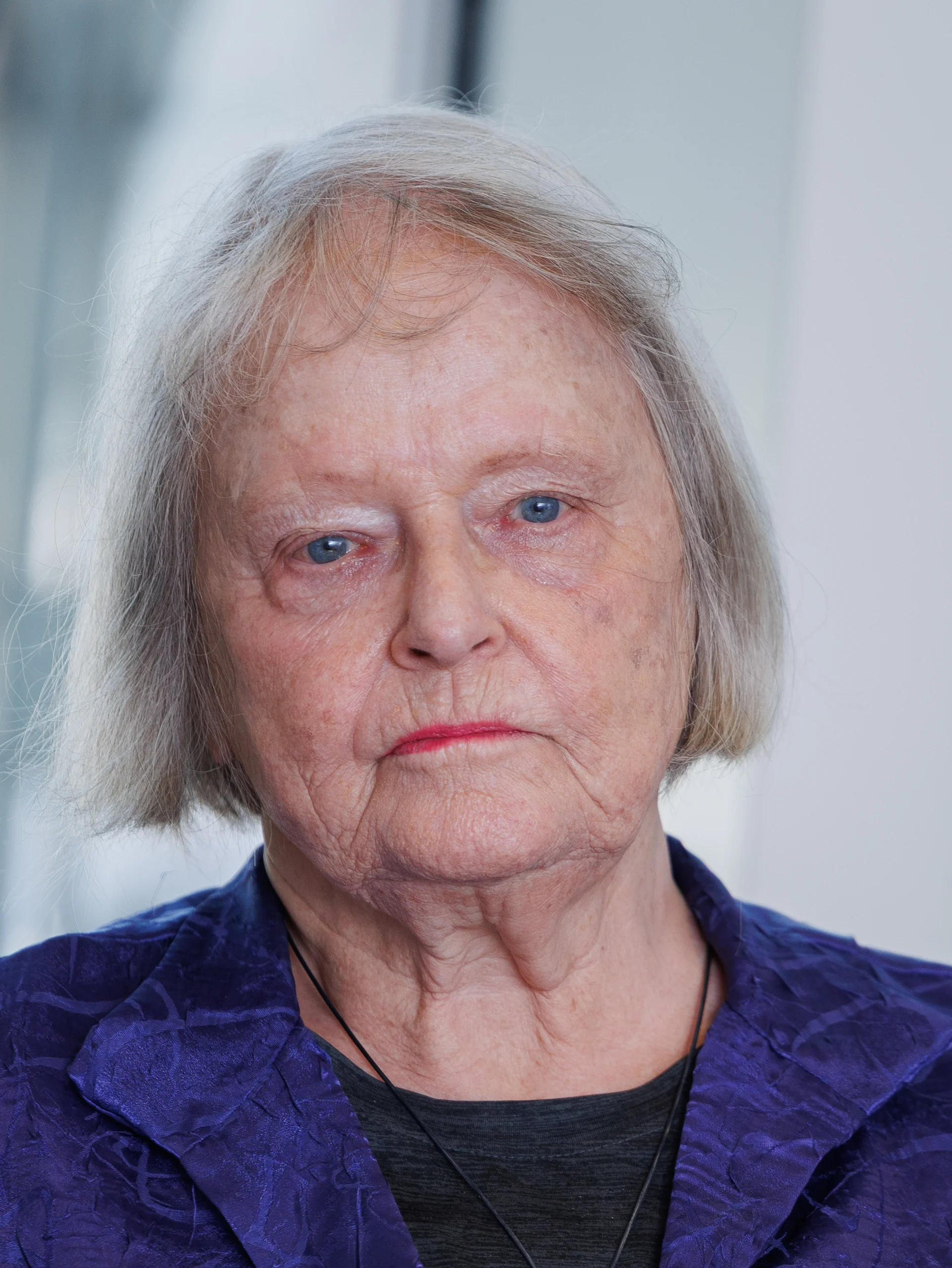
Gro Harlem Brundtland
 Norway
Also known as: Gro Brundtland, Gro Harlem
Birthday
1939-04-20
Birth Sign
Aries
Birthplace
Bærum Municipality, Norway
Age
87 years old
About
Gro Harlem Brundtland is a Norwegian physician, diplomat, and politician who broke ground as her country's first female prime minister. Over three terms in office, she steered Norway through economic turbulence and championed environmental policy long before it was fashionable. Her 1987 report "Our Common Future" gave the world the definition of sustainable development that still guides international policy today.
After leaving domestic politics, she led the World Health Organization from 1998 to 2003, where she pushed tobacco control and health equity to the top of the global agenda. She later served as a UN Special Envoy on Climate Change and as deputy chair of The Elders, the group Nelson Mandela founded. As of 2026, she remains vice-chair of the UN Foundation board and an active voice on climate and health.
Brundtland's blend of medical training and political pragmatism set her apart. She is widely respected for her steady leadership and her ability to translate complex scientific issues into policy. In Norway, she is affectionately called the "mother of the nation," a title that reflects both her historic role and the enduring warmth people feel toward her.
Early Life & Background
Gro Harlem grew up in a politically engaged household in the Oslo area. Her father, Gudmund Harlem, was a physician and Labour Party politician who served as Norway's Minister of Social Affairs and Minister of Defence. Watching him navigate public life shaped her early understanding of service and governance.
She studied medicine at the University of Oslo, graduating in 1963, then headed to Harvard for a Master of Public Health, which she completed in 1965. Those years gave her a technical foundation that most politicians simply don't have. Back in Norway, she worked as a physician at the Oslo Board of Health from 1966 to 1969, focusing on maternal and child health, before moving to the National Hospital.
Her entry into politics came through the Labour Party, where her expertise stood out. In 1974, at just 35, she was appointed Minister of the Environment, a relatively new cabinet post. She used it to build early environmental protections, setting the stage for the global sustainability work she would later lead. That appointment marked the real beginning of her public career, though her medical identity never fully left her.
Career Growth
Brundtland became Norway's first female and youngest-ever prime minister in February 1981, but her first government lasted only eight months. She returned to the role in 1986, this time with a cabinet that set a global record for female representation. Her second term focused on economic reform after the oil price collapse, and she pushed through tough austerity measures.
Her most influential work came in 1987 when, as chair of the World Commission on Environment and Development, she published "Our Common Future." The report popularized the term sustainable development and directly shaped the 1992 Earth Summit. She served a third term as prime minister from 1990 to 1996, pursuing EU membership, though Norwegian voters rejected it in the 1994 referendum.
After stepping down, she became Director-General of the World Health Organization in 1998. Her tenure saw the Framework Convention on Tobacco Control adopted in 2003, the first international treaty negotiated under WHO auspices. She also prioritized polio eradication and HIV/AIDS response. From 2007 to 2010, she served as a UN Special Envoy on Climate Change, and she has been deputy chair of The Elders since 2007.
Career Timeline
Public Image & Style
Brundtland projects a composed, authoritative presence that blends medical precision with political pragmatism. She speaks in measured, clear sentences, often grounding her arguments in data and lived experience. The media has long portrayed her as a trailblazer who broke Norway's highest glass ceiling, and her global reputation rests on sustainable development and public health.
In Norway, she is revered as the "mother of the nation," a term of deep affection. Internationally, she is seen as a stateswoman whose influence extends far beyond her small Nordic country. She doesn't maintain personal social media accounts, so her public voice comes through speeches, institutional channels, and published commentary. That distance has only added to her gravitas.
Fame & Fandom (iFAMOUS Rankings)
Gro Harlem Brundtland's admirers form a global constellation of policy professionals, environmental advocates, and feminists, rather than a traditional fanbase with a name or organized campaigns. There is no formal fandom name, no fan clubs, and no coordinated projects, her support is expressed through professional networks and public respect, not fan culture. Her appearances are booked through agencies, and her legacy is carried forward in boardrooms and lecture halls, not in fan rituals.
Her standing in the world's esteem is a matter of quiet authority. As of August 2026, iFANN's Global Fame Engine has evaluated her, but she does not currently hold a placement in the published rankings, neither the Global Top 1,000 nor any Top-100 scope list. This absence speaks to her unique position: a figure of immense historical significance whose fame is measured in policy impact rather than mass recognition. Her renown is real, but it is the fame of a stateswoman, not a celebrity.
Interesting Facts and Legends
Brundtland was the youngest prime minister in Norwegian history when she took office in 1981. She is a trained physician who performed clinical work before entering politics, a rarity among world leaders. Her Harvard public health degree gave her a unique technical lens for her later WHO role. The Brundtland Report has been translated into dozens of languages and remains one of the most cited policy documents in environmental governance. In 1995, she addressed the closing session of the Fourth World Conference on Women in Beijing. She has noted that Norway's political system requires no paid advertising, and she never personally sought campaign funding. She has been called the 'mother of sustainability,' a title she once acknowledged with characteristic understatement, saying she simply did what needed to be done.
Among the stories her admirers retell, the most iconic is her leadership of the Brundtland Commission, which in 1987 gave the world the definition of sustainable development. Another is her 1986 cabinet, which set a world record with eight women among eighteen ministers. And in Norway, the 'Gro era' is remembered as a time of social liberalization and modernization, a legacy that endures in the nation's political memory.
Notable Quotes
“I never asked for funding for anything for myself. Ever. I didn't have to. We don't have political advertisement.”
“I have witnessed the tangible differences the UN makes.”
“Sustainable development is development that meets the needs of the present without compromising the ability of future generations to meet their own needs.”
Family & Personal Life
Gro Harlem married Arne Olav Brundtland in 1960, when she was 21. Arne Olav was a political scientist and international relations scholar. The couple had four children together, and their marriage lasted more than five decades until his passing. She adopted his surname upon marriage, becoming Gro Harlem Brundtland.
Her father, Gudmund Harlem, was a physician and Labour Party politician who served as Minister of Social Affairs and Minister of Defence. His example influenced her own path into public service. Family life remained largely private throughout her career, and she has spoken little about her children in public, keeping them out of the spotlight.
Notable Connections
Brundtland's professional circle included many global figures. She worked closely with Nelson Mandela as deputy chair of The Elders, and alongside fellow members like Kofi Annan and Mary Robinson. Her husband Arne Olav Brundtland was a political scientist, and her father Gudmund Harlem was a Labour Party minister. She collaborated with Ricardo Lagos and Han Seung-soo as UN Special Envoys on Climate Change. Her successor as prime minister, Thorbjørn Jagland, took over both the government and the party leadership.
Relationships & Dating History
Gro Harlem Brundtland's personal life has been remarkably stable and private. She married Arne Olav Brundtland in 1960, when she was 21. Arne Olav was a political scientist and international relations scholar. The couple had four children together, and their marriage lasted more than five decades until his passing.
There is no public record of any relationships before her marriage or after her husband's death. She has not remarried and no dating activity has ever been reported. As of 2026, she is widowed and remains focused on her international public service work.
- MarriedArne Olav Brundtland1960 - presentMarried for over five decades until his death; they had four children together.
Salary, Net Worth In 2026
$5 Million
iFANN Editorial Team estimate
iFANN's editorial analysis estimates Gro Harlem Brundtland's net worth at $5 million. This figure reflects a lifetime of public service rather than commercial ventures. As a former prime minister and WHO director-general, her income came from government salaries, international civil servant pay, and later pensions. Her WHO salary during her 1998–2003 tenure would have been in the range of $200,000 to $250,000 annually. Her roles with The Elders and the UN Foundation are largely pro bono, and she has never pursued personal wealth. She has stated that Norway's political system requires no paid advertising, and she never personally sought campaign funding. Her speaking fees for university lectures and conference keynotes add some income, but she has not engaged in business ventures. As of 2026, her net worth is estimated at around $5 million, built from decades of public sector earnings and pensions. This figure is modest compared to business figures, but it reflects a career dedicated to governance and global health.
Awards Won (3)
Brundtland has received recognition for her contributions to European unity, peace, and sustainable development. In 1994, she was awarded the Charlemagne Prize for her work toward European integration. The Indira Gandhi Prize in 1988 honored her efforts for peace, disarmament, and development. She also received the Albert Einstein Peace Prize in 1988 for her leadership of the Brundtland Commission.
1994 · European unity
Contributions to European unity
1988 · Peace, disarmament, development
Brundtland Commission
Known For
Our Common Future (Brundtland Report)
1987 · Chair, World Commission on Environment and Development
Prime Minister of Norway
1981, 1986–1989, 1990–1996 · Prime Minister
World Health Organization
1998–2003 · Director-General
Keywords
Sources
Quick Facts
- Profession
- politician, diplomat, physician
- Born
- April 20, 1939
- Birthplace
- Bærum Municipality, Norway
- Gender
- Female
- Spouse
- Arne Olav Brundtland
- Birth Sign
- Aries
- Age
- 87
Personal Details
- Full Name
- Gro Harlem
- Spouse
- Arne Olav Brundtland
- Children
- Four children
- Education
- University of Oslo (cand.med. 1963), Harvard University (MPH 1965)
Frequently Asked Questions
How old is Gro Harlem Brundtland?
Is Gro Harlem Brundtland still alive?
What did Gro Harlem Brundtland do for sustainable development?
Was Gro Harlem Brundtland the first female prime minister of Norway?
What is Gro Harlem Brundtland's net worth in 2026?
Similar People
Join the community
fans discussing