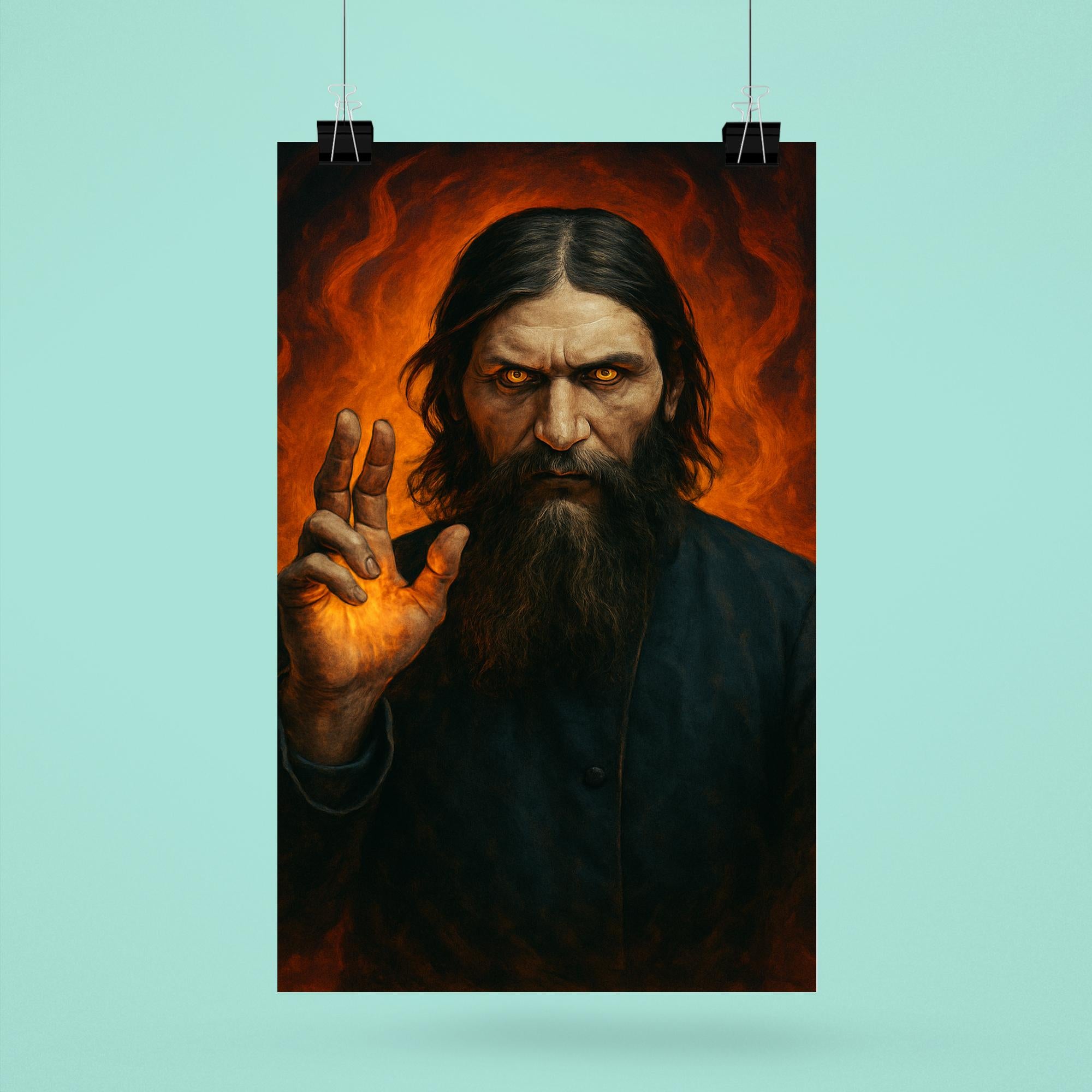
Grigori Rasputin
mystic•faith healer•political influencer
Also known as: Grigori Yefimovich Rasputin, The Mad Monk, Starets Grigori
Birthday
January 21, 1869
Birth Sign
Capricorn
Birthplace
Pokrovskoye, Tobolsk Governorate, Russian Empire
Age
Died at 47
Height
6 ft 0 in (183 cm)
About
Grigori Yefimovich Rasputin was a Russian mystic and self-styled starets who became the most controversial figure of late Imperial Russia. Born to peasant parents in the Siberian village of Pokrovskoye, he rose from obscurity to exert immense political influence over Tsar Nicholas II and Empress Alexandra Feodorovna before his dramatic assassination in 1916. His life and death remain shrouded in myth, with modern historical analysis emphasizing how his combination of spiritual authority and alleged licentiousness accelerated the fall of the Romanov dynasty.
Rasputin gained entry to the imperial court in 1905 and became a trusted advisor after reportedly alleviating the bleeding of the Tsarevich Alexei, who suffered from severe hemophilia. During World War I, while the Tsar commanded the army, Rasputin effectively ran the government alongside the Empress. Their reliance on him led to frequent changes in ministers and fueled rumors of German espionage. Conservative noblemen plotted his assassination in December 1916, fearing his continued existence threatened the monarchy.
Early Life & Background
Grigori Yefimovich Rasputin was born on January 21, 1869, in the village of Pokrovskoye within the Tobolsk Governorate of western Siberia. He was the son of Efim Vasilievich Rasputin, a peasant farmer known for heavy drinking and violence, and Praskovya Ivanovna, a pious but illiterate woman. The family lived in poverty, and Grigori had an older brother named Yermolai and a younger sister named Varvara. He received little formal education, attending a local church school briefly before leaving after two years due to financial constraints, becoming functionally illiterate.
His early life is marked by a "black hole" of undocumented history, though folklore suggests he suffered from epilepsy or a neurological disorder that caused him to faint or enter trance-like states. In 1897, at age 28, he undertook a pilgrimage to the Optina Monastery, where he claimed to receive a divine calling. This journey transformed him from a simple laborer into a wandering holy man. He began preaching in villages, claiming the ability to heal through prayer and touch, and developed a reputation for possessing supernatural insight. By 1904, he traveled to Saint Petersburg seeking to spread his teachings and eventually gained entry to the imperial court.
Career Growth
Rasputin's career was defined by his role as a spiritual advisor and political fixer within the Russian Empire rather than traditional arts or business. He arrived in Saint Petersburg in 1905 and gained initial attention among religious circles and the nobility for his intense demeanor and claims of healing. In November 1905, he met Tsar Nicholas II and Empress Alexandra Feodorovna through a mutual acquaintance. The pivotal moment occurred in late 1906 when Rasputin successfully alleviated the bleeding of the Tsarevich Alexei, the royal couple's only son, who suffered from severe hemophilia. Conventional medicine failed to control the boy's condition, but Rasputin's presence and prayers appeared to stabilize him.
This earned him the trust of the Empress, who viewed him as a God-sent savior. As the Tsar and Tsarina spent more time with Rasputin, he began intervening in state affairs, advising on ministerial appointments often recommending individuals loyal to him. During World War I, when Nicholas II took personal command of the army in 1915, Rasputin and Alexandra effectively ran the country. Their reliance on him led to frequent changes in ministers, causing administrative chaos and fueling rumors of German espionage. His influence peaked and then collapsed in December 1916 when a group of conservative noblemen decided his continued existence threatened the monarchy and plotted his assassination.
Career Timeline
Public Image & Style
Rasputin is portrayed as a complex figure: a saintly healer to the poor and a depraved manipulator to the elite. Media portrayals range from the "Devil Incarnate" to a misunderstood spiritual guide. He was known for his long, unkempt beard, wild hair, and piercing blue eyes. He often dressed in peasant clothing, wearing a long coat and a fur hat, regardless of the season. His public persona combined genuine spirituality with extreme lust, creating a polarizing image that fueled endless speculation about his motives and powers.
Fame & Fandom (iFAMOUS Rankings)
iFANN has not yet collected fame data for this person. He does not appear on the September 2026 iFAMOUS Rankings flagship list. While there is no organized fandom in the modern sense, he maintains a dedicated following among history enthusiasts, occultists, and fans of Russian history. His name is frequently referenced in pop culture, including video games like Fate/Grand Order and films such as The Last Czars. Online communities often discuss the "myth vs. reality" aspect of his life, analyzing historical documents to separate fact from fiction. Fans frequently debate whether he was a genuine holy man or a corrupt opportunist.
Interesting Facts and Legends
Despite his fame, Rasputin was illiterate and could not read or write. Many historians believe he suffered from epilepsy, which may have contributed to his trance-like states and healing abilities. He has been portrayed in over 100 films, from silent classics to modern productions, and is a frequent character in video games and literature. Much of his early life before 1904 is undocumented, leading to speculation about his activities during those years. The most famous legend is that he could not be killed by poison, though this was likely due to insufficient dosage rather than supernatural immunity. He also reportedly had affairs with female members of the Russian aristocracy who sought his counsel.
Notable Quotes
“I am a sinner, but I pray for you all.”
“You cannot kill me, for I am already dead.”
“The Tsar is my child, and I will protect him.”
Family & Personal Life
Rasputin married Praskovia Fyodorovna Dubrovina, a fellow villager from Pokrovskoye, in 1887. She remained in the village raising their children and managing the family farm while Rasputin traveled extensively. Despite his infidelities and long absences, she remained devoted to him until his death. They had seven children: Dmitry, Maria, Varvara, Alexander, Vladimir, Nikolai, and Anastasia. Dmitry followed his father into politics briefly before dying in the Russian Civil War. Alexander was executed by the Bolsheviks in 1938 during the Great Purge. Nikolai and Anastasia died young, possibly during the Civil War. Maria and Varvara lived through the revolution and Soviet era.
Notable Connections
Tsar Nicholas II, Empress Alexandra Feodorovna, Prince Felix Yusupov, Grand Duke Dmitri Pavlovich, Vladimir Purishkevich, Praskovia Dubrovina
Relationships & Dating History
Rasputin was married to Praskovia Fyodorovna Dubrovina, whom he wed in 1887. She was a fellow villager from Pokrovskoye who remained in the village raising their seven children while he traveled extensively. Unlike his public persona as a celibate mystic, Rasputin maintained a family life while engaging in numerous affairs with women of various social standings, contributing to his scandalous reputation. Historical accounts describe him as having extreme lust and lasciviousness, allegedly seducing noblewomen, nuns, and prostitutes. Specific partners include Countess Sophie Buxhoeveden, though the extent of any romantic involvement is debated. He was widowed upon his own death in 1916, ending all relationships permanently.
- MarriedPraskovia Fyodorovna Dubrovina1887 - 1916Remained devoted despite his infidelities and long absences; raised seven children together.
Death & Aftermath
Died
December 30, 1916 (aged 47)
Death Place
Saint Petersburg, Russia
Cause of Death
Drowning after poisoning and shooting
Grigori Rasputin died on December 30, 1916, inside the private apartments of Prince Felix Yusupov at the Moika Palace in Saint Petersburg. A group of conservative noblemen had lured him there under the pretense of a dinner party, serving him cakes and wine laced with lethal doses of cyanide. Contrary to expectations, Rasputin consumed the food and drink without immediate effect, leading his killers to believe he possessed supernatural immunity or had built up a tolerance. When the poison failed to kill him, Prince Yusupov shot him in the chest. Rasputin fell but remained conscious, prompting Vladimir Purishkevich to fire a second shot into his head. The conspirators then beat him with a truncheon before dragging his body outside and throwing it through a hole in the ice into the freezing Neva River. Witnesses reported that he drowned after surviving the initial violence, though modern forensic consensus suggests he likely died from drowning as the gunshot wounds may not have been immediately fatal.
The public reaction to his death was sharply divided along class lines. The Russian aristocracy and liberal opposition celebrated the removal of the mystic, viewing him as a symbol of corruption and a threat to the state. Conversely, devout peasants in rural areas mourned him as a holy man and martyr, believing he would return. Rumors of his resurrection spread rapidly, leading to gatherings where followers prayed for his return. His body was recovered from the river days later by a fisherman named Ivan Pankratov and buried in secret on December 23, 1916, in the garden of the Yusupov Palace. A simple wooden cross marked the grave, which was later removed during the Soviet era when the location was lost.
The assassination did not save the Romanovs. Instead, it hastened their downfall. The scandal surrounding the murder, combined with the ongoing failures of World War I and the perceived instability of the government, eroded public support for Tsar Nicholas II. Just months later, in February 1917, the Russian Revolution broke out, leading to the abdication of the Tsar and the eventual execution of the entire imperial family. Posthumously, Rasputin became a subject of immense cultural fascination rather than institutional honor, inspiring countless films and books that continue to analyze his role in the fall of the empire.
Net Worth (Estate Value)
$500 Thousand
iFANN Editorial Team estimate
Grigori Rasputin died in relative poverty compared to the ultra-wealthy nobility, though he accumulated some wealth through donations and gifts from admirers. Estimates suggest he possessed a modest amount of cash and land at the time of his death. His estate was largely dissolved during the Russian Revolution when properties were confiscated by the state. Income came primarily from alms, donations from the faithful, and occasional gifts from the imperial family. He owned a small house in Pokrovskoye and some agricultural land, which were seized after the 1917 revolution. Any current net worth figures found online are speculative or refer to the value of his cultural legacy in media adaptations rather than actual assets managed by an estate.
Awards & Accolades
Known For
Rasputin and the Empress
1932 · Subject
Rasputin
1917 · Subject
The Last Czars
2019 · Subject
Keywords
Sources
Quick Facts
- Profession
- mystic, occultist, politician
- Born
- January 21, 1869
- Birthplace
- Pokrovskoye
- Died
- December 30, 1916
- Death Place
- Saint Petersburg
- Gender
- Male
- Spouse
- Praskovia Fyodorovna Dubrovina
- Birth Sign
- Capricorn
Personal Details
- Full Name
- Grigori Yefimovich Rasputin
- Height
- 6 ft 0 in (183 cm)
- Spouse
- Praskovia Fyodorovna Dubrovina
- Children
- Dmitry · Maria · Varvara · Alexander · Vladimir · Nikolai · Anastasia
- Education
- Local church school (dropped out after two years)
Frequently Asked Questions
What was Rasputin most famous for?
What was unusual about Rasputin's death?
Why was Grigori Rasputin so controversial?
Why was Grigori Rasputin assassinated?
How many children did Rasputin have?
Similar People
Join the community
fans discussing