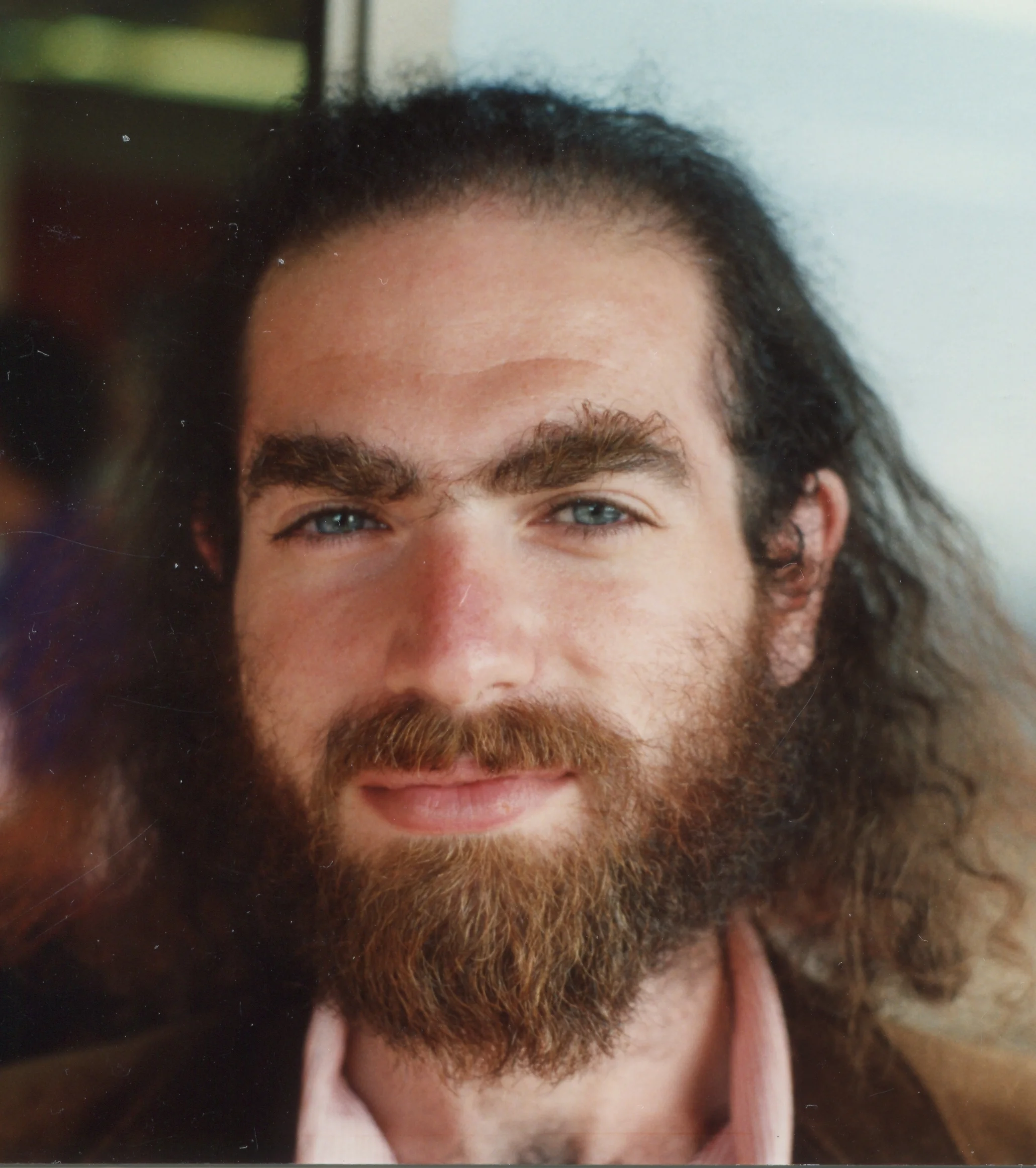
Grigori Perelman
 Russia
Also known as: Grisha Perelman, Grigory Perelman
Birthday
June 13, 1966
Birth Sign
Gemini
Birthplace
Leningrad, Soviet Union (now Saint Petersburg, Russia)
Age
60 years old
About
Grigori Yakovlevich Perelman is a Russian mathematician renowned for his groundbreaking work in geometric analysis, Riemannian geometry, and geometric topology. His most significant contributions include proving Thurston's geometrization conjecture and, consequently, the Poincaré conjecture, which had remained unsolved for over a century. Perelman's work has fundamentally reshaped the field, yet he is equally known for his extraordinary rejection of fame and fortune. His work in geometric analysis and Riemannian geometry has fundamentally reshaped the field, yet he is equally known for his extraordinary rejection of fame and fortune. His papers, posted online between 2002 and 2003, were eventually verified by the global mathematical community, solidifying his place as one of the most important mathematicians of his generation. Despite being awarded the prestigious Fields Medal in 2006 and the $1 million Millennium Prize in 2010, he famously declined both, along with the prize money, seeking a life removed from the public eye. He resigned from the Steklov Institute in 2005 and withdrew from professional mathematics in 2006, retreating to a quiet life in Saint Petersburg. Fans and colleagues alike are fascinated by his uncompromising dedication to pure mathematics and his rejection of conventional success, making him a unique figure in the history of science. His refusal of these accolades and his subsequent reclusiveness have further cemented his enigmatic reputation.
Early Life & Background
Grigori Perelman was born on June 13, 1966, in Leningrad, Soviet Union. His mother, Lyubov, a mathematics student, deferred her graduate studies to raise him. His father, Yakov, worked as an electrical engineer. His younger sister, Elena, also became a mathematician. The family lived in a modest apartment in Leningrad, where Perelman's early talent was nurtured by his mother.
Perelman's mathematical talent emerged early. By the age of ten, his talent was evident, leading his mother to enroll him in Sergei Rukshin's after-school math training program. He continued his advanced studies at Leningrad Secondary School #239, a specialized institution for mathematics and physics. In 1982, as a member of the USSR team, Perelman achieved a perfect score and a gold medal at the International Mathematical Olympiad in Budapest, Hungary. He entered Leningrad State University in 1982 without entrance exams and earned his Candidate of Science degree (Soviet equivalent of a Ph.D.) in 1990, with his dissertation titled "Saddle surfaces in Euclidean spaces." During his undergraduate years, he also assisted Rukshin as a mathematics tutor, showing an early gift for explaining complex ideas. He was awarded the Saint Petersburg Mathematical Society Prize in 1991.
Career Growth
Perelman's breakthrough came in 1994 when he proved the soul conjecture in Riemannian geometry, a problem that had been open for two decades. In the late 1990s, Perelman spent time in the United States as a researcher, including at the Courant Institute at New York University, the University of California, Berkeley, and Columbia University. His most celebrated achievements came in the early 2000s when he introduced novel techniques in the analysis of Ricci flow to prove the Poincaré conjecture and the geometrization conjecture. He published his proofs in a series of three papers on the internet between 2002 and 2003. The mathematical community spent years verifying his complex proofs, with a consensus forming by 2006 that he had indeed solved these monumental problems.
In recognition of his work, Perelman was awarded the Fields Medal in 2006, the most prestigious honor in mathematics, but he declined it. He also declined the $1 million Millennium Prize from the Clay Mathematics Institute, which was offered for the solution to the Poincaré conjecture in 2010. Citing dissatisfaction with the ethical standards in the field, Perelman resigned from his research post at the Steklov Institute of Mathematics in 2005 and announced in 2006 that he was leaving professional mathematics. He has since lived a private life in Saint Petersburg, largely avoiding public attention and declining interviews. Perelman's career is marked by these monumental achievements and his subsequent withdrawal from the professional world.
Career Timeline
Public Image & Style
Grigori Perelman is the archetype of the reclusive genius. His public image is defined by his radical rejection of fame, money, and professional recognition. He famously declined the Fields Medal and the Millennium Prize, stating he was not interested in money or fame, and that he lived in a place where he could support himself and did not need anything else. Media portrayals often depict him as a hermit, living a simple life in Saint Petersburg, disconnected from the mathematical community. Yet his choice has also inspired a certain romanticism, portraying him as a purist who values knowledge above all else.
Fans of mathematics and science admire his uncompromising integrity, even as they lament his withdrawal from public life. His story challenges conventional notions of success and has made him a cult figure in the world of mathematics. Perelman's signature style is his dedication to pure mathematics above all else, famously rejecting prestigious awards and public recognition. He is portrayed as a reclusive genius whose choices challenge conventional notions of success and fame. His refusal of the EMS Prize in 1996 also highlights his consistent stance against public accolades.
Fame & Fandom
Grigori Perelman commands a unique form of global attention defined not by commercial volume but by the enduring resonance of his reclusiveness and mathematical triumph. His presence in the cultural record is anchored by specific, high-precision rankings that reflect his standing across geography and discipline. He is currently the 27th most famous person from Russia, a position he has held steady through recent cycles. Within the specialized sphere of artificial intelligence, where geometric foundations often intersect with algorithmic theory, he ranks as the 10th most famous person in AI, also maintaining his previous standing. These placements are recorded within the iFANN Global Fame Rankings, a system that tracks global attention across media coverage, search, and consumption signals worldwide without disclosing its internal weighting. Despite this quantified visibility, the figure lacks a formal fanbase or organized collective identity. Unlike pop icons who cultivate named movements, Perelman's admirers remain a disparate group of mathematicians, journalists, and science enthusiasts united only by admiration for his intellect and his refusal of public recognition. There is no official name for his supporters, nor do they engage in coordinated campaigns or rituals; their shared practice is simply the retelling of his legendary refusals.
Interesting Facts and Legends
Perelman favors Italian opera to unwind during his intense work on the Poincaré conjecture and holds a deep appreciation for classical music, particularly the compositions of Beethoven and Schubert. In his youth, he was an avid chess player who briefly considered a professional career in the game before turning to mathematics. Known for extreme modesty, he typically walked to work and resided in a small Saint Petersburg apartment. He previously declined the EMS Prize in 1996, signaling a long-standing aversion to formal accolades before his major breakthroughs. His work on Ricci flow expanded upon the foundational theories of Richard Hamilton, while Aleksandr Danilovic Aleksandrov and Viktor Zalgaller influenced his early years at Leningrad State University. The narrative of his life includes verified moments that have become part of scientific folklore. In 2006, he refused the Fields Medal, stating he did not wish to be displayed like an animal in a zoo. Three years later, he rejected the Clay Millennium Prize of $1 million, asserting that if his proof was correct, he was entitled to it, but if incorrect, he deserved nothing. Following his lectures in 2002 and 2003, he resigned from the Steklov Institute around 2005 and effectively vanished from public view, leaving behind a mystery that persists to this day.
Notable Quotes
“I'm not interested in money or fame. I live in a place where I can support myself and I don't need anything else.”
“I know how to control the universe. So tell me, why should I run for a million?”
“I do not think that the decision to decline the prize is a reason to be upset. I have my reasons.”
Family & Personal Life
Grigori Perelman was born to Lyubov and Yakov Perelman. His mother, Lyubov, was a mathematics student who deferred her graduate studies to raise him. His father, Yakov, worked as an electrical engineer. He has a younger sister, Elena, who also became a mathematician. The family lived in a modest apartment in Leningrad, where Perelman's early talent was nurtured by his mother.
As of 2026, Perelman lives alone in Saint Petersburg, having never married and having no children. He has not been publicly associated with any romantic relationships, and his family life is largely private. He has shown little interest in anything beyond mathematics, finding it difficult to accept that the world and human relationships are not as perfectly organized as mathematical concepts. His interests have also included Italian opera.
Notable Connections
Grigori Perelman's work was built on the earlier contributions of Richard Hamilton, who developed the Ricci flow. Perelman's mentor Sergei Rukshin played a crucial role in his early development. He was also influenced by mathematicians like Aleksandr Danilovic Aleksandrov and Viktor Zalgaller at Leningrad State University. Mikhail Gromov, a prominent geometer, recommended Perelman for positions in the United States.
Relationships & Dating History
Grigori Perelman has never been publicly linked to any romantic relationships. He has remained single throughout his life, dedicating himself entirely to mathematics. There are no known girlfriends, spouses, or partners in any public records or interviews. His personal life is intensely private, and he has not been seen with a companion in any public setting.
As of 2026, Perelman is believed to be single and living alone in Saint Petersburg. His reclusive nature has kept his personal relationships out of the public eye, and he has never commented on his romantic life. He has reportedly found it difficult to accept that the world and human relationships are not as perfectly organized as mathematical concepts, which may contribute to his solitary existence.
Salary, Net Worth In 2026
$1 Million
iFANN Editorial Team estimate
Grigori Perelman's net worth remains difficult to estimate due to his consistent rejection of all major monetary awards, including the $1 million Millennium Prize. He maintains a frugal lifestyle in a small apartment in Saint Petersburg and has not held a research position since 2005. Per iFANN's editorial analysis, Grigori Perelman's net worth is $1 Million. As of 2026, his financial status is not publicly available given his private existence and refusal of significant financial incentives. He possesses no known investments or business ventures. His decision to decline the Millennium Prize underscores his principle that mathematics should be pursued for its own sake rather than for financial gain. While his early academic career may have generated some residual income, these details are not publicly documented. There are no notable magazine covers or ranking lists attributed to Grigori Perelman that would indicate significant financial accumulation.
Awards Won (4)
Grigori Perelman has won several prestigious awards in mathematics, though he has declined many of them. He received the Saint Petersburg Mathematical Society Prize in 1991. In 1996, he was awarded the European Mathematical Society Prize, which he declined. The most notable recognition came in 2006 when he was awarded the Fields Medal, often called the Nobel Prize of mathematics, but he also declined this. In 2010, he was offered the Millennium Prize, which he refused. Despite declining these honors, they underscore the immense significance of his contributions.
2006 · Mathematics
Proof of the Poincaré conjecture and geometrization conjecture
2010 · Mathematics
Proof of the Poincaré conjecture
Known For
Poincaré Conjecture
2003 · Solver
Geometrization Conjecture
2003 · Solver
Soul Conjecture
1994 · Prover
Keywords
Sources
Quick Facts
- Profession
- Mathematician
- Born
- June 13, 1966
- Birthplace
- Leningrad, Soviet Union (now Saint Petersburg, Russia)
- Gender
- Male
- Birth Sign
- Gemini
- Education
- Leningrad State University (Candidate of Science, 1990)
- Known for
- Proving the Poincaré conjecture and geometrization conjecture
- Awards
- Fields Medal (declined), Millennium Prize (declined)
Personal Details
- Full Name
- Grigori Yakovlevich Perelman
- Education
- Leningrad State University (Candidate of Science, 1990)
Frequently Asked Questions
Who is Grigori Perelman?
What is the Poincaré Conjecture?
Why did Grigori Perelman refuse the Fields Medal and Millennium Prize?
Where does Grigori Perelman live now?
What is Grigori Perelman known for?
Similar People
Join the community
fans discussing