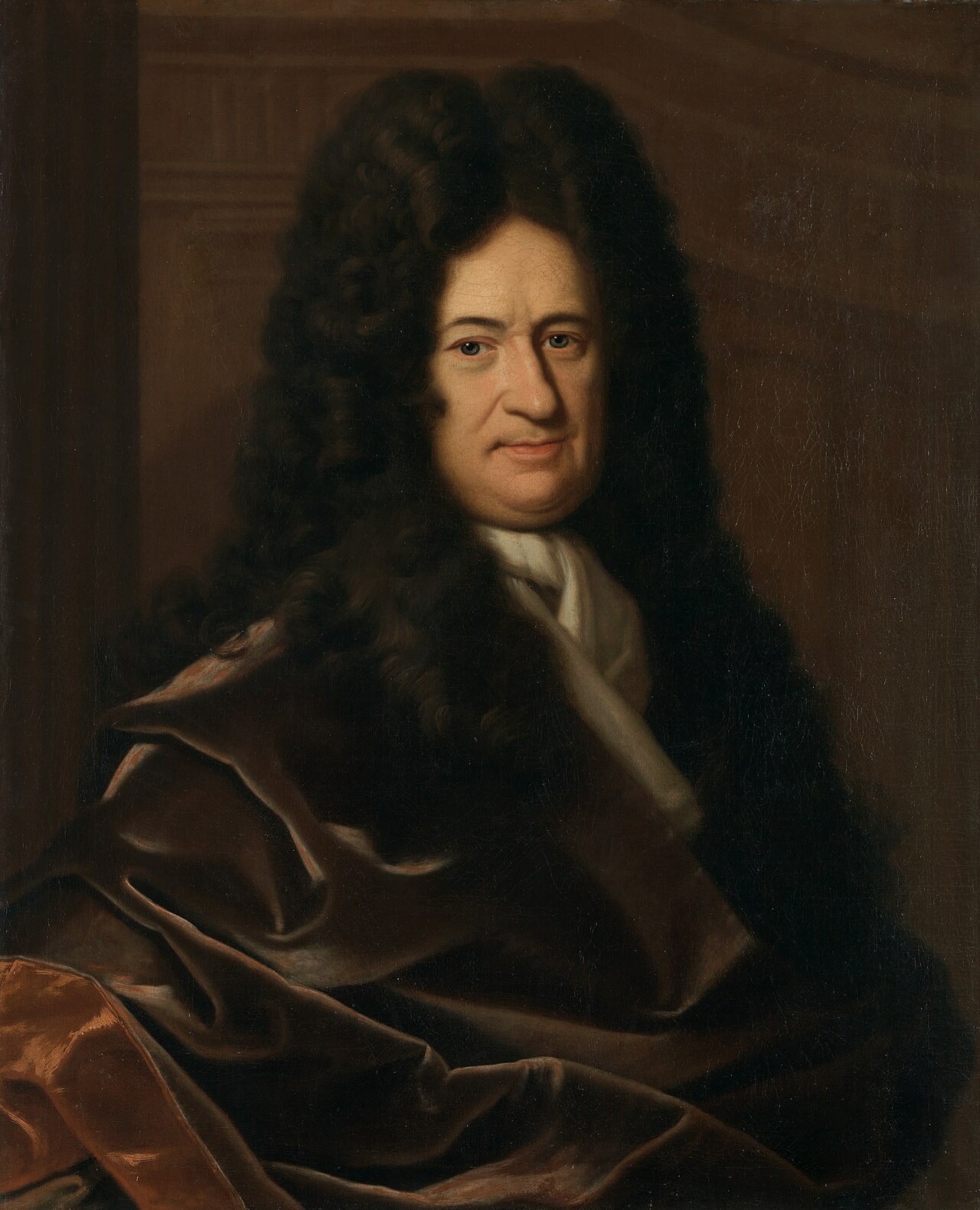
Gottfried Wilhelm Leibniz
Awards & Honours
2
Awards Won
4
Honours
3
Records
Leibniz's achievements are remarkable for their breadth and lasting impact. He co-invented calculus, whose notation is still used universally, and developed the binary number system that became the foundation of all digital computing. His philosophical works, particularly Theodicy and Monadology, remain central to Western metaphysics. He founded the Berlin Academy of Sciences, a model for later national academies. His anticipation of symbolic logic and universal language concepts make him a precursor to modern computer science and artificial intelligence.
Awards
Honours & Distinctions
Fellow of the Royal Society
Elected for his contributions to mathematics and mechanics.
Founder and First President of the Berlin Academy of Sciences
Founded the academy and served as its first president.
Member of the French Academy of Sciences
Elected as a foreign member.
Imperial Court Councillor
Appointed by Emperor Charles VI.
Records & Feats
Co-inventor of calculus
Independently developed calculus around 1675, with notation still in use today.
First to publish a full account of differential calculus
Published Nova Methodus pro Maximis et Minimis in 1684, the first published paper on differential calculus.
Inventor of binary number system
Perfected the binary number system in 1679, later fundamental to digital computing.