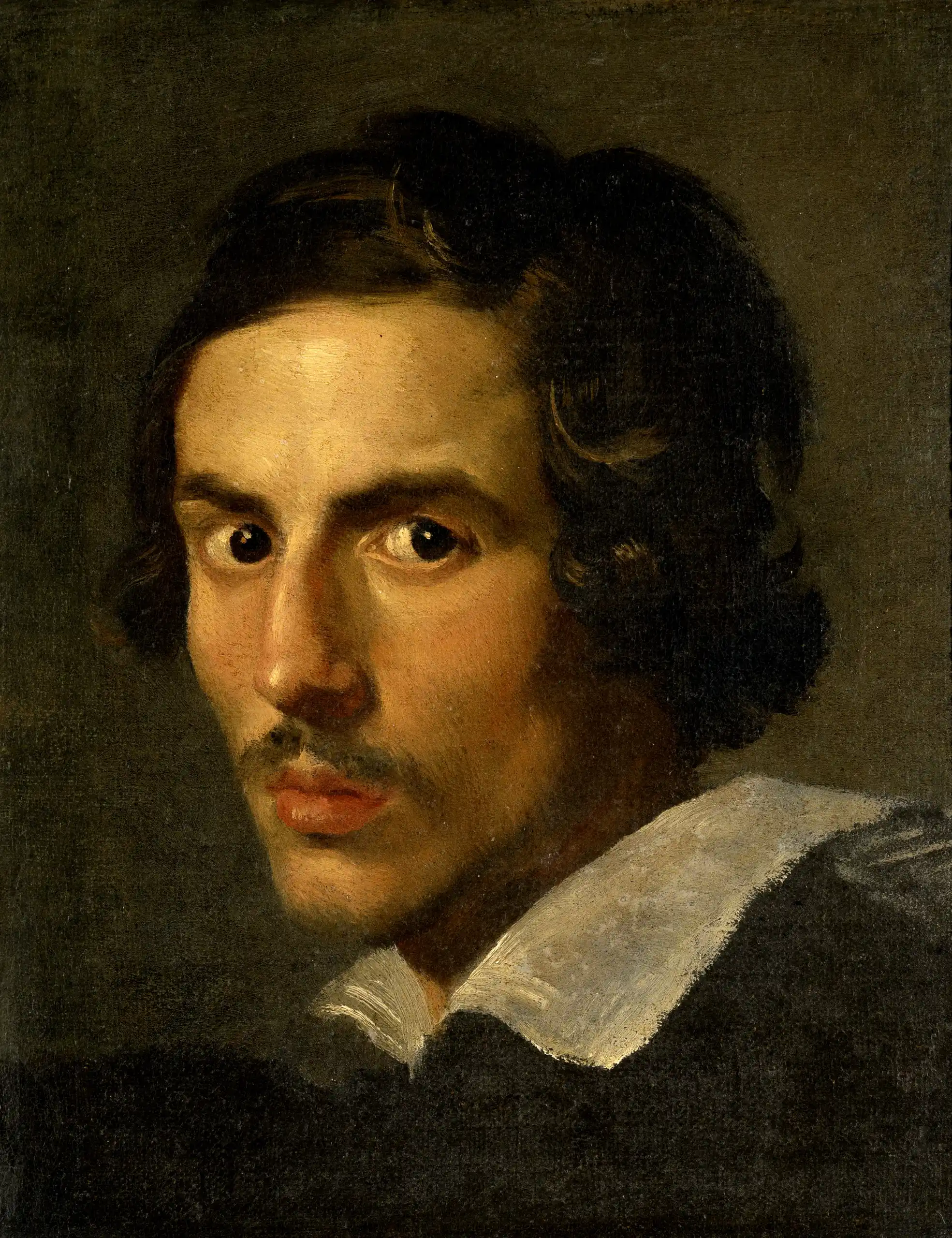
Gian Lorenzo Bernini
Birthday
December 7, 1598
Birth Sign
Sagittarius
Birthplace
Naples, Kingdom of Naples
Age
Died at 81
About
Gian Lorenzo Bernini was an Italian sculptor, architect, and painter who dominated the Roman art world for over six decades. He is widely regarded as the greatest sculptor of the 17th century and the father of the Baroque style. His ability to capture movement, emotion, and narrative in marble was unmatched, earning him comparisons to Michelangelo. Bernini was not just an artist but a city planner, playwright, and designer of stage sets and festival decorations. He transformed the face of Rome with works like the colonnade of St. Peter's Square and the Four Rivers Fountain on Piazza Navona. His sculptures, such as Apollo and Daphne and The Ecstasy of Saint Teresa, remain among the most celebrated in Western art.
Early Life & Background
Bernini was born in Naples, the sixth of thirteen children. His father, Pietro Bernini, was a Mannerist sculptor who recognized his son's prodigious talent early on. At age eight, Gian Lorenzo carved a marble head that drew widespread admiration. By ten or eleven, he had caught the attention of Pope Paul V, who predicted a great future for the boy. The family moved to Rome when Bernini was about eight, and he began formal training under his father, later studying in the studio of the Florentine painter Cigoli. He also studied antique sculptures in the Vatican and was influenced by Michelangelo and the High Renaissance. His first securely attributed work, a marble portrait bust of Bishop Giovanni Battista Santoni, dates from around 1610–1612, when he was just a teenager.
Career Growth
Bernini's breakthrough came under the patronage of Cardinal Scipione Borghese, for whom he created a series of masterpieces between 1618 and 1625. These included The Rape of Proserpina (1621–22), Apollo and Daphne (1622–25), and David (1623–24). In 1623, Maffeo Barberini became Pope Urban VIII, launching Bernini's most productive period. From 1624 to 1633, he designed and oversaw the construction of the bronze baldacchino in St. Peter's Basilica, a monumental canopy with twisted columns that seemed to defy the weight of bronze. His mature masterpiece, The Ecstasy of Saint Teresa (1645–1652) in the Cornaro Chapel, integrated sculpture, architecture, and painting into a unified whole. In the 1650s, he created the Four Rivers Fountain on Piazza Navona, and in the 1660s, he designed the grand colonnade of St. Peter's Square. His last securely attributed work dates to 1679.
Career Timeline
Public Image & Style
Bernini is remembered as the defining artist of the Roman Baroque, a master who could make marble seem alive with emotion and movement. His style emphasized dynamic energy, theatricality, and psychological depth, breaking away from the static ideals of the Renaissance. Media and scholars often call him "the Michelangelo of his age" and credit him with creating the Baroque style. Art lovers and tourists flock to Rome to see his works, which remain central to the city's identity. There is no official fandom name, but his admirers are passionate about Baroque art and his genius for uniting different art forms into a single, breathtaking vision.
Fame & Fandom (iFAMOUS Rankings)
Gian Lorenzo Bernini's admirers are not a fandom in any modern sense, there are no fan clubs, no formal name, no coordinated campaigns. Instead, his following is a diffuse, global congregation of art historians, students, tourists, and the simply awe-struck, drawn together by a shared pilgrimage to the Borghese Gallery or a quiet moment before the Ecstasy of Saint Teresa. Their devotion is institutional and intellectual, expressed through museum visits, scholarly essays, and the occasional bemused sigh over the elephant statue in Piazza della Minerva, which keeps losing its tusk. Yet this is a fanbase that has endured for over three centuries, sustained not by hashtags but by the sheer, breathtaking force of marble made to breathe.
In the iFANN Global Fame Engine's August 2026 evaluation, Gian Lorenzo Bernini has been assessed but currently holds no placement in the published rankings. He is not listed among the Global Top 1,000 or any Top-100 scope list. The absence of a numerical rank, however, does not diminish the scale of his renown; his name remains synonymous with the Baroque, his works are among the most visited in Rome, and his influence is so pervasive that he is often called the Michelangelo of his age. The engine's evaluation, while unranked, acknowledges a legacy that continues to shape how the world perceives art and fame itself.
Interesting Facts and Legends
Bernini was a man of many talents: a playwright and actor who wrote and performed in Carnival satires, a designer of stage sets and theatrical machinery, and a creator of decorative objects such as lamps, tables, mirrors, and coaches. Pope Urban VIII once ordered him to study painting more seriously, hoping he would decorate the Benediction Loggia of St. Peter's, though the commission was never executed. His Portrait Bust of Costanza Bonarelli is considered one of the most intimate Baroque portraits, capturing a private, unidealized moment. The most recent catalogue raisonné of his sculptures (2022) comprises 143 entries. He was able to manipulate marble to make figures appear animated rather than posed, a skill that set him apart.
One of the most retold legends is his near-miraculous ability to turn marble into flesh, exemplified by the Rape of Proserpina, where Pluto's fingers seem to press into living skin. Another iconic story is Pope Urban VIII's "magnificent bet" on the young Bernini, a patronage that made him the dominant artist of seventeenth-century Rome. In a recurring modern quirk, the tip of the tusk of his elephant statue in Rome has been snapped off multiple times, a misfortune that has become an inside joke among art lovers.
Notable Quotes
“Bernini was called 'the Michelangelo of his age' by his son Domenico Bernini.”
“Art historian Bacchi said of the St. Peter's Baldachin: 'Bernini did monumental works that look like ephemeral works.'”
“Sotheby's expert Margaret Schwartz stated: 'Gian Lorenzo Bernini was the most important sculptor after Michelangelo.'”
“One scholar noted: 'What Shakespeare is to drama, Bernini may be to sculpture.'”
Family & Personal Life
Bernini was the sixth of thirteen children born to Angelica Galante and Pietro Bernini. His father was a Florentine Mannerist sculptor who moved the family to Rome when Gian Lorenzo was about eight. Bernini married Caterina Tezio around 1639, and they had several children together. His youngest son, Domenico Bernini (1657–1723), became his biographer, writing The Life of Gian Lorenzo Bernini, a key primary source. Bernini was a deeply religious Catholic throughout his life, and his faith influenced much of his sacred art.
Notable Connections
Bernini was deeply influenced by Michelangelo and the ancient Greek and Roman marbles he studied in the Vatican. His greatest patron was Pope Urban VIII (Maffeo Barberini), who supported him for over two decades. Cardinal Scipione Borghese commissioned his early breakthrough sculptures. The painter Annibale Carracci praised his youthful work. His father, Pietro Bernini, was his first teacher and collaborator. His son Domenico Bernini became his biographer. The sculptor also had a scandalous affair with Costanza Bonarelli, the wife of his assistant.
Relationships & Dating History
Bernini's most famous romantic involvement was with Costanza Bonarelli, the wife of his assistant Matteo Bonarelli, around 1636–1638. He created the intimate Portrait Bust of Costanza Bonarelli during their affair. The relationship ended dramatically when Bernini discovered Costanza was also involved with his brother Luigi. He reportedly had Luigi beaten and ordered a servant to slash Costanza's face. The scandal led to a fine from the pope but a pardon soon after. Around 1639, Bernini married Caterina Tezio, a woman from a respectable Roman family. Their marriage was stable and lasted until his death in 1680. They had several children, including Domenico, who later wrote Bernini's biography.
- RumouredCostanza Bonarelli1636 - 1638Affair with the wife of his assistant; ended in scandal when Bernini discovered her involvement with his brother.
- MarriedCaterina Tezio1639 - 1680CurrentMarried after the Bonarelli scandal; their marriage was stable and they had several children.
Death & Aftermath
Died
November 28, 1680 (aged 81)
Death Place
Rome, Italy
Cause of Death
Reported natural causes associated with advanced age
Gian Lorenzo Bernini, the preeminent Italian sculptor, architect, and painter of the Baroque era, died on November 28, 1680, in Rome, Italy. He was 82 years old at the time of his death, having been born on December 7, 1598, in Naples,,. Historical records confirm he died at his home or shortly after a final illness; contemporary accounts describe him as having suffered from a fever and general weakness in his final days,. There are no disputed accounts regarding the date or place of his death, nor any evidence of foul play. His physical capacity had significantly diminished by 1680 while overseeing works such as the completion of the colonnade at St. Peter's Square under Pope Innocent XI. Tributes were paid by the Catholic Church and the artistic community, recognizing his service to eight different popes,.
The loss was felt deeply by institutions like the Vatican. Bernini was buried in the church of Santa Maria Maggiore in Rome, specifically in the chapel of the Holy Family, a location he had designed himself,. Posthumous recognition includes numerous films, books, and academic studies dedicated to his life, alongside major museum exhibitions such as those at the Kunsthistorisches Museum in Vienna and various exhibitions in Rome celebrating his patronage relationships,,,. In 2026, commemorations marked the 400th anniversary of St. Peter's Basilica, highlighting his pivotal role. His estate was handled by his family, specifically his son Domenico Bernini, who wrote a biography of his father shortly after his death, ensuring his legacy was preserved through written history and the continuation of his workshop's work,.
Net Worth (Estate Value)
As a 17th-century artist, Bernini's wealth came from papal commissions and private patrons. During his lifetime, he was the highest-paid artist in Rome, living comfortably in a large workshop with multiple assistants. Today, his works are priceless cultural treasures. Individual sculptures have sold for tens of millions at auction, but most major works remain in situ in Rome. Revenue from his legacy flows through museum admissions, tourism, and licensing of images. There is no current estate management, as his works are in the public domain.
Awards & Accolades
View 6 records, honours and achievementsKnown For
Apollo and Daphne
1625 · Sculptor
The Ecstasy of Saint Teresa
1652 · Sculptor, architect
St. Peter's Baldachin
1634 · Designer, sculptor
Four Rivers Fountain
1651 · Sculptor, architect
Colonnade of St. Peter's Square
1667 · Architect
Keywords
Sources
Quick Facts
- Profession
- sculptor, architect, painter
- Born
- +1598-12-07
- Birthplace
- Naples
- Died
- +1680-11-28
- Death Place
- Rome
- Gender
- Male
- Spouse
- Caterina Tezio
- Birth Sign
- Sagittarius
Personal Details
- Full Name
- Gian Lorenzo Bernini
- Spouse
- Caterina Tezio
- Children
- Several, including Domenico Bernini
- Education
- Trained under his father Pietro Bernini and in the studio of the painter Cigoli
Frequently Asked Questions
What is Gian Lorenzo Bernini best known for?
How old was Bernini when he died?
Did Bernini have children?
What was Bernini's relationship with Costanza Bonarelli?
How many sculptures did Bernini create?
Similar People
Join the community
fans discussing