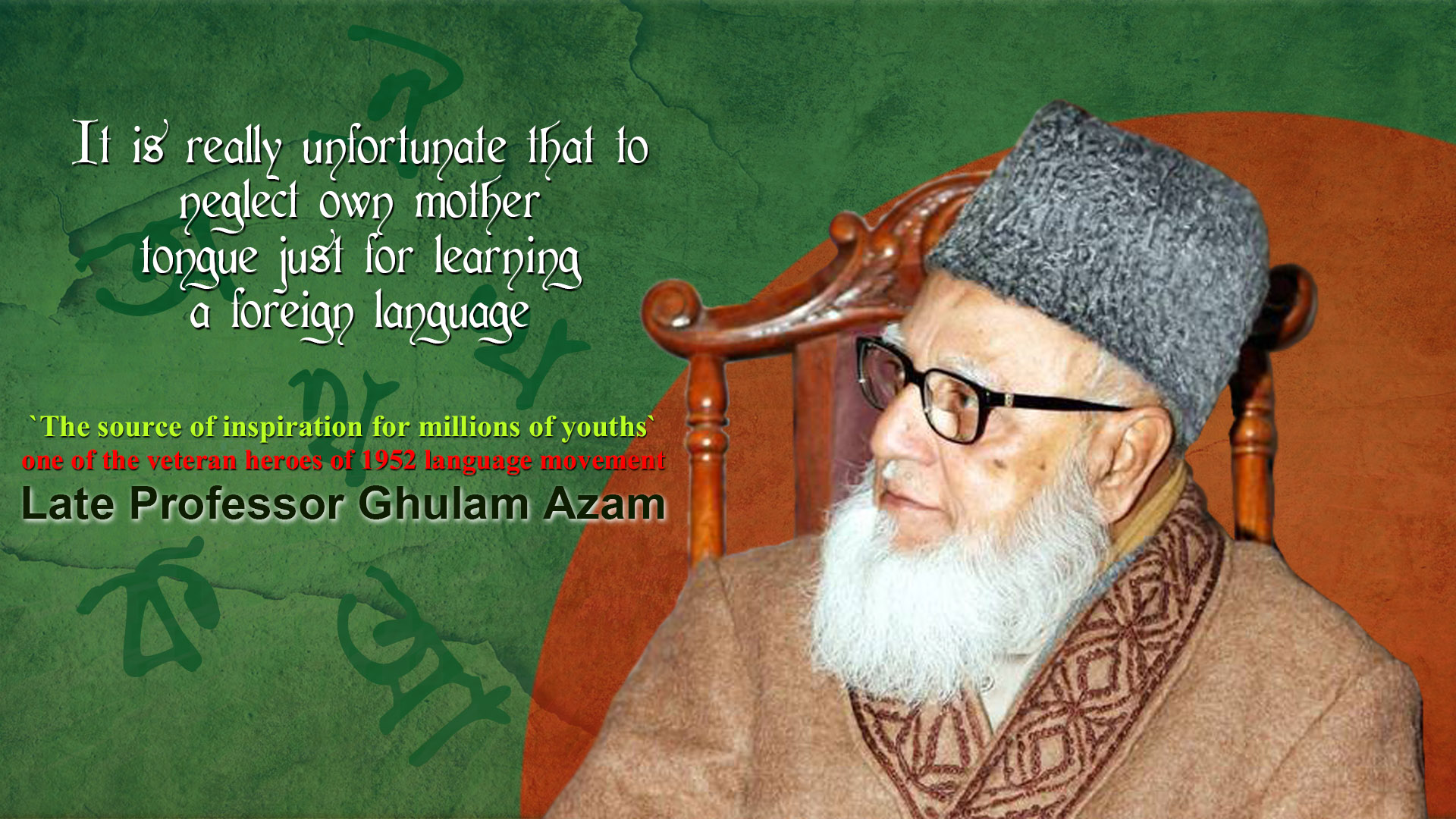
Ghulam Azam
 Bangladesh
Birthday
November 7, 1922
Birth Sign
Scorpio
Birthplace
Dhaka, Bengal Presidency, British India
Age
Died at 91
About
Ghulam Azam was a Bangladeshi politician and writer who led the far-right Bangladesh Jamaat-e-Islami. He was born in Dhaka in 1922 and spent his life at the center of the country's political storms, most controversially during the 1971 Liberation War, when he helped raise paramilitary groups like the Razakar Bahini and Al-Badr. Those forces backed the Pakistan Army and carried out atrocities against civilians, a chapter that defined his legacy. He was arrested in 2012, convicted of war crimes, and sentenced to 90 years in prison. He died in 2014 at age 91.
Though he was a prolific writer, authoring 138 books, and an influential figure for many Bangladeshis, his name remains deeply polarizing. The trial that convicted him drew criticism from international human rights groups over procedural flaws, reflecting the unresolved tensions of the independence struggle. His supporters still view him as a principled leader, while others remember the violence his militias enabled.
Early Life & Background
Ghulam Azam was born into a devout Muslim family in Dhaka, the eldest son of Sheikh Ghulam Kabir and Sayeda Ashrafunnisa. His ancestral home sat in Birgaon Village, Brahmanbaria, and both his father and grandfather were Mawlanas, rigorous in their practice of Islam. That religious upbringing shaped his path early on.
He studied at a local madrasa, then completed high school in Dhaka before enrolling at Dhaka University, where he earned a degree in political science. During his student years, he became active in the cultural organization Tamaddun Mozlish, which later played a role in the language movement. He also served as general secretary of the Dhaka University Central Students Union in the late 1940s.
After graduating, he taught political science at Rangpur Carmichael College, starting in 1951. In 1952, he founded a branch of Tamaddun Majlish in Rangpur, deepening his involvement in Islamist politics. By 1960, he had risen to lead Jamaat-e-Islami in East Pakistan, setting the stage for his later prominence.
Career Growth
Ghulam Azam's political career peaked during the 1971 Bangladesh Liberation War, when he aligned with the Pakistan Army and helped form the Razakar Bahini and Al-Badr paramilitary groups. These forces opposed the Mukti Bahini and were involved in widespread atrocities, including murder, rape, and torture. After the war, he remained in Bangladesh illegally for years, with his citizenship only restored in 1994. He continued to lead Jamaat-e-Islami Bangladesh until 2000.
His later years were dominated by legal battles. On January 11, 2012, he was arrested by the International Crimes Tribunal and charged with conspiracy, planning, incitement, and complicity in genocide. On July 15, 2013, he was found guilty and sentenced to 90 years in prison, with the tribunal noting he deserved death but showing leniency due to his age and health. He died in prison on October 23, 2014.
Career Timeline
Public Image & Style
Ghulam Azam is one of the most polarizing figures in Bangladesh's history. To his supporters, he was a principled Islamic leader and a skilled orator who fought for what he believed was right. To his critics, he was a war criminal who aided the Pakistan Army during the 1971 genocide. His public image is deeply tied to the unresolved tensions of the independence struggle, and even after his death, he remains a symbol of that divide. Media coverage often highlights his role in the war and the subsequent trial, while his writings and political ideas are studied by those interested in Islamist politics in South Asia.
Fame & Fandom
Ghulam Azam's name still commands attention across Bangladesh and among the global Bengali diaspora, though his standing in the broader world is far more muted. As of August 2026, iFANN's Global Fame Engine has evaluated his profile but has not placed him in any published ranking, neither the Global Top 1,000 nor any Top-100 scope list. He remains a figure of intense regional significance rather than worldwide renown.
His fame, such as it is, is inseparable from the political firestorms of his life. Media coverage spikes whenever his legacy resurfaces, a court ruling, an anniversary, a student protest. Yet his global footprint is small; he never crossed into the mainstream of international celebrity or notoriety.
His fanbase, if it can be called that, has no formal name. There is no organized fandom, no fan clubs, no coordinated campaigns. What exists is a political and ideological following, primarily within Islamist circles in Bangladesh. His supporters maintain memorial websites and tribute pages, but these are acts of advocacy, not fandom. His granddaughter's essay, 'Dreams of My Grandfather,' offers a personal counter-narrative, but it circulates within sympathetic communities, not as part of a fan phenomenon.
In the absence of a structured fandom, his legacy lives on through political memory, contested, polarizing, and deeply local.
Interesting Facts and Legends
Ghulam Azam wrote 138 books, mostly in Bengali, on Islam and Bangladesh, including a nine-volume memoir titled Jibone Ja Dekhlam. He also proposed the 'Caretaker Government' formula, which became a foundation for Bangladesh's democratic processes. He was a disciple of Sayed Abul Ala Mawdudi, the founder of Jamaat-e-Islami. Despite his political controversies, he was known as a softly spoken man with a kind heart and a fondness for children. He spent his final years in prison, where he continued to write and reflect.
One of the most enduring legends surrounding Azam is his contested role in the Bengali Language Movement of 1952. His supporters claim he was a leader of that movement, a foundational nationalist cause, but critics dispute this, pointing to his later collaboration with Pakistan during the 1971 war. The story remains a point of pride for his followers and a symbol of his complex legacy.
His death in 2014, while serving a 90-year sentence for war crimes, sparked controversy. Supporters viewed it as martyrdom, while opponents saw it as the close of a dark chapter. The funeral drew significant crowds, though exact numbers are not documented. Even after his death, his image remains a lightning rod, in December 2025, students at Dhaka University threw shoes at a picture of him displayed at Jagannath Hall, an act of symbolic desecration that underscores his lasting polarizing power.
Family & Personal Life
Ghulam Azam married Afifa Azam, and together they had six children, including a son, Brig. Gen. Azmi. His family remained largely out of the public eye, but his grandson has spoken warmly of him as a caring grandfather. He was the eldest son of Sheikh Ghulam Kabir and Sayeda Ashrafunnisa, and his father and grandfather were both Mawlanas, deeply devoted to Islamic practice. The family's ancestral home was in Birgaon Village, Brahmanbaria.
Notable Connections
Ghulam Azam was associated with Sayed Abul Ala Mawdudi, the founder of Jamaat-e-Islami, who mentored him. His father, Sheikh Ghulam Kabir, and mother, Sayeda Ashrafunnisa, shaped his early life. He was married to Afifa Azam, and their son Brig. Gen. Azmi followed a military career. Motiur Rahman Nizami succeeded him as leader of Jamaat-e-Islami Bangladesh.
Relationships & Dating History
Ghulam Azam married Afifa Azam, and the couple had six children together. Their marriage lasted until his death in 2014. Afifa remained a supportive partner throughout his political career and his imprisonment. The family has largely stayed out of the public spotlight, but they have occasionally spoken to defend his legacy.
- MarriedAfifa Azam? - 2014Married until his death; they had six children together.
Death & Aftermath
Died
October 23, 2014 (aged 91)
Death Place
Dhaka, Bangladesh
Cause of Death
Heart attack (myocardial infarction)
Ghulam Azam spent his final months under house arrest in Dhaka, confined to his residence or a private medical facility as the International Crimes Tribunal's conviction loomed over him. On October 23, 2014, the former emir of Bangladesh Jamaat-e-Islami succumbed to a heart attack at the age of 91, ending a life that had already been defined by decades of political storms and legal battles. The reaction to his death fractured the nation along deep ideological lines. Supporters within Jamaat-e-Islami and conservative religious circles mourned him as a martyr and revered scholar, organizing vigils and gatherings to celebrate his legacy. Conversely, opposition groups, students, and survivors of the 1971 genocide viewed the event with relief and condemnation, marking it with protests rather than moments of silence.
The state did not declare a day of mourning, and no official government officials participated in any formal ceremonies. Azam was buried on October 24, 2014, in the graveyard of the Jamaat-e-Islami headquarters in Dhaka. Thousands of party supporters marched through the capital's streets for the procession, transforming the burial into a display of political solidarity rather than a state-sponsored memorial. His son, Abdullahil Amaan Azmi, continued to defend his father's controversial stance on the 1971 war in subsequent years, while the family estate remained managed internally without public litigation. Decades later, his visual legacy remains contested, with caricatures and portraits removed from university campuses following student protests.
Net Worth (Estate Value)
$10 Million
iFANN Editorial Team estimate
iFANN's editorial analysis currently estimates Ghulam Azam's estate at $10 million. This figure stems primarily from his extensive literary output: he authored 138 books, many of which remain in print and continue to sell in Bangladesh and among Bengali-speaking communities worldwide. Royalties from these works form the backbone of the estate's income.
Beyond book sales, his political legacy sustains ongoing interest in his writings, ensuring a steady, if modest, revenue stream. The estate is managed by his family, who have overseen the posthumous publication of some works. While no major financial windfalls have occurred since his death, the enduring relevance of his ideas and the steady sales of his books have kept the estate financially stable.
Awards & Accolades
View 2 records, honours and achievementsKnown For
Leader of Bangladesh Jamaat-e-Islami
1960-2000 · Political Leader
Involvement in 1971 Liberation War
1971 · Controversial Figure
Keywords
Sources
Quick Facts
- Profession
- politician
- Born
- November 7, 1922
- Birthplace
- Dhaka, Bengal Presidency, British India
- Died
- October 23, 2014
- Death Place
- Dhaka, Bangladesh
- Gender
- Male
- Birth Sign
- Scorpio
- Spouse
- Afifa Azam
- Children
- Six, including Brig. Gen. Azmi
- Education
- Dhaka University (Political Science)
- Net Worth
- $10 Million
Personal Details
- Full Name
- Ghulam Azam
- Spouse
- Afifa Azam
- Children
- Six children, including Brig. Gen. Azmi
- Education
- Dhaka University (Political Science)
Frequently Asked Questions
Who was Ghulam Azam?
When was Ghulam Azam born and when did he die?
What was Ghulam Azam known for?
What was the outcome of Ghulam Azam's war crimes trial?
What was Ghulam Azam's role in the Bangladesh Liberation War?
Similar People
Join the community
fans discussing