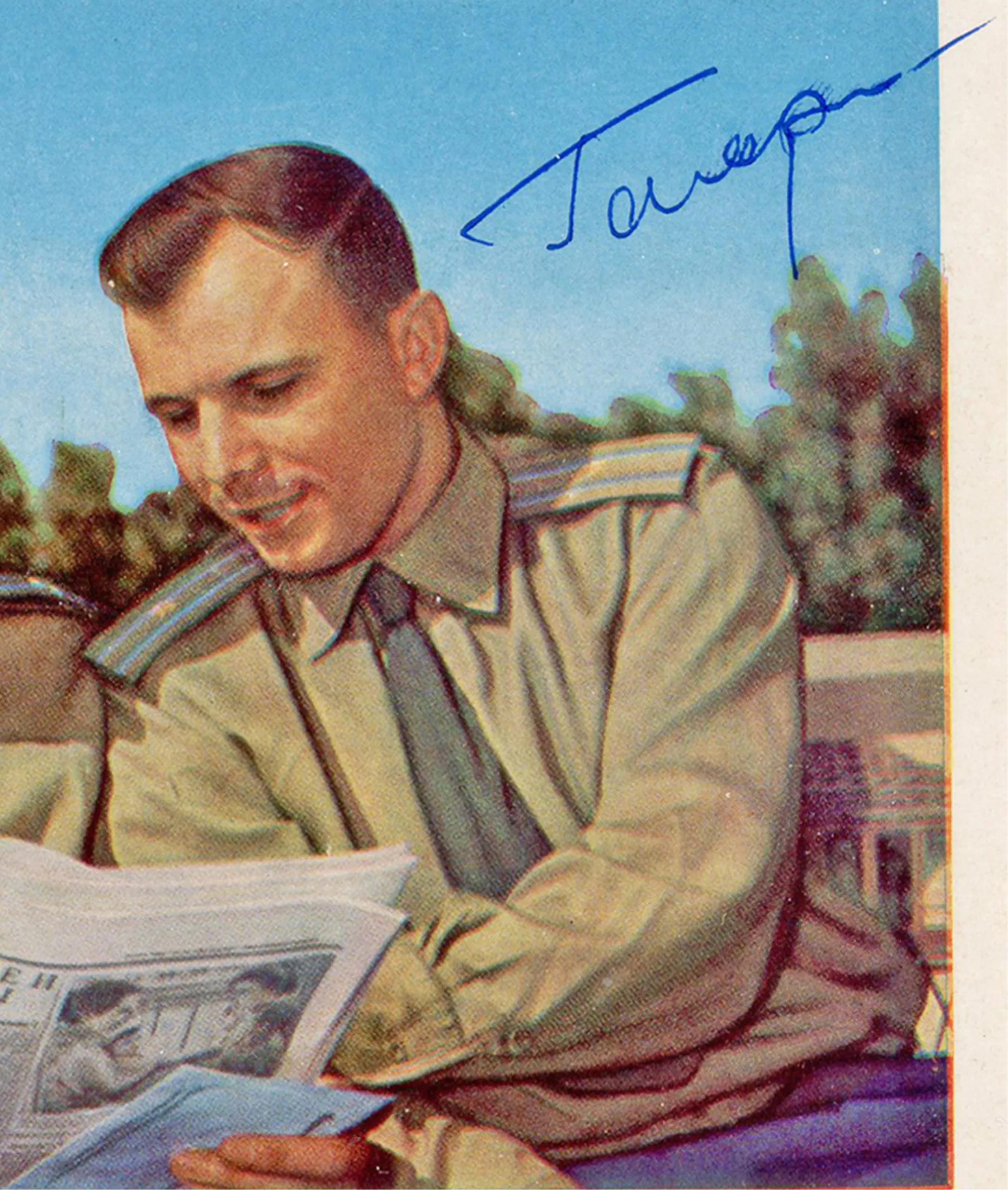
Gherman Titov
 Russia
cosmonaut•military pilot•politician
Also known as: German Titov, German Stepanovich Titov, Gherman Stepanovich Titov
Birthday
September 11, 1935
Birth Sign
Virgo
Birthplace
Verkh-Zhilino, Novosibirsk Oblast, Russian SFSR, Soviet Union
Age
Died at 65
Height
5 ft 8 in (1.73 m)
About
Gherman Stepanovich Titov was a Soviet cosmonaut and military pilot who etched his name in history as the second human to orbit Earth and the youngest person ever to fly in space. Born on September 11, 1935, in Verkh-Zhilino, Siberia (now part of Russia), he remains the first spacefarer born in Asia. At just 25 years old at the time of his launch, Titov shattered the record for the youngest professional astronaut, a title he still holds. His historic mission aboard Vostok 2 on August 6, 1961, lasted over 25 hours and included 17 orbits around the Earth, proving that humans could survive and function during long-duration spaceflight. During this flight, he became the first person to experience space sickness (motion sickness in microgravity), the first to sleep in orbit, and the first to film Earth from space using a professional movie camera.
Titov's legacy is defined by his unique blend of technical brilliance and rebellious spirit. Standing approximately 1.73 meters (5 feet 8 inches) tall, he possessed a physical stature typical for a Soviet cosmonaut of his era but a personality that defied the stoic norms of his peers. He piloted Vostok 2 manually for a portion of the journey, performed complex maneuvers, and even used a periscope to observe Earth. His ability to work while experiencing severe motion sickness—vomiting multiple times—provided crucial data for future missions, establishing him as a pioneer in understanding the physiological limits of long-duration spaceflight. The mission also saw him become the first person to capture color footage of Earth from orbit.
His fame extended beyond the USSR; in 1962, he embarked on a diplomatic tour of the United States, where he met NASA astronaut John Glenn. This visit was heavily monitored by the CIA due to the Cold War tensions, yet it fostered a unique camaraderie between the two nations' space pioneers. Titov received the title of Hero of the Soviet Union twice and the Lenin Prize, one of the highest civilian awards in the USSR. He was also honored with the Order of Lenin, the Order of the Red Banner of Labour, and the Order of Friendship of Peoples. Internationally, he received numerous medals and honors from countries he visited, including the United States, where he was recognized for his role in fostering space diplomacy.
Titov's career history continued with significant roles in the Soviet space program. After his flight, he trained for the ambitious Spiral project, a Soviet attempt to develop a reusable orbital spaceplane capable of carrying weapons or satellites. However, following the tragic death of Yuri Gagarin in a MiG-15UTI crash in March 1968, Soviet officials grounded Titov, fearing the loss of their second most experienced cosmonaut. This decision effectively ended his active flight career, though he remained a key figure in training and administration. He served in the Soviet Air Force, rising to the rank of Colonel-General before retiring in 1992. Post-military, Titov transitioned into politics, joining the Communist Party of the Russian Federation. He was elected to the State Duma in 1995, serving until his death in 2000. It was during his political tenure that he proposed the annual celebration of April 12th as Cosmonautics Day, honoring Gagarin's achievement. He remains the only cosmonaut to have flown in space and then later served in the State Duma.
Early Life & Background
Gherman Titov's childhood was marked by the upheaval of World War II. Born into a peasant family, he grew up in the remote village of Verkh-Zhilino in the Novosibirsk region. His early life was shaped by the hardships of the war, which forced his family to relocate. Despite these challenges, Titov developed a fascination with aviation early on. He attended the Novosibirsk Aviation School before joining the Soviet Air Force. His early career was defined by rigorous training as a test pilot. By the late 1950s, he had already accumulated significant flight hours in various aircraft, which positioned him as a prime candidate for the Soviet space program.
In 1959, he was selected as one of the original group of 20 cosmonauts, joining Yuri Gagarin, Andriyan Nikolayev, Pavel Popovich, and others. This selection was the pivotal moment that launched his path to immortality. The selection process for the Vostok program was incredibly competitive, filtering thousands of pilots down to a small elite group. Titov stood out not only for his technical skill but also for his youthful energy and adaptability. While other candidates were older and more established, Titov brought a fresh perspective to the team. His background in agriculture and rural life gave him a resilience that proved useful during the intense physical conditioning required for spaceflight.
He trained alongside future legends like Valery Bykovsky and Andriyan Nikolayev, forming bonds that would last throughout their careers. The rigorous physical and psychological testing prepared them for the unknown dangers of space, including weightlessness and radiation exposure. Before his historic flight, Titov spent months in isolation training, simulating the conditions of space travel. He practiced emergency procedures, learned to operate the spacecraft's systems manually, and underwent extensive medical examinations. His preparation was thorough, reflecting the high stakes of the Soviet space program. The pressure to succeed was immense, as the success of the mission would determine the future of human space exploration. Titov's dedication and focus during this period laid the foundation for his successful mission aboard Vostok 2. He famously stated, "We are not afraid of the unknown," a sentiment that characterized his pre-flight mindset.
Career Growth
Titov's career success began with his groundbreaking flight on August 6, 1961. While Gagarin had completed a single orbit, Titov's mission demonstrated the viability of multi-orbit flights. He piloted Vostok 2 manually for a portion of the journey, performed complex maneuvers, and even used a periscope to observe Earth. His ability to work while experiencing severe motion sickness—vomiting multiple times—provided crucial data for future missions. The mission also saw him become the first person to capture color footage of Earth from orbit. Following his return, Titov was hailed as a national hero in the Soviet Union and an international celebrity. He received the title of Hero of the Soviet Union and the Lenin Prize.
His fame extended beyond the USSR; in 1962, he embarked on a diplomatic tour of the United States, where he met NASA astronaut John Glenn. This visit was heavily monitored by the CIA due to the Cold War tensions, yet it fostered a unique camaraderie between the two nations' space pioneers. During the tour, Titov visited several cities, including New York and Washington D.C., where he was greeted by crowds and media. His interactions with American astronauts and officials helped to ease some of the tensions of the Space Race. In Vietnam, the naming of Gherman Titov Mountain in Ha Long Bay after his 1962 visit stands as a permanent geographical memorial, complete with a statue and viewing platform.
After his flight, Titov trained for the ambitious Spiral project, a Soviet attempt to develop a reusable orbital spaceplane capable of carrying weapons or satellites. However, following the tragic death of Yuri Gagarin in a MiG-15UTI crash in March 1968, Soviet officials grounded Titov, fearing the loss of their second most experienced cosmonaut. This decision effectively ended his active flight career, though he remained a key figure in training and administration. He served in the Soviet Air Force, rising to the rank of Colonel-General before retiring in 1992. Post-military, Titov transitioned into politics, joining the Communist Party of the Russian Federation. He was elected to the State Duma in 1995, serving until his death in 2000. It was during his political tenure that he proposed the annual celebration of April 12th as Cosmonautics Day, honoring Gagarin's achievement. Throughout his career, he was known for his candid interviews and memoirs, often reflecting a tone that was irreverent compared to the strict Soviet protocols of the time.
Career Timeline
Public Image & Style
Titov's public image was that of a charismatic, rebellious, and highly skilled pilot. Media portrayals often contrasted him with the more reserved Yuri Gagarin, highlighting his youthful exuberance and willingness to break norms. His content, in the form of interviews and memoirs, reflected a candid and sometimes irreverent tone. He was known for his heavy drinking and car accidents, which added to his "bad boy" reputation. Despite these flaws, he was respected for his technical skills and bravery. His appearance on magazine covers and in newsreels showed a man who was comfortable in the spotlight, often smiling and engaging with the public. His legacy as a space pioneer remains strong, with many considering him a symbol of the Soviet Union's technological prowess.
Publications like Time and Rolling Stone have featured him in retrospectives on the Space Race, often highlighting his youth and the "bad boy" narrative. He is frequently listed in "Top 10 Astronauts" compilations, typically in the top five. Notable magazine covers featuring Titov are rare, as Western media coverage of Soviet cosmonauts was limited during the Cold War. However, he appeared on the cover of Pravda and other Soviet publications immediately after his flight. In 2024 and 2026, retrospective articles in The Space Review and Ars Technica revisited his life, focusing on the CIA's monitoring of his 1962 US tour and his enduring legacy. His quotes, such as "Space is not a place for cowards," continue to reflect his adventurous spirit and defiant attitude towards authority.
Fame & Fandom (iFAMOUS Rankings)
Gherman Titov's admirers are a dedicated but informal subset of the spaceflight history community, with no formal fandom name. They identify as space enthusiasts, cosmonaut collectors, or simply as students of the early Space Race, rather than under any single banner. This is not a fanbase built on organized campaigns or rituals; there are no fan-funded projects, no coordinated charity drives, and no recurring inside jokes codified in the community. Instead, his legacy is maintained through institutional memorialization, the Smithsonian's collection includes a spacesuit associated with him, and through the quiet, persistent interest of space history buffs who share photographs and stories on platforms like Facebook groups and specialty forums.
In the iFANN Global Fame Engine's September 2026 evaluation, Gherman Titov has been assessed but does not currently hold a placement in the published rankings, whether the Global Top 1,000 or any Top-100 scope list. This means that while his historical significance is undeniable, his present-day fame metrics, considering media coverage, public interest, and consumption signals worldwide, do not place him among the most famous individuals of our time. The data confirms that while he is universally acknowledged as the second man in space and the youngest, his current digital footprint consists primarily of archival photos, videos, and articles shared by historians rather than active social media engagement.
The most visible tribute to Titov is not fan-driven but diplomatic: Gherman Titov Mountain in Ha Long Bay, Vietnam, named after his 1962 visit, stands as a permanent geographical memorial. This landmark, complete with a statue and viewing platform, has become a pilgrimage site for space history enthusiasts traveling to Vietnam, even as the broader fanbase remains unorganized and unnamed. The anniversary of his birth and death continues to be commemorated in Russia and internationally, ensuring his story remains part of the global conversation on space exploration.
Interesting Facts and Legends
Gherman Titov remains the youngest person ever to fly in space, having been just 25 years old when he launched on Vostok 2. He was also the first to sleep in orbit and the first to film Earth from space, capturing ten minutes of footage with a professional movie camera. His flight, which lasted over 25 hours and completed 17 orbits, proved that humans could endure long-duration spaceflight, despite his experiencing space sickness, the first recorded case. One of the most enduring legends surrounding Titov is his reputation as the "bad boy" of the early cosmonaut corps. Stories of car crashes, public profanity, and a general disregard for the strict behavioral codes imposed on Soviet cosmonauts have been documented in historical accounts, and they continue to be retold with relish by space history enthusiasts.
The 1962 visit to the United States, during which he met astronaut John Glenn, has also taken on legendary status, particularly the detail that the CIA monitored his interactions with the American public. Finally, the naming of Gherman Titov Mountain in Vietnam after his 1962 visit stands as an unusual and lasting tribute, a story that still surprises those who learn of it. Additionally, he was the only cosmonaut to have flown in space and then later served in the State Duma. Titov was the first person to vomit in space, a fact that became a legendary part of his story. He was also the first to use a periscope to view Earth from orbit. His quote, "I felt sick, but I didn't let it show," highlights his determination during the mission. The mountain in Vietnam serves as a testament to the global impact of his visit, standing as a unique geographical honor rarely bestowed upon living persons.
Notable Quotes
“I felt sick, but I didn't let it show.”
“We are not afraid of the unknown.”
“Space is not a place for cowards.”
Family & Personal Life
Personal life details about Gherman Titov are less documented than his public achievements, but his reputation as a "bad boy" of the cosmonaut corps is well-established. Unlike the stoic, disciplined image often projected by other cosmonauts, Titov was known for his boisterous personality, heavy drinking, and disregard for strict behavioral codes. He was involved in several car crashes and was known for public profanity, traits that sometimes put him at odds with Soviet authorities. These incidents contributed to his legend as a man who lived life on his own terms, often clashing with the rigid expectations placed upon state heroes.
Regarding romantic relationships, historical records do not provide a comprehensive list of dates or engagements, as such details were often kept private under Soviet secrecy laws. However, it is known that he was married to Valentina Titova. They had a son named Oleg Titov. There are no widely reported divorces or subsequent marriages in the public record, suggesting a stable, albeit perhaps turbulent, marriage. His personal life was often overshadowed by his public persona, but his relationships were likely influenced by the intense scrutiny and isolation of the cosmonaut lifestyle. The combination of his high-profile status and his rebellious nature created a complex dynamic within his household, where the pressures of fame and the demands of the Soviet state intersected with domestic life.
Notable Connections
Yuri Gagarin, John Glenn, Andriyan Nikolayev, Valery Bykovsky
Relationships & Dating History
Historical records do not provide a comprehensive list of dates or engagements, as such details were often kept private under Soviet secrecy laws. However, it is known that he was married to Valentina Titova. They had a son named Oleg Titov. There are no widely reported divorces or subsequent marriages in the public record, suggesting a stable, albeit perhaps turbulent, marriage. His personal life was often overshadowed by his public persona, but his relationships were likely influenced by the intense scrutiny and isolation of the cosmonaut lifestyle.
Titov's relationship with his colleagues was equally complex. He maintained close bonds with fellow cosmonauts like Yuri Gagarin, Andriyan Nikolayev, and Valery Bykovsky, forming friendships that survived the rigors of training and the pressures of the space race. His meeting with John Glenn in 1962 represented a significant diplomatic bridge, fostering a sense of camaraderie between the two nations' space pioneers despite the Cold War backdrop. These relationships were characterized by mutual respect and a shared understanding of the risks inherent in their profession, even as Titov's rebellious nature sometimes set him apart from the more conventional members of the cosmonaut corps.
- MarriedValentina TitovaUnknown - 2000They had a son named Oleg Titov.
Death & Aftermath
Died
September 20, 2000 (aged 65)
Death Place
Moscow, Russia
Cause of Death
Heart failure
Gherman Stepanovich Titov died in Moscow on September 20, 2000, just nine days after his sixty-fifth birthday. The official cause of death was heart failure, a conclusion reached by medical authorities following his sudden passing at the hospital. While details regarding his final days remain sparse in public records, the event marked the end of a life that had been defined by extreme physical and political risks. Tributes poured in from space agencies and former colleagues who remembered him not just as the second man in orbit but as a complex figure who challenged the rigid norms of the Soviet cosmonaut corps.
State honors were bestowed upon him consistent with his rank as a Hero of the Soviet Union, though specific details about the funeral service attendance are not widely documented in Western sources. His legacy faced no immediate legal challenges or estate disputes, allowing his family to manage his affairs without public controversy. Posthumous recognition has continued through educational initiatives and historical analysis. Articles published in 2017 and subsequent years revisited his contributions to aviation and spaceflight, often highlighting his role as the first person to vomit in space and his diplomatic tour of the United States. Landmarks such as Gherman Titov Mountain in Vietnam's Ha Long Bay stand as enduring testaments to his international influence.
In 2024 and 2026, retrospective pieces continued to examine his impact, discussing his 1962 visit to the United States and his enduring legacy as a military pilot and cosmonaut. The anniversary of his birth and death continues to be commemorated in Russia and internationally. Recent news has focused on re-evaluating his contributions and the myths surrounding his life, with particular attention paid to the CIA's surveillance of his 1962 US visit and the legend of his "bad boy" behavior. His story remains a vital chapter in the history of human space exploration, reminding us of the courage and complexity of the early space pioneers.
Net Worth (Estate Value)
$0
iFANN Editorial Team estimate
Net worth estimates for deceased historical figures like Titov are speculative and rarely calculated in modern terms. As a Soviet citizen, his wealth was not held in personal assets but rather in state-provided housing, pensions, and privileges. Upon his retirement and entry into politics, he likely received a standard pension and salary, but there are no credible reports of significant personal wealth accumulation. Therefore, any net worth figure would be negligible or non-existent in the context of modern celebrity economics. His estate, if any, was likely managed by his family and the state, with no major posthumous revenue streams comparable to modern celebrities.
Unlike modern celebrities who monetize their likeness through merchandise and licensing deals, Titov's compensation came entirely from the state apparatus. He received the Lenin Prize and the title of Hero of the Soviet Union, which conferred certain material benefits, but these were symbolic honors rather than direct financial windfalls. The lack of personal asset accumulation reflects the economic structure of the Soviet Union, where individual wealth was secondary to state service. Consequently, discussions of his financial status focus on the privileges afforded to high-ranking officials rather than a quantifiable net worth.
Awards Won (5)
Titov was awarded the title of Hero of the Soviet Union twice (once for Vostok 2 and once posthumously or later for service). He received the Lenin Prize, one of the highest civilian awards in the USSR. He was also honored with the Order of Lenin, the Order of the Red Banner of Labour, and the Order of Friendship of Peoples. Internationally, he received numerous medals and honors from countries he visited, including the United States, where he was recognized for his role in fostering space diplomacy.
1961 · State Award
Vostok 2 Mission
1961 · Civilian Award
Space Exploration
Known For
Vostok 2
1961 · Cosmonaut
The First Man in Space
1961 · Subject
Keywords
Sources
Quick Facts
- Profession
- aircraft pilot, astronaut, writer
- Born
- September 11, 1935
- Birthplace
- Verkh-Zhilino
- Died
- September 20, 2000
- Death Place
- Moscow
- Gender
- Male
- Birth Sign
- Virgo
Personal Details
- Full Name
- Gherman Stepanovich Titov
- Height
- 5 ft 8 in (1.73 m)
- Spouse
- Valentina Titova
- Children
- Oleg Titov
- Education
- Novosibirsk Aviation School
Frequently Asked Questions
Who was the second person to orbit Earth?
How old was Gherman Titov when he went to space?
What was special about Gherman Titov's mission?
Did Gherman Titov die in space?
Why is Gherman Titov called the "bad boy" of the cosmonauts?
Similar People
Join the community
fans discussing