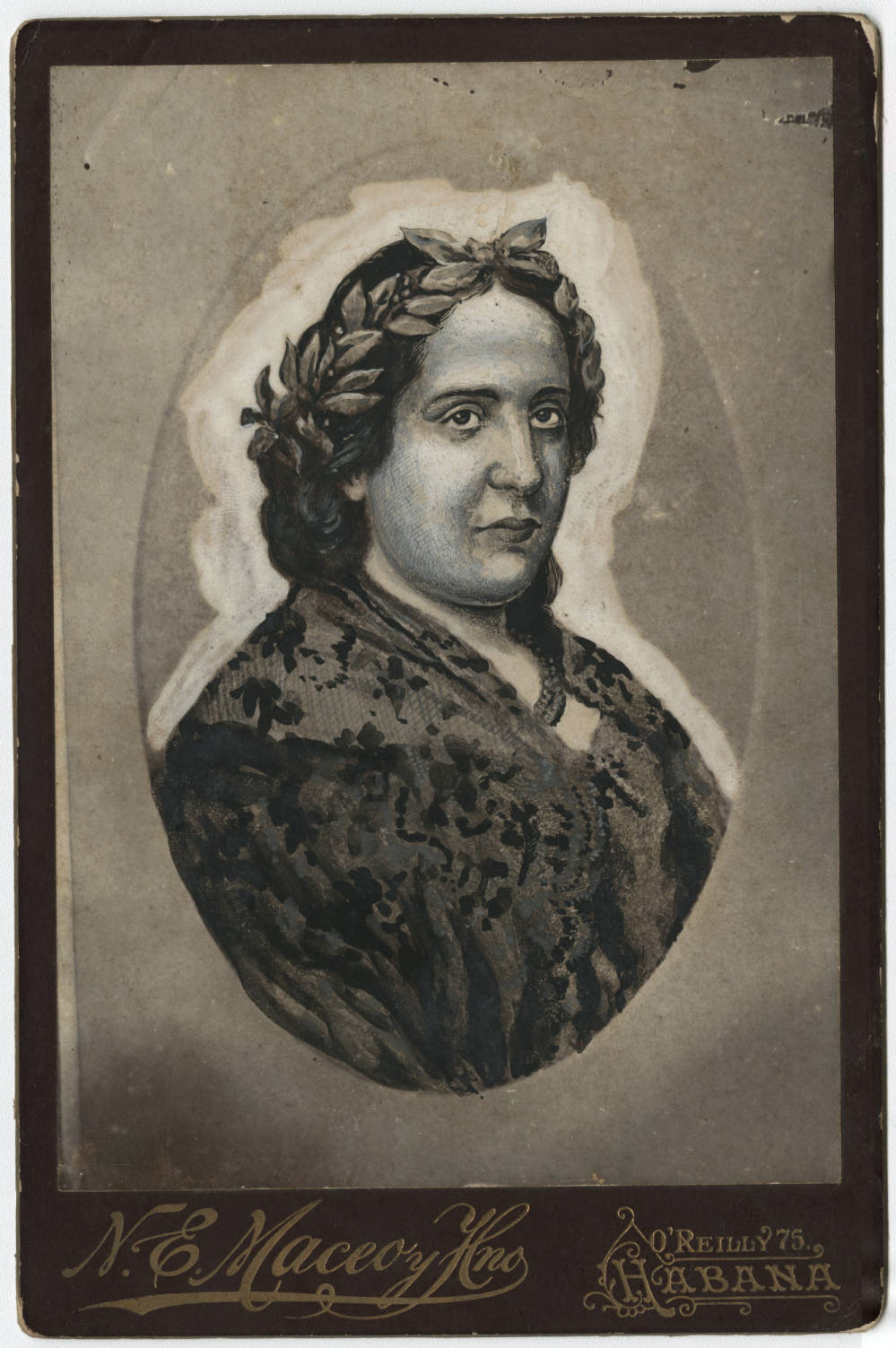
Gertrudis Gómez de Avellaneda
 Mexico
Also known as: La Peregrina
Birthday
March 23, 1814
Birth Sign
Aries
Birthplace
Puerto Príncipe (now Camagüey), Cuba
Age
Died at 58
About
Gertrudis Gómez de Avellaneda was a Cuban-born Spanish writer, poet, and playwright, one of the most significant voices of 19th-century Romantic literature. Her work spans poetry, novels, and more than twenty plays, and she is remembered as a bold critic of slavery and an early advocate for women's intellectual freedom. Today, scholars and readers alike regard her as a pioneer of the Spanish American novel and a key figure in the Romantic movement.
Her most famous work, the anti-slavery novel Sab, published in 1841, tells the story of a slave's unrequited love for his mistress, a daring subject for its time. She also wrote the poetry collection Poesías and the play El donativo de la fe, among many others. Her literary legacy continues to be celebrated, with tributes and honors in Spain and Cuba well into the 21st century.
Early Life & Background
Gertrudis Gómez de Avellaneda was born on March 23, 1814, in Puerto Príncipe, now Camagüey, Cuba. Her father, Manuel Gómez de Avellaneda, was a Spanish naval commander, and her mother, Francisca de Arteaga y Betancourt, came from a prominent Cuban family. She grew up in a comfortable household, though her mother's early death when Gertrudis was just nine years old marked her deeply.
She was educated at home, where she showed an early talent for writing and poetry. By her teens, she was already composing verses, and her family encouraged her literary interests. In 1836, at the age of 22, she moved with her family to Spain, a journey that would shape her career. She settled in Seville, where she began to publish her work under the pseudonym La Peregrina, meaning 'The Pilgrim'. This name reflected her sense of displacement and her longing for Cuba, but it also marked her entrance into the literary circles of Spain.
Career Growth
Avellaneda's breakthrough came in 1841 with the publication of Sab, a novel that boldly condemned slavery and championed the humanity of its enslaved protagonist. The book caused a stir in Spain, where such critiques were rarely voiced so openly. She followed this with a steady stream of work: poetry collections, plays, and essays that solidified her reputation as a leading Romantic writer.
Her plays, including El donativo de la fe (1852) and Baltasar (1858), were performed in Madrid's major theaters, earning her acclaim as one of the few women playwrights of her era. She also wrote the historical novel Guatimozín, último emperador de México (1846), based on the life of the last Aztec emperor. Throughout the 1850s, she moved between Spain and Cuba, and on her return to Cuba in 1859, she was celebrated as a literary star. After her husband's death in 1863, she returned to Spain, where she continued to write until her death in 1873.
Career Timeline
Public Image & Style
Avellaneda cultivated the persona of the passionate, intellectual Romantic writer, often dressing in dark, flowing garments that matched her dramatic poetry. She was known for her fiery speeches and her willingness to debate male intellectuals on equal footing, which earned her both admiration and criticism. In the literary salons of Madrid, she was a magnetic presence, drawing attention with her sharp tongue and her unapologetic ambition.
Media and critics of her time often framed her as a 'masculine' writer because of her bold themes and strong voice, a label she rejected. Modern readers, however, see her as a feminist icon, a woman who used her pen to challenge slavery, patriarchy, and the limits placed on women's creativity. Her fandom today includes scholars, students, and readers who celebrate her as a precursor of feminist literature in the Spanish-speaking world.
Fame & Fandom
Gertrudis Gómez de Avellaneda's admirers have never coalesced into a formal fandom with a name, there are no fan clubs, no coordinated campaigns, no hashtags. Instead, her devotees are scholars, students, and literary enthusiasts in Cuba and Spain who know her simply as "La Avellaneda" or by the affectionate nickname "Tula." Their devotion expresses itself through institutional tributes: the Biblioteca Virtual Miguel de Cervantes maintains a digital portal to her works, and the bicentennial of her birth in 2014 sparked a wave of commemorations across Cuba, including a ballet festival tribute and a theater festival in Camagüey named in her honor. Even today, Cuban cultural figures continue to push for her posthumous recognition by the Royal Spanish Academy, a cause that has become a rallying point for those who see her as a genius unjustly denied.
In the eyes of iFANN's Global Fame Engine, Avellaneda is currently evaluated but unranked, holding no placement in the published Top 1,000 or any scope-specific list. This reflects her status as a figure of enduring literary importance rather than contemporary mass fame, her renown lives on in classrooms and critical studies, not in viral moments. Yet her legend persists, anchored by the story of her 1853 rejection from the Royal Spanish Academy, a slight that has become the defining tale of her legacy, retold by fans and scholars as a symbol of her brilliance and the sexism she overcame.
Interesting Facts and Legends
Avellaneda was known for her sharp wit and independent spirit, often pushing against the social conventions of her time. She never learned to ride a horse, a skill considered essential for women of her class, and instead preferred to walk. She was also an avid reader of French literature, which influenced her Romantic style. Despite her fame, she struggled financially in her later years, relying on a small pension from the Spanish government. One of her most personal works is the poem 'Al partir', which she wrote when she first left Cuba for Spain, capturing the pain of exile. She was also one of the first women to be considered for a seat in the Royal Spanish Academy, though she was ultimately denied entry because of her gender.
A story fans still retell is her dramatic love affair with the poet Gabriel García Tassara, who abandoned her when she became pregnant; their daughter died in infancy, and Avellaneda channeled her grief into some of her most poignant poetry. Another legend centers on her departure from Cuba at age 22, a journey often romanticized as the beginning of her literary destiny. And the tale of her rejection by the Royal Spanish Academy in 1853 remains the cornerstone of her mythology, a brilliant woman denied by the establishment, whose legacy has outlasted her rejectors.
Notable Quotes
“I am a woman, and I have a soul; I am a woman, and I have a heart; I am a woman, and I have a mind.”
“The slave is my brother, and I will not be silent while he suffers.”
“I have always believed that the pen is the most powerful weapon for truth.”
Family & Personal Life
Gertrudis Gómez de Avellaneda was the daughter of Manuel Gómez de Avellaneda, a Spanish naval commander, and Francisca de Arteaga y Betancourt, who died when Gertrudis was nine. Her father remarried, and she had several siblings, though details about them are scarce. She was especially close to her brother, Manuel, who supported her literary ambitions.
In 1846, she married Domingo Verdugo y Massieu, a Spanish military officer and politician. The couple had a son, but the child died in infancy, a loss that devastated Avellaneda. She and Domingo remained together until his death in 1863. After that, she lived with her sister and her family in Madrid, where she continued to write and maintain her literary friendships.
Notable Connections
Gertrudis Gómez de Avellaneda is associated with her father, Manuel Gómez de Avellaneda, a Spanish naval commander, and her husband, Domingo Verdugo y Massieu, a military officer and politician. She was also part of the Romantic literary movement in Spain, alongside writers like José de Espronceda and Carolina Coronado, with whom she corresponded and shared ideas.
Relationships & Dating History
Gertrudis Gómez de Avellaneda had a passionate and often complicated romantic life. In her youth in Spain, she was involved with the poet Ignacio de Cepeda, a relationship that inspired many of her love poems. The affair was intense but ultimately ended, and Cepeda later married another woman.
In 1846, she married Domingo Verdugo y Massieu, a Spanish military officer and politician. Their marriage was reportedly stable and supportive, and they had a son who died in infancy. They remained together until Domingo's death in 1863. After that, Avellaneda did not remarry, though she maintained close friendships with several male intellectuals. As of her death in 1873, she was a widow.
- DatedIgnacio de Cepeda1839 - 1842A passionate but short-lived affair that inspired many of her love poems.
- MarriedDomingo Verdugo y Massieu1846 - 1863Her husband until his death; they had a son who died in infancy.
Death & Aftermath
Died
February 1, 1873 (aged 58)
Death Place
Unknown
Cause of Death
Unknown
Net Worth (Estate Value)
$1 Million
iFANN Editorial Team estimate
iFANN's editorial analysis currently estimates Gertrudis Gómez de Avellaneda's estate at $1 Million. During her lifetime, she earned income from her plays, novels, and poetry, but she never achieved great wealth. After her husband's death in 1863, she relied on a small pension from the Spanish government and the support of her family. Today, her estate's value is based on the continuing royalties from her published works, which remain in print in Spanish-speaking countries. The rights to her books are managed by her literary heirs, and her works are also freely available through digital libraries and public domain collections. While her estate does not generate significant posthumous income, her literary legacy is considered invaluable, with scholars and institutions preserving her manuscripts and promoting her work.
Awards & Accolades
View 3 records, honours and achievementsKnown For
Sab
1841 · Novelist
Poesías
1841 · Poet
El donativo de la fe
1852 · Playwright
Baltasar
1858 · Playwright
Keywords
Sources
Quick Facts
- Profession
- poet, writer, playwright
- Born
- March 23, 1814
- Birthplace
- Puerto Príncipe (now Camagüey), Cuba
- Died
- February 1, 1873
- Death Place
- Madrid, Spain
- Gender
- Female
- Spouse
- Domingo Verdugo y Massieu
- Birth Sign
- Aries
- Notable Work
- Sab (1841)
Personal Details
- Full Name
- Gertrudis Gómez de Avellaneda y Arteaga
- Spouse
- Domingo Verdugo y Massieu
Frequently Asked Questions
Who was Gertrudis Gómez de Avellaneda?
What is Gertrudis Gómez de Avellaneda's net worth in 2026?
When and where was Gertrudis Gómez de Avellaneda born?
What is Gertrudis Gómez de Avellaneda best known for?
When did Gertrudis Gómez de Avellaneda die?
Similar People
Join the community
fans discussing