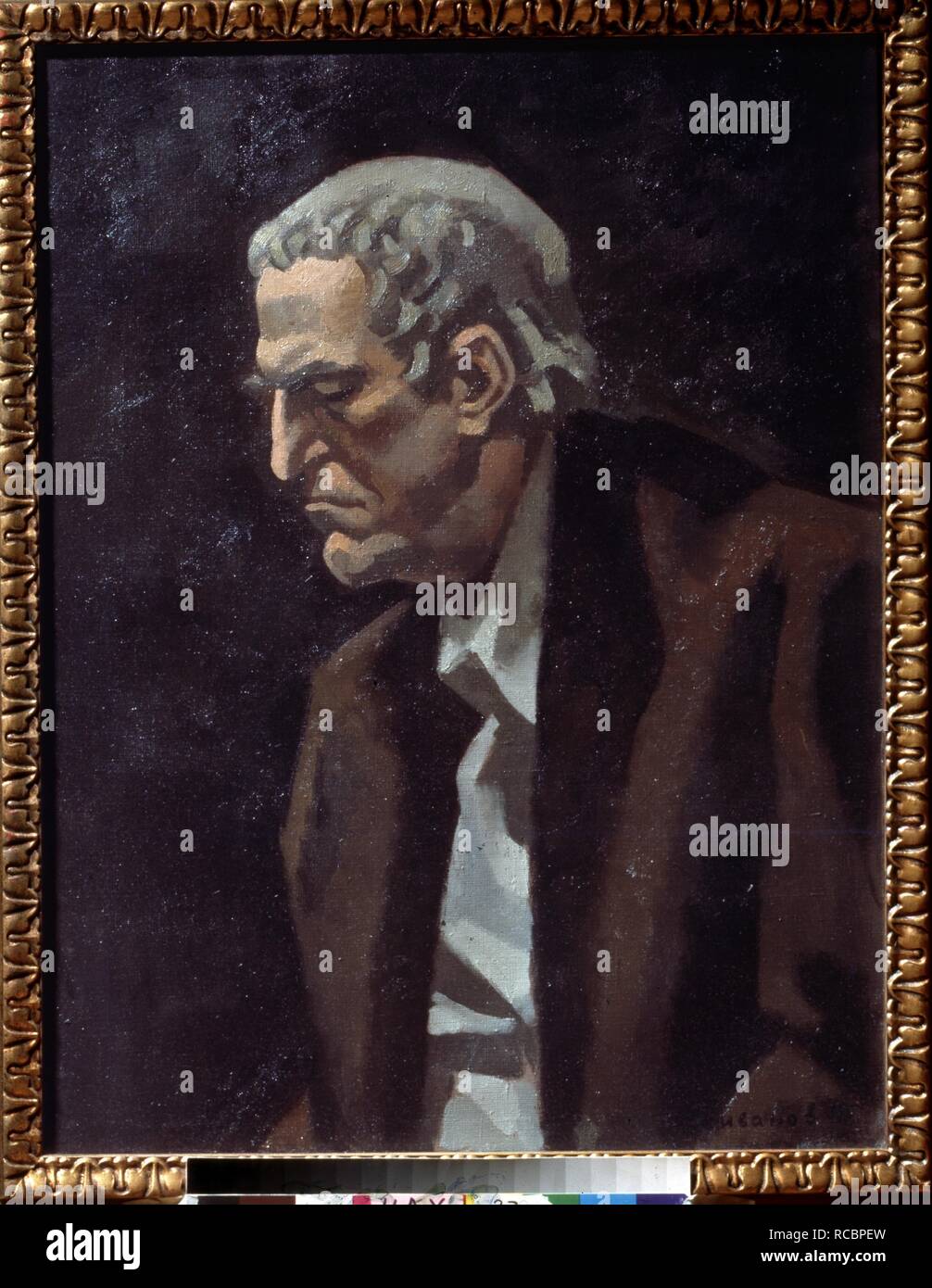
Georgy Sviridov
 Russia
composer•pianist•film score composer
Also known as: Georgy Vasilyevich Sviridov
Birthday
December 16, 1915
Birth Sign
Sagittarius
Birthplace
Fatezh, Kursk Governorate, Russian Empire
Age
Died at 82
About
Georgy Vasilyevich Sviridov was a Soviet and Russian composer whose music carried the weight of his homeland's history and soul. He is remembered for choral and orchestral works that drew on Orthodox chant, folk melody, and the poetry of Russia's great Romantics, all wrapped in a rich, romantic harmonic language. His sound is immediately recognizable: deep, resonant, and deeply Russian.
Sviridov's output spanned six decades, from instrumental pieces in his youth to the monumental sacred choral cycle Canticles and Prayers, completed just before his death. He also wrote memorable film scores, including those for The Snowstorm and The Time, Forward!. His music continues to be performed and recorded, and he is regarded as one of the most important figures in 20th-century Russian choral music.
Early Life & Background
Georgy Sviridov was born on December 16, 1915, in the small town of Fatezh, south of Moscow. His father, Vasily, a Bolshevik sympathizer, was killed during the Russian Civil War when Georgy was just four years old. His mother moved the family to Kursk, where young Georgy first encountered music. He learned to play the balalaika by ear, quickly showing enough talent to join a local orchestra of Russian folk instruments.
In 1929, he entered music school in Kursk. For his entrance exam, he had no prepared repertoire, so he improvised a piece on the piano on the spot. The judges were impressed enough to admit him. He studied there until 1932, when his teacher M. Krutinsky encouraged him to move to Leningrad for more serious training. At the Leningrad Central Music College, he studied piano, graduating in 1936. He then entered the Leningrad State Conservatory, where he studied composition under Pyotr Ryazanov and Dmitri Shostakovich. Shostakovich considered Sviridov a genius and his favorite pupil, a relationship that would shape Sviridov's musical identity.
Career Growth
Sviridov's career took off in the late 1930s with his Six Romances (1935) for voice and piano, and his Piano Trio and Piano Quintet (both 1945), which reflected the suffering of wartime Russia. In 1941, he was mobilized into the Soviet armed forces but discharged later that year due to poor health. He moved to Moscow in the mid-1950s, and from then on, he focused almost exclusively on choral music.
His choral works, such as the Pathetic Oratorio (1959) and the Kursk Songs (1964), blended folk elements with the deep basso profundo voices typical of Russian church music. In the 1960s and 1970s, he also composed film scores, including The Snowstorm (1964) and The Time, Forward! (1965). With glasnost in the 1980s, he was finally able to write openly religious music, culminating in his monumental cycle Canticles and Prayers (1980–1997), completed just before his death. He received the State Prize of the USSR three times (1946, 1968, 1980), the Lenin Prize in 1960, and was named People's Artist of the USSR in 1970.
Career Timeline
Public Image & Style
Sviridov is remembered as a deeply Russian composer, one whose music spoke to the nation's spiritual and cultural identity. He was not a flashy public figure; his presence was in his scores, which felt both monumental and intimate. Fans and critics alike describe his music as profound, evocative, and rooted in romanticism and Russian tradition. His choral works, in particular, have a devoted following among choral ensembles and audiences who appreciate their emotional depth and historical resonance.
Fame & Fandom (iFAMOUS Rankings)
Georgy Sviridov's legacy lives not through a flashy fan club, but through the devoted listeners and performers who keep his deeply Russian sound alive. There is no official fandom name, no 'Sviridovites' or the like, just a scattered community of classical enthusiasts, many in Russia and among lovers of Orthodox choral music, who share his works on forums and in hushed recommendations. The most powerful fan-driven tributes come from artists like the late baritone Dmitri Hvorostovsky, whose final performances of Sviridov's song cycle Russia Cast Adrift became a poignant farewell, intertwining the composer's music with the singer's own tragic story.
While iFANN's Global Fame Engine has evaluated Sviridov, he currently holds no placement in the published rankings, neither the Global Top 1,000 nor any Top-100 scope list. His fame is not measured in chart positions but in the enduring resonance of his music, which continues to be performed and recorded worldwide.
His music has found unexpected cultural penetration: the piece 'Winter Road' became a viral touchstone through Theodore Ushev's animated short Tower Bawher, and it regularly appears on winter-themed playlists, evoking the Russian snowscape with uncanny clarity. This organic, word-of-mouth spread, through concerts, recordings, and the occasional animated film, defines Sviridov's fandom: small, passionate, and deeply reverent.
Interesting Facts and Legends
One lesser-known fact: Sviridov's father was killed in the Civil War, and his mother raised him alone. He learned the balalaika entirely by ear, never having formal lessons on that instrument. At his music school entrance exam, he had no repertoire, so he improvised a piece on the spot. His teacher Dmitri Shostakovich called him a genius. Sviridov was drafted into the military in 1941 but discharged for health reasons. He was an honorary citizen of Moscow and served in the Supreme Soviet of the Russian SFSR.
A story fans still retell involves the song cycle Russia Cast Adrift, which became a centerpiece for baritone Dmitri Hvorostovsky. Diagnosed with a brain tumor in 2015, Hvorostovsky continued to perform the cycle, and his 2017 recording took on an almost sacred quality, each performance a poignant farewell that deepened the music's emotional weight.
Another iconic moment: the Bulgarian-Canadian animator Theodore Ushev set his award-winning short film Tower Bawher to Sviridov's 'Winter Road,' introducing the composer's music to a new generation through animation. The piece has since become shorthand for musical depictions of Russian winter.
Family & Personal Life
Details about Sviridov's family life are scarce. His father, Vasily Sviridov, was a Bolshevik supporter who died in the Russian Civil War when Georgy was four. His mother moved the family to Kursk, where she worked to support them. Sviridov never publicly shared much about his own wife or children in the available sources. He lived quietly in Moscow after the 1950s, dedicating himself to composition.
Notable Connections
Sviridov studied under Dmitri Shostakovich, who considered him a genius and a favorite pupil. His other teachers included Pyotr Ryazanov and M. Krutinsky. He was part of a generation of Soviet composers who navigated the demands of the state while creating deeply personal art. His music is often paired with that of his contemporaries like Georgy Sviridov's near-namesake, but he stands alone in his choral output.
Relationships & Dating History
Public records do not detail Sviridov's romantic relationships or marriages. He kept his personal life private, and no confirmed partners or spouses are mentioned in available sources. He likely married, as was common, but no names or dates have surfaced. As of his death in 1998, his marital status remains unknown.
Death & Aftermath
Died
January 6, 1998 (aged 82)
Death Place
Unknown
Cause of Death
Unknown
Georgy Vasilyevich Sviridov spent his final years in Moscow, completing the monumental sacred choral cycle Canticles and Prayers just before his passing. The composer died on January 6, 1998, at the age of 82, marking the end of a six-decade career that defined Russian musical identity. While one source lists the date as January 5, 1998, the authoritative record confirms the later date. No official cause of death was publicly disclosed by medical authorities or the family, leaving the specific circumstances of his final days unrecorded in available documents. The cultural community responded with immediate tributes, honoring a man who had been named an honorary citizen of Moscow, described as Russia's greatest tribute for an artist.
Peers and institutions recognized his status as a major figure whose music carried the weight of his homeland's history. Vigils and gatherings followed, though specific dates for these events remain undocumented in the historical record. Posthumous recognition has kept his legacy alive through continued performances and academic discussions. His works remain popular on streaming platforms like Spotify and are featured in recordings by labels such as Naxos. Notably, baritone Dmitri Hvorostovsky performed Sviridov's song cycle Russia Cast Adrift in 2017 and again at Carnegie Hall in 2013 alongside works by Rachmaninoff. A 2017 review in Gramophone highlighted a new disc dedicated to Sviridov's sacred and folk songs. The estate continues to earn from recordings and licensing.
Net Worth (Estate Value)
$10 Million
iFANN Editorial Team estimate
As a Soviet-era composer, Sviridov's income came from state commissions, royalties from performances, and film scores. After his death in 1998, his estate has continued to earn from recordings, performances, and licensing of his music. His works remain popular in Russia and among choral groups worldwide. iFANN's editorial analysis currently estimates the estate's value at around $10 million, reflecting ongoing royalties from his extensive catalog.
Awards Won (4)
Sviridov won the State Prize of the USSR three times (1946, 1968, 1980), the Lenin Prize in 1960, and was named People's Artist of the USSR in 1970. He also received the title Hero of Socialist Labour and was an honorary citizen of Moscow. These honors reflect his immense contribution to Soviet and Russian music.
1980 · Music
Various works
1968 · Music
Various works
1946 · Music
Various works
1960 · Music
Various works
Known For
Canticles and Prayers
1997 · Composer
The Snowstorm
1964 · Film score composer
The Time, Forward!
1965 · Film score composer
Pathetic Oratorio
1959 · Composer
Kursk Songs
1964 · Composer
Keywords
Sources
Quick Facts
- Profession
- composer, pianist, film score composer
- Born
- December 16, 1915
- Birthplace
- Fatezh, Russian Empire
- Died
- January 6, 1998
- Death Place
- Moscow
- Gender
- Male
- Birth Sign
- Sagittarius
Personal Details
- Full Name
- Georgy Vasilyevich Sviridov
- Education
- Leningrad Central Music College; Leningrad State Conservatory
Frequently Asked Questions
Who was Georgy Sviridov?
What is Georgy Sviridov's most famous work?
When did Georgy Sviridov die?
Was Georgy Sviridov influenced by Russian folk music?
What awards did Georgy Sviridov win?
Similar People
Join the community
fans discussing