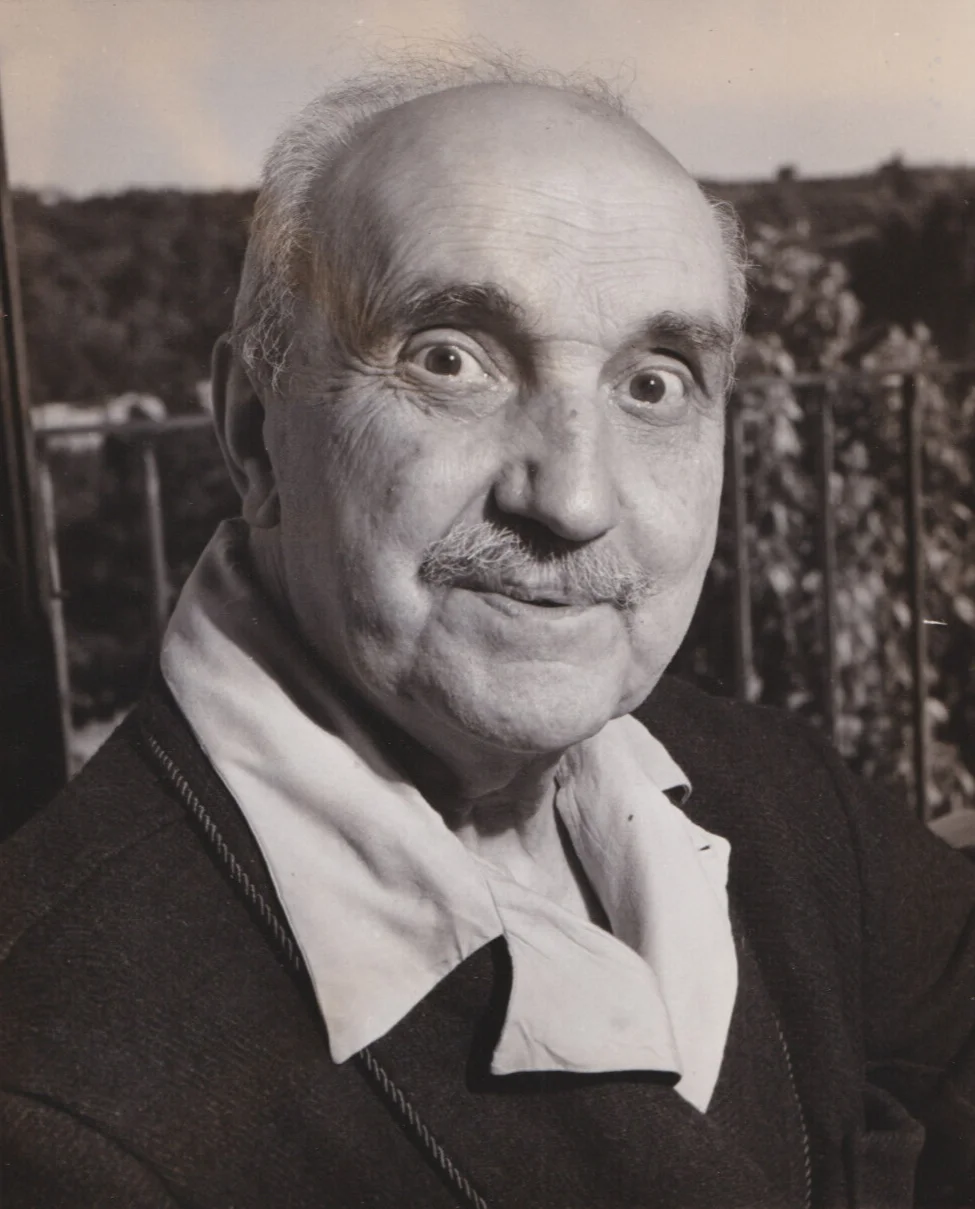
George Santayana
 Spain
SpainAlso known as: Jorge Santayana, Jorge Augustín Nicolás Ruiz de Santayana
Birthday
December 16, 1863
Birth Sign
Sagittarius
Birthplace
Madrid, Spain
Age
Died at 88
About
George Santayana was a Spanish-born American philosopher, essayist, poet, and novelist whose wit and aphorisms have outlived much of his formal philosophy. He spent forty years in the United States, teaching at Harvard and writing in English with a clarity that made complex ideas accessible. His most quoted line, "Those who cannot remember the past are condemned to repeat it," has become a staple of political and historical discourse.
Santayana's output was vast, spanning aesthetics, metaphysics, and cultural criticism. Works like The Life of Reason and The Sense of Beauty remain touchstones, while his only novel, The Last Puritan, became a bestseller. He is remembered as a skeptic who valued imagination, a materialist who respected religion, and a critic who never lost his affection for the traditions of his Spanish childhood.
Early Life & Background
Santayana was born into a complicated family in Madrid. His mother, Josefina Borrás, had been married before to a Boston merchant named George Sturgis, and she had five children from that marriage. When Santayana was still young, his mother moved to Boston with her Sturgis children, leaving George behind in Ávila with his father, Agustín Ruiz de Santayana. He stayed there for eight years, a period he later described as solitary and unhappy, sustained by a dream-life of fiction and architecture.
In 1872, at age eight, he made the twelve-day sea voyage to Boston to join his mother. He attended the Boston Latin School for eight years, where he studied Latin, Greek, mathematics, and rhetoric. He then entered Harvard College, graduating summa cum laude in 1886. After two years of philosophy at the University of Berlin, he returned to Harvard for his doctorate under William James. During his student years he co-founded the Harvard Monthly and served as an editor and cartoonist for the Harvard Lampoon.
Career Growth
Santayana joined the Harvard faculty in 1889, forming a celebrated trio with William James and Josiah Royce. His first major book, The Sense of Beauty (1896), established him as a serious aesthetician. The four-volume Life of Reason (1905–06) followed, tracing the development of human reason through myth, religion, art, and science.
A personal turning point came in 1893, after the death of a student, his father's death, and his sister's marriage. He resolved to live more deliberately and plan for early retirement. In 1912, at age 48, he left Harvard permanently, funded by an inheritance, and moved to Europe. After years in Paris and Oxford, he settled in Rome in 1925. There he wrote Scepticism and Animal Faith (1923), the four-volume Realms of Being (1928–1940), and his only novel, The Last Puritan (1935), which became a bestseller and a Book of the Month Club selection. He continued writing until his death in 1952, completing Dominations and Powers (1951), a study of society and politics.
Career Timeline
Public Image & Style
Santayana was often called "the Mona Lisa of philosophy" for his enigmatic smile and detached demeanor. He presented himself as a gentleman scholar, witty and urbane, with a fondness for classical art and architecture. His public image was that of a skeptic who nonetheless appreciated beauty and tradition. He was not a public intellectual in the modern sense, but his aphorisms gave him a lasting cultural presence. He appeared on the cover of Time magazine in 1936, the year his novel became a bestseller.
Fame & Fandom
George Santayana never courted a crowd, yet his voice echoes louder than most modern celebrities. While pop stars rely on stadiums and social media algorithms, the philosopher built a legacy of quiet endurance through text alone. He resigned from Harvard in 1912 to escape the cult of personality, retreating to Oxford and finally Rome where he lived as a recluse until his death. His audience consists not of screaming fans or organized fan clubs, but of scholars, students, and readers who return to his aphorisms like ancient texts. There is no official fandom name for Santayana; the concept of a fanbase organizing around his persona simply does not exist. He avoided public appearances, never drove a car, and rarely flew, preferring the solitude of long walks in Italian streets over the roar of applause. The only legends surrounding him are intellectual ones, centered on the enduring power of his words rather than physical riots or viral moments. His famous line about remembering the past remains a staple of political discourse, cited in debates ranging from climate change to international wars, proving that ideas can outlive their author by decades. Unlike musicians whose fame fluctuates with chart positions, Santayana's cultural weight remains steady, anchored by the timeless nature of his critique on reason and beauty. He left behind no merchandise lines, no birthday billboards, and no fan-funded projects. His influence is measured in academic syllabi and the occasional citation in a speech, not in streaming numbers or ticket sales. This absence of a formal community highlights the unique path of his fame: a solitary figure whose work speaks for itself across generations without needing a chorus of admirers to keep it alive. Despite this massive intellectual following, iFANN's Global Fame Engine has evaluated this person, but they do not currently hold a placement in the published rankings (Global Top 1,000 or a Top-100 scope list).
Interesting Facts and Legends
George Santayana never learned to drive and rarely traveled by airplane, preferring the rhythm of his feet to the noise of engines. An avid walker, he took long daily strolls through the streets of Rome, maintaining a routine that grounded his philosophical musings in physical movement. He kept his Spanish citizenship all his life, even though he wrote almost entirely in English with a clarity that made complex ideas accessible. Known for his elegant suits and impeccable manners, he stood in stark contrast to the stereotypical absent-minded professor. One of his most famous sayings summarized his worldview: "Everything ideal has a natural basis and everything natural an ideal development." A recurring narrative describes him as an "accidental resident" of Spain, highlighting his dual heritage as a Spanish-born American who chose to live out his life in Europe. Stories often tell how he returned to Madrid briefly in his youth but ultimately rejected both the United States' materialism and European aristocracy's pretensions. Another verified literary moment involves the origin of his most ubiquitous quote, "Those who cannot remember the past are condemned to repeat it," which appeared in his 1905 book *The Life of Reason*. This line has become one of the most cited phrases in Western literature, frequently referenced in political discourse and historical analysis.
Notable Quotes
“Those who cannot remember the past are condemned to repeat it.”
“Only the dead have seen the end of war.”
“Beauty is pleasure objectified.”
“Cultivate imagination, love it, give it endless forms, but do not let it deceive you.”
Family & Personal Life
Santayana's parents were Josefina Borrás and Agustín Ruiz de Santayana. His mother had been married previously to George Sturgis, with whom she had five children; two died in infancy. The three surviving Sturgis children were Santayana's half-siblings. His parents separated when he was young, with his mother moving to Boston and his father remaining in Spain. Santayana never married and had no children. He maintained correspondence with his family but lived a solitary life in Europe.
Notable Connections
Santayana taught a generation of influential thinkers at Harvard, including T. S. Eliot, Robert Frost, Gertrude Stein, Walter Lippmann, and W. E. B. Du Bois. His philosophy also shaped Wallace Stevens, Conrad Aiken, and Supreme Court Justice Felix Frankfurter. He studied under William James and Josiah Royce, both of whom became his colleagues.
Relationships & Dating History
Death & Aftermath
Died
September 26, 1952 (aged 88)
Death Place
Rome, Lazio, Italy
Cause of Death
Natural causes associated with old age
The quiet end came in a Rome hotel room near the Spanish Steps, where George Santayana passed away in his sleep on September 26, 1952. The ninety-year-old philosopher died of natural causes associated with old age. Tributes flowed from academic institutions and literary peers who recognized the loss of a major figure in twentieth-century thought, with Harvard University issuing statements honoring his contributions to American philosophy while European intellectual circles acknowledged his enduring legacy. A private funeral followed shortly after, featuring close friends like poet Wallace Stevens and writer John Dewey who gathered for an intimate service consistent with Santayana's lifelong preference for solitude.
His body was cremated and interred in the Protestant Cemetery in Rome, fulfilling his request to rest alongside other expatriates and artists. Posthumous management of his estate ensured the publication of remaining letters and manuscripts, most notably The Letters of George Santayana released in 1955 which offered deep insight into his correspondence with figures such as T.S. Eliot. Various scholarships and foundations established in his name now support studies in philosophy and literature, preserving his intellectual legacy through academic archives at Harvard and elsewhere.
Net Worth (Estate Value)
$300 Thousand
iFANN Editorial Team estimate
As a philosopher and professor who died in 1952, Santayana's net worth was not tracked by contemporary financial reporters. At the time of his death, his estate consisted mainly of royalties from his books, particularly *The Last Puritan*, which had achieved bestseller status. Per iFANN's editorial analysis, the estate's value is estimated at $300 Thousand in 2026. This figure is derived from ongoing royalties and the sale of his papers. The estate is managed by academic institutions that hold his literary rights.
Awards Won (2)
Santayana received the Benson Medal from the Royal Society of Literature and the Butler Gold Medal from Columbia University, honors that recognized his contributions to philosophy and letters.
1930 · Literature
Lifetime achievement
1945 · Philosophy
Lifetime achievement
Known For
The Life of Reason
1905-1906 · Author
The Sense of Beauty
1896 · Author
The Last Puritan
1935 · Author
Scepticism and Animal Faith
1923 · Author
Keywords
Sources
Quick Facts
- Profession
- philosopher, writer, poet
- Born
- December 16, 1863
- Birthplace
- Madrid, Spain
- Died
- September 26, 1952
- Death Place
- Rome, Italy
- Gender
- Male
- Birth Sign
- Sagittarius
- Nationality
- Spanish
- Education
- Harvard College, University of Berlin
Personal Details
- Full Name
- Jorge Agustín Nicolás Ruiz de Santayana y Borrás
- Education
- Harvard College (BA, 1886), University of Berlin, Harvard University (PhD)
Frequently Asked Questions
What is George Santayana most famous for?
Did George Santayana ever marry?
Why did George Santayana leave Harvard?
Was George Santayana an American or Spanish philosopher?
How old was George Santayana when he died?
Similar People
Join the community
fans discussing