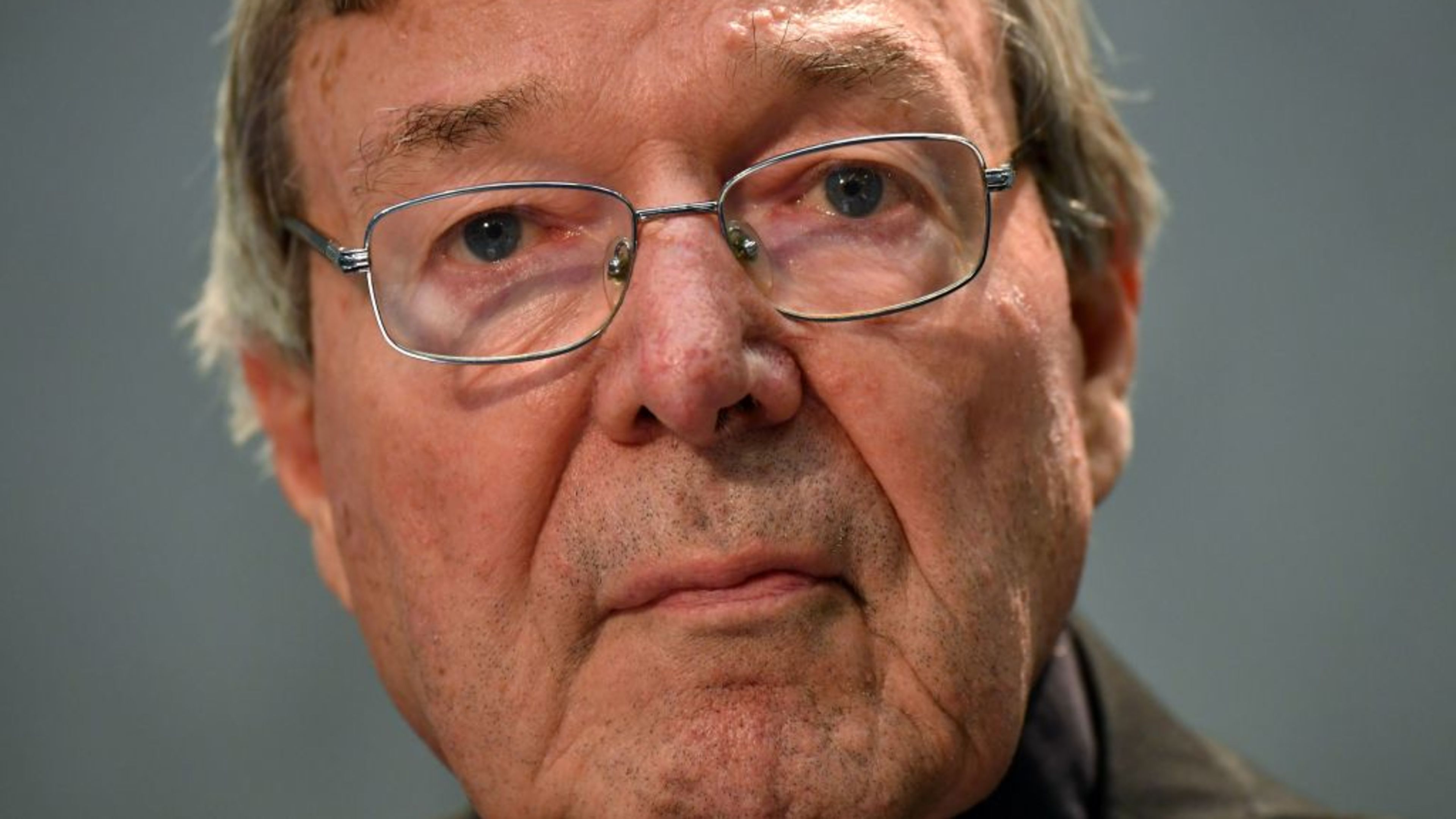
George Pell
 Australia
Also known as: George Cardinal Pell
Birthday
June 8, 1941
Birth Sign
Gemini
Birthplace
Ballarat, Victoria, Australia
Age
Died at 81
About
George Pell was an Australian cardinal of the Catholic Church, known for his conservative theology and his role in the Vatican's financial reforms. Born in 1941, he was ordained a priest in 1966 and rose through the hierarchy to become Archbishop of Melbourne in 1996 and Archbishop of Sydney in 2001. In 2003, Pope John Paul II made him a cardinal. From 2014 to 2019, he served as the first Prefect of the Secretariat for the Economy, tasked with overhauling Vatican finances.
Pell's career was overshadowed by child sexual abuse allegations. In 2018, he was convicted of historical offenses, but Australia's High Court quashed the conviction in 2020. He spent 404 days in prison. After his death in 2023, a government compensation scheme found that he had abused two boys in the 1970s, a finding his supporters disputed. Pell remains a deeply polarizing figure, admired by some for his intellect and leadership, and criticized by others for his handling of abuse cases.
Early Life & Background
George Pell was born on June 8, 1941, in Ballarat, Victoria, to George Arthur Pell, a non-practising Anglican and former heavyweight boxing champion, and Margaret Lillian Pell, a devout Catholic of Irish descent. As a child, Pell endured 24 operations to remove an abscess in his throat, spending much of his early years in and out of hospitals.
A talented Australian rules footballer, Pell signed a professional contract with the Richmond Football Club in 1959, but soon felt called to the priesthood. He entered the seminary in 1960, studying at Corpus Christi College in Werribee before moving to Rome's Propaganda Fide College. He was ordained a priest at St. Peter's Basilica on December 16, 1966. Pell earned a Licentiate of Sacred Theology in 1967, a Doctor of Philosophy in Church History from Oxford in 1971, and a Master of Education from Monash in 1982. During his Oxford years, he served as chaplain to Catholic students at Eton College.
Career Growth
After returning to Australia in 1971, Pell served in parish churches and held key educational roles, including Episcopal Vicar for Education in Ballarat and Rector of Corpus Christi College. In 1987, he was appointed Auxiliary Bishop of Melbourne, and in 1996, Archbishop of Melbourne. He moved to Sydney in 2001. Pope John Paul II made him a cardinal in 2003.
Pell participated in the conclaves that elected Popes Benedict XVI and Francis. In 2013, Pope Francis appointed him to the Council of Cardinal Advisers, and the following year made him the first Prefect of the Secretariat for the Economy. Pell's tenure was marked by efforts to bring transparency to Vatican finances. His career was interrupted in 2017 when he faced charges of historical child sexual abuse. Convicted in 2018, he spent 404 days in prison before the High Court of Australia acquitted him in 2020. He returned to Rome, where he died in 2023.
Career Timeline
Public Image & Style
George Pell cut an imposing figure, both physically and intellectually. Known for his conservative views on sexuality and church doctrine, he was a frequent commentator in the media. Supporters saw him as a loyal and courageous churchman; critics viewed him as out of touch and complicit in covering up abuse. His public image was further complicated by his conviction and acquittal, which polarized opinion. After his death, Archbishop Anthony Fisher called him "Australia's greatest-ever churchman," a sentiment not shared by his detractors.
Fame & Fandom
The figure of George Pell has never attracted a formal fandom in the manner of pop stars or athletes, as his legacy rests on institutional power and polarizing legal history rather than celebrity worship. His support base consists primarily of conservative Catholics and traditionalist movements who view him as a martyr for the faith, while he remains reviled by others. This complex reception stands in stark contrast to the global metrics that now quantify his historical footprint. According to the iFANN Global Fame Rankings, he holds the position of the 54th most famous person in Religious Leaders, a standing that has remained steady from the previous cycle. This placement reflects a sustained level of attention across media coverage, search activity, and consumption signals worldwide, ensuring his name persists in public discourse long after his death. The rankings, which track global attention through comprehensive data aggregation, place him firmly within the upper echelons of his specific industry despite the controversies that defined his later years. While no organized fan clubs or ritualistic gatherings exist, the narrative surrounding his life continues to be retold with intensity by adherents who frame his story as a battle against a hostile world. The absence of a named fanbase does not diminish the fervor with which his supporters defend his memory, even as critics maintain their opposition. His posthumous status is thus defined by this enduring division, where the same events are interpreted either as proof of persecution or evidence of guilt, keeping his relevance alive in a way that few figures outside of active politics manage.
Interesting Facts and Legends
Pell was a voracious reader who famously debated atheist Richard Dawkins on the ABC, often describing cynicism and relativism as poisons. During his tenure as Archbishop of Melbourne, he established the Melbourne Response in 1996, an early protocol for handling abuse claims that became a foundational model for subsequent global measures. He served as a delegate to the 1998 Australian Constitutional Convention and helped establish four Catholic institutions, including the Australian Catholic University and Campion College. A central element of his modern legend involves his arrest and conviction, making him the most senior Catholic cleric ever convicted of child sex abuse. Following his imprisonment, his convictions were unanimously overturned by the High Court of Australia in April 2020 due to insufficient evidence, transforming his image among supporters into that of a victim of a witch hunt. Biographers and supporters have since characterized him as a builder who restored chapels and created sculpture gardens in Melbourne. Recent accounts suggest that a group referred to as Demos continues to keep his memory alive years after his death, viewing him as a saintly figure. The stories fans tell newcomers focus less on folklore and more on the stark contrast between his public vilification and his eventual vindication.
Notable Quotes
“I am surprised by the findings and believe they are not supported by evidence.”
“Cynicism and relativism are poisons.”
Family & Personal Life
George Pell was born to George Arthur Pell, a non-practising Anglican and heavyweight boxing champion, and Margaret Lillian Pell, a devout Catholic of Irish descent. His father was of English (Leicestershire) descent, and his mother's maiden name was Burke. Pell had no siblings mentioned in public records. As a priest and cardinal, Pell took a vow of celibacy and never married or had children. His family background was modest; his father's boxing career and his mother's faith influenced his upbringing. Pell's personal life was devoted entirely to the Church, with his closest relationships being within the clerical hierarchy.
Notable Connections
George Pell's key associations included Pope Benedict XVI, whom he considered a friend, and Pope Francis, who appointed him to the Council of Cardinal Advisers and the Secretariat for the Economy. He also worked closely with Pope John Paul II, who made him a cardinal. Archbishop Anthony Fisher of Sydney succeeded Pell and wrote the foreword to his biography. Pell debated Richard Dawkins on ABC television.
Relationships & Dating History
George Pell, as a Catholic priest and cardinal, took a vow of celibacy and never married. He had no known romantic relationships, no spouse, and no children. His personal relationships were primarily familial and within the church hierarchy. His closest known association was with Pope Benedict XVI, whom he described as a friend. At the time of his death on January 10, 2023, Pell was unmarried, consistent with his clerical vows.
Death & Aftermath
Died
January 10, 2023 (aged 81)
Death Place
Rome, Italy
Cause of Death
Complications from a long-standing illness
Cardinal George Pell died on January 10, 2023, at the Mater Ecclesiae Hospital in Rome, Italy, where he had been receiving treatment for a long-term illness. His final days occurred while he served as Prefect Emeritus of the Secretariat for the Economy, a role he held until resigning in 2019 due to health reasons, and his last significant public appearance took place in May 2021 during an event regarding Vatican financial reforms. Public reaction to his death remained deeply polarized, with many Australians expressing relief or indifference following his overturned conviction for historical offenses, while conservative Catholic circles offered tributes viewing him as a victim of injustice.
A private funeral service was held on January 16, 2023, at the Basilica of St. John Lateran, presided over by Cardinal Giovanni Battista Re, before his remains were transported to Melbourne for burial at the Archdiocesan Cemetery in Fawkner. In the years following his death, supporters sought to shape his historical memory through publications such as Professor Tracey Rowland's biography Remembering George Cardinal Pell: Recollections of a Great Man of the Church, which was launched in August 2026.
Net Worth (Estate Value)
As a Catholic cardinal who took a vow of poverty, George Pell had no personal wealth comparable to entertainment or business figures. His net worth has never been publicly reported. His estate, managed after his death, has not disclosed any significant assets. Pell's income would have been limited to his clerical salary, which is modest. Thus, his net worth is effectively negligible, and any figure would be speculative.
Awards Won (2)
George Pell received the Centenary Medal in 2003 and was made a Companion of the Order of Australia in 2005. He was created a cardinal by Pope John Paul II in 2003. He also served as President Delegate of the Synod of Bishops in 2008.
2003 · General
2005 · General
Known For
Archbishop of Sydney
2001-2014 · Archbishop
Prefect of the Secretariat for the Economy
2014-2019 · Prefect
Cardinal
2003 · Cardinal
Keywords
Sources
Quick Facts
- Profession
- Catholic cardinal
- Born
- June 8, 1941
- Birthplace
- Ballarat, Victoria, Australia
- Died
- January 10, 2023
- Death Place
- Rome, Italy
- Gender
- Male
- Birth Sign
- Gemini
Personal Details
- Full Name
- George Pell
- Education
- Licentiate of Sacred Theology (Pontificia Università Urbaniana, 1967); Doctor of Philosophy in Church History (University of Oxford, 1971); Master of Education (Monash University, 1982)
Frequently Asked Questions
Was George Pell ever married?
How did George Pell die?
Was George Pell convicted of sexual abuse?
What was George Pell's net worth?
What is George Pell best known for?
Similar People
Join the community
fans discussing