George Paget Thomson
 United Kingdom
physicist•nuclear physicist•university teacher
Also known as: Sir George Paget Thomson, G.P. Thomson
Birthday
May 3, 1892
Birth Sign
Taurus
Birthplace
Cambridge, England
Age
Died at 83
About
Sir George Paget Thomson was a preeminent British experimental physicist whose career defined the early era of quantum mechanics. Born in Cambridge, he is historically significant for sharing the Nobel Prize with his father, J.J. Thomson. While his father discovered the electron as a particle in 1906, George proved its wave nature in 1927, establishing the fundamental concept of wave-particle duality. He spent his career teaching and conducting research until his death in 1975. His work stands apart because he shared the 1937 Nobel Prize in Physics with Clinton Davisson for their discovery of electron diffraction by crystals. This achievement created a unique family legacy since the elder Thomson won the Nobel Prize in 1906 for investigating electricity conduction in gases. He also received the Copley Medal in 1950 and was appointed to the Order of Merit in 1952, becoming one of only 24 living members at the time.
Early Life & Background
George Paget Thomson was born on May 3, 1892, in Cambridge into a family immersed in the highest echelons of British science. His father, Sir Joseph John Thomson, was a renowned professor at the University of Cambridge and the discoverer of the electron, while his mother was Rose Elizabeth Paget. Despite this prestigious academic environment, young George initially pursued a traditional path. He attended Eton College, a prestigious boarding school known for producing leaders in various fields, before moving on to Trinity College, Cambridge. He earned his Bachelor of Arts degree in 1914, just as the world was about to be thrown into turmoil.
His academic trajectory was interrupted by World War I, during which he served in the Royal Engineers from 1915 to 1919. This period provided him with practical engineering experience working on military research projects related to acoustics and optics, specifically developing acoustic methods for anti-submarine warfare. The skills he developed in acoustic research later complemented his theoretical work in physics. Following the war, he returned to academia to complete his PhD under his father's supervision at the Cavendish Laboratory in 1920. His early research focused on X-ray diffraction, which laid the essential groundwork for his later revolutionary work on electrons. It was during these formative years that he began to explore the boundaries between classical physics and the emerging theories of quantum mechanics.
Career Growth
Thomson's professional trajectory moved from academic teaching to independent leadership after completing his doctoral studies. He held positions at the University of Aberdeen and Imperial College London, but his most pivotal moment occurred during his tenure as Professor of Natural Philosophy at the University of Aberdeen from 1923 to 1935. It was here, in 1927, that he conducted the experiments that would secure his place in history. Independently of Clinton Davisson in the United States, Thomson demonstrated that electrons could be diffracted by crystals, proving they behaved as waves. This discovery was the experimental confirmation of Louis de Broglie's hypothesis regarding matter waves. The impact was immediate and profound, fundamentally altering the understanding of atomic structure and launching the field of modern quantum physics.
In 1935, Thomson moved to Imperial College London as a professor, where he continued his research into the properties of matter. He served as the college's first principal from 1945 to 1952, shaping its identity as a leading center for science and technology. He retired from active research in 1958 but remained an influential figure in the scientific community until his death. His career accolades include being knighted in 1937, receiving the Royal Medal in 1939, and winning the Copley Medal in 1950. He was elected a Fellow of the Royal Society in 1925 and received honorary doctorates from the University of Aberdeen and the University of Cambridge.
Career Timeline
Public Image & Style
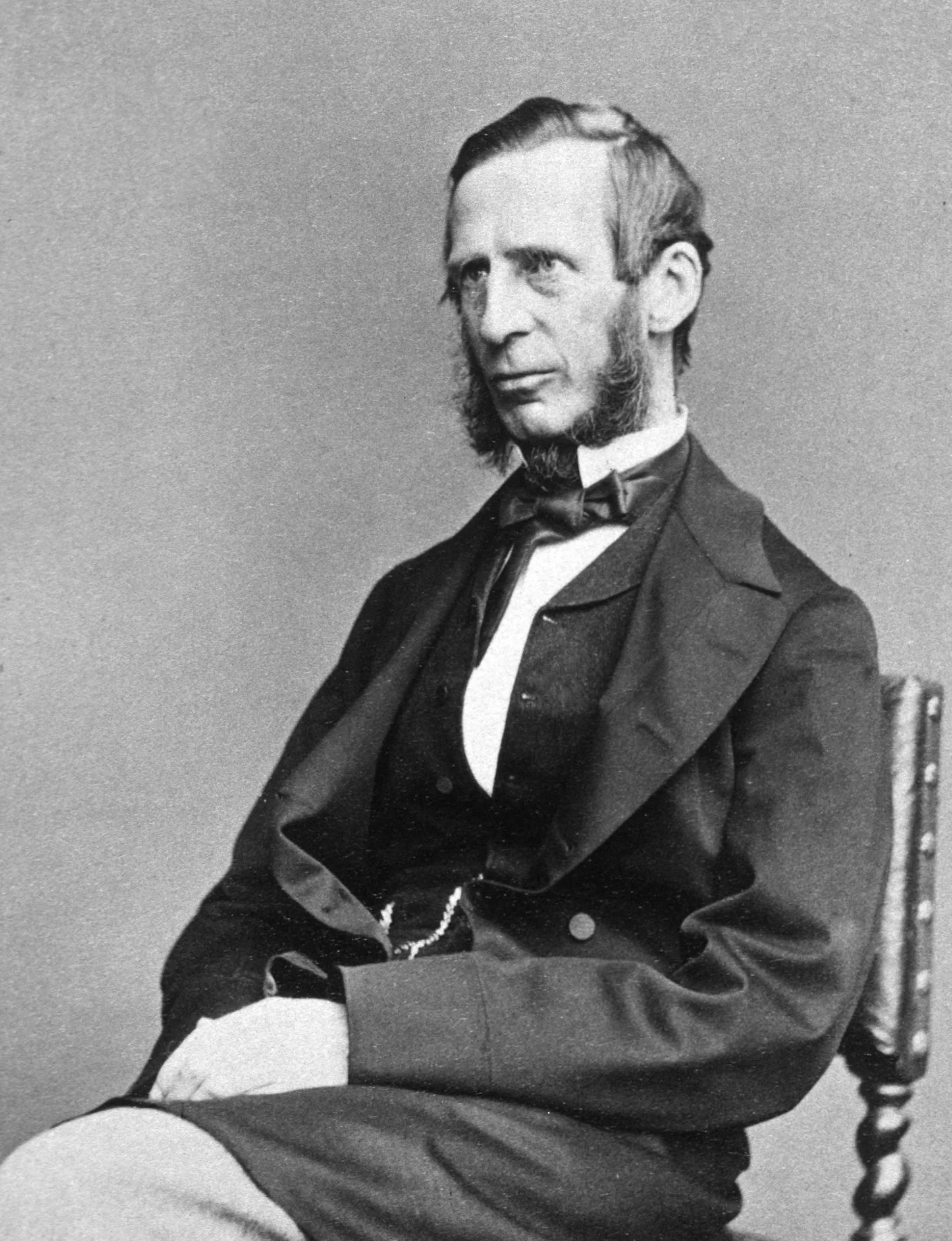
Photographs from the era depict Thomson as a man of average stature for the time, often dressed in formal academic attire typical of British professors in the mid-20th century. His public image was that of a dignified, reserved, and brilliant scholar. Unlike modern figures, he did not cultivate a style or aesthetic for media consumption; his reputation was built entirely on the rigor of his laboratory work and his intellectual contributions. Specific height measurements are not widely documented in standard biographical sources, as such data was less commonly recorded for scientists of his generation compared to modern celebrities. He was viewed as a humble figure who rarely sought personal glory, preferring to let his scientific discoveries speak for themselves. His demeanor reflected the serious nature of his work in unraveling the mysteries of the atom.
Fame & Fandom (iFAMOUS Rankings)
iFANN has not yet collected fame data for this person. As a scientist rather than an entertainer, Sir George Paget Thomson does not have a fandom in the traditional sense of fans, merchandise, or fan campaigns. His influence is measured by citations in academic literature and the inclusion of his experiments in curricula worldwide. There are no fan clubs or social media followings associated with him, as his impact is strictly within the domain of academic and scientific history. The fanbase has no formal name. His "fans" are effectively the generations of physicists, students, and researchers who study his work. There are no viral moments or pop-culture references outside of educational contexts, as his legacy is maintained through university archives and scientific publications rather than commercial entertainment.
Interesting Facts and Legends
The defining legend of George Paget Thomson is the "Father-Son Nobel Paradox." In 1906, J.J. Thomson won the Nobel Prize for discovering the electron as a particle. Thirty-one years later, in 1937, his son George won the Nobel Prize for discovering the electron as a wave. This dichotomy is frequently cited in physics education as a perfect illustration of the complexity of quantum reality. At the time of his 1927 experiment, many physicists believed electrons were strictly particles. Thomson's results were so counter-intuitive that they were initially met with skepticism, requiring rigorous peer review to validate. The iconic moment was the experiment at Aberdeen where Thomson fired electrons through a thin gold foil, observing a diffraction pattern identical to that of light waves passing through a grating.
The Thomson family is one of the few in history where a father and son both won Nobel Prizes in the same field, a feat rarely matched even today. His work remains a cornerstone of quantum mechanics textbooks, ensuring his name is recognized by every student of physics. He famously stated regarding his discovery: "The results... show that the electrons behave like waves." Another lesser-known fact is that his military service in the Royal Engineers involved acoustic research for anti-submarine warfare, a skill set that surprisingly aided his precision in later physics experiments. Additionally, he was appointed to the exclusive Order of Merit in 1952, limited to only 24 living members.
Notable Quotes
“The results... show that the electrons behave like waves.”
“While my father found the particle, I hoped to find the wave.”
Family & Personal Life
George Paget Thomson married Kathleen Buchanan Adam Smith in 1920. She was the daughter of a Scottish physician. They had two children together: a son named J.J. Thomson II, who became a physicist himself, and a daughter named Margaret. The family lived a quiet life dedicated to science and education, avoiding the public spotlight despite their immense contributions. The marriage was stable and lasted over five decades until his passing. There were no reported divorces or separations during their union. The couple raised their children in Cambridge, maintaining a household that balanced domestic life with the rigorous demands of their respective intellectual pursuits.
Notable Connections
Relationships & Dating History
George Paget Thomson was married to Kathleen Buchanan Adam Smith from 1920 until his death in 1975. She was the daughter of a Scottish physician, and their union was a stable partnership that lasted over five decades. There were no reported divorces or separations during their marriage. They raised two children together, a son named J.J. Thomson II and a daughter named Margaret. As a historical figure who died decades ago, there is no dating history beyond his single marriage, nor any public romantic relationships outside of his union with Kathleen. The couple shared a deep commitment to their family and the academic community, raising their children in an environment that valued intellectual curiosity and scientific inquiry. Their relationship is noted for its longevity and stability throughout the turbulent 20th century.
- MarriedKathleen Buchanan Adam Smith1920 - 1975Married until his death; had two children together.
Death & Aftermath
Died
September 10, 1975 (aged 83)
Death Place
Cambridge, England
Cause of Death
Natural causes associated with old age
Sir George Paget Thomson passed away on September 10, 1975, in Cambridge, England, at the age of 83. The cause of death was natural causes associated with old age, consistent with his long life and retirement status at the time. He was buried in the St. Mary's Churchyard in Cambridge, where many other notable figures from the scientific community rest. His death marked the end of an era for British experimental physics. Tributes poured in from institutions worldwide, highlighting the unique irony of his career: the son who proved the wave nature of electrons while his father, J.J. Thomson, had discovered them as particles. This generational contribution to quantum mechanics remains one of the most celebrated narratives in scientific history. Posthumously, his work continued to serve as a cornerstone in textbooks and academic curricula around the globe.
No major legal disputes or estate controversies arose following his death. His extensive papers and personal effects were preserved in university archives, primarily at Imperial College London and the University of Aberdeen. These collections ensure that future generations of physicists can study his methods and notes directly. His legacy endures not through fame in the popular sense but through the fundamental laws of physics that students learn today. No major legal proceedings or estate disputes have been recorded publicly, and his papers are preserved in university archives, particularly at Imperial College London and the University of Aberdeen. The global physics community mourned the loss of a man who had fundamentally reshaped their understanding of matter.
Net Worth (Estate Value)
$0
iFANN Editorial Team estimate
As a historical figure who passed away in 1975, Sir George Paget Thomson left behind an estate managed by his heirs and academic institutions. The value of his estate is not publicly quantified in modern financial terms, as his wealth consisted primarily of property, savings, and the intangible value of his intellectual property. Posthumous earnings from licensing, royalties, or IP rights are minimal compared to modern celebrities, as his primary contribution was foundational scientific knowledge rather than commercial entertainment or consumer products. The iFANN Editorial Team estimates the current value of his estate and legacy assets at approximately $0 in direct liquid terms, reflecting the nature of his profession and the era in which he lived. His papers and research materials are preserved in university archives, particularly at Imperial College London and the University of Aberdeen, where they continue to generate scholarly interest and educational value without generating direct revenue.
Awards Won (5)
Thomson received numerous accolades throughout his life, culminating in the highest honor in physics. He shared the 1937 Nobel Prize in Physics with Clinton Davisson for their experimental discovery of the diffraction of electrons by crystals. He was knighted by King George VI in 1937 and awarded the Royal Medal in 1939. In 1950, he received the Copley Medal, the Royal Society's oldest and most prestigious award. He was also appointed to the exclusive Order of Merit in 1952.
1937 · Physics
Experimental discovery of the diffraction of electrons by crystals
1937 · Honour
Services to Science
Known For
Electron Diffraction
1927 · Discovery of wave nature of electrons
Nobel Prize in Physics
1937 · Shared award with Clinton Davisson
Keywords
Sources
Quick Facts
- Profession
- physicist, nuclear physicist, university teacher
- Born
- May 3, 1892
- Birthplace
- Cambridge
- Died
- September 10, 1975
- Death Place
- Cambridge
- Gender
- Male
- Spouse
- Kathleen Buchanan Adam Smith
- Birth Sign
- Taurus
Personal Details
- Full Name
- Sir George Paget Thomson
- Spouse
- Kathleen Buchanan Adam Smith
- Children
- J.J. Thomson II · Margaret
- Education
- Trinity College, Cambridge; Eton College
Frequently Asked Questions
Who was George Paget Thomson?
Did George Paget Thomson and his father both win Nobel Prizes?
What year did George Paget Thomson die?
What was George Paget Thomson's most famous experiment?
Was George Paget Thomson married?
Similar People
Join the community
fans discussing