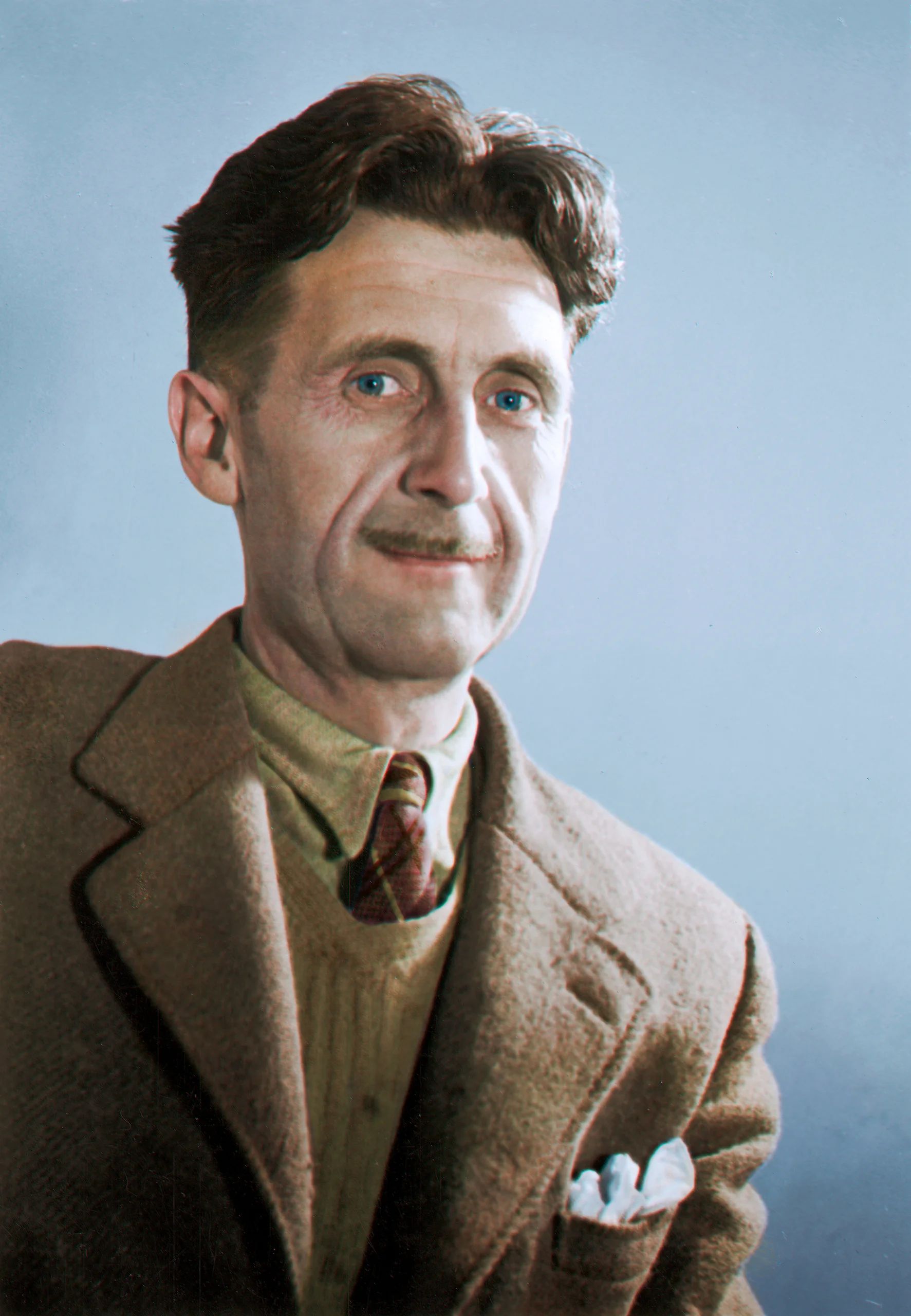
George Orwell
 India
Also known as: Eric Arthur Blair
Birthday
June 25, 1903
Birth Sign
Sagittarius
Birthplace
Motihari, Bengal Presidency, British India
Age
Died at 46
Height
5 ft 10 in (178 cm)
About
Eric Arthur Blair, known by his pen name George Orwell, was an English novelist, essayist, journalist, and critic who became one of the most influential writers of the 20th century. He adopted the pseudonym "George Orwell" to craft a body of work defined by lucid prose, fierce social criticism, and an unwavering opposition to totalitarianism. His real identity remained largely separate from his public persona until after his death, when biographical details were fully integrated into his legacy. Orwell served as a war correspondent and poet before passing away at age 46 on January 21, 1950.
His career spanned diverse genres, from literary criticism to polemical journalism, all unified by a fierce opposition to totalitarianism and a staunch support for democratic socialism. He rejected both authoritarian communism and fascism, themes that drove his most enduring narratives. Critics and historians frequently cite his essays on politics, language, and culture as essential reading. In 2008, The Times ranked him as the second-greatest British writer since 1945.
Early Life & Background
Born Eric Arthur Blair on June 25, 1903, in Motihari, Bengal Presidency, Orwell spent his early childhood in Henley-on-Thames after his family moved to England in 1904. He attended St Cyprian's School, an expensive preparatory school in Eastbourne, where he felt out of place due to his lack of wealth compared to other students. This experience deeply influenced his later critiques of class structures. He then attended Eton College from 1917 to 1921, where he excelled academically but struggled with the rigid social hierarchy. Despite winning scholarships, he chose not to attend university.
In 1922, Orwell joined the Indian Imperial Police to serve in Burma (now Myanmar). His time there exposed him to the brutalities of colonial rule, which fueled his growing anti-imperialist sentiments. In 1927, he resigned from the police force, disillusioned by the system he served, and returned to Europe to pursue writing. Upon returning, he lived in poverty in Paris and London, working menial jobs such as dishwasher and teacher while writing short stories and essays. He traveled extensively across Europe and Spain, documenting the lives of the poor and marginalized. These experiences formed the basis of his early non-fiction works, including Down and Out in Paris and London (1933) and The Road to Wigan Pier (1937).
In 1936, Orwell volunteered to fight for the Republican faction during the Spanish Civil War. His service was cut short when he was wounded by a sniper bullet and forced to retreat due to political infighting within the Republican ranks. His account of these events, Homage to Catalonia (1938), provided a critical perspective on the complexities of the conflict and further cemented his status as a writer unafraid to challenge prevailing narratives.
Career Growth
Orwell's literary career reached its zenith with two groundbreaking novels that reshaped political discourse. Animal Farm, released in 1945, used a farmyard setting to expose the corruption of revolutionary ideals and became an instant success praised for its sharp critique of authoritarianism. His later dystopian masterpiece, Nineteen Eighty-Four, published just five years before his death, introduced concepts like Big Brother and thoughtcrime into the global lexicon. These fictional works stand alongside powerful non-fiction accounts such as The Road to Wigan Pier and Homage to Catalonia.
Other notable works include Burmese Days (1934), Keep the Aspidistra Flying (1936), and numerous essays on politics, language, and culture. His influence extended beyond literature; terms like "Orwellian" entered the global lexicon to describe surveillance, manipulation of truth, and oppressive regimes. The adjective Orwellian now describes any situation involving surveillance or manipulation of truth. His legacy persists not through marketing hype but through the continued relevance of his warnings about power and truth.
Career Timeline
Public Image & Style
Orwell stood approximately 5 feet 10 inches tall. He was known for his distinctive style, often photographed in casual attire, reflecting his rejection of formalism. His public image was that of a rugged, uncompromising intellectual, committed to exposing truths even when unpopular. He maintained a reputation for honesty and integrity, often prioritizing his principles over personal gain or comfort. His writing style was characterized by clarity and directness, avoiding flowery language in favor of plain speech.
Fame & Fandom (iFAMOUS Rankings)
iFANN has not yet collected fame data for this person. The fanbase has no formal name documented in iFANN data. Readers continue to engage with his works in academic, political, and cultural contexts. Notable fan campaigns include efforts to keep his works in school curricula and protests against censorship. Fans often refer to themselves as admirers of his vision or simply as readers of classic literature. The enduring nature of his fanbase is evident in the continuous publication of new editions and adaptations of his works.
Interesting Facts and Legends
Orwell was left-handed but wrote with his right hand. He once worked as a dishwasher in a hotel kitchen in Paris to survive. His real name, Eric Blair, was rarely used after he adopted the pseudonym George Orwell. One of the most widely retold stories about Orwell is his decision to abandon the Indian Imperial Police to pursue writing despite financial instability. Another iconic moment was his participation in the Spanish Civil War, where he narrowly escaped death and documented the chaos of the conflict. His coining of terms like "Big Brother" and "Thoughtcrime" has become part of global cultural mythology.
Notable Quotes
“All animals are equal, but some animals are more equal than others.”
“War is peace. Freedom is slavery. Ignorance is strength.”
“If liberty means anything at all, it means the right to tell people what they do not want to hear.”
“In a time of deceit telling the truth is a revolutionary act.”
Family & Personal Life
Orwell was born to Richard Edward Walmesley Blair, a civil servant in the Indian Civil Service, and Ida Mabel Blair. His father was of English descent, while his mother had French and Irish ancestry. He had a sister named Marjorie Blair who attended his funeral. Orwell was married twice: first to Eileen O'Shaughnessy from 1936 until her death in 1945, and then to Sonia Brownell from 1949 until his own death in 1950. Neither marriage produced children. Sonia Brownell survived him and dedicated herself to preserving his legacy, managing his estate and publishing posthumous works.
Notable Connections
Aldous Huxley, E.M. Forster, Stephen Spender, Malcolm Muggeridge, Sonia Brownell, Eileen O'Shaughnessy.
Relationships & Dating History
Orwell was married twice throughout his life. His first marriage was to Eileen O'Shaughnessy in 1936. They met in 1935 while both were involved in leftist circles. Their marriage was marked by shared political ideals, though Eileen struggled with health issues. She died in 1945 from complications following a routine operation, leaving Orwell devastated. They had no children together. After Eileen's death, Orwell remained single for several years, focusing on his writing.
In 1948, he began a relationship with Sonia Brownell, a former secretary, after meeting through mutual friends. They married in October 1949, just months before his death. Sonia survived him and dedicated herself to preserving his legacy, managing his estate and publishing posthumous works. There were no children from this union. Orwell's romantic life was relatively private, with few public relationships outside these two marriages. He was known for his intense focus on his work, often prioritizing writing over personal connections.
- MarriedEileen O'Shaughnessy1936 - 1945Met in 1935; she died from complications of surgery in 1945.
- MarriedSonia Brownell1949 - 1950Married in October 1949; she managed his estate after his death.
Death & Aftermath
Died
January 21, 1950 (aged 46)
Death Place
London, England
Cause of Death
Pulmonary tuberculosis
George Orwell died on January 21, 1950, at University College Hospital in London after years of suffering from pulmonary tuberculosis, a condition that left him bedridden and coughing up blood by late 1949. His last public appearance occurred earlier that year when he attended the launch of Nineteen Eighty-Four in October, though he appeared frail and required assistance during the event. Medical staff confirmed the death based on clinical diagnosis and his known medical history. While some historical accounts suggest the disease was exacerbated by poor working conditions or reactivated by a specific strain contracted during the Spanish Civil War, the official ruling remained pulmonary tuberculosis accepted by both the family and the medical community.
Tributes poured in from peers like Aldous Huxley and E.M. Forster, while book sales of Nineteen Eighty-Four surged dramatically following his passing to become an overnight bestseller that remained so for decades. The term Orwellian entered the global lexicon immediately, reflecting how his ideas had already cemented their grip on public consciousness before he took his final breath. A private funeral service followed three days later on January 24, 1950, at Golders Green Crematorium in North London where close friends, family including his wife Sonia Brownell and sister Marjorie, and literary figures such as Stephen Spender and Malcolm Muggeridge gathered. His ashes were scattered in the garden of the crematorium according to his wishes for simplicity, though biographers continue to debate whether they were later moved to a more permanent resting place within the grounds.
The posthumous era saw his legacy expand far beyond his lifetime with the establishment of the Orwell Society and the Orwell Foundation to preserve his works and promote ideals of truth and democracy. Numerous adaptations followed including a famous film version of Nineteen Eighty-Four starring John Hurt and an animated version of Animal Farm, while statues and murals now honor his memory in London and other cities. The estate continues to generate significant revenue through royalties used to support literary scholarships and maintain his birthplace in Motihari and his home in Wallington.
Net Worth (Estate Value)
$25 Million
iFANN Editorial Team estimate
As Orwell passed away in 1950, his net worth at the time was modest, estimated at around £2,000 (approximately $8,000 USD in today's value). However, his estate has grown significantly since then. Royalties from his works, licensing deals, and merchandise now generate millions annually. The Orwell Foundation manages these funds to support literary scholarships and maintain his birthplace in Motihari and his home in Wallington. Research by the iFANN Editorial Team puts his estate's current fortune at around $25 million, driven by the enduring popularity of his novels and the ongoing demand for educational materials featuring his works.
Awards & Accolades
View 9 records, honours and achievementsKnown For
Animal Farm
1945 · Author
Nineteen Eighty-Four
1949 · Author
Homage to Catalonia
1938 · Author
Keywords
Sources
Quick Facts
- Profession
- writer, war correspondent, poet
- Born
- June 25, 1903
- Birthplace
- Motihari, Bengal Presidency, British India
- Died
- January 21, 1950
- Death Place
- London, England
- Gender
- Male
- Spouse
- Eileen O'Shaughnessy, Sonia Brownell
- Birth Sign
- Sagittarius
Personal Details
- Full Name
- Eric Arthur Blair
- Height
- 5 ft 10 in (178 cm)
- Spouse
- Eileen O'Shaughnessy, Sonia Brownell
- Children
- Education
- St Cyprian's School; Eton College
Frequently Asked Questions
What is George Orwell's real name?
When did George Orwell die?
What caused George Orwell's death?
Who was George Orwell married to?
What are George Orwell's most famous works?
Social Media
Similar People
Join the community
fans discussing