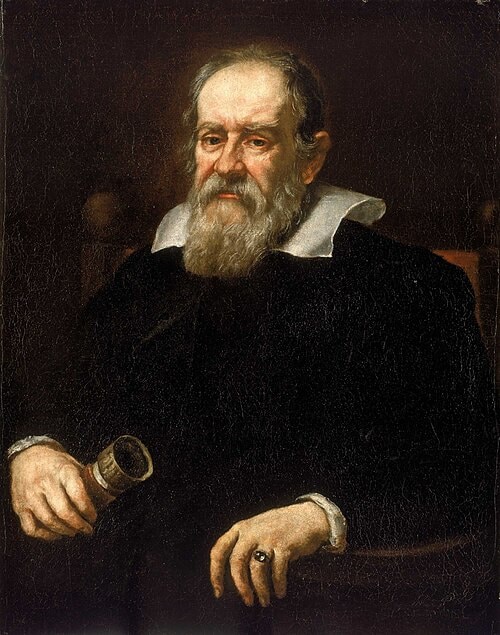
Galileo Galilei
Awards & Honours
4
Awards Won
4
Honours
3
Records
Galileo Galilei's achievements are extraordinary by any measure. He is credited with founding modern observational astronomy, modern physics, and the scientific method itself. His telescopic discoveries of Jupiter's moons, lunar mountains, and the phases of Venus provided the first concrete evidence for the Copernican system. His work on motion and mechanics laid the groundwork for Newtonian physics. He was the first to systematically use experimentation and mathematics to understand nature, a approach that became the bedrock of science. His trial and house arrest made him a global symbol of intellectual freedom. He was elected to the Accademia dei Lincei, the first modern scientific academy, and his works remain foundational texts. No other single figure has had such a profound impact on the way we investigate the natural world.
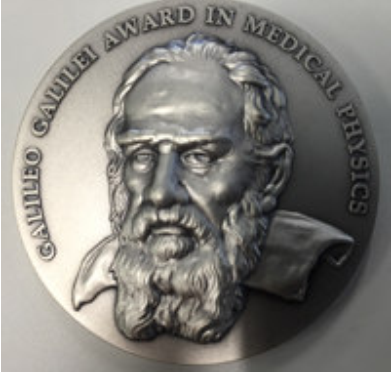
Awards
Honours & Distinctions
Chief Mathematician and Philosopher to the Grand Duke of Tuscany
Prestigious court position with no teaching duties.
Member of Accademia dei Lincei
Elected as the sixth member of the first modern scientific academy.
Reburial in Santa Croce Basilica
Monumental tomb opposite Michelangelo.
Papal Rehabilitation
Formal acknowledgment of Church errors in Galileo's trial.
Records & Feats
First to systematically use telescope for astronomical discovery
Galileo was the first to turn a telescope to the heavens and make detailed observations, discovering Jupiter's moons, lunar mountains, and Venus phases.
First to provide concrete evidence for heliocentrism
His observations of Venus phases and Jupiter's moons provided the first empirical evidence supporting the Copernican model.
Founder of modern physics
His work on motion, inertia, and falling bodies established the foundations of classical mechanics.