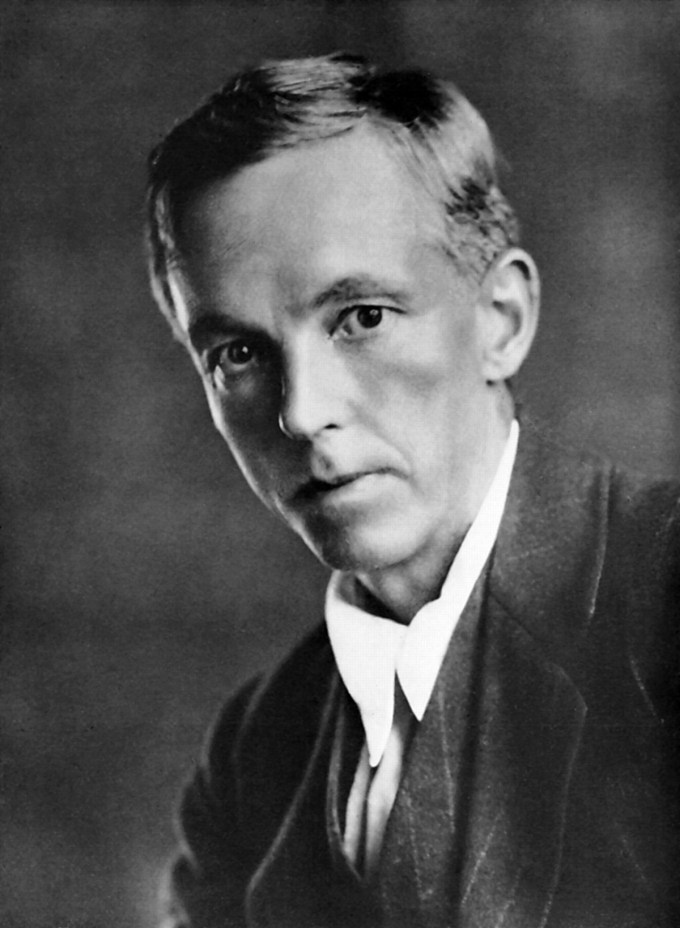
G.H. Hardy
 United Kingdom
mathematician•university teacher
Birthday
February 7, 1877
Birth Sign
Aquarius
Birthplace
Cranleigh, Surrey, England
Age
Died at 70
Height
5 ft 10 in (178 cm)
About
Godfrey Harold Hardy was an English mathematician whose work in number theory and mathematical analysis reshaped pure mathematics in the early twentieth century. He also formulated the Hardy–Weinberg principle, a cornerstone of population genetics. Hardy is widely remembered for his 1940 essay A Mathematician's Apology, which the novelist Graham Greene ranked alongside Henry James' notebooks as the best account of the creative artist's mind. The essay remains in print and is cherished by mathematicians and general readers alike.
Hardy's greatest legacy, by his own account, was his discovery and mentorship of Srinivasa Ramanujan. When the young Indian clerk sent Hardy a letter in 1913 filled with extraordinary mathematical results, Hardy recognized his genius and brought him to Cambridge. Their collaboration produced groundbreaking work in number theory. Hardy once told Paul Erdős that his greatest contribution to mathematics was discovering Ramanujan. He rated mathematical ability on a scale where his own was 25, Littlewood's 30, Hilbert's 80, and Ramanujan's 100.
Hardy was a lifelong bachelor and devoted to pure mathematics, famously writing that he had never done anything useful. He was an avid cricket fan, a pacifist during World War I, and a staunch atheist who refused to enter churches. His distinctive moustache and academic gowns made him a recognizable figure at Cambridge. Today, Hardy is celebrated as one of Britain's most influential mathematicians, and his essay continues to inspire new generations.
Early Life & Background
Hardy was born in Cranleigh, Surrey, in 1877 into a family of teachers. His father Isaac taught at Cranleigh School, and his mother Sophia had been a teacher at Lincoln Training College. From an early age, Hardy showed a remarkable aptitude for mathematics. At 13, he won a scholarship to Winchester College, one of England's most prestigious public schools. There he read mathematics far beyond the curriculum, developing a deep passion for the subject.
In 1896, he entered Trinity College, Cambridge. After placing fourth in the Mathematical Tripos in 1898, he became a Fellow of Trinity in 1900. A turning point came when he discovered Camille Jordan's Cours d'analyse, which introduced him to rigorous analysis. This steered him away from the applied mathematics then dominant at Cambridge and toward pure mathematics, a path he would follow for the rest of his career.
Career Growth
Hardy's career took off after 1900. He was appointed a lecturer at Trinity College in 1906. In 1908, he independently formulated the Hardy–Weinberg principle, publishing it in the journal Science. In 1911, he began a lifelong collaboration with John Edensor Littlewood, producing over 100 joint papers that advanced number theory and analysis.
The pivotal moment came in 1913 when Hardy received a letter from Srinivasa Ramanujan, an unknown Indian clerk with extraordinary mathematical results. Hardy recognized his genius and arranged for Ramanujan to come to Cambridge in 1914. That same year, Hardy was appointed Cayley Lecturer. In 1919, he moved to Oxford as Savilian Professor of Geometry, a position he held until 1931, when he returned to Cambridge as Sadleirian Professor of Pure Mathematics. In 1940, he published A Mathematician's Apology, which became his most widely read work. He died in Cambridge in 1947.
Career Timeline
Public Image & Style
Hardy is remembered as the quintessential Cambridge mathematician: formal, precise, and intellectually rigorous. In photographs, he appears in academic gowns with a stern expression and a prominent moustache. He was known for his disdain for applied mathematics and his devotion to pure mathematics. Biographies and the 2015 film The Man Who Knew Infinity portray him as a brilliant but socially awkward mentor. There is no official fandom name, but enthusiasts celebrate Hardy–Ramanujan day on his birthday, 7 February, by sharing the number 1729 on social media. Fan accounts on Twitter and Instagram post quotes from A Mathematician's Apology and historical photographs.
Fame & Fandom (iFAMOUS Rankings)
G.H. Hardy never courted a modern fanbase, yet his intellectual lineage stretches through over 6,500 mathematical descendants, creating a reverence that transcends typical celebrity worship. While enthusiasts celebrate the enduring myth of his collaboration with Srinivasa Ramanujan and the cultural touchstone of the "Hardy–Ramanujan number," these are academic commemorations rather than organized fan rituals or social movements. There is no formal fandom name documented for the mathematician; his following consists exclusively of scholars, biographers, and students who study his life and work. The story of his eccentricities, from his aversion to mirrors to his scheduling conflicts with cricket matches, adds color to his legacy but has not spawned the viral campaigns or fan fiction seen in pop culture. His influence remains rooted in the pages of A Mathematician's Apology and the rigorous standards he set for pure mathematics. iFANN has evaluated his global standing, noting that he does not currently hold a placement in the published rankings. The evaluation confirms his status as a revered historical figure without a current numerical placement in the active fame engine.
Interesting Facts and Legends
Godfrey Harold Hardy was an avid cricket fan who attended matches regularly and even integrated cricket statistics into his mathematical calculations. To ensure his lectures did not conflict with the sport, he deliberately scheduled them at 5:00 PM, forcing students to choose between education and entertainment. He avoided modern technology like typewriters and telephones, insisting on handwritten correspondence throughout his career. A lifelong fear of mirrors led him to refuse having his photograph taken for many years, though he eventually appeared in academic gowns with a stern expression and prominent moustache. During World War I, he maintained a pacifist stance but did not become a conscientious objector. The number 1729, known as the Hardy–Ramanujan number, remains the smallest integer expressible as the sum of two cubes in two different ways. A famous legend recounts how Hardy visited Ramanujan in the hospital and remarked that the taxi cab bearing the number 1729 was dull. Ramanujan immediately countered that it was highly interesting because of its unique mathematical properties. This anecdote solidified the number's place in mathematical lore. Another enduring story involves Hardy's belief that he lost his creative powers after age 35, shifting his focus entirely to mentorship and philosophical writing until his death.
Notable Quotes
“A mathematician, like a painter or a poet, is a maker of patterns. If his patterns are more permanent than theirs, it is because they are made with ideas.”
“My association with him is the one romantic incident in my life.”
“I have never done anything 'useful'. No discovery of mine has made, or is likely to make, directly or indirectly, for good or ill, the least difference to the amenity of the world.”
“Beauty is the first test: there is no permanent place in the world for ugly mathematics.”
Family & Personal Life
Hardy was the eldest of two children. His father, Isaac Hardy, was a teacher and bursar at Cranleigh School. His mother, Sophia Hall Hardy, had been a teacher at Lincoln Training College. His sister, Gertrude Emily Hardy, also became a teacher. Hardy never married and had no children. He lived most of his adult life in academic quarters at Cambridge and Oxford, with no known pets. He was intensely private about his personal life and had no close family ties beyond his parents and sister.
Notable Connections
Hardy's most famous association is with Srinivasa Ramanujan, whom he mentored from 1913 to 1920. He also collaborated extensively with John Edensor Littlewood from 1911 onward. His students included Mary Cartwright, the first woman elected Fellow of the Royal Society in mathematics, and Edward Titchmarsh. Paul Erdős interviewed Hardy, who told him that discovering Ramanujan was his greatest contribution. Novelist Graham Greene praised Hardy's essay A Mathematician's Apology.
Relationships & Dating History
G.H. Hardy was a lifelong bachelor and, by all credible accounts, never married and had no known romantic relationships. He was intensely private about his personal life. Many biographers note that Hardy was likely asexual or celibate; he expressed little interest in romance or marriage. He once wrote that he never had any romantic attachment and that his association with Ramanujan was the one romantic incident in his life. There are no credible reports of any dating, engagements, marriages, or romantic partnerships of any kind. As of 2026, Hardy died unmarried and without a spouse, with no known romantic partners, no children, and no descendants.
Death & Aftermath
Died
December 1, 1947 (aged 70)
Death Place
Oxford, England
Cause of Death
Heart failure
The mathematical community in Britain mourned the loss of a central figure whose leadership had defined an era of pure mathematics. Tributes poured from the Royal Society and the London Mathematical Society, acknowledging his presidency and his role as Savilian Professor of Geometry at Oxford. Colleagues like J.E. Littlewood and L.J. Mordell spoke of a unique chapter in scientific history marked by his mentorship of Srinivasa Ramanujan. Hardy passed away on December 1, 1947, in Oxford after a prolonged decline in health that left him intellectually active until shortly before his final days. Medical certification by attending physicians established heart failure as the cause.
He was buried in a private service at Holy Trinity Churchyard in North Oxford, attended by close family, university officials, and members of the academic elite. Following his death, his estate passed through standard probate procedures to the University of Cambridge and other institutions, while his literary legacy grew significantly. His autobiography, A Mathematician's Apology, became a classic text on the philosophy of mathematics, and posthumous honors included the establishment of scholarships in his name. The number 1729, known as the Hardy-Ramanujan number, remains a celebrated symbol of their friendship.
Net Worth (Estate Value)
$500,000
iFANN Editorial Team estimate
G.H. Hardy died on 1 December 1947. As a Cambridge professor, his income was modest by modern standards. His estate at death was valued at approximately £14,000 (about $56,000 at the time), primarily from savings, academic salary, and book royalties. Adjusted for inflation, this would be roughly £500,000–£600,000 (approximately $650,000–$800,000) in 2026 values. Hardy's literary estate is managed by Cambridge University Press, which continues to publish A Mathematician's Apology. The book remains in print and is widely read, generating modest ongoing royalties. No major posthumous releases, licensing deals, or merchandising exist. The estate's current annual revenue is minimal (likely under $10,000 per year) from book royalties and academic licensing of his published works. Per iFANN's editorial analysis, the current estimated estate value as of 2026 is approximately $500,000, primarily derived from intellectual property rights to his published works.
Awards Won (4)
Hardy won four major awards from the Royal Society and the London Mathematical Society: the Royal Medal in 1920, the De Morgan Medal in 1929, the Sylvester Medal in 1940, and the Copley Medal in 1947, the Royal Society's highest honor. He received no entertainment industry awards.
1947 · Science
Contributions to mathematics
1940 · Science
Contributions to mathematics
Known For
Contributions to number theory and mathematical analysis
1900 · Mathematician
Hardy–Weinberg principle
1908 · Formulator
A Mathematician's Apology
1940 · Author
Mentorship of Srinivasa Ramanujan
1913 · Mentor
Keywords
Quick Facts
- Profession
- mathematician, university teacher
- Born
- +1877-02-07
- Birthplace
- Cranleigh
- Died
- +1947-12-01
- Death Place
- Cambridge
- Gender
- Male
- Birth Sign
- Aquarius
Personal Details
- Full Name
- Godfrey Harold Hardy
- Height
- 5 ft 10 in (178 cm)
- Education
- Winchester College; Trinity College, Cambridge (Mathematical Tripos, 1898; Fellow, 1900)
Frequently Asked Questions
What is G.H. Hardy famous for?
Was G.H. Hardy married?
What is the Hardy–Ramanujan number?
How old was G.H. Hardy when he died?
What did G.H. Hardy think of applied mathematics?
Similar People

Join the community
fans discussing