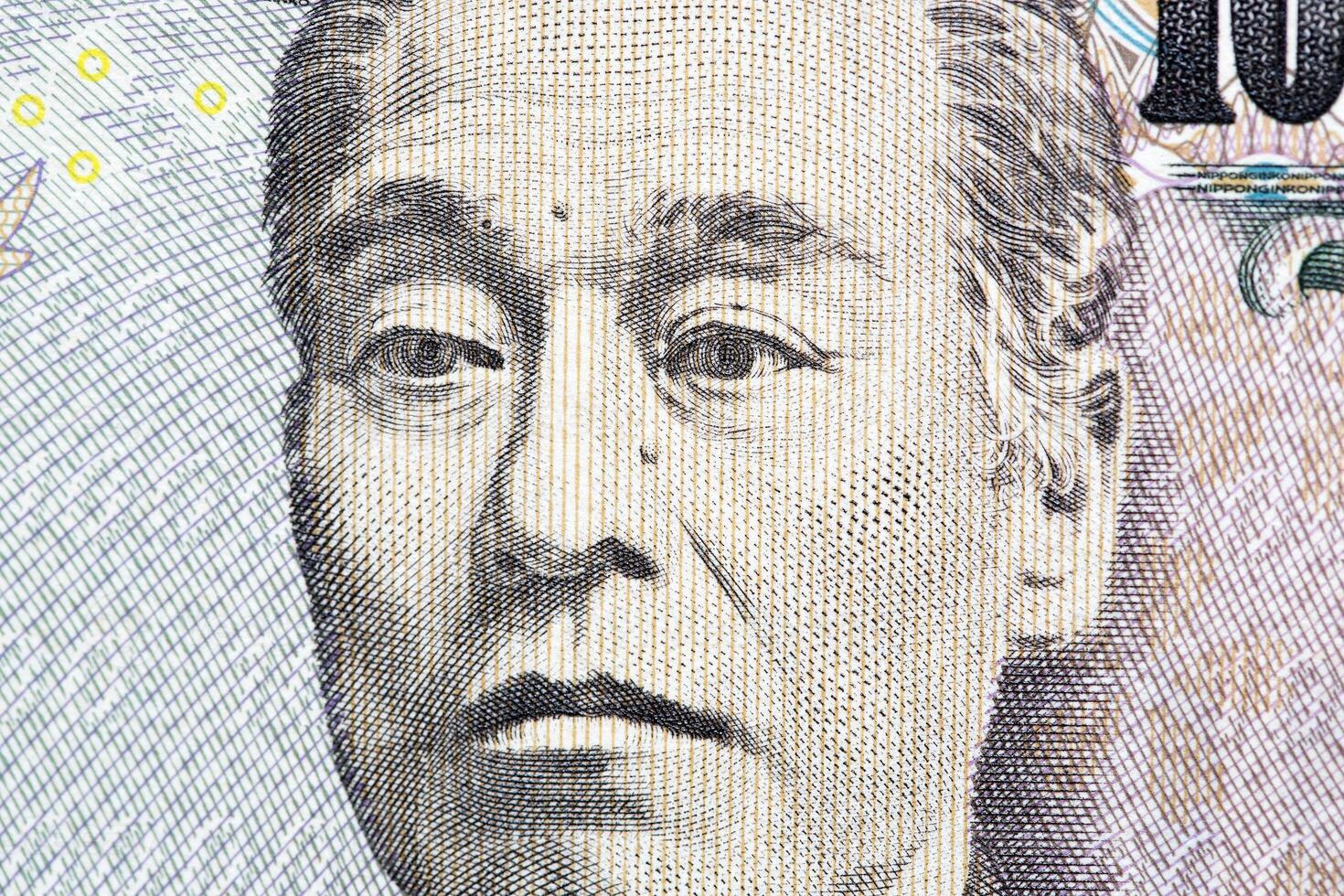
Fukuzawa Yukichi
 Japan
JapanWriter•educator•philosopher•translator
Also known as: Yukichi Fukuzawa
Birthday
January 10, 1835
Birth Sign
Capricorn
Birthplace
Dōjima, Osaka, Japan
Age
Died at 66
About
Fukuzawa Yukichi was a Japanese writer, educator, philosopher, and translator whose ideas helped shape modern Japan. He founded Keio University and wrote influential works that introduced Western concepts of science, society, and equality to a nation emerging from feudalism. His face once appeared on the 10,000-yen note, a sign of his lasting importance.
Fukuzawa believed education was the key to personal and national progress. His most famous book, An Encouragement of Learning, sold millions of copies and argued that all people are born equal and that learning, not birth, determines one's place in society. He also established the newspaper Jiji Shinpō to spread his ideas to a broad audience.
Today, Fukuzawa is remembered as a champion of modernization and a founding father of Japanese liberalism. His legacy lives on through the university he started and the countless students who have followed his example.
Early Life & Background
Fukuzawa Yukichi was born on January 10, 1835, in Dōjima, Osaka, into a low-ranking samurai family. His father, a librarian for the Nakatsu domain, died when Fukuzawa was just 18 months old, leaving the family in financial hardship. Growing up in a society rigidly divided by class, he saw firsthand how birth, not ability, determined a person's opportunities.
At around 19, Fukuzawa began studying Dutch, then the gateway to Western knowledge during Japan's isolation. He proved a quick learner and soon moved to Nagasaki to continue his studies. Later, he taught himself English, a rare skill at the time. His language abilities opened doors: in 1860, he was chosen to accompany Japan's first diplomatic mission to the United States, and in 1862 he traveled to Europe. These journeys gave him a firsthand look at Western institutions and technology, experiences that would shape his life's work.
Before the Meiji Restoration, Fukuzawa worked as a translator for the Tokugawa shogunate. He also began teaching, and in 1858 he founded a small school for Dutch studies in Edo, which would later grow into Keio University.
Career Growth
Fukuzawa's breakthrough came after the Meiji Restoration in 1868, when Japan opened itself to the world. He became a leading voice in the Civilization and Enlightenment movement, urging his countrymen to adopt Western science, education, and institutions. He deliberately avoided government positions to maintain his independence as a thinker.
His 1866 book Seiyō Jijō (Conditions in the West) was a bestseller that introduced Japanese readers to Western customs and technology. But his most influential work was Gakumon no Susume (An Encouragement of Learning), first published in 1872. The book's opening line, "Heaven never created a man above another nor a man below another," became a rallying cry for equality. It sold millions of copies and inspired a generation to pursue education.
In 1882, Fukuzawa founded the newspaper Jiji Shinpō, which he used to comment on politics, economics, and social issues. He also wrote extensively on topics ranging from women's rights to national defense. His school, Keio Gijuku, grew into Keio University, one of Japan's most prestigious institutions. Fukuzawa continued teaching and writing until his death in 1901.
Career Timeline
Public Image & Style
Fukuzawa Yukichi is often depicted as a stern, intellectual figure with a beard and Western-style clothing. In Japanese popular culture, he is a symbol of modernization and education. His image on the 10,000-yen note made him familiar to every Japanese person, and his name is synonymous with Keio University.
Fans of Japanese history admire him for his bold ideas and his willingness to challenge tradition. His writings are still read today, and his quotes are frequently shared on social media. He is often compared to other great modernizers, such as Eiichi Shibusawa, who also appears on a new banknote.
Fame & Fandom
Fukuzawa Yukichi's global recognition is a quiet, enduring phenomenon, his ideas and image have permeated Japanese culture for over a century, yet his fame outside Japan remains modest, largely confined to academic and historical circles. As of August 2026, iFANN's Global Fame Engine has evaluated Fukuzawa but he does not currently hold a placement in the published rankings, whether the Global Top 1,000 or any Top-100 scope list. This is not a reflection of his historical significance, but rather a measure of contemporary global attention, which is limited. His fanbase, such as it exists, has no formal name, there is no documented fandom title, no organized fan club, and no modern fan campaigns. Instead, his legacy is institutionalized through Keio University, which he founded, and through his continued presence in Japanese education and public discourse. The closest thing to fan rituals are the annual commemorations of his death at Keio and the reverence shown by students who study his works. His famous quote from An Encouragement of Learning, 'Heaven does not create one man above or below another man', has achieved proverbial status in Japan and is frequently shared in educational contexts. His removal from the 10,000-yen note in 2024 sparked nationwide nostalgia, cementing his status as a cultural icon. For those who admire him, his legacy is a living tribute to the power of education and enlightenment.
Interesting Facts and Legends
Fukuzawa Yukichi was known for his love of Western clothing and once appeared in a photograph wearing a top hat and formal suit, a rare sight in 1860s Japan. He was also an early advocate for women's education, arguing that a society could not progress if half its population was uneducated. Despite his fame, Fukuzawa remained a private person. He rarely gave interviews and preferred to let his writings speak for him. He was also a collector of Western scientific instruments, including a telescope and a microscope, which he used to demonstrate modern technology to his students. One of his lesser-known works is a geography textbook, Sekai kunizukushi (All the Countries of the World), published in 1869. It was one of the first Japanese textbooks to describe the world beyond Asia.
Among the stories fans still retell is his 1862 visit to London as part of a Tokugawa delegation, where he encountered Western technology and customs that left him astonished, a moment that catalyzed his life's work as an educator. Another iconic moment is his 1860 voyage to America on the Kanrin Maru, Japan's first official mission to the United States, where he served as interpreter and later wrote about his observations. His visit to the 1900 Paris World's Fair also became part of his legacy, as he marveled at Western technological displays. These journeys, documented in his autobiography, are celebrated by Keio University, which has organized student delegations to retrace his footsteps.
Notable Quotes
“Heaven never created a man above another nor a man below another.”
“The purpose of learning is not to become a tool of the government, but to develop one's own abilities.”
“Independence and self-respect are the foundations of a nation's independence.”
“It is not enough to know the West; one must also understand one's own country.”
“Education is the only way to break the cycle of poverty and ignorance.”
Family & Personal Life
Fukuzawa married a woman named Toshi, though little is recorded about her in historical accounts. The couple had several children, but details about their lives are scarce. Fukuzawa's personal life was largely devoted to his work, and he often described his students as his extended family.
He grew up in a household with his mother and siblings after his father's early death. His mother, though from a samurai family, struggled to provide for the children. Fukuzawa later credited his mother's resilience for his own determination.
Notable Connections
Fukuzawa Yukichi was a contemporary of many key figures of the Meiji Restoration, though he worked independently. He was influenced by Western thinkers such as John Stuart Mill and Herbert Spencer, whose works he read and translated. He also corresponded with and advised government leaders, though he never held a formal position. His school, Keio Gijuku, attracted many future leaders, and his newspaper, Jiji Shinpō, was widely read by the intellectual elite.
Relationships & Dating History
Fukuzawa Yukichi married Toshi, a woman from a samurai family, in the late 1850s. The couple had several children, though their names are not widely recorded. Fukuzawa was a devoted husband and father, but his work often took precedence. Toshi supported his educational endeavors, and the family lived modestly despite his fame.
After Fukuzawa's death in 1901, Toshi survived him. Their descendants have continued to honor his legacy, with some involved in education and publishing. As of 2026, Fukuzawa's descendants maintain his family grave in Tokyo.
- MarriedToshi Fukuzawa1859 - 1901Married until Fukuzawa's death in 1901; had several children together.
Death & Aftermath
Died
February 3, 1901 (aged 66)
Death Place
Unknown
Cause of Death
Unknown
Net Worth (Estate Value)
$3 Million
iFANN Editorial Team estimate
Fukuzawa Yukichi's wealth came primarily from his writing and his school. His books, especially An Encouragement of Learning, sold in enormous numbers, providing a steady income. He also earned from his newspaper, Jiji Shinpō, which was profitable. As a private citizen, he did not amass a large personal fortune, but his estate was valued at the time of his death. Per iFANN's editorial analysis, his net worth is estimated at $3 Million. His legacy, however, is priceless: Keio University remains one of Japan's top institutions, and his ideas continue to influence Japanese society.
Awards & Accolades
View 2 records, honours and achievementsKnown For
An Encouragement of Learning
1872 · Author
Keio University
1858 · Founder
Seiyō Jijō
1866 · Author
Keywords
Sources
Quick Facts
- Profession
- Writer, educator, philosopher, translator
- Born
- January 10, 1835
- Birthplace
- Dōjima, Osaka, Japan
- Died
- February 3, 1901
- Death Place
- Shiba, Tokyo, Japan
- Gender
- Male
- Birth Sign
- Capricorn
Personal Details
- Full Name
- Fukuzawa Yukichi
- Education
- Studied Dutch and English; self-taught in Western learning
Frequently Asked Questions
Who was Fukuzawa Yukichi?
What is Fukuzawa Yukichi's net worth in 2026?
Is Fukuzawa Yukichi still on the 10,000-yen note?
What was Fukuzawa Yukichi's most famous book?
Why is Fukuzawa Yukichi important to Japan?
Similar People
Join the community
fans discussing