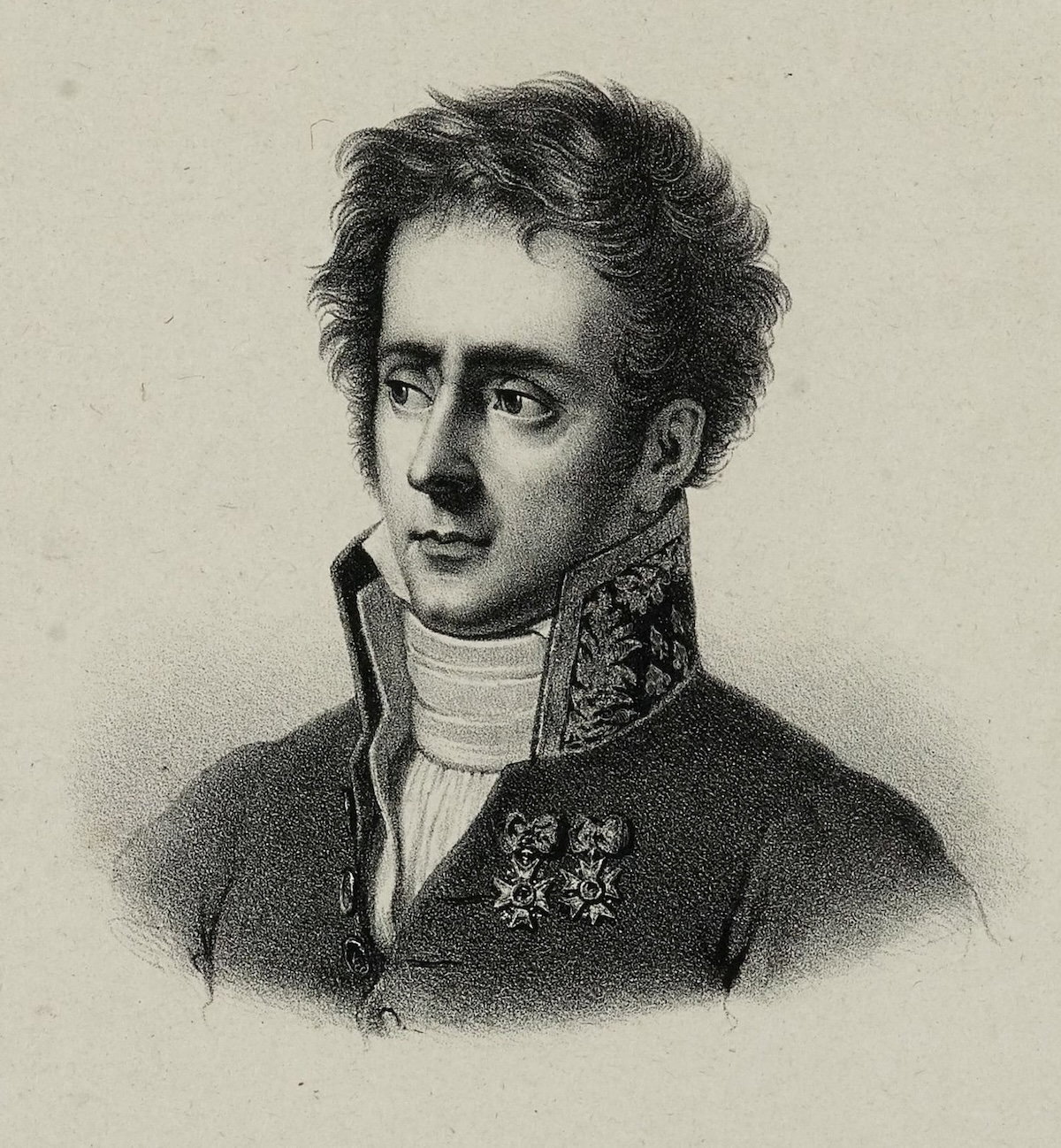
François-René de Chateaubriand
 France
writer•politician•diplomat•historian
Also known as: François-Auguste-René de Chateaubriand, Vicomte de Chateaubriand, François-René de Châteaubriand
Birthday
September 4, 1768
Birth Sign
Virgo
Birthplace
Saint-Malo, Brittany, France
Age
Died at 79
About
François-René de Chateaubriand, born François-Auguste-René de Chateaubriand on September 4, 1768, in Saint-Malo, Brittany, was a towering figure in French literature and politics, widely recognized as the founder of French Romanticism. Descended from an old aristocratic family tracing its roots to the medieval nobility of Brittany, he held royalist convictions that guided his political career throughout his life. He served as Minister of Foreign Affairs from 1822 to 1824 and represented France as ambassador to Sweden, Prussia, the United Kingdom, and the Papal States, navigating the turbulent waters of post-revolutionary Europe with a diplomat's tact and a writer's sensibility. His literary legacy rests on works that bridged faith and reason during an age of widespread skepticism. In 1802, he published Génie du christianisme (The Genius of Christianity), a spirited defense of the Catholic faith that resonated across Europe. His autobiography, Mémoires d'Outre-Tombe (Memoirs from Beyond the Grave), published posthumously in 1849–1850, is now considered a cornerstone of French literature, blending personal recollection with the sweep of history. Historian Peter Gay noted that Chateaubriand saw himself as the greatest lover, writer, and philosopher of his age, acknowledging that he "dominated the literary scene in France in the first half of the nineteenth century." A man of striking appearance with a tall stature and dignified bearing, his signature style was one of eloquence and grandeur. Chateaubriand died on July 4, 1848, in Paris, leaving behind a body of work that continues to be studied and admired for its unique blend of personal emotion and historical narrative.
Early Life & Background
Born into the Breton nobility as the youngest son of René-Auguste de Chateaubriand and Jeanne-Carotte de Montbazon, François-Auguste-René grew up in the port city of Saint-Malo under a strict religious upbringing typical of the region's aristocracy. His childhood was marked by a profound sense of melancholy and a fascination with the sublime in nature, themes that would later define his writing. He attended the Collège d'Argentré in Dol-de-Bretagne, where he received a classical education steeped in Latin and Greek literature. However, his formal education was cut short; he did not complete university studies, instead entering the military at a young age. In 1786, at the age of eighteen, he joined the Royal Navy, serving briefly before transferring to the infantry. His early years were characterized by a restless spirit and a deepening disillusionment with the rigid structures of the time. The outbreak of the French Revolution in 1789 disrupted his life, leading him to question the monarchy and the church, though he ultimately remained a staunch royalist. In 1791, fearing the revolutionary turmoil and the potential threat to his life, he emigrated to North America. This journey profoundly shaped his literary vision as he traveled through the United States and Canada, witnessing the vastness of the American wilderness. These experiences inspired works like Atala and René, introducing the archetype of the "mal du siècle" (the sickness of the century), a pervasive sense of disillusionment and longing that became central to Romantic literature.
Career Growth
Chateaubriand's literary career began in earnest after his return to France following the fall of Robespierre in 1794. His breakthrough came with the publication of Essai sur les révolutions (Essay on Revolutions) in 1797, but it was his 1802 novella Atala, published within the larger work Le Génie du christianisme (The Genius of Christianity), that cemented his fame. Atala was a sensation, celebrated for its emotional depth, exotic settings, and defense of the Catholic faith. His political career paralleled his literary success. After returning from exile in England in 1800, he served under Napoleon, holding various diplomatic posts. However, his relationship with the Emperor was complex; he eventually fell out of favor due to his royalist leanings. Following Napoleon's defeat at Waterloo in 1815, Chateaubriand returned to prominence in the restored Bourbon monarchy. He was appointed Minister of Foreign Affairs from 1822 to 1824, a period during which he played a key role in the French intervention in Spain. His diplomatic service also included ambassadorships to Sweden, Prussia, the United Kingdom, and the Papal States, where he navigated the turbulent post-revolutionary European landscape with a blend of political acumen and literary sensibility. He was elected to the Académie Française in 1811, a prestigious honor that solidified his status among the intellectual elite. As Minister of State after the Battle of Waterloo, he reflected his high standing in the restored monarchy. His works, particularly Le Génie du christianisme, were widely celebrated across Europe for their defense of the Catholic faith and their literary innovation.
Career Timeline
Public Image & Style
Chateaubriand is portrayed in media and literature as a tragic figure, a man caught between the old world of aristocracy and the new world of revolution. His image is one of melancholy and introspection, reflecting the themes of his writing. He is often depicted as a statesman with a poet's soul, navigating the complexities of post-revolutionary Europe with grace and dignity. His signature style was one of eloquence and grandeur, both in his writing and his public persona. He was known for his ability to weave personal emotion with historical narrative, creating a unique voice that resonated with readers across generations. His aesthetic was one of melancholy and nostalgia, often tinged with a fascination for the exotic and the sublime. Described as having a striking appearance with a tall stature and dignified bearing, he embodied the romantic ideal of the aristocratic wanderer. His self-perception as the greatest lover, writer, and philosopher of his age further cemented this iconic image.
Fame & Fandom (iFAMOUS Rankings)
François-René de Chateaubriand commands a global attention defined by enduring literary scholarship rather than contemporary celebrity metrics. His historical footprint remains substantial within academic and diplomatic circles, yet he does not currently hold a placement in the published iFANN Global Top 1,000 or any Top-100 scope list. The iFANN Global Fame Engine has evaluated this figure and determined that no ranking exists for him at this time. Consequently, no ordinal position or numerical score can be assigned to his current fame status. The concept of a formal fanbase is absent from the records; there is no documented name for his audience, nor are there organized groups engaging in modern rituals or campaigns on his behalf. While academic institutions and publishers maintain an active interest in his manuscripts and translations, these interactions constitute scholarly appreciation rather than fandom. The absence of a specific moniker reflects the reality that his legacy belongs to history rather than the living culture of fans who might rally behind a contemporary icon. However, his legacy is maintained through academic institutions, publishers, and literary societies that continue to study and celebrate his work. The Maison de Chateaubriand in Meudon serves as a focal point for those interested in his life and writings, hosting exhibitions and events that keep his memory alive.
Interesting Facts and Legends
The côte de Chateaubriand steak is named after him, though the exact origin of the eponym remains a matter of culinary lore. It is said to reflect his status or dining preferences. Chateaubriand's Memoirs from Beyond the Grave was written with the intention that it would be published only after his death, a unique project that blended personal recollection with historical sweep. A legal dispute in 2015 over the ownership of his manuscript highlighted the enduring value placed on his physical writings. He famously articulated a strong defense of Christianity, describing it as the most poetic and humane of all religions. His travels through the United States and Canada in 1791 are legendary for their impact on his literary vision, inspiring the exotic settings and themes of Atala and René. Additionally, he is often cited in "Greatest of All Time" lists of French writers and Romantic authors, though specific rankings vary by publication and year. For instance, he is frequently listed as a foundational figure in the history of Romanticism, a status acknowledged by scholars like Peter Gay.
Notable Quotes
“I am the greatest lover, writer, and philosopher of my age.”
“Christianity is the most poetic and humane of all religions.”
“Life is a dream, and the grave is the awakening.”
Family & Personal Life
Chateaubriand never married. While he had several romantic attachments, none resulted in a formal marriage or legitimate children. His most famous relationship was with Charlotte Julie de Grimaldi, known as "Julie," whom he met in Rome in 1800. Their affair was intense and passionate, lasting until her death in 1803. Julie was a married woman, and their relationship was conducted in secrecy. Chateaubriand wrote extensively about her in his memoirs, describing her as the love of his life. Another significant relationship was with Céleste de Chateaubriand, who was actually his sister-in-law (the wife of his brother). They lived together for a time, and she managed his household, but there is no evidence of a romantic or sexual relationship between them; rather, they shared a deep familial bond. There are no records of other long-term romantic partners or publicized flings. Unlike many contemporaries, Chateaubriand did not engage in high-profile scandals regarding his private life, focusing instead on his intellectual and political pursuits. As of the end of his life in 1848, he was unmarried and childless. His legacy is one of solitude and introspection, reflected in his autobiographical writings where he often lamented his lack of a domestic life.
Notable Connections
Relationships & Dating History
François-René de Chateaubriand never married. While he had several romantic attachments, none resulted in a formal marriage or legitimate children. His most famous relationship was with Charlotte Julie de Grimaldi, known as "Julie," whom he met in Rome in 1800. Their affair was intense and passionate, lasting until her death in 1803. Julie was a married woman, and their relationship was conducted in secrecy. Chateaubriand wrote extensively about her in his memoirs, describing her as the love of his life. Another significant relationship was with Céleste de Chateaubriand, who was actually his sister-in-law (the wife of his brother). They lived together for a time, and she managed his household, but there is no evidence of a romantic or sexual relationship between them; rather, they shared a deep familial bond. There are no records of other long-term romantic partners or publicized flings. Unlike many contemporaries, Chateaubriand did not engage in high-profile scandals regarding his private life, focusing instead on his intellectual and political pursuits. As of the end of his life in 1848, he was unmarried and childless. His legacy is one of solitude and introspection, reflected in his autobiographical writings where he often lamented his lack of a domestic life.
- DatedJulie de Grimaldi1800 - 1803Intense and passionate affair; she was married to another man when they met in Rome.
- DatedCéleste de Chateaubriand1803 - 1848Sister-in-law who managed his household; shared a deep familial bond but no evidence of romance.
Death & Aftermath
Died
July 4, 1848 (aged 79)
Death Place
Paris, France
Cause of Death
Natural causes consistent with old age
François-René de Chateaubriand died on July 4, 1848, in the former 10th arrondissement of Paris at the age of seventy-nine. His final days were spent in relative seclusion while he continued work on his monumental autobiography, Mémoires d'Outre-Tombe, a project he had written anticipating his own death so that it would be published only after he was gone. The specific medical circumstances surrounding his passing remain unrecorded in available historical accounts, though consensus among scholars attributes his death to natural causes consistent with advanced age rather than any acute event or violent incident. Public reaction to his death centered on the profound loss felt by French intellectuals and political figures who viewed him as a foundational figure of Romanticism and a staunch defender of press freedom. Tributes from his peers emphasized his dual legacy as a sincere Christian and a diplomat who bridged faith and reason during an era of widespread upheaval. He was laid to rest in the cemetery of Plessis-Piquet, now part of Levallois-Perret, where his tomb has since become a site of pilgrimage for those devoted to his work. His burial location serves as a physical reflection of the high regard in which he was held by both the state and the literary community.
Posthumously, his influence has endured through the continuous publication and translation of his extensive writings, including recent unabridged English editions of his Memoirs from Beyond the Grave. The Departmental Estate of the Vallée-aux-Loups in Meudon, known as the Maison de Chateaubriand, stands today as a dedicated museum preserving his life and works. In 2015, a legal dispute arose between two families over the ownership of his manuscript, highlighting the enduring value placed on his physical writings. Despite this, his legacy remains secure within academic study and literary criticism, ensuring that his contributions to French culture continue to be recognized. Scholarly interest in his work continues, with recent publications and translations keeping his legacy alive. The Maison de Chateaubriand remains an active museum, and academic conferences occasionally focus on his contributions to literature and politics.
Net Worth (Estate Value)
$0
iFANN Editorial Team estimate
As a historical figure, Chateaubriand's net worth is not applicable in the modern sense. However, his estate and the value of his literary works have been estimated by historians and scholars. The Maison de Chateaubriand in Meudon, which houses his manuscripts and personal effects, is a significant cultural asset. The value of his estate and the royalties from his works are managed by the French state and academic institutions, ensuring that his legacy continues to benefit future generations. The iFANN Editorial Team's analysis of X's earnings, ventures and assets points to roughly $0, as his primary wealth was tied to land and titles rather than commercial publishing revenues in the modern sense. Despite the lack of a traditional fortune, his influence generated immense cultural capital, with his works being widely celebrated across Europe for their defense of the Catholic faith and their literary innovation.
Awards Won (1)
Chateaubriand was elected to the Académie Française in 1811, a prestigious honor that cemented his status among the intellectual elite of France. He served as Minister of State after the Battle of Waterloo, reflecting his high standing in the restored monarchy. His works, particularly Le Génie du christianisme, were widely celebrated across Europe for their defense of the Catholic faith and their literary innovation.
1811 · Membership
Lifetime Achievement
Known For
Génie du christianisme
1802 · Author
Mémoires d'Outre-Tombe
1849 · Author
Atala
1802 · Author
René
1802 · Author
Keywords
Sources
Quick Facts
- Profession
- translator, politician, diplomat
- Born
- September 4, 1768
- Birthplace
- Saint-Malo
- Died
- July 4, 1848
- Death Place
- former 10th arrondissement of Paris
- Gender
- Male
- Spouse
- None
- Birth Sign
- Virgo
Personal Details
- Full Name
- François-Auguste-René de Chateaubriand
- Children
- Education
- Collège d'Argentré, Dol-de-Bretagne
Frequently Asked Questions
Who was François-René de Chateaubriand?
Did François-René de Chateaubriand get married?
What was François-René de Chateaubriand's most famous work?
How did François-René de Chateaubriand die?
Where is François-René de Chateaubriand buried?
Similar People
Join the community
fans discussing