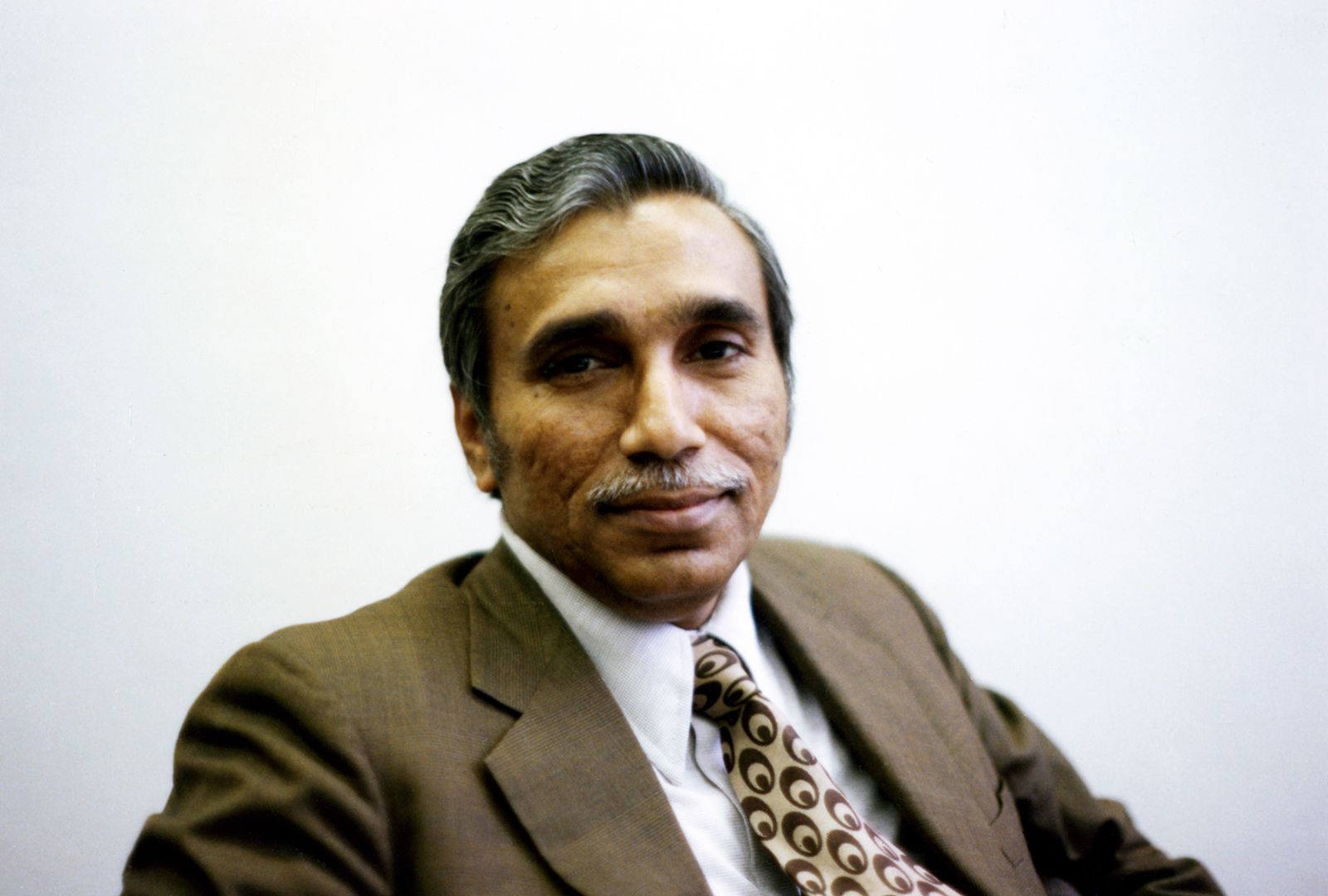
Fazlur Khan
 Bangladesh
Also known as: Fazlur Rahman Khan, Fazlur R. Khan
Birthday
April 3, 1929
Birth Sign
Aries
Birthplace
Dhaka, Bengal Presidency (now Bangladesh)
Age
Died at 52
About
Fazlur Rahman Khan was a Bangladeshi-American structural engineer and architect whose innovations in skyscraper design changed city skylines around the world. He is best remembered as the father of the tubular design system, a structural approach that made buildings taller, safer, and more economical. His work on the John Hancock Center and the Sears Tower in Chicago pushed the limits of what was possible, and his ideas continue to shape how engineers approach tall buildings today. Khan's genius lay in his ability to blend engineering rigor with architectural vision. He joined Skidmore, Owings & Merrill in 1955 and became a partner in 1966, helping the firm become a global leader in high-rise design. He was also an early adopter of computer-aided analysis, using it to model complex wind forces and structural behavior. His contributions earned him recognition as one of the most influential structural engineers of the twentieth century. He passed away on March 27, 1982, in Jeddah, Saudi Arabia, at the age of 52. His legacy lives on in the buildings that define modern skylines and in the engineers he inspired. He is widely recognized as the "father of tubular designs" for high-rise buildings, a concept that revolutionized the construction of supertall structures and made them more feasible and efficient. Before Khan's innovations, buildings over 20 to 30 stories faced significant structural challenges, particularly with lateral support and the increasing cost and complexity associated with wind pressure. His most significant contribution was the development of the "tubular design" system, which fundamentally changed high-rise construction. This system, particularly the "bundled tube" variation, utilized clustered steel cylinders to form a strong, rigid column. This approach allowed for greater height and stability while using less material, eliminating the need for internal wind braces and allowing for more flexible interior spaces. Khan's work continues to inspire engineers and architects worldwide, and streets have been named in his honor, such as "Fazlur R. Khan Way" adjacent to the Willis Tower in Chicago. He is remembered not only for his technical genius but also for his belief that engineers should appreciate life beyond their technical work, stating, "The technical man must not be lost in his own technology. He must be able to appreciate life, and life is art, drama, music and, most importantly, people."
Early Life & Background
Fazlur Rahman Khan was born on April 3, 1929, in Dhaka, Bengal Presidency (now Bangladesh). His father, a mathematics teacher and textbook author, later became Director of Public Instruction in Bengal. Growing up in a household that valued education, Khan developed a love for problem-solving and an appreciation for the arts and music. He discovered the pleasure of analyzing problems from various perspectives. He received his Bachelor of Engineering from the University of Dhaka in 1950. Following communal riots in 1950, he returned to Dhaka and was admitted to Ahsanullah Engineering College (now Bangladesh University of Engineering and Technology), earning his bachelor's degree in civil engineering in 1950. He taught at the university until 1952 before moving to the United States on a Fulbright and Pakistani scholarship to study at the University of Illinois at Urbana-Champaign. There, he earned two master's degrees in theoretical and applied mechanics and structural engineering, and a PhD in structural engineering in 1955. His doctoral research focused on the behavior of reinforced concrete, laying the groundwork for his later innovations.
Career Growth
Khan began his professional career in 1955 with the architectural and engineering firm Skidmore, Owings & Merrill (SOM) in Chicago. After fulfilling scholarship obligations by returning to East Pakistan (now Bangladesh) and serving as a lecturer, he rejoined SOM in the U.S. in 1960 and became a partner in 1966. Khan's work was central to significant advancements in building design, particularly in the implementation of computer technology, new structural materials, and a deeper understanding of wind effects on tall structures.
His breakthrough came with the design of the 100-story John Hancock Center in Chicago, completed in 1969. The building's distinctive X-braced exterior was a direct result of Khan's tubular frame concept, which allowed for a lighter, more efficient structure. This project demonstrated that supertall buildings could be built without the massive, expensive interior columns used in previous designs.
Khan's most famous achievement followed with the Sears Tower (now Willis Tower), completed in 1973. Using his bundled tube system, he arranged nine steel tubes into a cluster that rose to 108 stories. The tower became the world's tallest building, a title it held from 1973 to 1998. The bundled tube design not only provided strength but also created flexible floor space that could be configured in different ways.
Beyond Chicago, Khan's influence reached the Hajj Terminal at Jeddah's airport, a vast fabric-roofed structure that won the American Institute of Architects Twenty-Five Year Award in 2010. He also worked on the Onterie Center and other projects, always looking for ways to use materials more efficiently.
Khan received numerous honors during his lifetime, including Engineering News-Record's Construction's Man of the Year in 1972, the Wason Medal from the American Concrete Institute in 1971, and the Lloyd Kimbrough Medal from the American Institute of Steel Construction in 1973. He also earned honorary doctorates from Northwestern University, Lehigh University, and the Swiss Federal Institute of Technology. He was cited by Engineering News-Record (ENR) as one of the "Men who served the best interests of the construction industry" and was voted "Construction's Man of the Year" by ENR in 1972. The Council of Tall Buildings and Urban Habitat (CTBUH) named an award in his honor, the Fazlur Khan Lifetime Achievement Medal.
Career Timeline
Public Image & Style
Khan is celebrated as a visionary engineer who bridged the gap between structural efficiency and architectural beauty. He is often called the "father of tubular designs," a title that reflects his transformative impact on skyscraper construction. His approach emphasized using less material to achieve greater height, a philosophy that resonated with architects and clients alike. He was also a mentor to many young engineers, and his legacy is kept alive through lectures, awards, and the buildings that continue to define Chicago's skyline. His resting place at Graceland Cemetery in Chicago is also marked, with recent social media posts from the cemetery highlighting his grave.
Fame & Fandom
Fazlur Rahman Khan never sought a celebrity cult, yet his legacy commands a reverence that rivals the devotion given to rock stars or movie icons. His followers are not found in chaotic fan clubs but in the quiet awe of structural engineers, architecture students, and the Bangladeshi diaspora who view him as the architect of their modern skyline. This professional fandom gathers annually at the Fazlur R. Khan Distinguished Lecture Series, where his methods are dissected with the intensity of religious study. While no informal name like "Khan-ites" exists, the community treats his work as sacred text, preserving the story of how he watched a bamboo cane bend in the wind to invent the tubular structure that saved the skyscraper from collapsing under its own weight. The 2017 Google Doodle marked a rare crossover moment, bringing his engineering genius to a global audience usually reserved for entertainers, sparking a surge of interest that turned his biography into a bestseller among non-engineers. He did not have a fanbase that organized chart pushes or birthday billboards; instead, his fans built monuments of steel and glass across Chicago and New York. Today, his influence is measured not in viral hashtags but in the hundreds of supertall buildings standing as silent tributes to his calculations. In the iFANN Global Fame Rankings, his status remains formidable. He is currently ranked as the 21st most famous person from Bangladesh, a position he has held steady through multiple cycles.
Interesting Facts and Legends
Fazlur Rahman Khan was a man who believed technical experts must also appreciate art and music, often urging colleagues to look beyond their blueprints. After his death, his contributions were formally recognized when he was inducted into the Illinois Engineering Hall of Fame in 2006. A street near the Willis Tower now bears his name as Fazlur R. Khan Way, ensuring passersby remember the mind behind the structure. Lehigh University hosts the Fazlur R. Khan Distinguished Lecture Series, keeping his teachings alive for new generations. His daughter, Yasmin Sabina Khan, authored the definitive biography titled Engineering Architecture to document his life. The Hajj Terminal earned the American Institute of Architects Twenty-Five Year award in 2010, celebrating a project that showcased his innovative approach to large-scale transit. The Council of Tall Building and Urban Habitat (CTBUH) established the Fazlur Khan Lifetime Achievement Medal to honor future innovators. Legends in the field still retell the story of how observing a hollow bamboo stalk inspired the tubular design that revolutionized construction. Another enduring tale describes him as the "Einstein of Structural Engineering," a title reflecting his ability to solve complex wind-resistance problems with mathematical elegance. These stories cement his place not just in history books, but in the collective imagination of those who shape the world's vertical cities.
Notable Quotes
“The technical man must not be lost in his own technology. He must be able to appreciate life, and life is art, drama, music and, most importantly, people.”
Family & Personal Life
Khan was born into a Bengali Muslim family in Dhaka. His father, a mathematics teacher and textbook author, later became Director of Public Instruction in Bengal. Khan married the daughter of a wealthy landowner. He had a daughter, Yasmin Sabina Khan, who has written about her father's life and work. Khan passed away from cardiac arrest while in Jeddah, Saudi Arabia, and is buried at Graceland Cemetery in Chicago.
Notable Connections
Relationships & Dating History
Fazlur Khan married the daughter of a wealthy landowner in Bangladesh, but details about their relationship are not widely documented. He had a daughter, Yasmin Sabina Khan, who later became an author. Khan was married at the time of his death in 1982.
- Married? - 1982Married to the daughter of a wealthy landowner; details are scarce.
Death & Aftermath
Died
March 27, 1982 (aged 52)
Death Place
Unknown
Cause of Death
reported heart attack
Fazlur Rahman Khan died on March 27, 1982, at the age of 52. The most consistent report regarding the cause of death is that he died of a heart attack, autopsy findings, family statement, or hospital declaration confirming this specific cause is available in the source text to distinguish between a confirmed medical ruling and a general public account. There is no mention of any dispute regarding the cause or circumstances of his death in the provided materials. His passing appears to have been treated as a natural event. Public reaction to his death included significant tributes from the engineering and architectural communities, though specific details of vigils, chart surges, or memorial murals immediately following his death are not enumerated in the sources.
Tributes have since evolved into enduring honors; he is widely referred to as the "Einstein of structural engineering" by professionals in the field. Institutions such as Lehigh University established the "Fazlur R. Khan Distinguished Lecture Series" to honor his legacy. Google honored him with a doodle on what would have been his 88th birthday in 2017, celebrating his role in converging engineering and architecture. In 2023, El País published an article commemorating his impact on skyscraper design, further cementing his posthumous reputation. Details regarding his funeral or memorial service, including the date, location, whether it was public or private, notable attendees, performances, or the specific method of burial or cremation, are not provided in the search results.
It is noted, however, that he is buried at Graceland Cemetery in Chicago, as indicated by a Facebook post from the cemetery. Posthumously, Fazlur Khan has received numerous awards and dedications. He was inducted into the National Academy of Engineering. His estate and legacy are maintained through various foundations and lecture series, including the one at Lehigh University mentioned above. The handling of his estate specifically is not detailed in the provided text beyond these institutional honors. No films or books directly detailing his death were identified in the search results, though his life and work are subjects of biographical entries and articles in Britannica, Wikipedia, and various news outlets.
Net Worth (Estate Value)
As a structural engineer, Fazlur Khan earned a comfortable living, but his true wealth lay in his contributions to the built environment. At the time of his death in 1982, his estate was modest by today's standards. His legacy, however, has proven financially significant through the enduring value of the buildings he designed. The John Hancock Center and Willis Tower continue to generate substantial revenue, and his name is attached to awards and lectures that keep his memory alive. While exact figures are not publicly available, his influence on skyscraper design has saved billions in construction costs over the decades. His work is preserved through academic lectures, such as the Fazlur Rahman Khan Distinguished Lecture Series at Lehigh University, and through works like the musical composition created by the University of Illinois in 2018 to honor him.
Awards Won (5)
Fazlur Khan received numerous honors for his engineering innovations, including the Wason Medal (1971), the Lloyd Kimbrough Medal (1973), and the Oscar Faber Medal (1973). He was named Construction's Man of the Year by Engineering News-Record in 1972. Posthumously, he was inducted into the Illinois Engineering Hall of Fame in 2006.
1973 · Engineering
Structural engineering contributions
2006 · Hall of Fame
Lifetime achievement
Known For
John Hancock Center
1969 · Structural Engineer
Sears Tower (Willis Tower)
1973 · Structural Engineer
Hajj Terminal, Jeddah
1981 · Structural Engineer
Keywords
Sources
Quick Facts
- Profession
- Structural Engineer, Architect
- Born
- April 3, 1929
- Birthplace
- Dhaka, Bengal Presidency (now Bangladesh)
- Died
- March 27, 1982
- Death Place
- Jeddah, Saudi Arabia
- Gender
- Male
- Birth Sign
- Aries
Personal Details
- Full Name
- Fazlur Rahman Khan
- Education
- B.Sc. in Civil Engineering, Ahsanullah Engineering College (1950); M.S. in Theoretical and Applied Mechanics, University of Illinois (1952); M.S. in Structural Engineering, University of Illinois (1953); Ph.D. in Structural Engineering, University of Illinois (1955)
Frequently Asked Questions
Who was Fazlur Khan?
What was Fazlur Khan's net worth?
Is Fazlur Khan still alive?
What is Fazlur Khan best known for?
How did Fazlur Khan change skyscraper design?
Similar People
Join the community
fans discussing