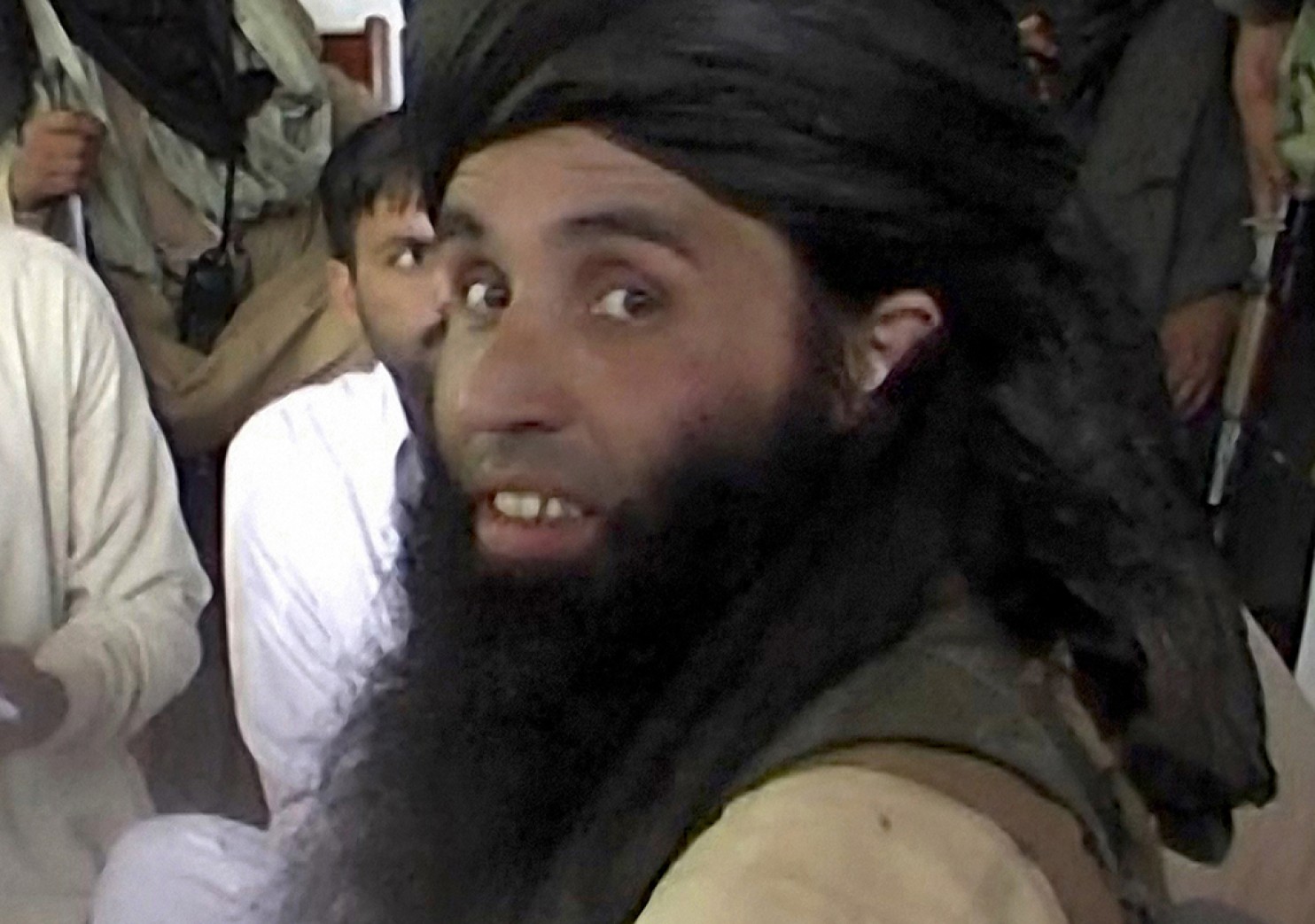
Fazlullah Hayat
 Pakistan
Also known as: Mullah Fazlullah, Mullah Radio, Radio Mullah, Fazal Hayat
Birthday
1974-01-01
Birth Sign
Capricorn
Birthplace
Kuza Bandai, Swat District, Pakistan
Age
Died at 44
About
Fazlullah Hayat was a Pakistani militant who led the Tehreek-e-Taliban Pakistan (TTP) as its third emir from November 2013 until his death in June 2018. Known internationally as “Mullah Radio” for his fiery FM broadcasts, he was one of South Asia's most wanted men, blamed for ordering the 2012 attack on Malala Yousafzai and for the 2014 Army Public School massacre in Peshawar that killed 149 people. He also headed the Tehreek-e-Nafaz-e-Shariat-e-Mohammadi (TNSM), the movement that sought to impose Sharia law in the Swat Valley.
During his five years at the helm of the TTP, Fazlullah presided over an organization wracked by internal dissent, with rival Mehsud factions challenging his authority. Despite the fragmentation, the group under his command carried out some of Pakistan's deadliest attacks. The United Nations and the United States both designated him as a global terrorist, and Washington placed a $5 million bounty on his head. He was killed by a U.S. drone strike in Afghanistan's Kunar Province on June 15, 2018, a blow that analysts said reshaped the TTP's leadership landscape.
Early Life & Background
Fazlullah Hayat was born in 1974 in the small village of Kuza Bandai in the Swat District of Pakistan's Khyber Pakhtunkhwa province. His family were farmers, but he showed little interest in agriculture. He briefly attended a local madrassa, but dropped out before completing his religious education, relying instead on natural oratory skills that would later define his career.
His life changed in the early 2000s when he married the daughter of Sufi Muhammad, the founder of the TNSM, a movement dedicated to enforcing Sharia law in Swat. When Sufi Muhammad was arrested, Fazlullah stepped into the leadership vacuum. He began broadcasting sermons over an illegal FM radio channel, mixing religious rhetoric with calls for militancy. The broadcasts were a hit in the remote valley, earning him the nickname “Mullah Radio” and building a devoted following. By 2007, he had become the de facto ruler of most of Swat, imposing a harsh interpretation of Islamic law that included public executions, floggings, and the destruction of girls' schools.
His insurgency drew a massive military response. In 2009, after 16 months of fighting, the Pakistani army launched a major offensive that drove him and his fighters out of Swat. He fled to the tribal areas near the Afghan border and eventually crossed into Afghanistan, where he would continue to operate for the rest of his life.
Career Growth
Fazlullah's appointment as the third emir of the TTP came on November 7, 2013, days after a U.S. drone strike killed his predecessor, Hakimullah Mehsud. The choice was controversial within the organization, as Fazlullah was not from the dominant Mehsud tribe, and several factions openly resented his leadership.
Despite the internal strife, the TTP under his command escalated attacks. The most notorious was the December 16, 2014, assault on the Army Public School in Peshawar, which left 149 people dead, most of them children. Fazlullah claimed responsibility, saying it was retaliation for Pakistani military operations against the Taliban.
He was also widely believed to have ordered the 2012 shooting of Malala Yousafzai, the teenage education activist from Swat, who survived and later won the Nobel Peace Prize. International media frequently described him as “the man who shot Malala.”
As his tenure wore on, the TTP splintered into rival factions, including the Mehsud faction led by Khan Said “Sajna” and the Shehryar Mehsud group, which often clashed with each other. By 2018, the organization had lost much of its operational cohesion. On March 7, 2018, the U.S. State Department added him to its Rewards for Justice list with a $5 million reward. He was killed on June 15, 2018, in a drone strike in Kunar Province, Afghanistan, along with four associates.
Career Timeline
Public Image & Style
Fazlullah's public image was defined entirely by his role as a terrorist leader. In international media, he was portrayed as ruthless and fanatical, responsible for some of Pakistan's most devastating attacks. His signature “style” was his radio-based preaching, which combined religious rhetoric with militant mobilization. Within militant circles, he was respected for his oratory but resented by tribal factions who saw him as an outsider. There was no conventional fandom; his name was synonymous with fear and extremism in Pakistan and beyond.
Fame & Fandom (iFAMOUS Rankings)
Fazlullah Hayat, the militant leader known as Mullah Radio, never cultivated a fanbase in any conventional sense. His public following was confined to the ideological sympathizers of the Tehreek-e-Taliban Pakistan (TTP) and the Tehreek-e-Nafaz-e-Shariat-e-Mohammadi (TNSM), who regarded him as a religious authority and military commander. There is no documented fandom name, no fan campaigns, no rituals, and no instances of him interacting with admirers as a celebrity might. His reputation was built on fear and violence, not on the kind of cultural adoration that typically generates fan communities.
In the broader public sphere, his name became synonymous with terrorism, particularly after ordering the 2012 attack on Malala Yousafzai and orchestrating the 2014 Army Public School massacre. These actions defined his legacy, and any 'legend' surrounding him is a record of brutality rather than celebrated lore. The story of his transformation from a ski-lift operator to a militant emir is frequently retold, but it is a cautionary tale, not a source of inspiration.
As of August 2026, iFANN's Global Fame Engine has evaluated Fazlullah Hayat but does not currently place him in any published ranking, including the Global Top 1,000 or any Top-100 scope list. This absence reflects the narrow and predominantly negative nature of his recognition, which is limited to news coverage of his attacks and death, and does not translate into the broad, ongoing fame measured by contemporary fame indices.
Interesting Facts and Legends
Fazlullah's FM radio sermons were so influential that the Pakistani military's 2009 offensive was partly aimed at destroying his broadcast infrastructure. He was falsely reported dead multiple times before his actual death, so some observers initially doubted the 2018 reports. His famous quote upon becoming TTP emir was: “Our goal is very clear, we want the law of Allah in Allah's land.” He was known to have no formal education beyond his brief madrassa attendance, yet his oratorical skills earned him a following. The Peshawar school massacre under his leadership was the deadliest terrorist attack in Pakistan's history.
One of the most widely told stories about Fazlullah is his rise from a ski-lift operator in the Swat Valley during the 1990s to a militant commander, a narrative that underscores his unexpected path to infamy. Another iconic moment, often cited in retrospectives, was his use of an illegal FM radio station to broadcast radical sermons, which earned him the nickname “Mullah Radio” and became central to his public identity. His death in a U.S. drone strike in June 2018 was initially met with skepticism due to prior false reports, but it is now accepted as fact, closing a violent chapter in Pakistan's history.
Notable Quotes
“Our goal is very clear, we want the law of Allah in Allah's land.”
Family & Personal Life
Fazlullah married the daughter of Sufi Muhammad, the founder of the TNSM, in the early 2000s. This marriage was instrumental in his rise within the movement, as it tied him directly to the organization's leadership. Details about his wife's name and any children are not publicly documented. He came from a working-class farming family in Swat, but he did not follow the family trade. After his death, his wife's status remains unknown.
Notable Connections
Relationships & Dating History
Fazlullah's only publicly documented relationship was his marriage to the daughter of Sufi Muhammad, which took place in the early 2000s. The marriage was instrumental in his rise within the TNSM, as it connected him to the movement's founding family. No other romantic relationships, marriages, or children are documented in credible sources. He remained married at the time of his death in 2018, though details of his wife's subsequent status are not publicly known.
- MarriedDaughter of Sufi Muhammad2000 - 2018Marriage to the TNSM founder's daughter helped cement his position in the movement.
Death & Aftermath
Died
2018-06-15 (aged 44)
Death Place
Kunar Province, Afghanistan
Cause of Death
US drone strike
Fazlullah Hayat died in mid-June 2018 within a residential compound in Kunar Province, Afghanistan. The United States conducted an airstrike targeting him during an Iftar gathering, and the operation was confirmed by American officials through visual assessment of the strike aftermath rather than through an autopsy or coroner's ruling. Intelligence assessments and reports from major international outlets established the drone strike as the definitive method of his death, with no disputed accounts regarding the cause existing in credible reporting. His death ended the tenure of the third emir of the Tehreek-e-Taliban Pakistan, an organization that had fractured into rival factions by the time of his elimination.
Public reaction to his demise varied across different groups. In Pakistan, citizens and government officials viewed him as a primary architect of violence in Swat and the shooter of Malala Yousafzai, leading to widespread relief. Extremist circles offered limited internal tributes via militant communications. The US government did not issue a formal legal ruling but acknowledged the operation as part of its counterterrorism campaign against high-value targets.
Posthumously, Fazlullah Hayat remains listed on sanctions databases such as the US Office of Foreign Assets Control as a designated terrorist. Reports indicate that his body was likely disposed of immediately after the drone strike, consistent with standard protocol for high-value target eliminations in conflict zones. He has not received awards, hall-of-fame inductions, or dedications, and no films, books, or scholarly works have been published specifically honoring him beyond academic analysis of his tactics.
Net Worth (Estate Value)
$1 Million
iFANN Editorial Team estimate
As a militant leader who spent his final years in hiding, Fazlullah Hayat had no legitimate income, business ventures, or publicly trackable assets. His death in a drone strike left no estate management structure or posthumous revenue. Any financial resources he controlled were tied to the TTP's illicit funding networks, which remain opaque. iFANN currently estimates his net worth at $1 million, a figure that reflects the minimal documented financial footprint of a fugitive militant, rather than any verifiable personal wealth.
Awards & Accolades
View 3 records, honours and achievementsKnown For
Tehreek-e-Taliban Pakistan
2013-2018 · Emir
Tehreek-e-Nafaz-e-Shariat-e-Mohammadi
2000s · Leader
Keywords
Sources
Quick Facts
- Profession
- militant leader
- Born
- 1974
- Birthplace
- Kuza Bandai, Swat District, Pakistan
- Died
- June 15, 2018
- Death Place
- Marawara District, Kunar Province, Afghanistan
- Gender
- Male
- Birth Sign
- Capricorn
- Aliases
- Mullah Fazlullah, Mullah Radio, Radio Mullah
- Designated By
- UN Security Council, U.S. OFAC, U.S. State Department
Personal Details
- Full Name
- Fazal Hayat
- Spouse
- Daughter of Sufi Muhammad
- Education
- Briefly attended a local madrassa; did not complete
Frequently Asked Questions
Who killed Mullah Fazlullah?
Did Mullah Fazlullah shoot Malala?
What is Mullah Radio?
Who was the leader of the Pakistani Taliban in 2014?
How old was Mullah Fazlullah when he died?
Similar People
Join the community
fans discussing