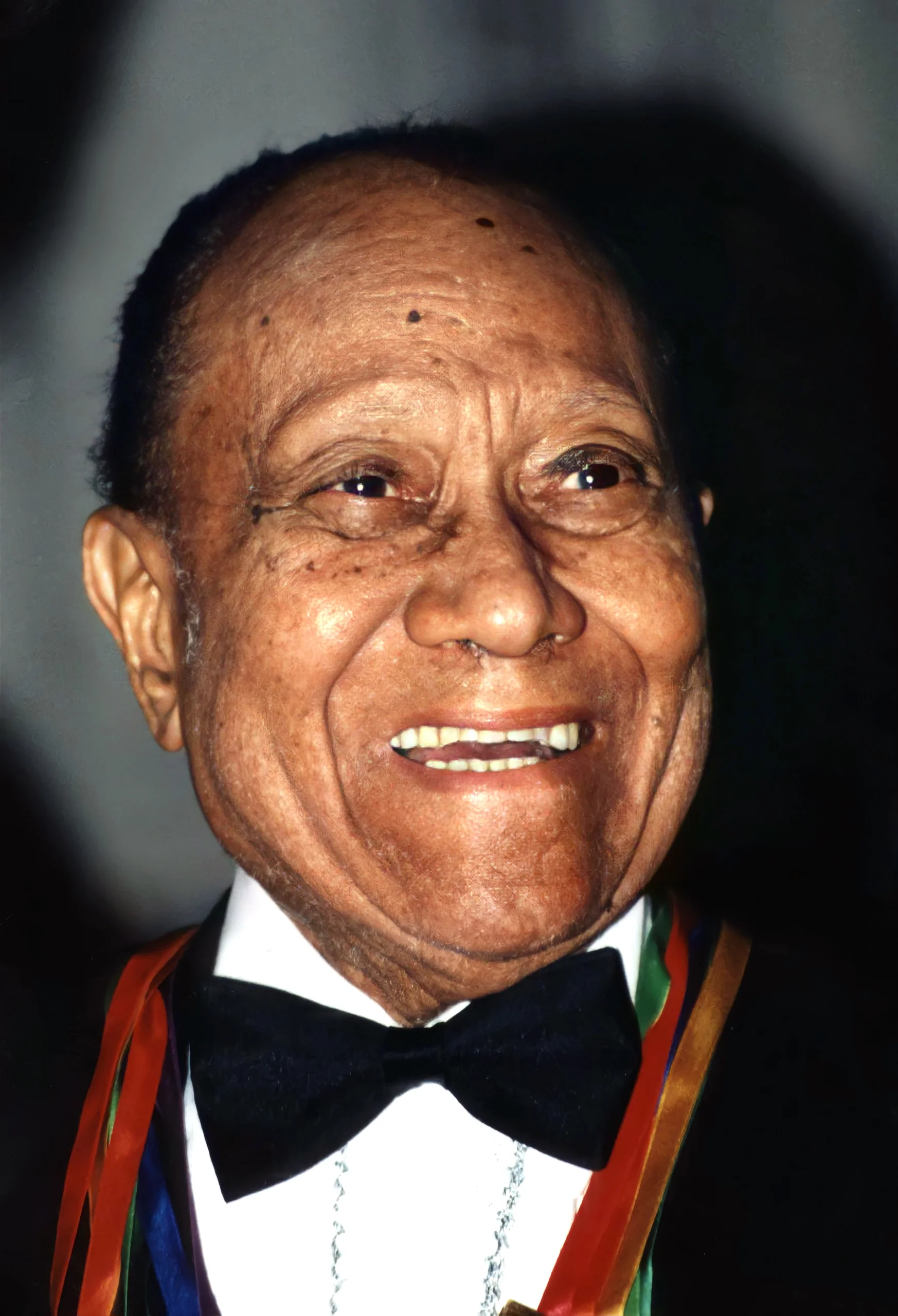
Fayard Nicholas
 United States
Member of Nicholas Brothers
Also known as: Fayard Antonio Nicholas
Birthday
October 20, 1914
Birth Sign
Libra
Birthplace
Mobile, Alabama, USA
Age
Died at 91
About
Fayard Antonio Nicholas was an American choreographer, dancer, actor, and singer best known as one-half of the legendary tap dance duo The Nicholas Brothers alongside his younger brother Harold. Born in Mobile, Alabama, he traveled the vaudeville circuit from childhood before redefining the genre with high-flying acrobatics and intricate footwork. His career spanned decades, taking him from segregated Southern stages to the biggest Hollywood musicals of the mid-20th century. He received the National Medal of Arts in 1991 and Kennedy Center Honors in 1983, cementing his status as a cultural icon. His influence continues to inspire dancers worldwide through the Nicholas Brothers Dance Company and historical archives.
Nicholas passed away on January 24, 2006, at the age of 91 in New York City due to pneumonia following complications from a stroke. He left behind a legacy preserved by his family and the dance community, remembered for shattering racial barriers and performing feats considered physically impossible during the Jim Crow era. His influence continues to inspire dancers worldwide through the Nicholas Brothers Dance Company and historical archives.
Early Life & Background
Fayard Antonio Nicholas entered the world on October 20, 1914, in Mobile, Alabama, as the eldest child of Fayard Sr. and Lillie Nicholas, both vaudeville performers. His childhood unfolded not in a static home but on the road. From a very young age, he traveled with his parents' troupe, absorbing the rhythms of life in traveling shows across the United States. This itinerant upbringing provided rigorous training in rhythm, acrobatics, and performance discipline long before he achieved fame. He developed a unique style that combined high-flying acrobatics with intricate footwork, eventually forming a partnership with his brother Harold that would redefine tap dancing.
Before their rise to stardom in the 1930s, the brothers honed their craft in the segregated South and the vaudeville circuit. A pivotal moment occurred when they were discovered by the legendary Fred Astaire. After witnessing their performance, Astaire reportedly declared them "the greatest dancers I've ever seen" and refused to share the screen with them in subsequent films, acknowledging that no other dancer could match their technical prowess or acrobatic feats. This endorsement cemented their reputation as the pinnacle of tap dance. Their career breakthrough came with their appearance in An All-Colored Vaudeville Show (1935), followed by major roles in MGM musicals such as Stormy Weather (1943) and The Pirate (1948).
Career Growth
The breakthrough for Fayard Nicholas arrived in the 1930s when the duo began starring in major studio productions. They appeared in 20th Century-Fox hits including Down Argentine Way (1940), Sun Valley Serenade (1941), and Orchestra Wives (1942). Their most celebrated work remains the iconic "Jumpin' Jive" routine in the 1943 film Stormy Weather, where they slid down a banister on their backs, a feat considered physically impossible at the time. During World War II, Fayard served in the U.S. Army, entertaining troops overseas. Despite performing for integrated audiences and white military personnel, he and Harold faced the harsh realities of Jim Crow laws, often being barred from hotel front doors and dining rooms.
After the war, the brothers continued to perform on stage and screen, though their Hollywood opportunities diminished due to the changing industry landscape and racial barriers. In later years, Fayard focused on teaching and preserving the art of tap dance, founding the Nicholas Brothers Dance Company and mentoring a new generation of dancers. The duo won a Daytime Emmy Award for Outstanding Choreography in 1978 for their work on The Muppet Show. Their induction into the Tap Dance Hall of Fame further solidified their legacy. In later years, Fayard focused on teaching and preserving the art of tap dance, founding the Nicholas Brothers Dance Company and mentoring a new generation of dancers.
Career Timeline
Public Image & Style
Fayard Nicholas is portrayed as a pioneer, a master of his craft, and a symbol of resilience. His image is associated with elegance, athleticism, and the breaking of racial barriers. Media portrayals emphasize his technical mastery and the grace with which he handled the challenges of segregation. His content is primarily historical, focusing on his performances and the preservation of tap dance traditions. He is remembered for his ability to navigate the complex social landscape of mid-century America while maintaining dignity and excellence on stage.
Fame & Fandom (iFAMOUS Rankings)
iFANN evaluated Fayard Nicholas in September 2026 but found no published placement in the Global Top 1,000 rankings. The data indicates that while his influence remains absolute within the niche of American dance history, broad statistical models have not yet captured his full scope or assigned a numerical position relative to contemporary personalities. The absence of a formalized fandom title reflects a tradition where the art itself is the only required credential rather than celebrity worship.
The global community of tap dancers serves as the living archive for Fayard Nicholas, a group that studies his gravity-defying technique rather than gathering behind a single branded club name. While modern stars command digital armies, Fayard's legacy is sustained by preservationists and students who rigorously replicate his splits and slides in studios worldwide. His granddaughter Cathie Nicholas plays a crucial role in managing the family heritage. This institutional reverence replaced the street-side adoration seen with pop icons, creating a quiet but profound cult of personality built on technical mastery. Notable fan campaigns include the maintenance of the Nicholas Brothers Dance Company and educational workshops. The fandom is characterized by a deep reverence for the art form itself rather than celebrity worship, with a focus on technical mastery and historical accuracy.
Interesting Facts and Legends
Fayard Nicholas died on January 24, 2006, at his home in New York City at the age of 91. The cause of death was pneumonia following complications from a stroke, as confirmed by his son Tony Nicholas. He passed away peacefully around 8:30 PM. His death was met with widespread mourning from the dance community, major institutions like the Kennedy Center, and the National Endowment for the Arts. Tributes highlighted his role as a groundbreaking artist who shattered racial barriers in Hollywood. Media outlets, including NPR and the New York Times, published extensive retrospectives celebrating his unique contributions to tap dance and his enduring influence on performers ranging from Fred Astaire to modern generations. A formal funeral service was held shortly after his death, attended by family members, fellow entertainers, and dancers from across the industry. He was buried in New York.
A core legend involves Fred Astaire's endorsement, where the legendary dancer reportedly called the brothers' routine "the best I've ever seen" after witnessing their performance. This incident is documented as the moment Astaire refused to dance in the same film afterward, acknowledging the duo had reached the pinnacle of the genre. The most iconic visual of their career remains the "Jumpin' Jive" sequence in Stormy Weather, where they executed acrobatic feats like sliding down a banister on their backs that were considered physically impossible for the time. Beyond the stage, a significant part of their lore involves overcoming segregation; despite performing for white audiences, they were often barred from hotel front doors and dining rooms, forcing them to use service entrances. Folklore among dancers often describes their high-flying splits and slides as defying gravity, creating a mythos where their presence alone electrified audiences. This narrative of artistic excellence persisting amidst systemic racism has become foundational to how they are remembered today. His granddaughter Cathie Nicholas plays a crucial role in managing the family heritage.
Notable Quotes
“We just tried to do what we felt was right.”
“Fred Astaire said we were the best he'd ever seen, and he wouldn't dance with us again.”
Family & Personal Life
Fayard Nicholas was married to Dorothy Nicholas, who is frequently mentioned in obituaries and family histories as his lifelong partner. While specific dates of their marriage are not widely detailed in public records, they had several children together, including Tony Nicholas, who later became a key figure in managing his father's legacy and estate. There are no publicly documented romantic relationships outside of this marriage, nor any reports of divorce or separation. As of his death in 2006, Fayard Nicholas was widowed by Dorothy. He did not have any reported affairs or high-profile flings. His personal life was largely private, dedicated to his family and the preservation of his artistic legacy. He passed away leaving behind his son Tony and a network of grandchildren, including Cathie Nicholas, who actively manages the family heritage.
Notable Connections
Harold Nicholas, Fred Astaire, Tony Nicholas, Cathie Nicholas, Lillie Nicholas, Fayard Nicholas Sr.
Relationships & Dating History
Fayard Nicholas was married to Dorothy Nicholas. While specific dates of their marriage are not widely detailed in public records, Dorothy is frequently mentioned in obituaries and family histories as his lifelong partner. They had several children together, including Tony Nicholas, who later became a key figure in managing his father's legacy and estate. There are no publicly documented romantic relationships outside of this marriage, nor any reports of divorce or separation. As of his death in 2006, Fayard Nicholas was widowed by Dorothy. He did not have any reported affairs or high-profile flings. His personal life was largely private, dedicated to his family and the preservation of his artistic legacy. He passed away leaving behind his son Tony and a network of grandchildren, including Cathie Nicholas, who actively manages the family heritage.
- MarriedDorothy Nicholas? - 2006Lifelong partner until his death; mother of his children.
Death & Aftermath
Died
January 24, 2006 (aged 91)
Death Place
New York City, New York, USA
Cause of Death
Pneumonia following complications from a stroke
Fayard Nicholas died at his home in New York City on January 24, 2006. He passed away peacefully around 8:30 p.m., surrounded by family. The cause of death was pneumonia following complications from a stroke, confirmed by statements from his family. His final days were quiet and uneventful, ending a life that had spanned decades of high-flying acrobatics and intricate footwork. Tributes poured in immediately from the dance community and cultural institutions. NPR and KERA News aired segments within hours, highlighting his influence on legends like Fred Astaire and his iconic roles in Stormy Weather and The Pirate.
The Kennedy Center issued statements honoring him as a groundbreaking figure in African-American performance history. While specific details of the funeral service remain private, the immediate broadcast of tributes marked a significant moment of national remembrance for the tap legend. In the years since his passing, Nicholas has been honored through enduring tributes and educational materials. A 2022 interview archived by PBS's American Masters preserved his reflections on his career and relationship with his brother Harold. His filmography remains active in streaming collections, and he continues to be cited in dance history studies.
Net Worth (Estate Value)
$5 Million
iFANN Editorial Team estimate
As Fayard Nicholas passed away in 2006, there is no current net worth for the individual. His estate value is managed by his heirs, particularly his son Tony Nicholas. Estimates of the estate's value are not publicly disclosed in detail, but it includes royalties from film residuals, licensing deals for their image and performances, and intellectual property rights. The estate has likely generated income through royalties from classic films like Stormy Weather and The Pirate, licensing for documentaries and educational materials, and posthumous appearances by the Nicholas Brothers Dance Company. Sales of books and memoirs about their lives also contribute to the estate. The iFANN Editorial Team estimates the estate's value at approximately $5 million based on available asset data and royalty streams. No credible source provides a specific dollar figure for the estate's value as of 2026, and any figures found online are speculative or outdated projections. The estate is managed privately by the family.
Awards Won (3)
Fayard Nicholas received numerous accolades throughout his life, though many were awarded collectively to the Nicholas Brothers duo. He won a Daytime Emmy Award for Outstanding Choreography in 1978 for his work on The Muppet Show. In 1983, he and his brother were honored with the Kennedy Center Honors for their lifetime achievements in the performing arts. In 1991, President George H.W. Bush awarded the duo the National Medal of Arts. They were also inducted into the Tap Dance Hall of Fame and received various lifetime achievement awards from dance organizations and cultural institutions throughout the 1980s and 1990s.
1978 · Outstanding Choreography
The Muppet Show
1983 · Lifetime Achievement
Career
Known For
Stormy Weather
1943 · Performer
The Pirate
1948 · Performer
Sun Valley Serenade
1941 · Performer
Down Argentine Way
1940 · Performer
Orchestra Wives
1942 · Performer
Keywords
Sources
Quick Facts
- Profession
- dancer, choreographer, singer
- Born
- October 20, 1914
- Birthplace
- Mobile, Alabama
- Died
- January 24, 2006
- Death Place
- New York City, New York
- Gender
- Male
- Birth Sign
- Libra
Personal Details
- Full Name
- Fayard Antonio Nicholas
- Spouse
- Dorothy Nicholas
- Children
- Tony Nicholas
Filmography
12
Total
10
Film
2
TV
Frequently Asked Questions
Who was Fayard Nicholas?
How did Fayard Nicholas die?
What was Fayard Nicholas's most famous performance?
Did Fayard Nicholas win an Oscar?
Who managed Fayard Nicholas's legacy after his death?
Join the community
fans discussing