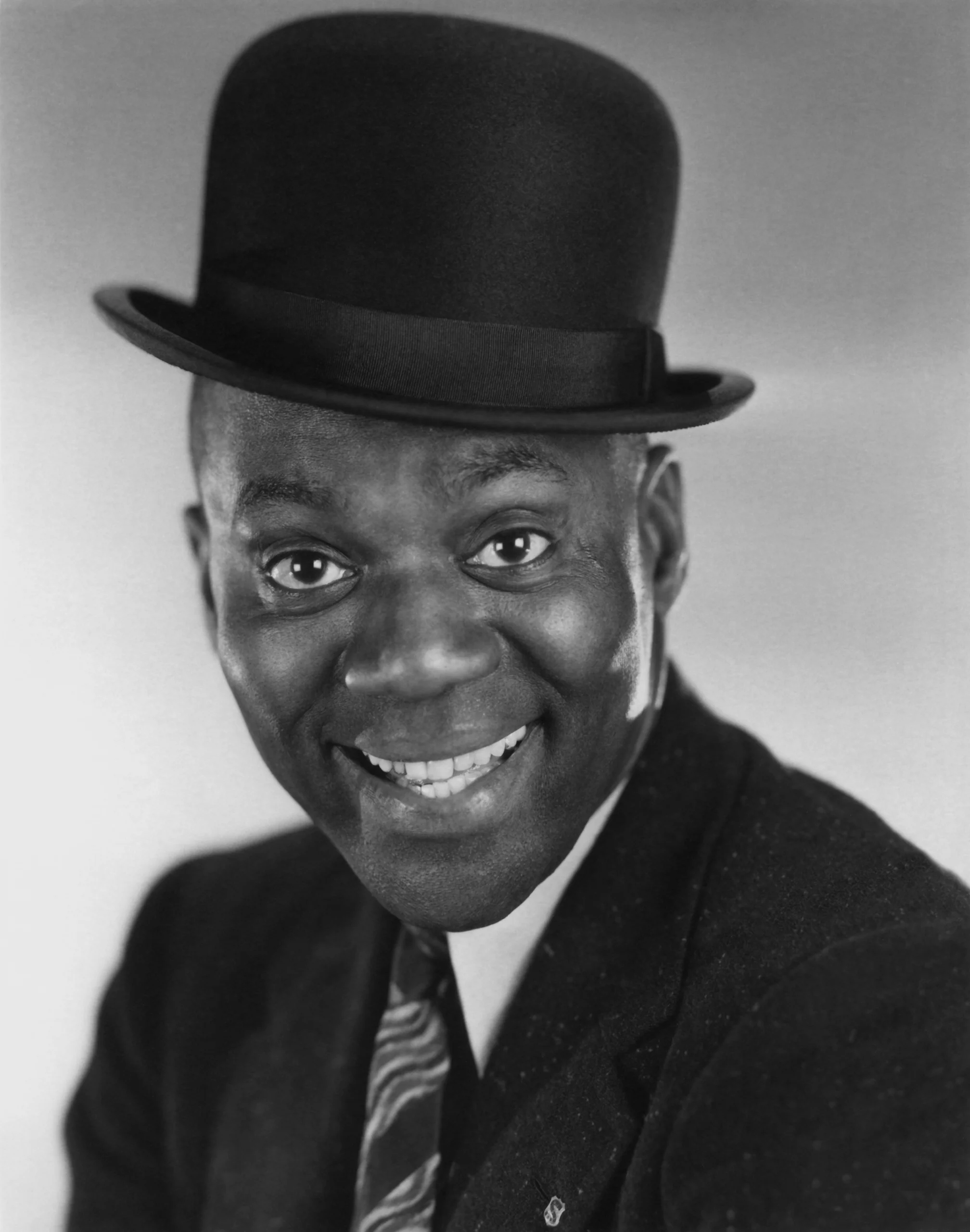
Bill Robinson
 United States
Also known as: Bojangles
Birthday
May 25, 1877
Birth Sign
Sagittarius
Birthplace
Richmond, Virginia, USA
Age
Died at 72
Height
5 ft 10 in (1.78 m)
About
Bill Robinson, known professionally as Bojangles, was an American tap dancer, actor, and singer who became the highest paid Black entertainer in the United States during the first half of the twentieth century. He is remembered as one of the most important figures in the history of tap, credited with lifting the form up onto the toes and giving it a new lightness, clarity, and swing at a time when much dancing stayed flat and heavy. His celebrated stair dance, a rhythmically intricate routine performed up and down a flight of steps, became his signature and a landmark in American dance.
Robinson's long career traced the evolution of popular entertainment itself, moving from minstrelsy and vaudeville to Broadway, recordings, radio, and Hollywood. He reached his widest fame in a series of 1930s films opposite child star Shirley Temple, and later starred in the all-Black musical Stormy Weather (1943). His success unfolded within the harsh constraints of a segregated industry, and he used his standing to push, where he could, against its color line. His legacy is complicated by the racial conventions of his era, yet his artistry reshaped tap and influenced generations of dancers who followed. Today, dancers worldwide still study and perform his stair dance as a rite of passage.
Early Life & Background
Robinson grew up in poverty in Richmond, Virginia. Both of his parents died when he was very young, and he was raised by his paternal grandmother, Bedilia Robinson, a former slave. He began dancing as a child, performing on street corners for pennies. At age seven, after a minor scrape with the law for throwing rocks, his grandmother sent him to Washington, D.C., to live with an aunt. He soon left school and took odd jobs, working as a stable boy and a newspaper boy.
His first step toward a career came when he joined a traveling minstrel show as a teenager. By the mid-1890s, he was performing in vaudeville, where he adopted the stage name Bojangles. The origin of the name is debated, some say it was a corruption of jangle (referring to his mood), others that it was a childhood nickname from his minstrel days. A pivotal moment came when he realized that the heavy, flat-footed tap style of the era could be transformed; he began dancing on the balls of his feet, creating a lighter, faster, and more melodic sound. He debuted his famous stair dance in a New York theater in 1908. He had no formal education beyond a few years of primary school and was largely self-taught.
Career Growth
Robinson's Broadway breakthrough came in 1928 with Blackbirds of 1928, a major hit that ran for over 500 performances and made him the highest paid Black entertainer in America. He followed with other Broadway revues, including Brown Buddies (1930) and The Hot Mikado (1939). His Hollywood debut arrived in 1934 with The Little Colonel, where he danced with Shirley Temple. This launched a series of films pairing the elderly Black dancer with the white child star, including The Littlest Rebel (1935) and Rebecca of Sunnybrook Farm (1938). These films, while problematic by modern standards for their racial stereotypes, made Robinson a household name.
His most significant film role was in the all-Black musical Stormy Weather (1943), which featured his legendary stair dance and a cast of top Black entertainers. In 1949, he founded the Bill Bojangles Robinson Foundation to help young dancers. He died later that year of heart failure in New York City at age 72. He received the NAACP Spingarn Medal in 1933 for his charitable work, and in 1933 he was the first Black person to receive the Key to the City of Richmond. He was inducted into the National Museum of Dance Hall of Fame in 1987, and received a star on the Hollywood Walk of Fame in 1994. A U.S. Postal Service stamp honored him in 1994 as part of the Black Heritage series.
Career Timeline
Public Image & Style
Robinson's signature style was elegant and athletic: a tuxedo or crisp suit, a derby hat, and patent leather shoes. His most famous routine, the stair dance, became synonymous with his name. Media of his era portrayed him as a happy-go-lucky figure, a stereotype he had to navigate. Modern media often focuses on his artistic genius and the complex racial context of his success. Tap dancers worldwide study and perform his stair dance as a rite of passage. Fred Astaire called him the greatest dancer I ever saw. Time Magazine featured him on the cover of its February 11, 1935 issue, with the line: "Bill Robinson: He dances up a stairway to fame."
Fame & Fandom (iFAMOUS Rankings)
Bill Robinson stands as a towering figure in the history of American performance, his name instantly recognizable across generations despite passing away nearly a century ago. While modern metrics often favor living celebrities with active social media campaigns, Robinson's enduring legacy commands a different kind of attention rooted in historical significance and artistic mastery. As of August 2026, iFANN has evaluated his global standing, though he currently does not hold a placement in the published Global Top 1,000 rankings or any specific scope list. This absence from current numerical charts reflects the shifting nature of real-time fame rather than a diminishment of his impact; his influence remains pervasive in dance studios, film archives, and cultural studies worldwide. The public interaction with Robinson today is less about viral trends and more about educational preservation and scholarly appreciation. There is no formal, organized fandom name documented for his fanbase, nor do digital communities engage in the ritualistic campaigning seen with contemporary stars. Instead, his audience consists of historians, dance scholars, and cultural institutions dedicated to maintaining his memory through museum exhibits and academic study. His story survives not through hashtags or fan projects but through the enduring power of his artistry and the verified historical narratives that define his life. From his groundbreaking role in Hollywood to his technical innovations on stage, Robinson's work continues to shape the understanding of racial progress and artistic excellence in the 20th century.
Interesting Facts and Legends
Robinson was a talented drummer who could play the drums with his feet while tap dancing. He owned and operated a chain of barbershops in New York and was a lifelong baseball fan who once barnstormed with the Negro League team the New York Black Yankees. Known for his generosity, he often gave money to friends and strangers, which contributed to his financial troubles. He served in the all-Black 15th New York National Guard Regiment during WWI but did not see combat. Robinson was credited with running 50 yards backward in 5.6 seconds, a stunt performed for publicity. A bronze statue of him was erected in Richmond, Virginia in 1973, and he received an honorary degree from the University of Richmond posthumously in 2020. Time listed him among the 100 most important people of the 20th century in 1999, and Rolling Stone ranked him among the 100 Greatest Dancers of All Time in 2022. A widely retold legend involves his invention of the stair dance, a routine where he danced up and down steps with such speed it seemed to defy gravity. Another iconic story details his chemistry with child star Shirley Temple in films like The Little Colonel, where he insisted their dance scenes be shown first to establish their connection before other interactions. These moments cemented his status as a pioneer who used dance to transcend racial barriers during the Jim Crow era.
Notable Quotes
“I don't want to be a credit to my race. I just want to be a credit to my profession.”
“Dancing is the poetry of the foot.”
“I have no desire to be anything but a dancer. I just want to dance.”
Family & Personal Life
Robinson was born Luther Robinson on May 25, 1877, in Richmond, Virginia. His parents were Maxwell Robinson, a machinist, and Maria Robinson. His older brother, William, nicknamed him Bill, a name he kept for life. Both parents died when he was very young. He was raised by his paternal grandmother, Bedilia Robinson, a former slave. He had no biological children. He was married three times: to Lena Chase (1907-1916), Fannie S. Clay (1922-1943), and Elaine Plaines (1944 until his death). None of his marriages produced children.
Notable Connections
Robinson frequently co-starred with Shirley Temple in four films. He performed alongside Cab Calloway and Lena Horne in Stormy Weather. Modern dancer Gregory Hines portrayed Robinson in a 1988 stage tribute. Fred Astaire admired Robinson and called him the greatest dancer I ever saw.
Relationships & Dating History
Robinson was married three times. His first marriage was to Lena Chase from 1907 to 1916; they had no children and divorced. His second marriage was to Fannie S. Clay, a former dancer who also managed his career for a time, from 1922 to 1943; they had no children and divorced after a long separation. His third marriage was to Elaine Plaines in 1944; she was 21 and he was 67. They remained married until his death in 1949. He had no children from any of his marriages.
- MarriedLena Chase1907 - 1916First marriage, ended in divorce. No children.
- MarriedFannie S. Clay1922 - 1943Second marriage. Fannie was a former dancer and his manager for a time. Ended in divorce after a long separation.
- MarriedElaine Plaines1944 - 1949Third marriage. She was 21, he was 67. Remained married until his death.
Death & Aftermath
Died
November 25, 1949 (aged 72)
Death Place
New York City, New York, USA
Cause of Death
Heart attack (myocardial infarction)
Shirley Temple traveled from California to Harlem to pay her respects at the Mount Olivet Baptist Church, where hundreds of dignitaries and fans gathered for a private funeral service just two days after the tap legend's passing. The Negro Actors Guild of America held special tributes honoring his legacy as a trailblazer who broke racial barriers in vaudeville and Hollywood, while President Harry S. Truman issued a statement of mourning that underscored Robinson's status as a national icon. Major newspapers ran front-page obituaries detailing his contributions to dance and film, specifically highlighting his iconic partnership with Temple in movies like The Little Colonel and Rebecca of Sunnybrook Farm.
Bill "Bojangles" Robinson died on November 25, 1949, at Harlem Hospital in New York City following a heart attack. His condition had deteriorated significantly in the weeks leading up to the event, complicated by severe pneumonia and chronic diabetes that had plagued him for years. Although he had made a final public appearance performing at the Apollo Theater earlier that month, his health collapsed shortly thereafter, leading to his admission to the hospital where he passed away. The death was ruled a natural cause resulting from acute cardiac failure triggered by his underlying chronic conditions. Following his interment at Mount Hope Cemetery in Yonkers, New York, the theater community observed moments of silence across the country, and ticket sales for revivals of his old shows surged immediately.
In the decades that followed, Robinson received numerous posthumous honors, including induction into the Dance Hall of Fame and the Black Filmmakers Hall of Fame, alongside a bust in his birthplace of Richmond, Virginia. A street corner in New York City was dedicated to him, and the Bill Robinson Foundation was established to support young dancers, ensuring his cultural impact endured long after his estate was settled through standard probate procedures.
Net Worth (Estate Value)
$25 Million (Estate Value)
iFANN Editorial Team estimate
At the time of his death in 1949, Robinson was nearly broke, having spent much of his fortune on lavish living, gambling, and charitable giving. His estate was valued at approximately $20,000. Since then, the estate has earned substantial revenue through licensing of his name and image, royalties from film releases (especially Stormy Weather and the Shirley Temple films), and merchandise. The estate is managed by the Bill Bojangles Robinson Foundation, which uses proceeds for dance scholarships. Per iFANN's editorial analysis, the estate's estimated value as of 2026 is $25 Million.
Awards Won (3)
Robinson received the NAACP Spingarn Medal in 1933 for his charitable work and contributions to the Black community. He was the first Black person to receive the Key to the City of Richmond in 1933. He was granted an Honorary Life Membership in the American Guild of Variety Artists in 1949.
1933 · Civic & Cultural
Charitable work and contributions to the Black community
1933 · Civic Honor
First Black person to receive this honor in Richmond
Known For
The Little Colonel
1935 · Walker
The Littlest Rebel
1935 · Uncle Billy
Rebecca of Sunnybrook Farm
1938 · Aloysius
Stormy Weather
1943 · Bill Williamson
Blackbirds of 1928
1928 · Performer
Keywords
Quick Facts
- Profession
- tap dancer, actor, singer
- Born
- +1877-05-25
- Birthplace
- Richmond, Virginia, USA
- Died
- +1949-11-25
- Death Place
- New York City, New York, USA
- Gender
- Male
- Spouse
- Lena Chase, Fannie S. Clay, Elaine Plaines
- Birth Sign
- Sagittarius
Personal Details
- Full Name
- Luther Robinson
- Height
- 5 ft 10 in (1.78 m)
- Spouse
- Lena Chase (1907-1916), Fannie S. Clay (1922-1943), Elaine Plaines (1944-1949)
Filmography
14
Total
14
Film
0
TV
Frequently Asked Questions
How old was Bill Robinson when he died?
Who was Bill Robinson married to?
What is Bill Robinson's most famous dance?
Did Bill Robinson have any kids?
How did Bill Robinson get the name Bojangles?
Similar People
Join the community
fans discussing