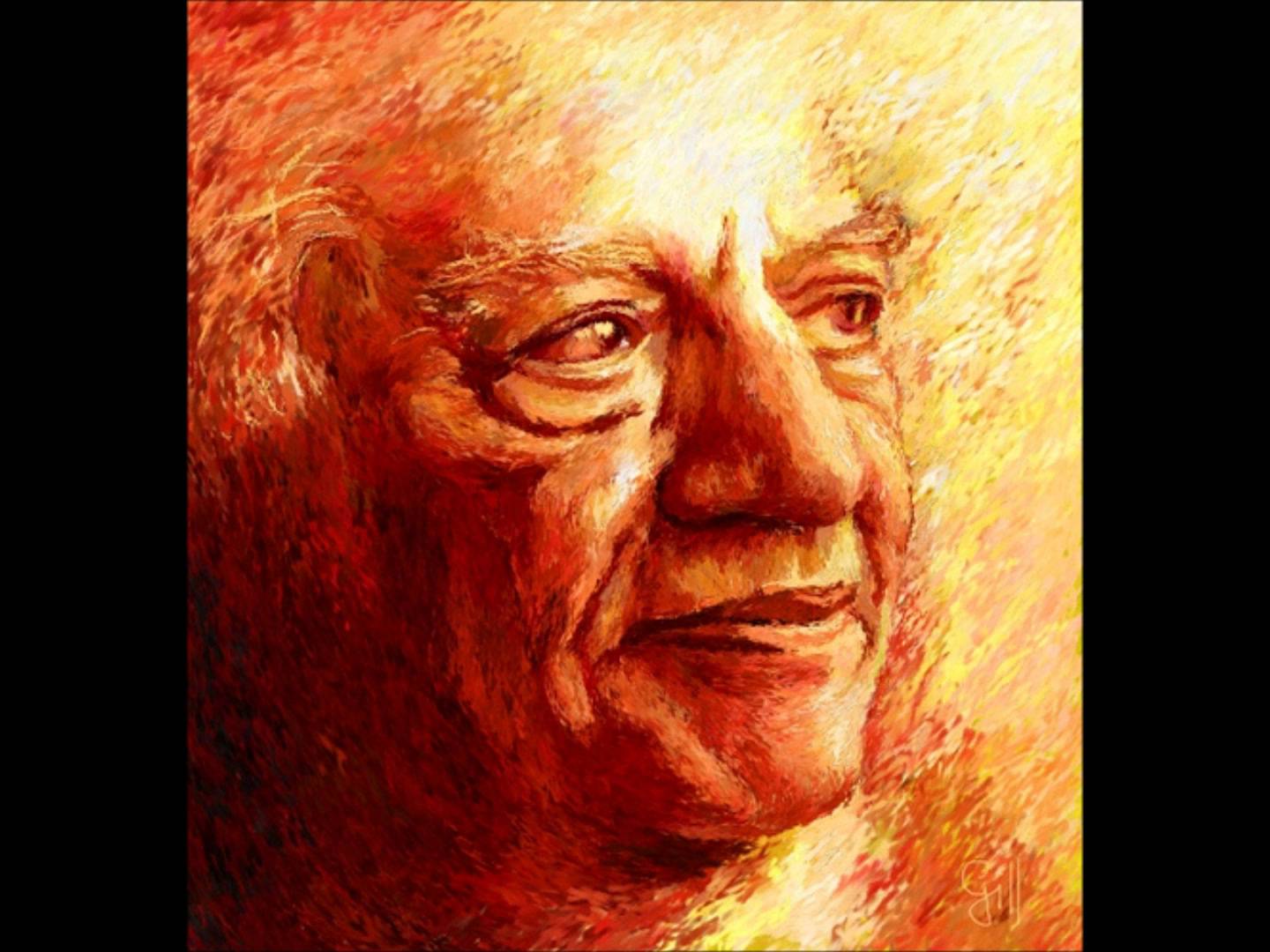
Faiz Ahmad Faiz
 Pakistan
Also known as: Faiz Ahmed Faiz
Birthday
February 13, 1911
Birth Sign
Aquarius
Birthplace
Sialkot, British India (now Pakistan)
Age
Died at 73
About
Faiz Ahmad Faiz was one of the most influential Urdu and Punjabi poets of the twentieth century, a writer whose work blended lyrical beauty with a deep commitment to social justice. His poetry, celebrated across South Asia and beyond, gave voice to the oppressed and challenged tyranny, earning him a lasting place in the literary canon. Faiz was also a journalist, teacher, and political activist, and his life was marked by both acclaim and persecution.
His collections, including Naqsh-e-Faryadi and Zindan-Nama, are considered classics, and his ghazals have been performed by leading singers. He was the first Asian poet to receive the Lenin Peace Prize, and his work continues to be studied and translated worldwide. Faiz died in 1984, but his words remain a touchstone for readers who seek poetry that speaks to both the heart and the times.
Early Life & Background
Born on February 13, 1911, in Sialkot, Faiz grew up in a household where learning was prized. His father, Sultan Muhammad Khan, was a barrister and a polyglot who counted Allama Iqbal among his friends, and his mother was known for her literary interests. Faiz attended mission schools where he studied Urdu, Persian, and Arabic, laying the groundwork for his later mastery of language.
He continued his education at Government College, Lahore, earning master's degrees in English Literature and Arabic, then added a second master's in Arabic from Oriental College. After completing his studies, Faiz began teaching English at M.A.O. College in Amritsar and later at Hailey College of Commerce in Lahore. His early poetry was conventional, focusing on love and beauty, but his time in Lahore exposed him to political and social issues that would reshape his work. In 1936, he joined the Progressive Writers' Movement, a group of left-leaning writers committed to using literature for social change.
Faiz's first collection, Naqsh-e-Faryadi, appeared in 1939, and while it showed his lyrical gifts, it also hinted at the political consciousness that would define his later work. His life took a significant turn when he joined the British Indian Army in 1942, serving during World War II and earning a British Empire Medal. This experience gave him a firsthand look at the costs of war, but it was only the beginning of a life that would be shaped by politics and imprisonment.
Career Growth
Faiz's breakthrough came after the partition of India in 1947, when he resigned from the army and became the editor-in-chief of The Pakistan Times, an English-language socialist newspaper, and later the Urdu daily Imroze. His editorial work made him a prominent voice in the new nation, but his political views soon put him in conflict with the state.
In 1951, Faiz was arrested in connection with the Rawalpindi Conspiracy Case, accused of plotting to overthrow the government. He was sentenced to death, but after four years in prison, he was released in 1955. His time in prison produced some of his most powerful work, including Dast-e-Saba and Zindan-Nama, which became cornerstones of resistance literature. After his release, Faiz continued his literary and editorial career, and in 1962 he received the Lenin Peace Prize, the first Asian poet to be so honored.
The 1965 war between India and Pakistan inspired some of his most anguished poems, and after Zulfikar Ali Bhutto was overthrown, Faiz went into exile in Beirut, where he edited the magazine Lotus. He remained in exile until 1982, when he returned to Pakistan. He died in Lahore in 1984, but his legacy continued to grow, culminating in a posthumous Nishan-e-Imtiaz in 1990.
Career Timeline
Public Image & Style
Faiz Ahmad Faiz is remembered as a poet of the people, a voice for the voiceless. His image is that of a principled intellectual who paid a heavy price for his beliefs, yet never wavered. He is often photographed with a thoughtful expression, his eyes reflecting both sorrow and resolve. His poetry, with its themes of love, loss, and revolution, has made him a beloved figure across South Asia, and his work is frequently recited at literary gatherings and protests alike.
Fans and scholars alike admire his ability to combine political commitment with lyrical beauty, and his ghazals are considered among the finest in the Urdu language. His legacy is kept alive by the Faiz Foundation and numerous academic programs that study his work.
Fame & Fandom
Decades after his death, Faiz Ahmad Faiz commands a following that defies the mechanics of modern celebrity worship. There is no official fan club, no organized chart-topping movement, and no name for his admirers other than readers of Urdu poetry or participants in progressive literary circles. His legacy is not built on billboard campaigns or social media hashtags but on a decentralized devotion to his words as tools for resistance. From student protests in Jantar Mantar to labor unions across South Asia, his verses are recited as anthems of liberation rather than pop culture artifacts. The most enduring legend surrounding him is the composition of 'Hum Dekhenge' within the dark confines of Rawalpindi prison, a poem that transformed him from a romantic lyricist into an international symbol of defiance against tyranny.
This ideological reverence has kept his voice alive through generations, with 2026 marking a resurgence among Gen Z activists who treat his couplets as shared language for political expression. While he lacks a formal fandom structure, his influence permeates public life, turning his poetry into a living force that rallies masses and inspires new movements. His standing in global cultural metrics remains formidable, reflecting this unique blend of literary mastery and revolutionary spirit. According to the iFANN Global Fame Rankings, Faiz Ahmad Faiz is currently the 4th most famous person in Pakistani Dramas, holding steady from the previous cycle.
Interesting Facts and Legends
Faiz Ahmad Faiz was the first Asian poet to receive the Lenin Peace Prize, an honor that reflected his global standing. He was also nominated for the Nobel Prize in Literature shortly before his death. A friend of Soviet poet Yevgeny Yevtushenko, Faiz's home in Lahore served as a gathering place for writers and intellectuals, fostering a vibrant literary culture. Despite his political activism, he was known for his personal warmth and humility. His poetry, often set to music, has been sung by artists across generations, making his words part of the popular imagination. He also wrote in Punjabi, and his work in that language is less known but equally admired.
A central pillar of his legend involves his imprisonment without trial following the Rawalpindi Conspiracy Case. During this time, he penned 'Hum Dekhenge,' predicting a future where tyranny would fall, a prophecy fans claim has been repeatedly validated by subsequent uprisings. Another iconic moment occurred during his visit to Cuba, where meetings with Fidel Castro solidified his status as a global icon of leftist thought. By 2026, his connection to Kashmir had become central to narratives of peace and self-determination, with his poetry invoked at conventions to amplify voices for justice.
Notable Quotes
“We will nourish the pen and tablet; we will tend them ever [...] for labor.”
“The night is long, but the morning will come.”
“Speak, for your lips are free, speak, your tongue is still yours.”
Family & Personal Life
Faiz married Alys George, a British woman who converted to Islam and took the name Alys Faiz. The couple had two daughters. Alys was a constant presence in his life, supporting him through his imprisonment and exile. His father, Sultan Muhammad Khan, was a barrister and a friend of Allama Iqbal, and his family's intellectual environment shaped Faiz's early interests. He was also close to his siblings, though details about them are scarce.
Notable Connections
Faiz's life was intertwined with many notable figures. His father, Sultan Muhammad Khan, was a friend of Allama Iqbal, and Faiz himself was influenced by the scholar Mir Hassan and the writer Patras Bukhari. He was part of the Progressive Writers' Movement alongside Sajjad Zaheer, Mulk Raj Anand, and Saadat Hasan Manto. Later, he counted Soviet poet Yevgeny Yevtushenko as a friend, and his political life brought him into contact with figures like Zulfikar Ali Bhutto and Muhammad Ali Jinnah.
Relationships & Dating History
Faiz married Alys George, a British expatriate, in 1941. Alys converted to Islam and took the name Alys Faiz. The couple remained together throughout Faiz's imprisonment and exile, and their marriage was a source of strength for him. They had two daughters. Alys was a supportive partner, and after Faiz's death, she worked to preserve his legacy. There are no other documented romantic relationships in Faiz's life.
- MarriedAlys Faiz1941 - 1984Married in 1941, remained together until Faiz's death in 1984.
Death & Aftermath
Died
November 20, 1984 (aged 73)
Death Place
Karachi, Sindh, Pakistan
Cause of Death
Heart attack (myocardial infarction)
The official finding from the Jinnah Postgraduate Medical Centre in Karachi confirmed that Faiz Ahmad Faiz had suffered a heart attack, ruling his passing a natural event resulting from long-standing health issues. The renowned poet and journalist died on November 20, 1984, at the age of 73 after being admitted to the hospital for treatment of chronic conditions including diabetes and heart disease. His final public appearance earlier that year marked his return to Pakistan following years of exile in Beirut and London, but declining health had largely retired him from active political organizing before his last days.
Tributes poured in immediately from across the Urdu-speaking world, with President Muhammad Zia-ul-Haq and opposition leaders alike issuing statements honoring his contribution to literature and his struggle against tyranny. The government declared a period of national mourning as thousands of mourners gathered in Karachi to pay their respects. The funeral service held shortly after his death featured recitations of his poetry, reflecting his deep connection to the people and his role as a cultural icon. He was buried at the Garden of Peace, a cemetery known for housing many prominent Pakistani figures.
Posthumous recognition expanded rapidly, with various foundations establishing scholarships to promote his spirit of resistance. His estate continues to be managed by his family and the Faiz Foundation, ensuring the preservation and publication of his works while films, books, and albums featuring his poetry set to music are released regularly. Decades later, his poems remain anthems of dissent, frequently recited during protests across South Asia, demonstrating a continuous legacy of public engagement rather than a singular commercial spike.
Net Worth (Estate Value)
$5 Million
iFANN Editorial Team estimate
Faiz Ahmad Faiz passed away in 1984, and his estate continues to earn from royalties on his poetry collections, which remain in print and are widely read. His works are also performed and recorded by musicians, generating ongoing income. The estate is managed by his family and the Faiz Foundation, which promotes his literary legacy. Posthumous earnings have been bolstered by translations and academic studies, and his name is often used in cultural events. Per iFANN's editorial analysis, as of 2026, the estate's value is estimated at around $5 Million, reflecting the enduring commercial appeal of his poetry and the steady stream of royalties from his published works.
Awards Won (2)
Faiz Ahmad Faiz received the Lenin Peace Prize in 1962, becoming the first Asian poet to receive this honor. He was also posthumously awarded Pakistan's Nishan-e-Imtiaz in 1990, the country's highest civil award. His work earned him international recognition, and he was nominated for the Nobel Prize in Literature.
1962 · Peace
For his poetry and activism
1990 · Civil
Lifetime achievement in literature
Known For
Naqsh-e-Faryadi
1939 · Author
Dast-e-Saba
1943 · Author
Zindan-Nama
1952 · Author
Keywords
Sources
Quick Facts
- Profession
- Poet, Journalist, Writer
- Born
- February 13, 1911
- Birthplace
- Sialkot, British India (now Pakistan)
- Died
- November 20, 1984
- Death Place
- Lahore, Pakistan
- Gender
- Male
- Spouse
- Alys Faiz
- Birth Sign
- Aquarius
- Education
- Master's in English and Arabic
Personal Details
- Full Name
- Faiz Ahmad Faiz
- Spouse
- Alys Faiz
- Children
- Two daughters
- Education
- Master's in English Literature and Arabic from Government College, Lahore; Master's in Arabic from Oriental College, Lahore
Frequently Asked Questions
When was Faiz Ahmad Faiz born?
What is Faiz Ahmad Faiz's net worth in 2026?
Why was Faiz Ahmad Faiz imprisoned?
What is Faiz Ahmad Faiz best known for?
Did Faiz Ahmad Faiz receive any major awards?
Similar People
Join the community
fans discussing