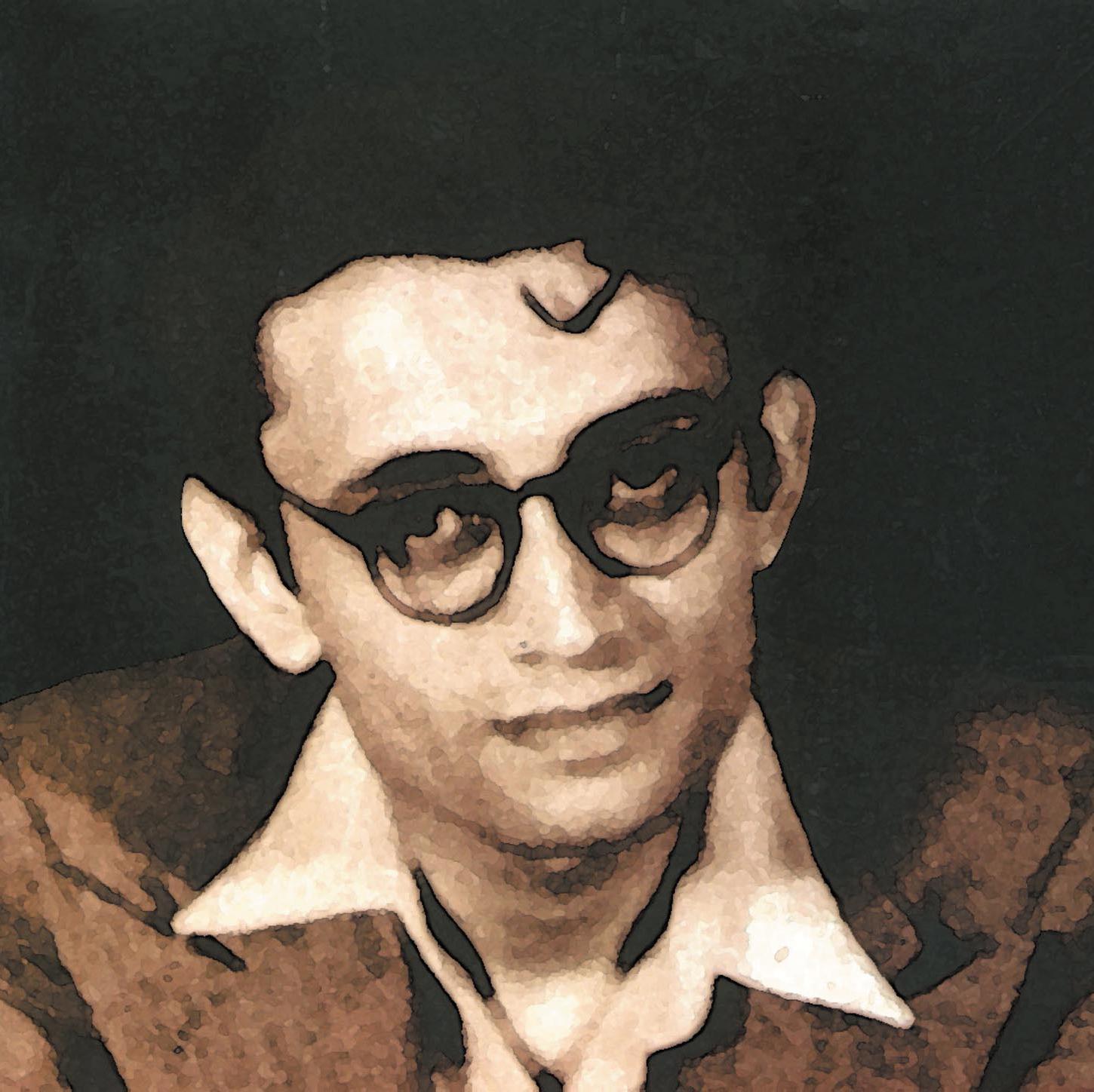
Saadat Hasan Manto
 Pakistan
Writer•playwright•novelist•screenwriter•journalist•translator
Also known as: Manto, Saadat Manto
Birthday
May 11, 1912
Birth Sign
Taurus
Birthplace
Samrala, Punjab, British India
Age
Died at 42
About
Saadat Hasan Manto was a Pakistani writer, playwright, and novelist, widely regarded as the greatest short-story author in Urdu literature. His unflinching stories about the Partition of India and the grim realities of urban life made him a towering figure in South Asian letters. Over his career, he produced 22 collections of short stories, a novel, five series of radio plays, three collections of essays, and two collections of personal sketches.
Manto's work is celebrated for its raw honesty and deep empathy, often exploring themes of violence, sexuality, and human degradation. He was tried six times for obscenity, three times in British India and three times in Pakistan, but never convicted. His stories like "Toba Tek Singh" and "Thanda Gosht" remain essential reading. His legacy endures through the Rekhta archive and two biographical films: Manto (2015) by Sarmad Khoosat and Manto (2018) by Nandita Das.
Early Life & Background
Born on May 11, 1912, in Samrala, Punjab, Manto grew up in a Punjabi Muslim family with Kashmiri ancestry. His father, Khwaja Ghulam Hasan, was a session judge, a strict man who valued discipline. Manto, however, was rebellious and often played pranks, struggling to fit into the rigid expectations of his household.
Academically, he stumbled. He failed his matriculation exams twice, even in Urdu, a subject he would later master. His early years were marked by a sense of aimlessness, but a move to Aligarh Muslim University proved pivotal. There, he met the writer Ali Sardar Jafri, who encouraged his literary interests. In his early twenties, Manto began translating Russian, French, and English short stories into Urdu, inspired by Western writers. His first story, "Tamasha," was published in 1934 in the journal Khalq. He also worked for a small news publication at age 22, honing his craft before his breakthrough.
Career Growth
Manto's career took off in the 1930s when he moved to Bombay in 1935. There, he worked for various publications and film companies, including Paras and Cine Tone, and edited the weekly Musawwir. The city became his muse, and he later called those years among the happiest of his life. His stories from this period, like "Kaali Shalwar" and "Hattak," delved into the lives of prostitutes and the marginalized, earning both acclaim and controversy.
After the Partition in 1947, Manto moved to Lahore, Pakistan, where he wrote his most famous Partition stories, including "Toba Tek Singh" and "Khol Do." These works captured the horror and absurdity of the violence that accompanied independence. Despite facing financial hardship and repeated obscenity trials, he continued to write prolifically until his death in 1955. His work has since been translated into many languages, and his influence on Urdu literature is immeasurable.
Career Timeline
Public Image & Style
Manto's public persona was as provocative as his writing. He was seen as a fearless chronicler of society's underbelly, unafraid to tackle taboo subjects. His court trials for obscenity only enhanced his notoriety, turning him into a symbol of artistic freedom. Readers admired his brutal honesty, while critics accused him of vulgarity.
His style was direct and unadorned, yet deeply evocative. He had a knack for capturing the voices of the marginalized, from prostitutes to refugees. Fans often quote his lines about the Partition, and his work remains a touchstone for discussions on censorship and morality. Today, he is revered as a literary rebel who told uncomfortable truths.
Fame & Fandom
Saadat Hasan Manto does not currently hold a placement in the published rankings of the Global Top 1,000 or any Top-100 scope list. The iFANN Global Fame Engine has evaluated his standing and confirmed that while his literary footprint remains massive, he lacks a current numeric ranking within these specific global parameters. His readership is not organized under a single formal banner; there is no documented fandom name for his audience, as his legacy is sustained by scholars, critics, and cultural institutions rather than an active fanbase with official rituals. Instead of chart-topping campaigns, modern reverence manifests through institutional projects like the 2026 effort in Ludhiana to officially recognize Papraudi as his birthplace. Artistic communities also keep his voice alive, such as the Bias Check theatre group staging Seher-e-Manto in Hyderabad. A major contemporary milestone occurred in May 2026 when Anupriya Goenka's adaptation of Hatak, titled Bombay Stories, garnered international attention at the Cannes Film Festival. These events represent the closest equivalents to fan projects, driven by artists honoring his memory rather than a self-organized club. The mythology surrounding him is rooted in his migration in January 1948, a defining journey from Bombay to Karachi that shaped his brutal masterworks. His legal battles against obscenity charges further cemented his status as a figure of artistic defiance, ensuring his stories remain a critical lens on history.
Interesting Facts and Legends
Manto was a heavy drinker, a habit that worsened after the Partition and contributed to his early death. He was also known for his sharp wit and love of pranks, which sometimes got him into trouble. One of his famous quotes, "If you find my stories dirty, the society you live in is dirtier," reflects his defiant stance against his critics. He was a member of the Progressive Writers' Association but was expelled due to ideological differences. Manto had a deep fondness for Bombay, which he once called "the city that gave me everything." His grand-niece, historian Ayesha Jalal, has written about his life and work, keeping his memory alive. A widely retold story of his life centers on his migration in January 1948, where he boarded a ship carrying the trauma of division to a new nation. This journey is frequently cited as the defining moment that shaped his later works depicting the grim realities of society. Another cornerstone of his legend involves his multiple trials for obscenity, where he refused to soften reality for the comfort of his audience, turning legal battles into a symbol of intellectual freedom.
Notable Quotes
“If you find my stories dirty, the society you live in is dirtier.”
“The world is a cruel place, but I have to write about it.”
“I am not a writer who writes for fame; I write because I must.”
Family & Personal Life
Manto married Safia Deen, a Kashmiri woman, in the mid-1930s. Their marriage was a source of stability amid his turbulent career. They had four children, though their firstborn died in infancy, a loss that deeply affected Manto. Friends described him as a devoted father who doted on his children.
The family lived in Bombay before moving to Lahore after Partition. In Lahore, they faced financial strain, but Safia remained supportive. Manto's father, Khwaja Ghulam Hasan, was a session judge, and his strictness shaped Manto's early rebelliousness. His family's Kashmiri heritage was a point of pride, and he often referenced it in his personal writings.
Notable Connections
Manto was associated with several prominent literary figures of his time, including the Progressive Writers' Association, which he later left. He was friends with writer Ali Sardar Jafri and had professional relationships with Mulk Raj Anand, Munshi Premchand, and Faiz Ahmed Faiz. His work was championed by critic Ismat Chughtai. In recent years, actors Nawazuddin Siddiqui and directors Sarmad Khoosat and Nandita Das have brought his story to the screen. His grand-niece, historian Ayesha Jalal, has written extensively about him.
Relationships & Dating History
Manto married Safia Deen in the mid-1930s, a Kashmiri woman he met during his time in Bombay. Their marriage was a partnership of mutual support, though it weathered financial hardships and Manto's drinking. They had four children, but their first child died in infancy, a tragedy that marked them. Safia stood by him through his obscenity trials and his move to Pakistan.
At the time of his death in 1955, Manto was still married to Safia. She outlived him and managed his literary estate. Their relationship was often described as loving, with Manto's letters to her revealing deep affection. After his death, Safia worked to preserve his legacy, ensuring his stories reached new generations.
- MarriedSafia Manto1936 - 1955Married until Manto's death; four children, first died in infancy.
Death & Aftermath
Died
January 18, 1955 (aged 42)
Death Place
Karachi, Pakistan
Cause of Death
Heart attack exacerbated by alcoholism and tuberculosis
The Civil Hospital in Karachi confirmed the passing of Saadat Hasan Manto on January 18, 1955, at the age of forty-two. Medical staff recorded the cause as a heart attack complicated by chronic alcoholism and tuberculosis, marking the end of a life eroded by substance abuse and physical decline. In his final months, the writer had been bedridden and largely absent from literary circles, his once-vigorous output silenced by deteriorating health before the fatal cardiac event took hold. The immediate reaction among Pakistani intellectuals was one of profound grief rather than public spectacle. The service remained a private affair attended by close family members and fellow writers, adhering to Islamic tradition for burial within the city where he died.
Decades later, Manto's legacy has surged far beyond the quiet silence of his final days. His stories continue to be published in new translations, including works like Bismillah and Other Stories, while adaptations such as Bombay Stories have garnered international acclaim at festivals like Cannes. Foundations and scholarships now bear his name to promote Urdu literature, ensuring that the voice which confronted society never truly faded into the past.
Net Worth (Estate Value)
$10 Million
iFANN Editorial Team estimate
As a writer in mid-20th-century South Asia, Manto never earned a large income. He often struggled financially, with publishers paying him modestly for his stories. His estate, however, has grown in value posthumously. His works continue to be published and translated, generating royalties for his heirs. Per iFANN's editorial analysis, his estate is estimated to be worth around $10 Million in 2026, driven by book sales, adaptations, and the enduring popularity of his stories. The two biographical films, one in 2015 and another in 2018, brought renewed attention to his work, boosting sales. His stories are now part of university curricula worldwide, ensuring a steady stream of royalties. The Nishan-e-Imtiaz award in 2012 also increased his profile. While Manto himself died in poverty, his literary legacy has become a valuable asset.
Awards Won (1)
Manto received the Nishan-e-Imtiaz in 2012, Pakistan's highest civilian honour, posthumously. This award recognized his immense contribution to Urdu literature. He also won the admiration of critics worldwide, though he never received major literary awards during his lifetime.
2012 · Civilian Honour
Lifetime achievement
Known For
Toba Tek Singh
1949 · Author
Thanda Gosht
1950 · Author
Bu
1940 · Author
Keywords
Sources
Quick Facts
- Profession
- Writer, playwright, novelist
- Born
- May 11, 1912
- Birthplace
- Samrala, Punjab, British India
- Died
- January 18, 1955
- Death Place
- Lahore, Pakistan
- Gender
- Male
- Spouse
- Safia Manto
- Birth Sign
- Taurus
Personal Details
- Full Name
- Saadat Hasan Manto
- Spouse
- Safia Manto
- Children
- Four (first child died in infancy)
- Education
- Aligarh Muslim University
Frequently Asked Questions
Who was Saadat Hasan Manto?
What are Saadat Hasan Manto's most famous works?
Why was Saadat Hasan Manto tried for obscenity?
When and where was Saadat Hasan Manto born and die?
What was Saadat Hasan Manto's perspective on the Partition of India?
Similar People
Join the community
fans discussing