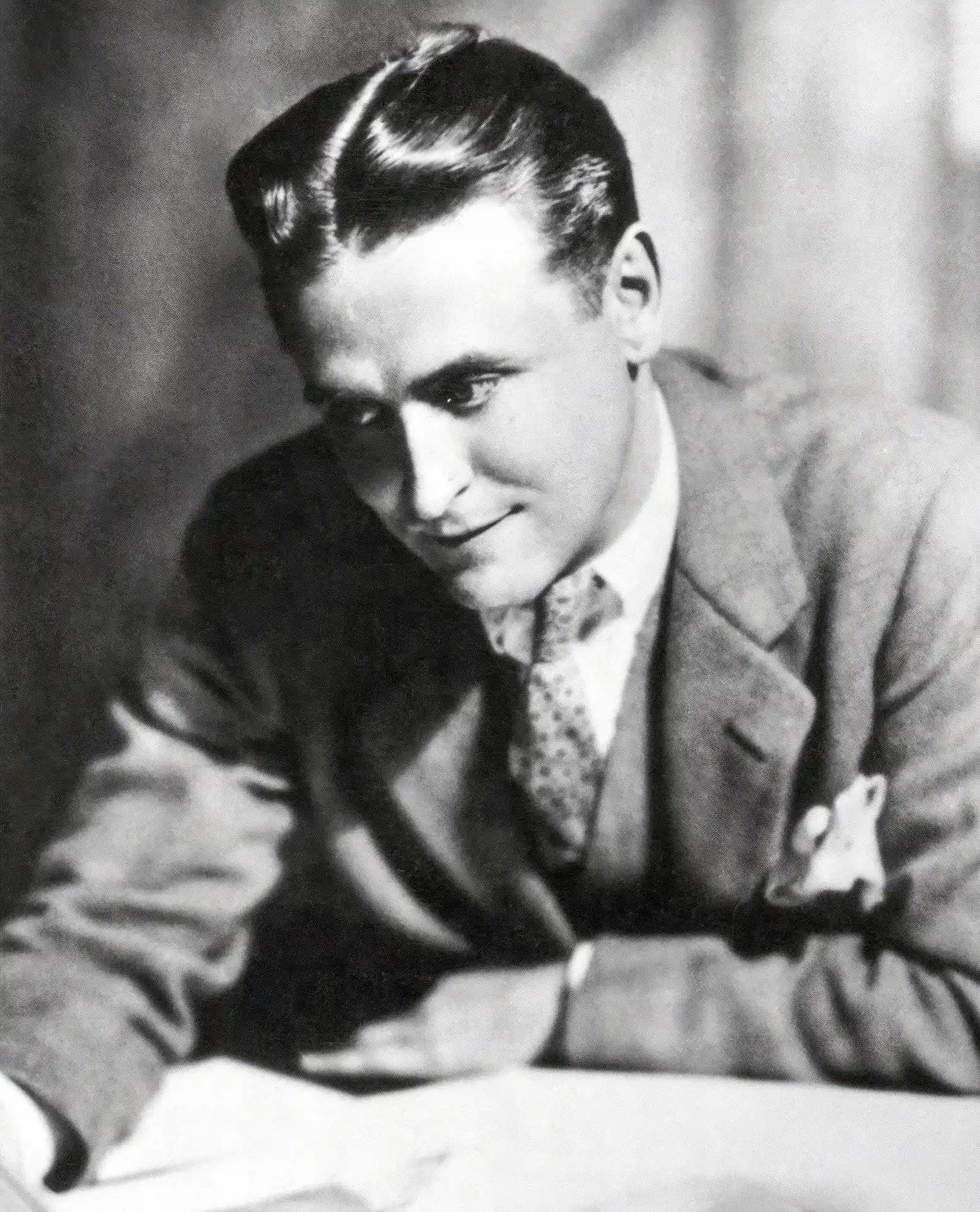
F. Scott Fitzgerald
writer•novelist•short story writer
Also known as: Francis Scott Key Fitzgerald
Birthday
September 24, 1896
Birth Sign
Libra
Birthplace
Saint Paul, Minnesota
Age
Died at 44
Height
5 ft 11 in (180 cm)
About
F. Scott Fitzgerald was an American novelist and short story writer whose work defined the Jazz Age. He is best known for his novel The Great Gatsby, a critical examination of the American Dream that has sold tens of millions of copies worldwide and is a staple in high school and college curricula. Fitzgerald's writing, marked by lyrical prose and sharp social observation, captured the exuberance and disillusionment of the 1920s. His debut novel, This Side of Paradise, made him an instant celebrity at age 24. Today, his works are studied for their psychological depth and cultural insight, and he is widely regarded as one of the greatest American writers of the 20th century.
Early Life & Background
Fitzgerald was born in Saint Paul, Minnesota, to an Irish Catholic mother and an unsuccessful father, whose business failures meant the family moved frequently. He attended St. Paul Academy and the Newman School, where his literary ambitions first surfaced. He enrolled at Princeton University in 1913, where he befriended critic Edmund Wilson and wrote for the Princeton Tiger. At Princeton, he met Ginevra King, a wealthy socialite who became a model for many of his characters and inspired his preoccupation with class and love. He left university without graduating in 1917 to join the U.S. Army during World War I. While stationed at Camp Sheridan in Alabama, he met Zelda Sayre, a spirited socialite. They became engaged, but she broke it off because of his uncertain finances. After his discharge in 1919, he moved to New York City, working in advertising while revising his first novel, The Romantic Egotist. The novel was rejected twice, but after thorough rewriting, it was accepted by Scribner's and published in 1920 as This Side of Paradise.
Career Growth
The publication of This Side of Paradise in 1920 was a sensation, selling over 3,000 copies in its first day and allowing Fitzgerald to marry Zelda. The couple lived a glamorous, often chaotic life in New York and later in Europe, where Fitzgerald wrote The Beautiful and Damned (1922) and his masterpiece, The Great Gatsby (1925). Though Gatsby received mixed reviews and modest sales at first, it is now considered a definitive American novel. Fitzgerald also wrote more than 160 short stories for magazines like The Saturday Evening Post, which funded his extravagant lifestyle. His later novel, Tender Is the Night (1934), was a more somber work reflecting his wife's mental illness and his own struggles. In the 1930s, he moved to Hollywood to work as a screenwriter, but his film work, including uncredited contributions to Gone with the Wind, was largely unsuccessful. He died of a heart attack in 1940, leaving The Last Tycoon unfinished.
Career Timeline
Public Image & Style
Fitzgerald is indelibly associated with the glamour and disillusionment of the Jazz Age. Media portrayals emphasize his wit, charm, and tragic decline. His personal style, tailored suits, polished manners, evoked the elegance of the 1920s. His writing tone ranged from sparkling social satire to poignant explorations of ambition and loss. His readership is devoted, often engaging through book clubs and academic study, though there is no official fandom name. The Fitzgerald estate maintains a social media presence, sharing archival content and promoting his works. He is frequently invoked in popular culture as a symbol of the Roaring Twenties.
Fame & Fandom (iFAMOUS Rankings)
The readership surrounding F. Scott Fitzgerald operates less like a modern fanbase and more as a global academic and literary society, bound by the enduring power of his prose rather than digital mobilization. Unlike contemporary stars who cultivate organized armies known by monikers like "Swifties," Fitzgerald's admirers coalesce through book clubs, university curricula, and the annual rituals of the F. Scott Fitzgerald Society. These followers engage in specific traditions, such as the "Gatsby Gala" where participants don 1920s attire, or the communal reading of his final lines at libraries worldwide. This devotion is not driven by social media campaigns but by a deep reverence for his psychological depth and his role in defining an era. The legacy of his work ensures that new generations of writers cite him as their primary inspiration, creating a generational chain of admiration that spans nearly a century since his death. While no formal fandom name exists in official records, the cultural footprint remains massive, with his novels serving as staples in education and his life story fueling endless biographical interest. Despite this enduring influence, iFANN's Global Fame Engine has evaluated this person, but they do not currently hold a placement in the published rankings (Global Top 1,000 or a Top-100 scope list).
Interesting Facts and Legends
Fitzgerald's full name links him to Francis Scott Key, the author of the U.S. national anthem. He was a teetotaler in college but became a heavy drinker later, a struggle that influenced his writing. Despite his fame, he often faced financial difficulties. He was a talented dancer and enjoyed the vibrant social scene of the Jazz Age. His daughter Scottie became a writer and journalist. Fitzgerald coined the term "Jazz Age" in his essay collection Tales of the Jazz Age (1922). He was a lifelong fan of the Minnesota Twins baseball team. A legendary incident from his youth occurred at Dartmouth College in February 1917, known as the "Winter Carnival disaster." During this event, Fitzgerald allegedly drank heavily and caused a scene, leading to disciplinary action and contributing to his eventual departure from the university. Another iconic moment involves the discovery of his Brooks Brothers coat in 2026, which had been lost for decades before being authenticated and sparking renewed museum interest. While widely believed he died of a heart attack while working on his unfinished novel, The Last Tycoon, the dramatic image of him clutching his manuscript in a hotel room remains a stylized version of reality often repeated in biographies.
Notable Quotes
“So we beat on, boats against the current, borne back ceaselessly into the past.”
“There are no second acts in American lives.”
“I wish I had done everything I ever wanted to do.”
Family & Personal Life
Fitzgerald was the only son of Edward Fitzgerald, a furniture salesman, and Mary McQuillan, the daughter of an Irish immigrant who made a fortune in the wholesale grocery business. His father's business failures created a sense of financial insecurity that haunted Fitzgerald. He had no siblings. He married Zelda Sayre in 1920, and their only child, Frances Scott Fitzgerald (known as Scottie), was born in 1921. The Fitzgeralds' marriage was tumultuous, marked by alcoholism and Zelda's mental health issues; they separated in 1930 but never formally divorced. In his later years, Fitzgerald lived with Hollywood columnist Sheilah Graham, who was his companion until his death.
Notable Connections
Fitzgerald was closely associated with his wife Zelda Fitzgerald, who was both his muse and a source of personal turmoil. He had a complex friendship with Ernest Hemingway, whom he met in Paris. His friend Edmund Wilson served as his literary executor and edited his posthumous works. Early love interest Ginevra King inspired many of his female characters. In his final years, he was companion to Hollywood columnist Sheilah Graham.
Relationships & Dating History
Fitzgerald's most significant relationship was with Zelda Sayre, whom he married in 1920. Their marriage was passionate but volatile, fueled by alcohol and Zelda's mental health struggles; they separated in 1930. Before Zelda, he dated Ginevra King from 1915 to 1917; their class differences influenced his writing. In Hollywood, he had a relationship with gossip columnist Sheilah Graham from 1937 until his death. He also had a brief rumored affair with Dorothy Parker in the early 1920s, though evidence is scant. As of 2026, Fitzgerald is deceased; his last relationship was with Graham.
- DatedGinevra King1915 - 1917Met at Princeton; their class differences inspired his themes of wealth and love.
- MarriedZelda Sayre1920 - 1940Married in 1920; had one daughter, Scottie; separated in 1930 due to Zelda's mental illness, but never divorced.
- RumouredDorothy Parker1920 - 1920Brief rumored affair; they were close friends and literary peers.
- DatedSheilah Graham1937 - 1940Hollywood gossip columnist; his companion in his final years.
Death & Aftermath
Died
December 21, 1940 (aged 44)
Death Place
Los Angeles, California, USA
Cause of Death
Acute myocarditis due to heart disease
F. Scott Fitzgerald spent his final weeks bedridden at the home of friend Edward Aswell in the Hollywood Hills, working on a screenplay for The Last Tycoon while suffering from chest pains and severe edema. He passed away on December 21, 1940, at age 44 in that private residence in Los Angeles, California, where he had been staying since arriving in November to collaborate with Samuel Goldwyn. Medical observers attributed his sudden decline to acute myocarditis, a condition resulting from years of chronic alcoholism and malnutrition. The public reaction to his passing remained muted compared to later decades, overshadowed by the Great Depression and the looming threat of World War II. Tributes from peers like Thomas Wolfe and Ernest Hemingway were confined to small gatherings within the literary community rather than large-scale vigils or national moments of silence.
His funeral took place three days later on December 24, 1940, as a private affair attended only by close friends including editor Maxwell Perkins and Edmund Wilson before his ashes were interred at Forest Lawn Memorial Park in Glendale. Decades later, Fitzgerald's legacy underwent a dramatic transformation following the rediscovery of his work in the 1950s, leading to his induction into the Hall of Fame for Great Americans and the founding of the F. Scott Fitzgerald Society. In 1975, his remains were exhumed and moved to St. Mary's Cemetery in Rockville Centre, New York, to rest beside his daughter Scottie and parents.
Net Worth (Estate Value)
$10 Million
iFANN Editorial Team estimate
As of 2026, F. Scott Fitzgerald's estate continues to generate significant revenue from his literary works, primarily through royalties from The Great Gatsby, which sells hundreds of thousands of copies annually worldwide. Additional income comes from short story collections, film and television adaptations, and merchandise. The estate is managed by literary executors. Fitzgerald died with debts, but the posthumous publication of The Last Tycoon and the resurgence of Gatsby's reputation in the mid-20th century built substantial value. Per iFANN's editorial analysis, the estate's estimated net worth is $10 Million, derived from ongoing book sales, licensing fees, and adaptation rights. Recent adaptations include the 2013 film directed by Baz Luhrmann, which boosted royalties.
Awards Won (2)
Fitzgerald did not win major literary awards during his lifetime. However, his works have been recognized posthumously: The Great Gatsby was awarded the American Academy of Arts and Letters' Gold Medal for the Novel in 1945, and he was inducted into the New Jersey Hall of Fame in 2016. His enduring legacy is reflected in the countless academic studies and adaptations of his work.
1945 · Novel
The Great Gatsby
2016 · Arts and Entertainment
Known For
The Great Gatsby
1925 · Author
This Side of Paradise
1920 · Author
Tender Is the Night
1934 · Author
The Beautiful and Damned
1922 · Author
The Last Tycoon
1941 · Author (unfinished)
Keywords
Quick Facts
Personal Details
- Full Name
- Francis Scott Key Fitzgerald
- Height
- 5 ft 11 in (180 cm)
- Spouse
- Zelda Fitzgerald
- Children
- Frances Scott Fitzgerald
- Education
- Princeton University (attended, did not graduate)
Frequently Asked Questions
Who was F. Scott Fitzgerald?
What is F. Scott Fitzgerald's net worth in 2026?
Is F. Scott Fitzgerald still alive in 2026?
What is F. Scott Fitzgerald most famous for?
How did F. Scott Fitzgerald die?
Similar People
Join the community
fans discussing