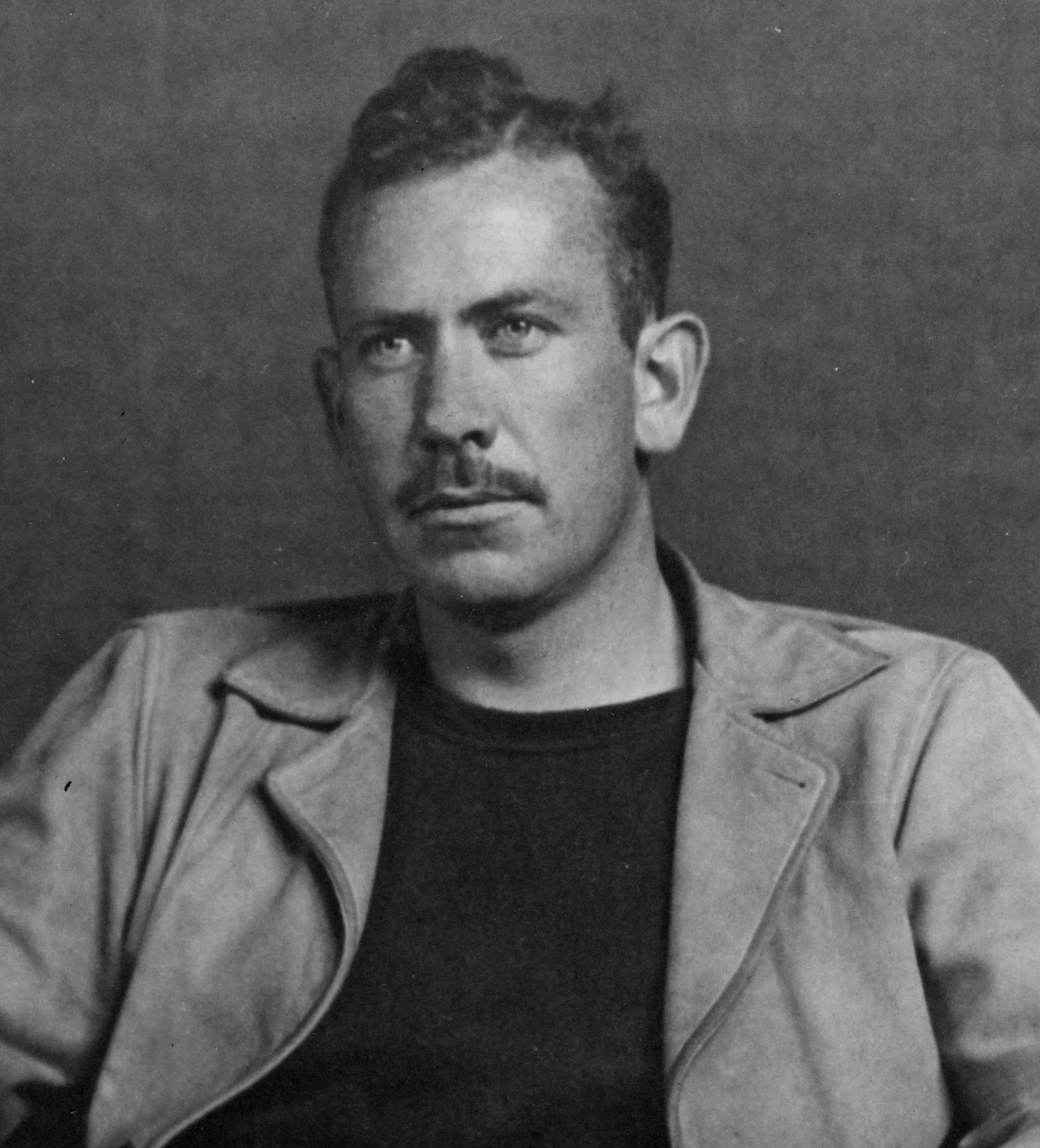
John Steinbeck
 United States
writer•screenwriter•war correspondent
Birthday
February 27, 1902
Birth Sign
Sagittarius
Birthplace
Salinas, California, USA
Age
Died at 66
Height
5 ft 10 in (178 cm)
About
John Ernst Steinbeck was an American novelist, short-story writer, and war correspondent whose works defined the literary landscape of mid-20th-century America. Born in Salinas, California, he grew up in a middle-class family just blocks from the town's bustling Main Street. His father served as the treasurer of Monterey County, and his mother, a former schoolteacher, instilled in him a love for literature and music. Steinbeck attended Stanford University intermittently between 1919 and 1925 but never completed his degree, leaving to work odd jobs, including as a farmhand, construction worker, and reporter for the New York Herald Tribune.
These early experiences with the migrant laborers of California deeply influenced his writing, providing the raw material for his most famous novels. His masterpiece, The Grapes of Wrath (1939), won the Pulitzer Prize in 1940 and became a cultural phenomenon, selling millions of copies and sparking intense political debate over its portrayal of the Okie migration. Throughout his career, he also served as a war correspondent for the New York Herald Tribune, covering World War II in Europe and the Vietnam War. In 1962, he was awarded the Nobel Prize in Literature "for his realistic and imaginative writings, combining as they do sympathetic humor and keen social perception." He received the Presidential Medal of Freedom in 1964.
Early Life & Background
Before achieving fame, Steinbeck struggled financially while living in New York City and later in Pacific Grove, California. He worked as a caretaker at a sheep ranch and wrote serially for local papers. His first significant breakthrough came with the publication of Cup of Gold (1929), followed by The Pastures of Heaven (1932) and To a God Unknown (1933). However, it was the 1935 release of Tortilla Flat that brought him widespread popularity and financial stability. This comic novel about "paisanos" in Monterey introduced his unique blend of humor and social observation.
The novella The Red Pony (1933) further established his reputation for lyrical storytelling. In 1937, Of Mice and Men catapulted him to national prominence, depicting the tragic friendship between two migrant workers during the Great Depression. His masterpiece, The Grapes of Wrath (1939), won the Pulitzer Prize in 1940 and became a cultural phenomenon, selling millions of copies and sparking intense political debate over its portrayal of the Okie migration. Before this success, he had lived in poverty, often relying on handouts from friends and family while trying to establish himself as a serious writer in the literary circles of New York and California.
Career Growth
Steinbeck's career success continued with In Dubious Battle (1936), The Moon Is Down (1942), and East of Eden (1952), the latter widely considered his magnum opus and a deeply personal exploration of his own family history. Throughout the 1940s and 1950s, he also served as a war correspondent for the New York Herald Tribune, covering World War II in Europe and the Vietnam War. His reporting was compiled into books such as A Russian Journal (1948) and Once There Was a War (1958).
In 1962, he was awarded the Nobel Prize in Literature "for his realistic and imaginative writings, combining as they do sympathetic humor and keen social perception." In 1964, President Lyndon B. Johnson presented him with the Presidential Medal of Freedom, the nation's highest civilian honor. Film adaptations of his work earned him three Academy Award nominations, reflecting the strong visual storytelling inherent in his prose. Across decades, his books have remained essential reading for anyone interested in the American experience.
Career Timeline
Public Image & Style
Steinbeck is portrayed as a humble, observant, and deeply empathetic writer who gave voice to the voiceless. His signature style combined clear, direct language with profound social commentary. Media portrayals often emphasize his connection to the California landscape and his commitment to social justice. Critics later described him as a giant of American letters, though he preferred to let his stories speak for themselves without fanfare. Readers continue to engage with his work because it balances sympathetic humor against harsh social realities.
Fame & Fandom (iFAMOUS Rankings)
iFANN has not yet collected fame data for this person. As of the October 2026 rankings, he is not featured on the August 2026 iFAMOUS Rankings flagship list.
While there is no formal "fan club" name like those seen in pop culture, Steinbeck enthusiasts are often referred to as "Steinbeckians" or simply fans of American literature. Fan campaigns include reading challenges, book club discussions, and charitable drives supporting agricultural workers, reflecting Steinbeck's lifelong advocacy for the poor. The 2026 Netflix adaptation of East of Eden has sparked renewed interest in his bibliography, leading to increased sales and discussions about the themes of the original text.
Interesting Facts and Legends
Steinbeck had a deep passion for marine biology and collaborated closely with marine biologist Edward Ricketts. This partnership led to the book Sea of Cortez (1941). During WWII, he traveled with U.S. troops in North Africa and Europe, filing reports that were later compiled into The Moon Is Down and Once There Was a War. He spent his final years translating medieval English literature, specifically Malory's Le Morte d'Arthur, which was published posthumously.
Despite being labeled a socialist by some critics, Steinbeck denied being a member of the Communist Party, though he sympathized with labor movements. The publication of The Grapes of Wrath caused such outrage in California that the state legislature banned the book from schools and libraries. In East of Eden, Steinbeck coined the concept of "timshel" (Thou Mayest), a Hebrew word representing free will. This philosophical idea has become a central part of his literary mythology, often cited in discussions about human agency.
Notable Quotes
“All men have stars, but they are not the same stars for different men.”
“The world breaks everyone and afterward many are strong at the broken places.”
“The great enemy of truth is very often not the lie, deliberate, contrived and dishonest, but the myth, persistent, persuasive and unrealistic.”
“I am afraid of the day when the government will lose control of the people. Then we will be in trouble.”
Family & Personal Life
John Steinbeck was married three times. His first marriage was to Carol Henning (née Beckett) on February 22, 1930. They met through mutual friends in Sag Harbor, New York. The couple had four sons: Thomas (Tommy), John IV (Pam), Edward (Ed), and Robert (Bob). Their marriage ended in divorce in 1942 due to Steinbeck's infidelity and the strain of his wartime travels.
His second marriage was to Gwyn Conger on June 18, 1943. She was a journalist and writer known for her sharp intellect and support of Steinbeck's work, though their relationship was marked by Steinbeck's continuing affairs. This union lasted until their divorce in 1948. Steinbeck's third and final marriage was to Elaine Anderson on April 10, 1950. Elaine, a former teacher and model, managed his household and public image for the remainder of his life. They remained married until his death in 1968. Elaine outlived him by several decades, managing his estate and ensuring the preservation of his legacy.
Notable Connections
Relationships & Dating History
John Steinbeck was married three times. His first marriage was to Carol Henning (née Beckett) on February 22, 1930. They met through mutual friends in Sag Harbor, New York. The couple had four sons: Thomas (Tommy), John IV (Pam), Edward (Ed), and Robert (Bob). Their marriage ended in divorce in 1942 due to Steinbeck's infidelity and the strain of his wartime travels.
His second marriage was to Gwyn Conger on June 18, 1943. They met in New York City after her separation from her first husband; she was a journalist and writer. This union lasted until their divorce in 1948. Gwyn Conger was known for her sharp intellect and support of Steinbeck's work, though their relationship was marked by Steinbeck's continuing affairs.
Steinbeck's third and final marriage was to Elaine Anderson on April 10, 1950. Elaine, a former teacher and model, met Steinbeck while working as a secretary for a publisher. She managed his household and public image for the remainder of his life. They remained married until his death in 1968. Elaine outlived him by several decades, managing his estate and ensuring the preservation of his legacy. Steinbeck had no children from his second or third marriages. As of the date of his death, he was widowed, having passed away while married to Elaine Anderson Steinbeck.
- MarriedCarol Henning1930 - 1942Four sons together; divorced due to infidelity and wartime strain.
- MarriedGwyn Conger1943 - 1948Journalist and writer; divorced due to Steinbeck's affairs.
- MarriedElaine Anderson1950 - 1968Managed his household and estate until his death.
Death & Aftermath
Died
December 20, 1968 (aged 66)
Death Place
New York City, New York, USA
Cause of Death
Acute myocardial infarction
John Steinbeck died peacefully in his sleep on December 20, 1968, at his home in the Harlem neighborhood of Manhattan. The official cause was an acute myocardial infarction resulting from congestive heart failure, a condition that had been affecting him for years. He was working on a translation of Sir Thomas Malory's Le Morte d'Arthur when he passed away. President Lyndon B. Johnson issued a public statement honoring Steinbeck as a great American writer and noting his profound impact on the nation's culture.
The funeral service was a private affair held three days later at Forest Lawn Memorial Park in Glendale, California. Close friends and fellow authors like Robert Penn Warren and James Michener attended to pay their respects. His ashes were interred there under a simple marker, reflecting his desire for privacy even in death. Following his passing, sales of his books surged immediately, and academic interest in his work intensified significantly. In 1976, the posthumous publication of his translation of The Acts of King Arthur and His Noble Knights appeared. The John Steinbeck Company continues to manage his literary rights, film adaptations, and merchandise, ensuring his legacy remains active. The 2026 Netflix adaptation of East of Eden has further driven renewed global interest in his bibliography.
Net Worth (Estate Value)
$15 Million
iFANN Editorial Team estimate
As a deceased individual, John Steinbeck does not have a current net worth in the traditional sense. However, his estate continues to generate significant revenue. The John Steinbeck Company manages his literary rights, film adaptations, and merchandise. Posthumous earnings come from book royalties, licensing deals for film and television adaptations, and merchandise. The 2026 Netflix adaptation of East of Eden has likely contributed to a surge in book sales and streaming-related licensing fees.
While exact figures fluctuate, the estate is estimated to be worth tens of millions of dollars, driven by the enduring global demand for his works and high-profile adaptations. Specific annual income figures are not publicly disclosed in detail, but the estate remains highly profitable. Research by the iFANN Editorial Team puts Steinbeck's estate value at around $15 million, based on ongoing royalties and licensing agreements.
Awards Won (3)
John Steinbeck won the Pulitzer Prize for Fiction in 1940 for The Grapes of Wrath. He was awarded the Nobel Prize in Literature in 1962 for his realistic and imaginative writings. In 1964, he received the Presidential Medal of Freedom. While he received three Academy Award nominations for Best Adapted Screenplay, he did not win any competitive Oscars.
1940 · Fiction
The Grapes of Wrath
1962 · Literature
Body of Work
Known For
The Grapes of Wrath
1939 · Novelist
East of Eden
1952 · Novelist
Of Mice and Men
1937 · Novelist
Tortilla Flat
1935 · Novelist
Keywords
Sources
Quick Facts
- Profession
- writer, screenwriter, war correspondent
- Born
- February 27, 1902
- Birthplace
- Salinas, California
- Died
- December 20, 1968
- Death Place
- New York City, New York
- Gender
- Male
- Spouse
- Elaine Anderson Steinbeck, Gwyn Conger, Carol Henning
- Birth Sign
- Sagittarius
Personal Details
- Full Name
- John Ernst Steinbeck
- Height
- 5 ft 10 in (178 cm)
- Spouse
- Elaine Anderson Steinbeck, Gwyn Conger, Carol Henning
- Children
- Thomas Steinbeck, John Steinbeck IV, Edward Steinbeck, Robert Steinbeck
- Education
- Stanford University (attended intermittently, did not graduate)
Filmography
12
Total
8
Film
4
TV
Frequently Asked Questions
What is John Steinbeck's most famous book?
How many wives did John Steinbeck have?
Why did John Steinbeck win the Nobel Prize?
What caused John Steinbeck's death?
Is there a new John Steinbeck movie or show in 2026?
Social Media
Similar People
Join the community
fans discussing