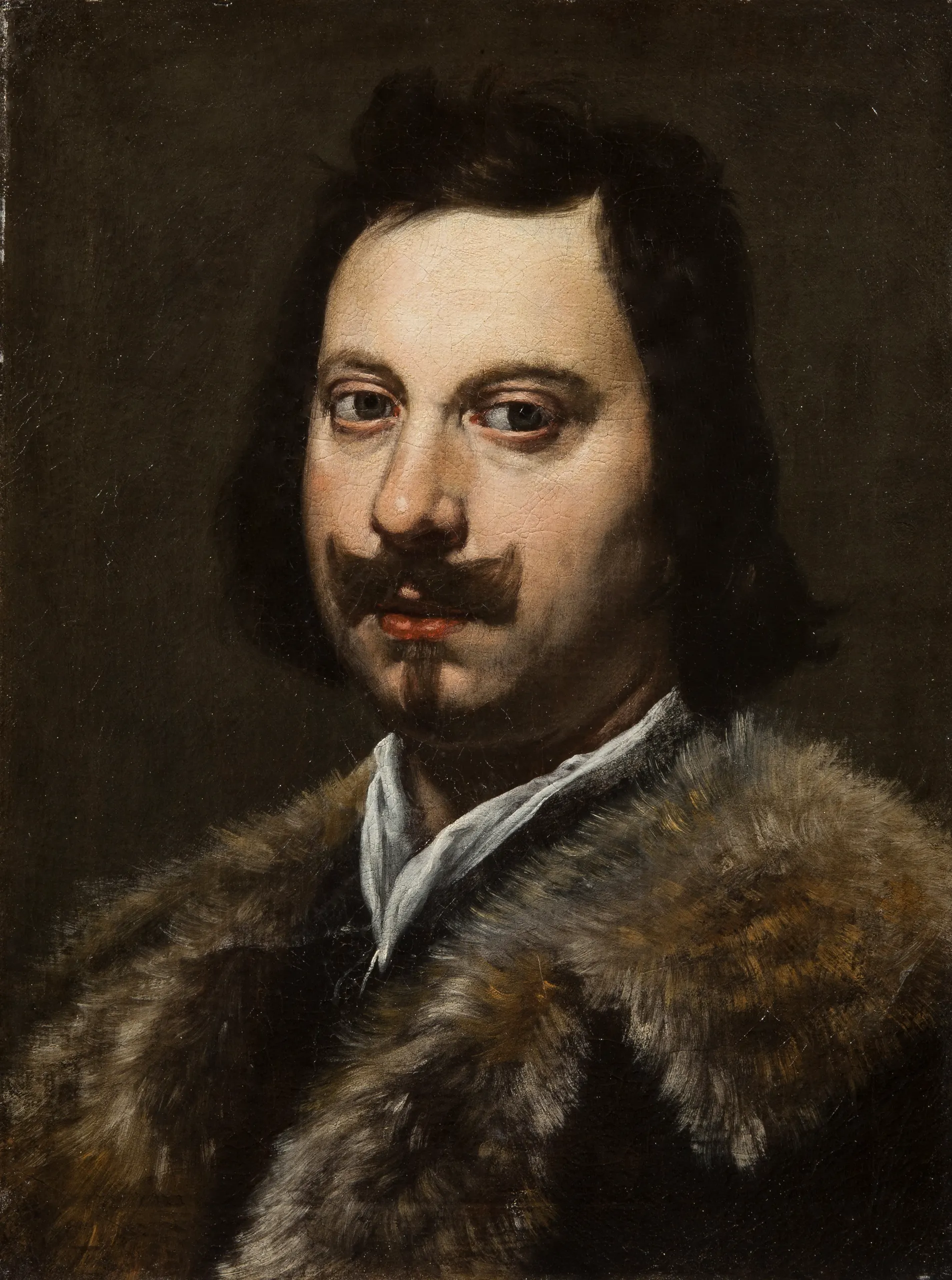
Evangelista Torricelli
 United States
mathematician•physicist•inventor
Also known as: Torricelli
Birthday
October 15, 1608
Birth Sign
Libra
Birthplace
Rome, Papal States
Age
Died at 39
About
Evangelista Torricelli was an Italian physicist and mathematician, born in Rome on 15 October 1608 and dead in Florence on 25 October 1647 at the age of 39. He is remembered as the inventor of the mercury barometer, the discoverer of the vacuum that bears his name, and the namesake of the torr, the unit of pressure still used in vacuum work. His Opera geometrica of 1644 gathered his geometry and mechanics, including the law of efflux that describes how liquid drains from an opening.
What distinguishes Torricelli from a dozen other seventeenth-century experimenters is the clarity of the explanation he attached to his instrument. The mercury column did not rise because nature abhorred a vacuum; it rose because the weight of the air pressed down on the basin. That single sentence turned a curiosity into meteorology's first real tool. His mathematical work on the method of indivisibles pushed toward the calculus that Newton and Leibniz would build a generation later.
He held the Medici court post for only five years, succeeding Galileo in 1642 and dying in 1647. The brevity is part of the story: a pressure unit, a vacuum, a law of fluid flow, and a nudge toward calculus, all inside 39 years.
Early Life & Background
Torricelli was born in Rome on 15 October 1608 and orphaned young. His uncle, a Camaldolese monk, took charge of his upbringing and placed him in a Jesuit school in Rome, where he studied mathematics and the classics. The arrangement was modest but decisive: it gave him Latin, geometry, and a route into the small network of Italian mathematicians who were then rethinking natural philosophy.
From the Jesuit school he moved to study mathematics and physics under Benedetto Castelli, a Benedictine who had himself been a pupil of Galileo. Castelli was the gatekeeper of that circle, and Torricelli became his secretary and assistant in Rome, handling correspondence, calculations, and the practical work of a working mathematician. Sources also record study at Pisa. The years before 1641 are thin in the record, but the pattern is clear: a talented young man in the orbit of the right teacher.
The turning point came in 1641, when Castelli sent him to Arcetri, near Florence, to assist Galileo in the final months of the old man's life. Galileo was blind and ailing, and Torricelli worked beside him through 1641 and into 1642. Galileo died in 1642, and the connection he had made at Arcetri opened the next door: the Medici court.
Career Growth
The breakthrough came in 1643, when Torricelli built the mercury barometer: a glass tube filled with mercury and inverted into a basin. The column settled at a height that varied slightly from day to day, and the space above it, the Torricelli vacuum, was a direct challenge to the old doctrine that nature abhorred a vacuum. His explanation, that the weight of the air held the mercury up, gave meteorology its first real instrument. Wired dates the first practical public demonstration to 11 June 1644.
In 1644 he published Opera geometrica, a collection of his geometry and mechanics. It included the law of efflux, now called Torricelli's law, describing how liquid drains from an opening at a speed proportional to the square root of the depth above it, and his work on the method of indivisibles, a precursor to calculus. He also advanced optics, grinding lenses and studying the behavior of light. The unit of pressure, the torr, carries his name.
After Galileo's death in 1642, Torricelli succeeded him as mathematician and philosopher to Grand Duke Ferdinando II de' Medici and taught mathematics at the University of Pisa. He held the court post until his death in 1647, a tenure of five years that produced the barometer, the vacuum, the law of efflux, and the indivisibles work.
Career Timeline
Public Image & Style
Torricelli's public image is that of the quiet instrument-maker of the scientific revolution, the man who explained the barometer while others argued about whether a vacuum could exist. Portraits and later engravings show a seventeenth-century scholar in dark clerical-style dress, and the reputation is correspondingly sober: precise, mathematical, and slightly overshadowed by Galileo. Modern accounts tend to present him as the bridge between Galileo's mechanics and the calculus of the next generation, a framing that emphasizes the indivisibles work as much as the mercury tube. In physics textbooks he is a name attached to a law and a unit, which is a durable if narrow kind of fame.
Fame & Fandom (iFAMOUS Rankings)
iFANN has not yet gathered fame data for Evangelista Torricelli, so no placement in the Global Fame Rankings is claimed here. He is not on the September 2026 iFAMOUS Rankings flagship list. His audience is not a fandom in the modern sense: there is no documented fanbase name and no organized fan culture. What exists is a readership, made up of physics students, historians of science, and the occasional Azur Lane player who knows the submarine. That is a small and scattered constituency, but it is a real one, and it has kept his name attached to a unit of pressure for nearly four centuries.
Interesting Facts and Legends
The story physics teachers still tell is the 1643 experiment itself: a tube of mercury inverted in a basin, the column falling to about 760 millimetres and stopping, and the empty space at the top that no one had expected to see. Torricelli's explanation, that the air has weight and presses on the basin, is the moment the barometer became an instrument rather than a trick.
His method of indivisibles is the standard "nudge toward calculus" footnote in the history of mathematics. He also ground his own lenses and studied light, work that is often left out of the short biographies. The line from his 1644 letter, that we live submerged at the bottom of an ocean of air, was still being used as a Jeopardy! Final clue on 13 November 2019. A Brin-class Italian submarine named Torricelli appears as a character in the game Azur Lane, the first Italian submarine added to that roster in 2021. The Museo Galileo in Florence mounted a tribute exhibition in 2024.
Notable Quotes
“We live submerged at the bottom of an ocean of air.”
Family & Personal Life
Torricelli was orphaned young and raised by his uncle, a Camaldolese monk, who saw to his education in Rome. No marriage, partner, or children are documented in any source consulted, and he is not known to have had a household of his own. The biographical record for a seventeenth-century scholar is thin on private life, and this one is no exception. What survives is the professional circle: Castelli as teacher, Galileo as mentor in the last months at Arcetri, and the Medici court as patron after 1642.
Notable Connections
Benedetto Castelli was his teacher and the connection to Galileo; Galileo Galilei was his mentor in the final months at Arcetri and his predecessor at the Medici court; Grand Duke Ferdinando II de' Medici was his patron from 1642.
Relationships & Dating History
No romantic relationships, engagements, marriages, or children are documented for Evangelista Torricelli in any source consulted. He is not known to have married. The biographical record for a seventeenth-century scholar is thin on private life, and readers looking for a dating history will find none. As of his death in 1647 he is not recorded as having a partner.
Death & Aftermath
Died
October 25, 1647 (aged 39)
Death Place
Florence, Tuscany, Italy
Cause of Death
Illness, commonly cited as typhoid fever but not firmly confirmed
Torricelli died in Florence on 25 October 1647, aged 39, after five years as court mathematician and philosopher to Grand Duke Ferdinando II de' Medici. The standard biographical record treats the death as premature illness without naming a disease; typhoid fever is the cause most often cited in secondary accounts but has never been firmly confirmed. He was buried in San Lorenzo, Florence.
Commemoration came centuries later and was institutional rather than personal. The Museo Galileo in Florence mounted the exhibition "Horror vacui? Vacuum between Imagination and Science: A Tribute to Evangelista Torricelli", reported on 29 May 2024. The Premio Evangelista Torricelli is an ongoing engineering award, and schools in Ravenna and Bolzano carry his name. His 1644 letter describing life at the bottom of an ocean of air was used as a Jeopardy! Final clue on 13 November 2019, and Wired marked the first practical demonstration of the barometer on 11 June 1644. A Brin-class Italian submarine named Torricelli appears as a character in the game Azur Lane, the first Italian submarine added to that roster in 2021. No probate figure survives for a 1647 scholar, so the estate is historically undocumented.
Net Worth (Estate Value)
No reliable net worth can be stated for Evangelista Torricelli. He died in 1647, and no probate inventory or estate figure survives in the standard biographical record. His income came from his position as court mathematician and philosopher to Grand Duke Ferdinando II de' Medici, a salaried post he held from 1642 to 1647, and from his teaching at the University of Pisa. Neither salary is documented in a form that would support a modern estimate. Any figure presented as his net worth in 2026 would be invented, so none is given. The estate is historically undocumented.
Awards & Accolades
View 7 records, honours and achievementsKnown For
Mercury barometer
1643 · Inventor
Torricelli vacuum
1643 · Discoverer
Opera geometrica
1644 · Author
Torricelli's law
1644 · Formulator
Method of indivisibles
1644 · Mathematician
Keywords
Sources
Quick Facts
- Profession
- mathematician, physicist, inventor
- Born
- October 15, 1608
- Birthplace
- Rome, Papal States
- Died
- October 25, 1647
- Death Place
- Florence, Tuscany, Italy
- Gender
- Male
- Birth Sign
- Libra
Personal Details
- Full Name
- Evangelista Torricelli
- Education
- Jesuit school in Rome; studied under Benedetto Castelli; University of Pisa
Frequently Asked Questions
What is Evangelista Torricelli famous for?
What is Torricelli's theorem in simple words?
How do you pronounce Evangelista Torricelli?
What was Torricelli's cause of death?
What are interesting facts about Evangelista Torricelli?
Similar People
Join the community
fans discussing