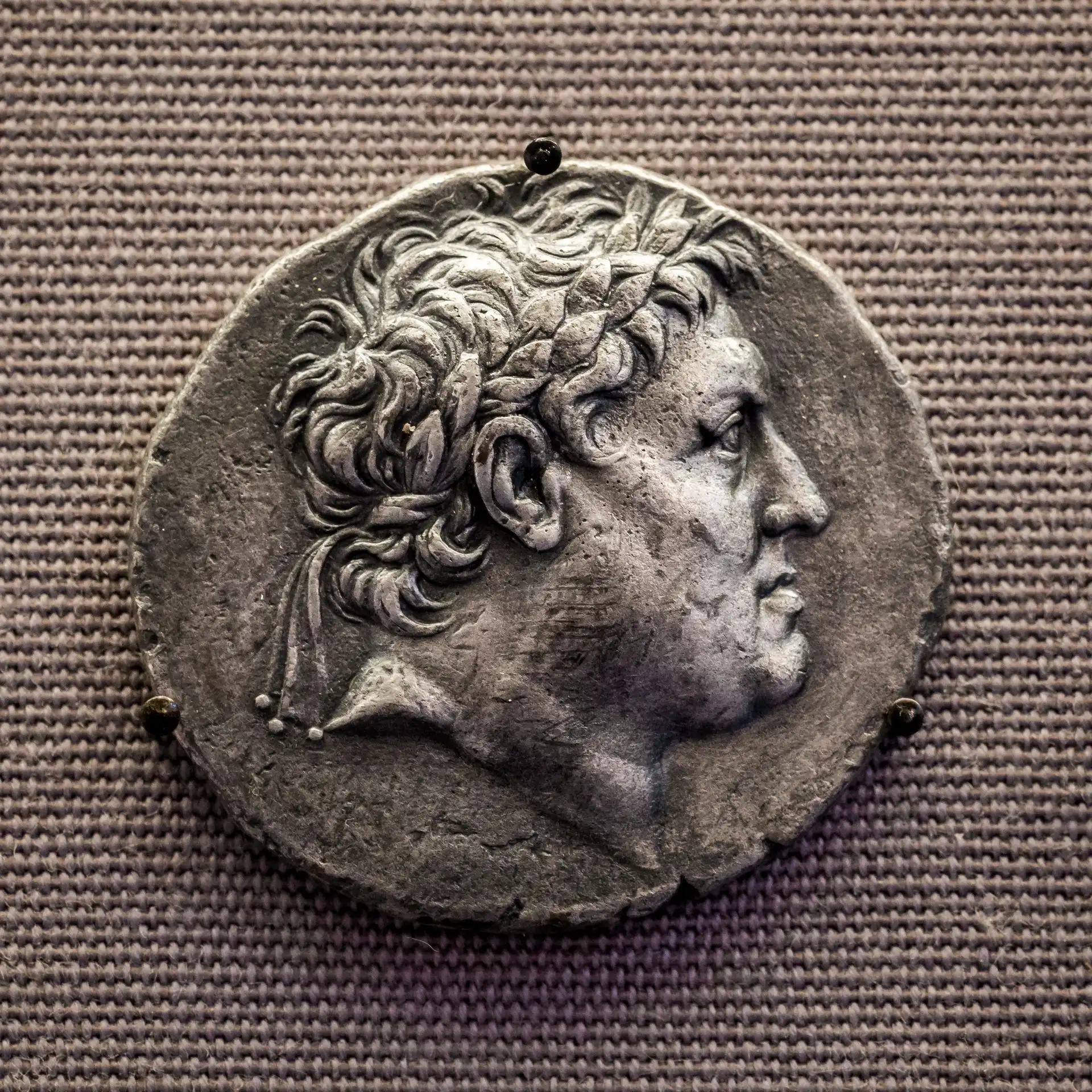
Eumenes
General•satrap•royal secretary
Also known as: Eumenes of Cardia
Birthday
January 1, 362 BC
Birth Sign
Capricorn
Birthplace
Cardia, Thracian Chersonese (modern Gallipoli, Turkey)
Age
Died at 46
About
Eumenes of Cardia was a Greek general, satrap, and Successor of Alexander the Great, and the only major figure among the Diadochi who was neither Macedonian nor a long-standing Companion of the king. He is known for his administrative genius as Alexander's personal secretary and for his unexpected brilliance as a battlefield commander during the Wars of the Diadochi. His most famous feat was defeating Craterus, one of Alexander's most seasoned generals, at the Hellespont in 321 BC. He fought Antigonus to a standstill at Paraitakene and Gabiene before his own troops betrayed him. His life is preserved in Plutarch's Parallel Lives, paired with Quintus Sertorius, and in the histories of Diodorus Siculus and Hieronymus of Cardia. He remains a fascination for students of the period because he rose from the chancery to command armies, and because his loyalty to Alexander's dynasty never wavered, even when it cost him everything. His story is one of the most dramatic arcs of the Diadochi wars, a Greek outsider who matched the best Macedonian generals in the field and held together a coalition through sheer force of will.
Early Life & Background
Eumenes was born in Cardia, a Greek city on the Thracian Chersonese, the peninsula that is now the Gallipoli peninsula in Turkey. Plutarch, drawing on Duris of Samos, reports that his father was a man whom poverty drove to work as a waggoner in the Chersonese, though the boy still received a liberal education. A rival tradition makes him the son of Hieronymus of Cardia, the historian who later chronicled his campaigns, and says he began as a royal secretary to Philip II. Modern scholarship, notably Edward Anson's Eumenes of Cardia: A Greek among Macedonians, treats his non-Macedonian origin as the defining fact of his career: he was a Greek outsider in a Macedonian court. He rose through the chancery to become Alexander's personal secretary and keeper of the royal correspondence, a post that gave him mastery of the army's administrative machinery and, crucially, of Alexander's seal and papers. He served through the Persian campaign in that secretarial role before his rise to command. In Alexander's last year he received the prestigious command of a hipparchy of Companion cavalry, a royal favourite bitterly resented by native Macedonians.
Career Growth
After Alexander died at Babylon in June 323 BC, Eumenes backed the regent Perdiccas in the First War of the Diadochi. In 321 BC he met and defeated Craterus, one of Alexander's most seasoned commanders, in a battle in Asia Minor, conventionally called the Battle of the Hellespont, a victory that made his reputation. Perdiccas was murdered by his own officers in 320 BC, and the settlement at Triparadisus made Eumenes an outlaw and public enemy of the regime of Antipater and Antigonus. Defeated by Antigonus at Orkynia in 319 BC, he was besieged in the fortress of Nora in Cappadocia, escaped, and allied with Polyperchon and with Olympias, Alexander's mother, against Cassander and Antigonus. From 318 BC he fought a long, brilliant defensive campaign in the Iranian east: victory at Paraitakene in 317 BC, then the bloody, indecisive battle of Gabiene in 316 BC. There his own elite corps, the Silver Shields, betrayed him, trading him to Antigonus in exchange for their baggage and families, and Antigonus had him executed in the winter of 316/315 BC.
Career Timeline
Public Image & Style
Ancient writers portray Eumenes as the clever outsider: a Greek secretary who outthought and outfought Macedonian generals. Plutarch pairs him with Quintus Sertorius, another rebel commander who fought against the odds, which tells us how the ancient world saw him: resourceful, persistent, and doomed. His use of Alexander's regalia and the Alexander tent gave him an aura of legitimate authority that his enemies could not match on the battlefield. Modern popular history frames him as Alexander's most unexpected successor. He was not a glamorous figure; his strength was administrative and strategic, and his public image in antiquity was that of a man whose brains made up for his lack of Macedonian pedigree. He was reportedly of modest stature and unremarkable appearance, a physical plainness that fuelled Macedonian contempt for him and sharpened the contrast with his strategic brilliance.
Fame & Fandom (iFAMOUS Rankings)
Fame data for Eumenes has not yet been gathered by iFANN, so no ranking is available. He does not appear on the September 2026 iFAMOUS Rankings flagship list. His fanbase today is informal: students of ancient history, classics enthusiasts, and listeners of history podcasts who encounter him as a fascinating what-if of the Diadochi wars. There is no formal fandom name, no organized campaigns, and no fan projects. The audience is small but dedicated, drawn to the story of a Greek outsider who nearly held Alexander's empire together through sheer cunning.
Interesting Facts and Legends
Eumenes' name derives from Greek eu (good) and menos (spirit, wrath), roughly well-disposed or of good courage. He was the only major Diadochos who was neither Macedonian nor a Companion of long standing. The potter wasp genus Eumenes and the Attalid king Eumenes II of Pergamon are unrelated namesakes. A story fans of ancient history still retell: Eumenes, needing money for his troops, borrowed from his officers and then used the funds to pay the men, later repaying the lenders from captured enemy treasure. Another is his dream of a miraculous spring and the Alexander tent, a pavilion containing Alexander's throne and regalia where he received visitors as if the king still presided, a piece of political theatre that kept his troops loyal. He once remarked to friends that he camped in a great herd of wild beasts, his sardonic description of the treacherous Macedonian officers around him. His name is pronounced yoo-MEN-eez.
Family & Personal Life
His wife was Artonis, a Persian noblewoman whom Alexander gave him in marriage at the mass Susa weddings of 324 BC. She was a daughter of Artabazus and sister of Barsine. The marriage was part of Alexander's policy of fusing Macedonian and Persian elites, and it placed Eumenes, already an outsider, even further from the Macedonian mainstream. Little else is recorded of his household. Plutarch's account of his father, a waggoner driven to that work by poverty, comes from Duris of Samos, while a rival tradition makes him the son of Hieronymus of Cardia. No children are named in the surviving sources. His family life, like much of his personal history, survives only in fragments, leaving us with a portrait built from scattered references rather than a continuous narrative.
Notable Connections
Relationships & Dating History
Eumenes married Artonis, a Persian noblewoman, at the mass Susa weddings of 324 BC. She was a daughter of Artabazus and sister of Barsine, and the marriage was arranged by Alexander as part of his policy of integrating Persian and Macedonian elites. No other relationships are recorded in the ancient sources. As of his death in 316/315 BC, he was married to Artonis.
- MarriedArtonis324 BC - 316 BCCurrentPersian noblewoman, daughter of Artabazus, given to Eumenes by Alexander at the Susa weddings.
Death & Aftermath
Died
January 1, 316 BC (aged 46)
Death Place
Gabiene, Asia (modern Iran)
Cause of Death
Execution by order of Antigonus
Antigonus had Eumenes killed in the winter of 316/315 BC, in the camp after the battle of Gabiene. The sources agree on the execution itself, though the final days are reported differently. The betrayal that delivered him came from his own elite corps, the Silver Shields, who handed him over in exchange for their baggage and families. Antigonus is said to have respected his adversary and to have returned his ashes to his family in a silver urn for burial in Cappadocia. The execution effectively ended the Argead loyalist cause, and the Silver Shields, the men who sold him, were broken up by Antigonus soon after. No monuments or public mourning are recorded in the ancient accounts; his memory survived through the histories of Hieronymus of Cardia, Plutarch, and Diodorus, not through a tomb or a cult.
Net Worth (Estate Value)
No reliable financial data exists for Eumenes, who lived in the fourth century BC. Any modern net worth estimate would be meaningless. His wealth in his own time came from military command, satrapal revenues, and captured treasure. Plutarch preserves a story that he borrowed money from his officers to pay his troops, then repaid the lenders from captured enemy treasure, a vignette of his financial cunning rather than a record of personal fortune.
Awards & Accolades
Known For
Battle of the Hellespont
321 BC · Commanding general
Battle of Paraitakene
317 BC · Commanding general
Battle of Gabiene
316 BC · Commanding general
Secretary to Alexander the Great
336–323 BC · Royal secretary
Keywords
Sources
Quick Facts
- Profession
- military officer, military personnel, satrap
- Born
- c. 362 BC
- Birthplace
- Cardia
- Died
- 316/315 BC
- Gender
- Male
- Spouse
- Artonis
- Birth Sign
- Capricorn
Personal Details
- Full Name
- Eumenes of Cardia
- Spouse
- Artonis
- Education
- Liberal education (per Plutarch)
Frequently Asked Questions
What is Eumenes known for?
How do you pronounce Eumenes?
Was Eumenes Macedonian?
Who was Eumenes' wife?
How did Eumenes die?
Similar People
Join the community
fans discussing