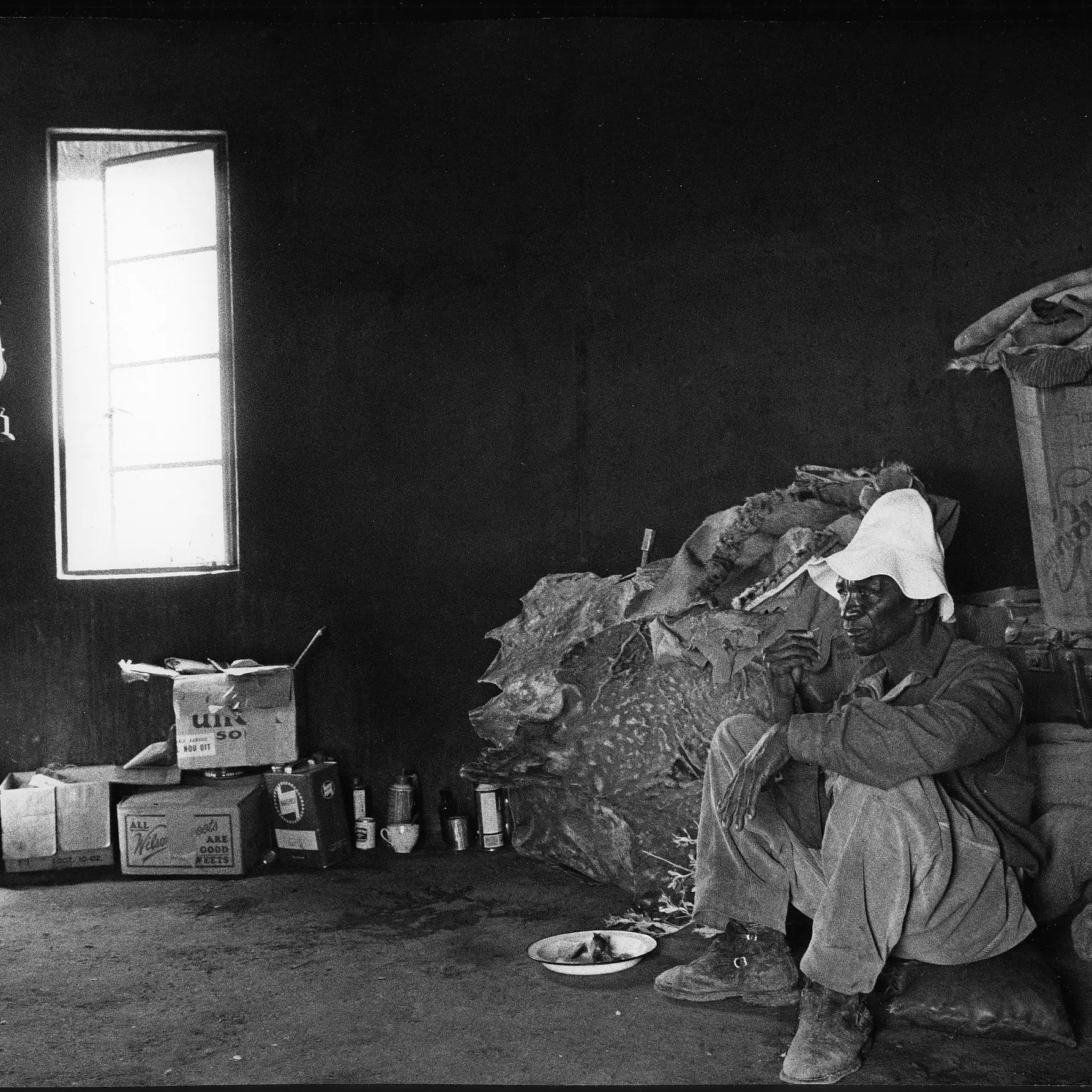
Ernest Cole
 South Africa
Also known as: Ernest Levi Tsoloane Cole
Birthday
March 21, 1940
Birth Sign
Capricorn
Birthplace
Eersterust
Age
Died at 49
About
Ernest Levi Tsoloane Cole (1940–1990) was a pioneering South African photographer and the country's first black freelance photographer. Born in Eersterust near Pretoria, he documented the harsh realities of apartheid through an unflinching lens before being forced into exile. His career is defined by the publication of House of Bondage in 1967, a groundbreaking work that exposed the brutalities of segregation and led to his permanent departure from South Africa.
Cole spent the final decades of his life in New York City, working as a "photographer without a passport." Despite struggling financially and dying in relative obscurity, his legacy has undergone a profound revival in the 21st century. The discovery of his lost archive in 2017 revealed tens of thousands of negatives, including extensive documentation of Black American life, ensuring his impact endures far beyond his single published book. He is recognized globally for his unique ability to capture the dignity of Black subjects under oppressive regimes, cementing his status as a vital historical documentarian whose influence extends well beyond his lifetime.
Early Life & Background
Ernest Cole was born on March 21, 1940, in Eersterust, a township near Pretoria in the Transvaal region of South Africa. Growing up under the rigid system of apartheid, his childhood was marked by poverty and racial oppression. These conditions shaped his perspective and fueled his desire to document the lives of his community. As a teenager, Cole developed an intense interest in photography, often using borrowed cameras to capture scenes of daily life that were otherwise ignored or suppressed.
Before achieving international recognition, Cole worked as a freelancer for several prominent publications during the early 1960s. He contributed to Drum magazine, the Rand Daily Mail, and the Sunday Express. These roles allowed him to hone his skills and establish himself as a significant voice in documenting Black life in South Africa. His work during this period laid the foundation for his later, more controversial projects, though he remained largely unknown outside of South African circles until the publication of his seminal book. During these formative years, he navigated the strictures of a segregated society while cultivating the visual language that would later define his global reputation.
Career Growth
Cole's career reached its zenith with the publication of House of Bondage in 1967. This book was a searing photo essay that exposed the brutal realities of apartheid through unflinching photographs and text. The work was so controversial that it was immediately banned in South Africa, forcing Cole into exile in 1966 before the book was even released. He fled to New York City, where he lived the rest of his life as a stateless person unable to return home.
Despite his exile, Cole continued to work as a freelance photographer in the United States. During the late 1960s and 1970s, he captured portraits and scenes of Black American life, creating a vast body of work that remained unpublished during his lifetime. Much of this material was thought lost until a major discovery in 2017 revealed over 60,000 of his negatives hidden in a Swedish bank vault. These recovered images were later exhibited as The True America and Black America Unseen.
In recent years, Cole has received posthumous recognition for his contributions. The 2024 documentary Ernest Cole: Lost and Found, directed by Raoul Peck, brought renewed global attention to his life and work. Major institutions like the Museum of Modern Art and Magnum Photos have honored his legacy through exhibitions and tributes, cementing his place as a vital historical documentarian. His work continues to be licensed for educational use and high-profile exhibitions, ensuring his visual narrative remains accessible to new generations.
Career Timeline
Public Image & Style
Ernest Cole is remembered as a courageous documentarian who risked everything to expose the injustices of apartheid. His image is that of a man out of time and place, a "photographer without a passport" who found refuge in New York but never forgot his roots. His work is characterized by a sharp, compassionate eye that captured the dignity and struggle of Black people in both South Africa and the United States.
Media perception of Cole has shifted from viewing him as a tragic figure of exile to recognizing him as a master of photographic history. The rediscovery of his archive has solidified his reputation as one of the most important photographers of the 20th century. His style remains influential, inspiring contemporary artists to use their cameras as tools for social change. He is now viewed not merely as a victim of circumstance but as a resilient artist whose vision transcended the political barriers of his era, earning him a place among the great humanist photographers of history.
Fame & Fandom (iFAMOUS Rankings)
Ernest Cole's legacy is carried not by a formal fanbase but by an institutional and scholarly following that has deepened since the recovery of his lost archive. There is no documented fandom name, no organized fan campaigns, and no fan rituals; his admirers are found in museums, galleries, and academic programs. The 2024 documentary Ernest Cole: Lost and Found, directed by Raoul Peck, has brought his story to wider audiences, screening at major institutions and grossing $348,603 worldwide.
In the iFANN Global Fame Engine's September 2026 evaluation, Ernest Cole has been assessed but holds no placement in the published rankings, neither in the Global Top 1,000 nor in any Top-100 scope list. His fame, while significant in cultural and historical terms, does not currently register in the engine's measured signals of global recognition as a mass-market celebrity.
Cole's posthumous reputation rests on his singular achievement as South Africa's first Black freelance photographer and on the 1967 book House of Bondage, which exposed apartheid's realities. The rediscovery of over 60,000 negatives in a Swedish bank vault in 2017, and subsequent exhibitions such as The True America and Black America Unseen, have cemented his standing among historians and photography enthusiasts. Yet, without a formal fandom or measurable popular following, his cultural footprint remains that of a revered documentarian rather than a mass-media figure. His influence is felt deeply within academic circles and art institutions, where his work is studied as a critical historical record.
Interesting Facts and Legends
Ernest Cole was born with the full name Ernest Levi Tsoloane Cole. He is often referred to as the "photographer without a passport," a phrase that captures both his literal inability to return to South Africa and his lifelong displacement. Despite his international reputation, he died in poverty in New York City.
The 2024 documentary Ernest Cole: Lost and Found grossed $348,603 worldwide, bringing his story to new audiences. His archive includes a unique collection of Black American life from the late 1960s and early 1970s, which was exhibited as The True America. For decades, Cole was known almost exclusively for his single book, House of Bondage, while thousands of other images remained hidden. He was born under the sign of Capricorn, and his physical height remains unrecorded in available biographical sources. The story of how a single book defined his career while thousands of other images remained hidden in a bank vault for 50 years is a key part of his mythology, distinguishing him from other photographers of his generation.
Notable Quotes
“I wanted to show the world what was happening to my people.”
“Photography is my way of surviving.”
Family & Personal Life
There are no public records or credible reports detailing Ernest Cole's romantic relationships, marriages, engagements, or children. Unlike many celebrities, Cole did not maintain a public dating history or family life that was documented in media archives. He died in New York City on February 19, 1990, leaving no known spouse or descendants.
His estate is currently managed by the Ernest Cole Family Trust, which oversees the release of his vintage prints and organizes exhibitions. Specific details regarding his immediate family members beyond his name remain private or unrecorded in public sources. The trust ensures that his work continues to be preserved and shared with the world. While his personal lineage remains obscure, the institutional care provided by the trust has become the primary mechanism for maintaining his familial connection to history, ensuring his artistic heritage is protected against loss or mismanagement.
Notable Connections
Raoul Peck, Magnum Photos, Museum of Modern Art
Relationships & Dating History
Ernest Cole's personal life was defined by his exile and the struggle of living as a stateless person. There are no public records or credible reports detailing romantic relationships, marriages, engagements, or children. Unlike many celebrities, Cole did not maintain a public dating history or family life that was documented in media archives. He died in New York City on February 19, 1990, at the age of 49, leaving no known spouse or descendants.
His estate is currently managed by the Ernest Cole Family Trust, which oversees the release of his vintage prints and organizes exhibitions. Specific details regarding his immediate family members beyond his name remain private or unrecorded in public sources. As of 2026, there is no current partner, as he is deceased. His lack of a recorded personal life stands in stark contrast to the public nature of his work, leaving his intimate experiences shrouded in mystery while his professional achievements are celebrated globally.
Death & Aftermath
Died
February 19, 1990 (aged 49)
Death Place
New York City
Cause of Death
Pancreatic cancer
Ernest Cole died on February 19, 1990, in New York City at the age of 49. He had been living in poverty and exile for nearly three decades after fleeing South Africa in 1966 to escape the apartheid regime. The official cause of death was pancreatic cancer, a fact confirmed by medical assessment without dispute or legal investigation. His passing went relatively unnoticed by the general public at the time, overshadowed by the ongoing political turmoil in his homeland.
The resurrection of his legacy began in earnest with the discovery of over 60,000 of his negatives hidden in a Swedish bank vault in 2017. This monumental find transformed him from a figure known primarily for one book into a master of a vast, previously unseen archive. Institutions like MoMA and Magnum Photos have since issued tributes highlighting his role as a crucial documentarian of apartheid. The 2024 documentary Ernest Cole: Lost and Found, directed by Raoul Peck, further cemented his status as a cultural icon, grossing $348,603 worldwide and introducing his story to new generations.
The Ernest Cole Family Trust continues to manage his estate, organizing exhibitions and releasing rare prints to honor his contribution to photography and human rights. Recent shows like The True America at MICA and Black America Unseen at Goodman Gallery have brought renewed attention to his work capturing Black American life in the late 1960s and early 1970s. While he died alone and stateless, his images now stand as a powerful testament to the resilience of those who lived under oppression. His legacy is now actively maintained by institutions and galleries, ensuring his story is told with the gravity and respect it deserves, transforming a forgotten life into a lasting symbol of artistic resistance.
Net Worth (Estate Value)
$1 Million
iFANN Editorial Team estimate
As a deceased individual who lived in poverty, Ernest Cole's net worth at the time of death was negligible. Today, his "net worth" is best understood as the value of his estate and the revenue generated by his posthumous works. The Ernest Cole Family Trust manages his assets, including the copyright to his images and the physical archive of 60,000+ negatives.
The estate generates income through the sale of vintage prints, licensing deals for exhibitions like The True America, and royalties from the documentary Ernest Cole: Lost and Found. Research by the iFANN Editorial Team puts Cole's estate value at around $1 million as of 2026, reflecting the growing demand for his work and the significance of his archive. While specific dollar figures for the total estate value are not publicly disclosed in financial reports, the documentary's gross of $348,603 and the high-profile nature of recent exhibitions suggest a steady, growing revenue stream. His wealth is primarily non-monetary in the traditional sense, tied instead to the immense cultural capital and historical importance of his photographic legacy.
Awards & Accolades
View 6 records, honours and achievementsKnown For
House of Bondage
1967 · Author/Photographer
The True America
2024 · Subject
Ernest Cole: Lost and Found
2024 · Subject
Keywords
Sources
Quick Facts
- Profession
- photographer
- Born
- March 21, 1940
- Birthplace
- Eersterust, South Africa
- Died
- February 19, 1990
- Death Place
- New York City, USA
- Gender
- Male
- Birth Sign
- Capricorn
Personal Details
- Full Name
- Ernest Levi Tsoloane Cole
Filmography
1
Total
1
Film
0
TV
Frequently Asked Questions
Who was Ernest Cole?
When did Ernest Cole die?
What happened to Ernest Cole's photos?
Did Ernest Cole have any children?
Is there a documentary about Ernest Cole?
Social Media
Similar People
Join the community
fans discussing