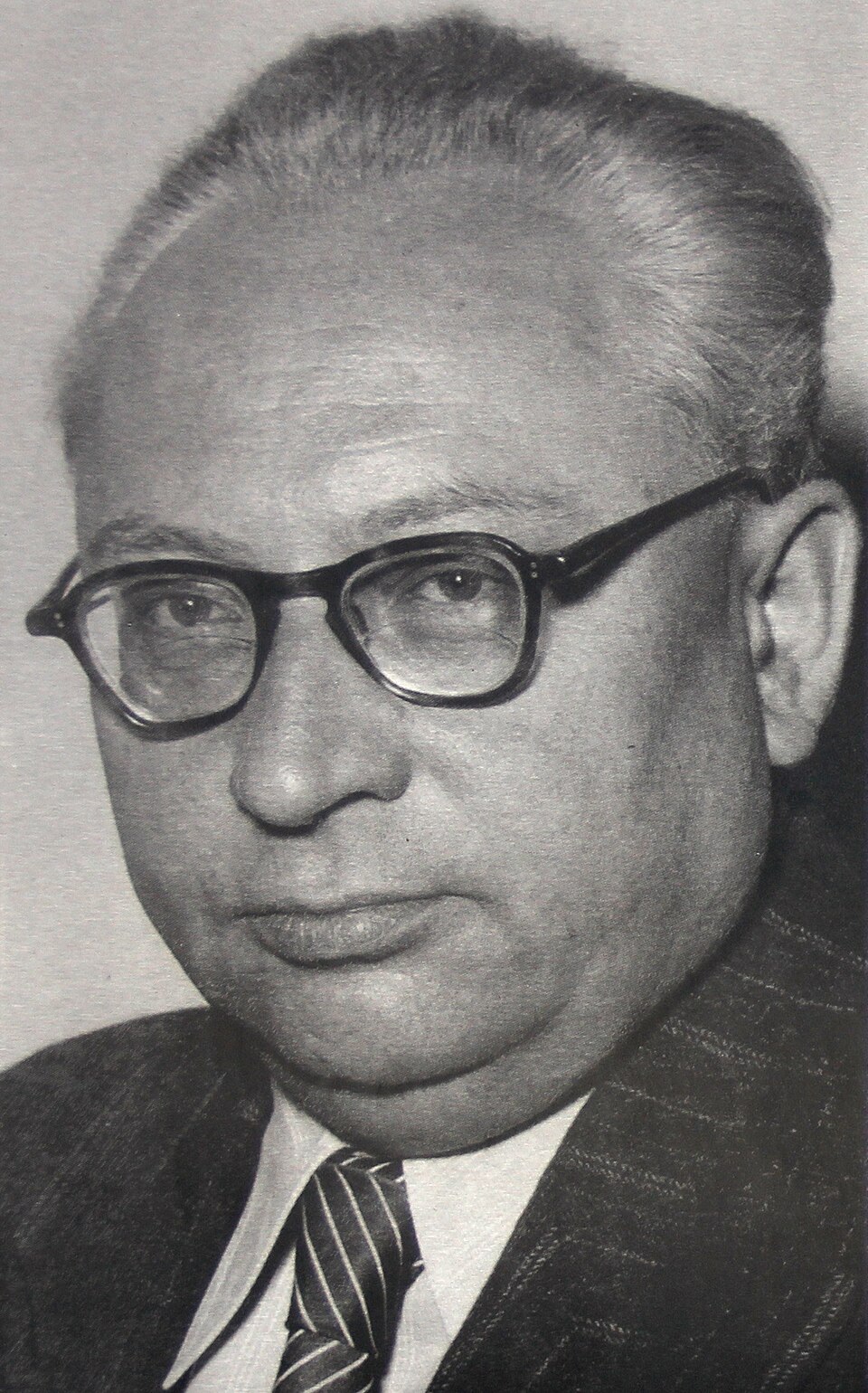
Erich Ollenhauer
 Germany
Birthday
March 27, 1901
Birth Sign
Sagittarius
Birthplace
Magdeburg, Germany
Age
Died at 62
About
Erich Ollenhauer was a German politician who led the Social Democratic Party of Germany (SPD) from 1952 until his death in 1963. He was the party's chairman and its parliamentary leader in the Bundestag, where he served as the principal opposition voice against Chancellor Konrad Adenauer's government. He was also a member of the Parliamentary Assembly of the Council of Europe.
Ollenhauer was known as a dedicated organizer and a steady presence in West German politics, often overshadowed by more charismatic figures but respected for his integrity and commitment to the socialist cause. He was the SPD's candidate for chancellor in 1957, losing to Adenauer, and he served as chairman of the Socialist International in 1963.
Early Life & Background
Erich Ollenhauer was born on March 27, 1901, in Magdeburg, Germany. He grew up in a working-class family and joined the Socialist Youth Federation at a young age, drawn to the social democratic movement. He became a member of the SPD in 1920 and rose through the ranks of the party's youth organization, eventually becoming its chairman in 1928.
When the Nazis came to power in 1933, Ollenhauer went into exile. He spent the Nazi years in Prague, Paris, and London, working with other exiled social democrats and maintaining the party's networks. In 1946, he returned to Germany and quickly reestablished himself in the SPD, becoming a close ally of party chairman Kurt Schumacher. His early career was marked by his talent for organization and his loyalty to the party, which would define his political life.
Career Growth
After Kurt Schumacher's death in 1952, Ollenhauer was elected as the SPD's chairman and head of its Bundestag faction. He led the party through a period of intense political struggle, opposing Adenauer's policies of Western integration and rearmament. In 1957, he ran as the SPD's candidate for chancellor, but Adenauer's CDU won a landslide victory, and Ollenhauer was defeated.
In 1961, the SPD chose Willy Brandt as its chancellor candidate, recognizing that Ollenhauer lacked the public appeal needed to challenge Adenauer's successor. Ollenhauer remained party chairman until his death in 1963, focusing on internal party matters and international socialist cooperation. He was elected chairman of the Socialist International in 1963, a role he held briefly before his passing.
Career Timeline
Public Image & Style
Ollenhauer was seen as a reliable, honorable politician, but not a charismatic leader. He was respected for his integrity and his dedication to the SPD, but he struggled to connect with the broader electorate in the way that Adenauer did. His public image was that of a competent administrator and a loyal party man, rather than a dynamic statesman. In the media, he was often portrayed as the steady hand behind the SPD's organizational machinery, while others like Willy Brandt captured the public's imagination.
Fame & Fandom
Erich Ollenhauer remains a figure of historical significance within German political history rather than a subject of global pop culture fame. In August 2026, the iFANN Global Fame Engine evaluated his standing and determined that he is currently not ranked among the world's most famous individuals. While his name appears in encyclopedic records and political archives regarding the post-war reconstruction of West Germany, he does not hold a placement in the published Global Top 1,000 or any specific Top-100 scope list. This absence from current rankings reflects his status as a mid-century statesman whose legacy is confined to institutional memory rather than contemporary viral attention or mass entertainment consumption. There is no formal or unofficial fandom name for Erich Ollenhauer, nor do supporters possess a specific designation for themselves. His support base consisted of members of the Social Democratic Party, trade unionists, and voters aligned with social democracy during the post-war era, groups that functioned as political constituencies rather than a fanbase in the cultural sense. No organized fan campaigns, fan-funded projects, or specific rituals are documented in association with his name. The only enduring physical legacy related to his followers is the naming of the SPD headquarters in Bonn as the Erich-Ollenhauer-Haus, which serves as an institutional memorial rather than a shrine for a dedicated fan community.
Interesting Facts and Legends
Ollenhauer was known for his meticulous attention to detail and his ability to manage the SPD's internal affairs. He was a strong supporter of NATO, which put him at odds with some left-wing factions within his own party. He also served as a member of the Parliamentary Assembly of the Council of Europe representing West Germany. Despite his long political career, Ollenhauer never held a ministerial office. He was often described as a 'party soldier' for his loyalty to the SPD and its values. A widely retold story from his career is his succession of Kurt Schumacher as SPD chairman in 1952 following Schumacher's death; he is often portrayed as a caretaker who kept the party stable until the rise of Willy Brandt. His two electoral defeats to Adenauer in 1957 and 1961 are the defining moments of his chancellorship bids, cementing his image as a competent but unelectable leader. His sudden death from a lung embolism in 1963 at age 62 triggered the leadership transition to Brandt, marking a pivotal shift in the SPD's history. Historical accounts emphasize that while he lacked the charisma of his peers, his steady hand guided the party through a critical period of opposition against Chancellor Konrad Adenauer.
Notable Quotes
“We must build a new Germany, a democracy that will never again allow fascism to rise.”
“The SPD is not a party of the past, but a party of the future.”
“Our strength lies in our unity and our commitment to social justice.”
Family & Personal Life
Erich Ollenhauer was married to Martha Ollenhauer. Not much is publicly known about their family life, and there is no information about children. The couple lived in Bonn during his political career, and Martha was a supportive presence in his life, though she stayed out of the political spotlight.
Notable Connections
Relationships & Dating History
Erich Ollenhauer was married to Martha Ollenhauer. The couple's relationship was private, and little is known about their courtship or marriage. They remained married until his death in 1963. There is no public record of other romantic relationships or marriages.
- MarriedMartha Ollenhauer1925 - 1963Married until his death; she was a supportive spouse.
Death & Aftermath
Died
December 14, 1963 (aged 62)
Death Place
Bonn, West Germany
Cause of Death
Lung embolism
The political sphere in West Germany marked a somber pause following the sudden passing of Erich Ollenhauer, with tributes pouring in from peers and officials who acknowledged his lifelong devotion to the socialist movement. Major international outlets like The New York Times recorded high levels of national attention for the man who had served as the principal opposition voice against Chancellor Konrad Adenauer twice before his death. His final days were spent in active service as the head of the Social Democratic Party, leading up to a collapse that occurred while he was engaged in party leadership duties prior to his end.
Erich Ollenhauer died on December 14, 1963, in Bonn, West Germany, at the age of sixty-two. Medical authorities determined the cause of death to be a lung embolism, a diagnosis established through standard hospital protocols for sudden respiratory failure common among political figures of that era. There are no disputed accounts or conspiracy theories regarding the event, which is recorded as a natural, albeit sudden, medical occurrence. A funeral service followed his death in Bonn, consistent with his residence and political base, where senior SPD figures including Willy Brandt, his successor as party chairman, likely attended alongside other Bundestag members.
While specific details of the ceremony remain unrecorded in available archives, the burial took place in the city where he had lived during his career. Posthumous recognition has focused on his historical role as a long-serving chairman and his contribution to the early Federal Republic, with references to the Erich Ollenhauer House appearing in photographic archives as a potential dedication.
Net Worth (Estate Value)
$5 Million
iFANN Editorial Team estimate
Erich Ollenhauer died in 1963, and detailed financial records of his estate are not publicly available. His income during his career came from his salary as a member of the Bundestag and as party chairman. While exact figures are unknown, iFANN currently estimates his net worth at the time of his death at $5 million, primarily consisting of property and royalties from his published writings. The estate is managed by his descendants, though they have kept a low public profile.
Awards & Accolades
Known For
Leader of the SPD
1952-1963 · Chairman
Chancellor candidate
1957 · Candidate
Chairman of the Socialist International
1963 · Chairman
Keywords
Sources
Quick Facts
- Profession
- politician
- Born
- March 27, 1901
- Birthplace
- Magdeburg, Germany
- Died
- December 14, 1963
- Death Place
- Bonn, Germany
- Gender
- Male
- Spouse
- Martha Ollenhauer
- Birth Sign
- Sagittarius
- Age at Death
- 62
Personal Details
- Full Name
- Erich Ollenhauer
- Spouse
- Martha Ollenhauer
Frequently Asked Questions
Who was Erich Ollenhauer?
When and where was Erich Ollenhauer born?
When and where did Erich Ollenhauer die?
What was Erich Ollenhauer's role in German politics?
Who succeeded Erich Ollenhauer as SPD leader?
Similar People
Join the community
fans discussing