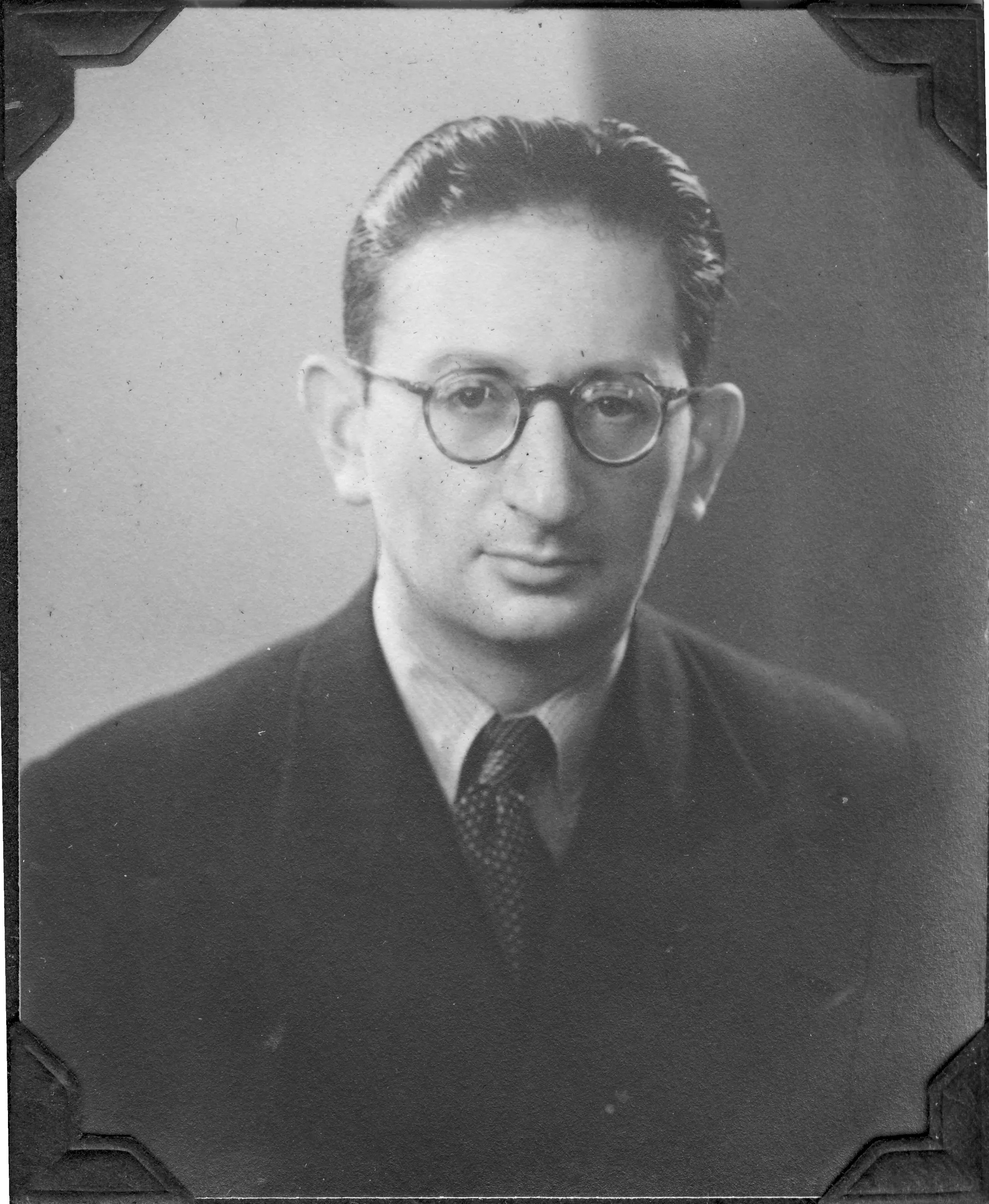
Erich Neumann
 Israel
analytical psychologist•philosopher•poet
Also known as: Erich Neumann (psychologist)
Birthday
January 23, 1905
Birth Sign
Sagittarius
Birthplace
Berlin, Germany
Age
Died at 55
About
Erich Neumann was a German analytical psychologist, philosopher, and poet, widely regarded as one of Carl Jung's most gifted students. Born in Berlin in 1905, he fled Nazi Germany in 1933 and settled in Tel Aviv, where he practiced and taught until his death in 1960. His major works, The Origins and History of Consciousness (1949) and The Great Mother (1955), remain foundational texts in analytical psychology, exploring the archetypal development of consciousness and the feminine principle across cultures.
Neumann's intellectual legacy extends beyond his books. He lectured annually at the Eranos Conference in Ascona, Switzerland, from 1948 to 1960, where his presentations shaped the direction of Jungian thought. His correspondence with Jung, published as Analytical Psychology in Exile, documents a deep personal and intellectual bond. Today, his work continues to be studied by clinicians, scholars, and students of depth psychology, and Princeton University Press keeps his collected works in print.
Early Life & Background
Erich Neumann was born into a Jewish family in Berlin on January 23, 1905, during a period of intense intellectual and cultural ferment in the German capital. He studied medicine at the University of Berlin, earning his medical degree, but his interests soon moved beyond the purely clinical. Drawn to the emerging field of depth psychology, he traveled to Zurich to study under Carl Jung, an experience that would define his intellectual trajectory.
The rise of Nazism made his position in Germany untenable. In 1933, he fled the country, and in 1934 he settled permanently in Tel Aviv, then in British Mandate Palestine. There, he established a practice as an analytical psychologist and began to develop his distinctive theoretical contributions, drawing on mythology, religion, and Jewish mystical traditions. This exile was pivotal, redirecting his life and career toward the synthesis of Jungian psychology with a deep exploration of cultural and spiritual archetypes.
Career Growth
Neumann's breakthrough came with the publication of The Origins and History of Consciousness in 1949, which mapped the evolution of human consciousness through archetypal stages, drawing on mythology, religion, and depth psychology. The book established his international reputation and remains a cornerstone of analytical psychology. His second major work, The Great Mother (1955), examined the feminine archetype across cultures and became equally influential.
From 1948 until his death, Neumann lectured annually at the Eranos Conference in Ascona, Switzerland, where his presentations, delivered in German, were foundational to his published works. He also wrote extensively on creativity, individuation, and Jewish psychology, exploring the intersection of Jungian thought with Jewish philosophical traditions. Princeton University Press continues to publish his collected works, a sign of his enduring scholarly impact.
Career Timeline
Public Image & Style
Neumann's public image is that of a serious, rigorous scholar who extended Jungian psychology into new territories of mythology, religion, and consciousness studies. Within Jungian circles, he is revered as one of the most important early theorists after Jung himself. His writing style blends psychological analysis with philosophical and mythological depth, aimed at an educated audience. There is no formal fandom name or fan culture in the popular sense; rather, his readership consists of academics, clinicians, and students of depth psychology. His work continues to be discussed on platforms like Reddit's r/Jung community.
Fame & Fandom (iFAMOUS Rankings)
Erich Neumann currently holds no placement in the iFANN Global Top 1,000 rankings or any Top-100 scope list, a status confirmed by the August 2026 evaluation cycle. While his intellectual footprint remains vast within the specific corridors of analytical psychology, he does not register as a mass-market figure with a global fame index score. This absence of a numeric ranking reflects the reality that his influence is concentrated rather than diffuse, thriving in academic libraries and clinical training rooms rather than on the front pages of general interest publications.
Unlike modern celebrities who cultivate organized followings, Neumann has never had a formal fandom name documented in any record. His audience consists entirely of scholars, therapists, and students of Jungian theory who engage with his texts through rigorous study rather than fan rituals or social media campaigns. There are no birthday billboards, fan-funded projects, or chart-pushing initiatives dedicated to him. The communities that discuss his work, such as niche subreddits focused on depth psychology, approach his legacy with scholarly curiosity rather than the adoration typical of pop culture icons. His presence in these spaces is defined by the analysis of his theories on the Great Mother and the development of consciousness, devoid of the celebrity-culture phenomena like inside jokes or viral moments that characterize true fandoms. The lack of an official fanbase underscores his identity as a serious theorist whose contributions were meant for professional advancement and philosophical inquiry, not public entertainment. Even in death, his legacy remains strictly within the realm of the academic and the clinical, where he is revered for his systematic expansion of Jungian thought rather than celebrated as a cultural phenomenon.
Interesting Facts and Legends
Erich Neumann coined the term "uroboric Self" to describe the grandiose Self of the infant, blending Freudian ideas with Jungian theory. He was among the earliest Jungians to consciously address the multiplicity of masculine and feminine elements within the psyche. Though he and Abraham Maslow never met, their models of higher consciousness arrived at strikingly similar conclusions, a parallel noted by Psychology Today. Neumann lectured at the Eranos Conference for thirteen consecutive years, from 1948 to 1960. His correspondence with Jung, beginning "Dearest Jung," reveals the warmth and intellectual intimacy of their relationship.
A central pillar of his professional legacy is his annual participation in the Eranos Conferences in Ascona, Switzerland, where he lectured every year until his death in 1960. This consistent presence made him a defining voice at the gatherings that shaped mid-century depth psychology. His most famous theoretical contribution, often cited as his defining moment in psychological literature, is the development of the concept of the "Great Mother" archetype, explored in depth in his seminal work The Origins and History of Consciousness. This work systematized the development of consciousness and the feminine principle, earning him recognition as the "great systematizer" of analytical psychology alongside Jung's role as the explorer.
Notable Quotes
“She is the creative Earth, which not only brings forth and swallows life.”
“The uroboric Self is the grandiose Self of the infant, the beginning of all consciousness.”
“In the beginning was the symbol, and the symbol was with God, and the symbol was God.”
Family & Personal Life
Neumann was married to Julie Neumann, and the couple had children together, though detailed public records of his family life are limited. He maintained a close professional and personal correspondence with Carl Jung, documented in Analytical Psychology in Exile. Neumann was deeply engaged with questions of Jewish identity and psychology, exploring the intersection of Jungian thought with Jewish mystical and philosophical traditions.
Notable Connections
Carl Jung, Neumann's mentor and correspondent, regarded him as one of his most gifted students. Olga Fröbe-Kapteyn, founder of the Eranos forum, hosted Neumann's annual lectures. Abraham Maslow, a parallel thinker, developed models of higher consciousness strikingly similar to Neumann's, though they never met. Julie Neumann was his wife.
Relationships & Dating History
Publicly available information about Neumann's romantic relationships is extremely limited, consistent with the privacy norms of his era and the scholarly focus of available sources. He was married to Julie Neumann, with whom he had children. No other romantic relationships have been documented in credible public sources. Neumann died in 1960, and he was married at the time of his death.
- MarriedJulie Neumann1930 - 1960CurrentMarried and had children together; remained married until his death.
Death & Aftermath
Died
November 5, 1960 (aged 55)
Death Place
Tel Aviv, Israel
Cause of Death
Renal carcinoma (kidney cancer)
Erich Neumann passed away on November 5, 1960. He was 55 years old at the time of his death. The cause of his death was renal carcinoma (kidney cancer), a fact consistently reported across biographical entries and obituary summaries from academic publishers like Princeton University Press. His final public appearance likely coincided with his annual lecture series at the Eranos Conference in Ascona, Switzerland, which he had led every year since 1948, before illness claimed him later that same year. While modern tributes exist decades later, such as Dr. Nancy Furlotti's writings on his relevance to the Jungian community and lectures by figures like Camille Paglia, these reflect long-term academic recognition rather than immediate post-mortem mourning.
Details regarding the specific date, location, or nature of his funeral service are not present in historical sources, leaving the exact burial arrangements unverified in public archives. Following his death, Neumann's intellectual legacy was sustained through the continued management of his estate by publishers including Shambhala Publications and Princeton University Press. These institutions have kept his major works, such as The Origins and History of Consciousness and The Great Mother, in print within the Bollingen Series, ensuring his theories on the collective unconscious and individuation remain central to analytical psychology.
Net Worth (Estate Value)
Erich Neumann died in 1960, and no contemporary net worth figures exist. His estate's financial value is not publicly documented. The ongoing publication of his works by Princeton University Press suggests continued royalty income for his estate, but specific figures are not available in public sources. His intellectual legacy, rather than financial wealth, constitutes his enduring significance.
Awards & Accolades
Known For
The Origins and History of Consciousness
1949 · Author
The Great Mother
1955 · Author
Keywords
Sources
Quick Facts
- Profession
- poet, psychologist, philosopher
- Born
- January 23, 1905
- Birthplace
- Berlin, Germany
- Died
- November 5, 1960
- Death Place
- Tel Aviv, Israel
- Gender
- Male
- Birth Sign
- Sagittarius
- Spouse
- Julie Neumann
Personal Details
- Spouse
- Julie Neumann
- Education
- University of Berlin (medicine)
Frequently Asked Questions
What is Erich Neumann known for?
Was Erich Neumann a student of Carl Jung?
Where did Erich Neumann live after leaving Germany?
Did Erich Neumann have children?
When did Erich Neumann die?
Similar People
Join the community
fans discussing