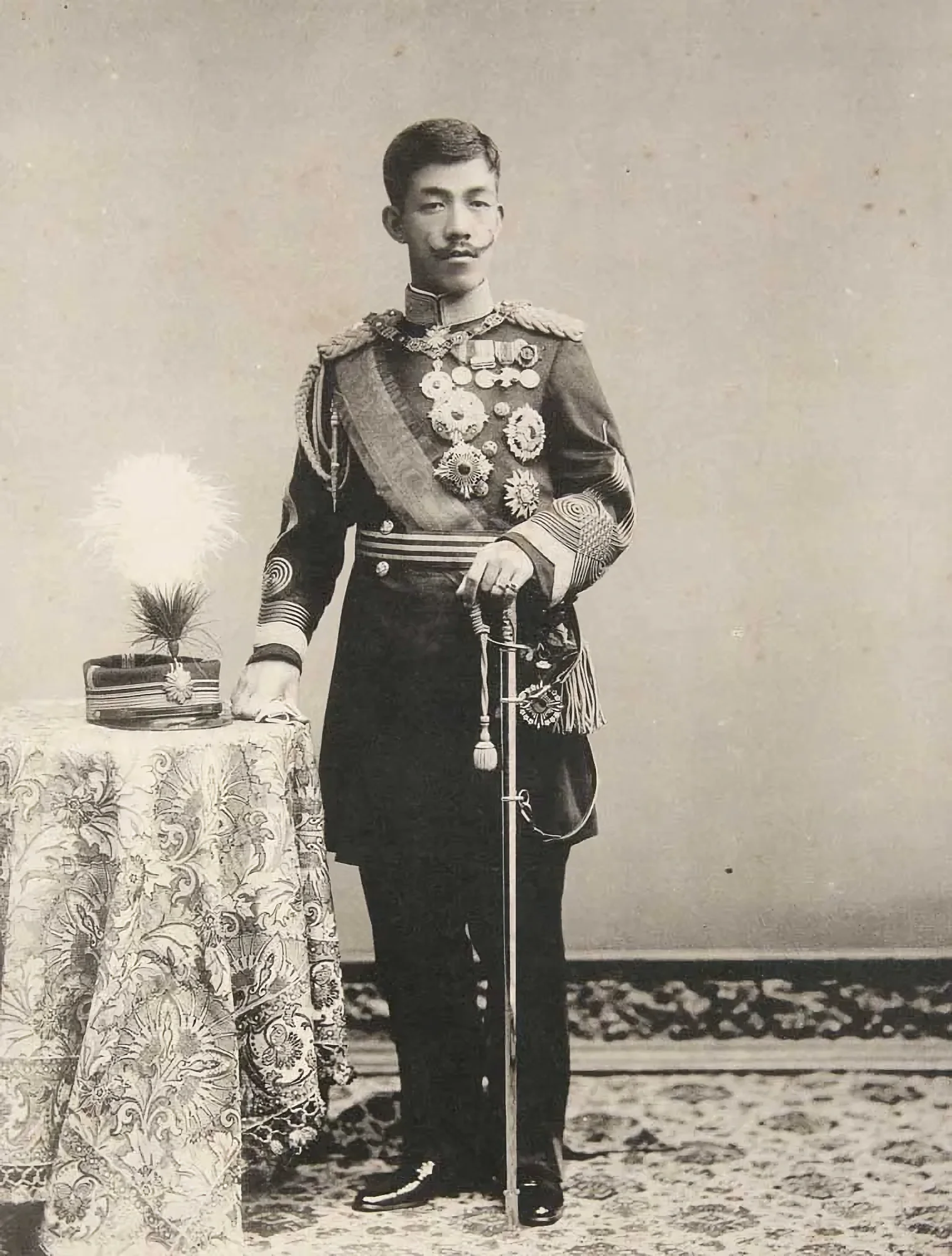
Emperor Taishō
 Japan
JapanAlso known as: Yoshihito, Emperor Taisho
Birthday
August 31, 1879
Birth Sign
Virgo
Birthplace
Akasaka Estate, Tokyo, Japan
Age
Died at 47
Height
5 ft 5 in (165 cm)
About
Emperor Taishō, born Yoshihito on 31 August 1879 at the Akasaka Estate in Tokyo, was the 123rd emperor of Japan, reigning from 29 July 1912 until his death on 25 December 1926. His era, known as the Taishō period, saw a notable shift toward liberal democracy at home, often called Taishō Democracy, even as Japan joined the Allies in World War I, endured the Spanish flu pandemic, and recovered from the devastating Great Kantō Earthquake of 1923. His chronic poor health, which began with meningitis shortly after birth, limited his public appearances and ultimately contributed to his early death at age 47.
Yoshihito was the son of Emperor Meiji and a concubine, Yanagiwara Naruko. His two elder siblings died in infancy, so he was proclaimed crown prince in 1888. Despite a childhood marked by various ailments, he married Sadako Kujō, from the aristocratic Kujō family of the Fujiwara clan, in 1900. The couple had four sons, including the future Emperor Shōwa (Hirohito). When his father died in 1912, Yoshihito ascended the Chrysanthemum Throne, but his neurological issues meant he played only a symbolic role in governance. From 1919 onward, he withdrew from official duties entirely, leading to the appointment of Crown Prince Hirohito as regent in 1921. Hirohito succeeded him upon his death at the Hayama Imperial Villa in Kanagawa Prefecture on Christmas Day, 1926.
Early Life & Background
Born in 1879 at the Akasaka Estate in Tokyo, Yoshihito was the third son of Emperor Meiji and a concubine, Yanagiwara Naruko. His two elder brothers died in infancy, leaving him as the sole surviving heir. His health was fragile from the start; he contracted meningitis shortly after birth, which left lasting neurological damage that would shape his entire life.
Despite his ailments, he was proclaimed crown prince in 1888. His education was frequently interrupted by illness, but he received tutoring in classical Chinese literature, Japanese history, and Confucian ethics, standard for heirs to the throne. In 1900, he married Sadako Kujō, a member of the aristocratic Kujō family of the Fujiwara clan, in an arranged marriage. The couple had four sons, including the future Emperor Shōwa, born in 1901.
A rare photograph from 1907 shows Yoshihito as crown prince posing with some 260 commoners in a west Japan city, an unusual moment of accessibility for an imperial figure of that era. His childhood and youth were marked by health struggles that limited his activities and education compared to typical imperial heirs, but he remained the designated successor to the throne.
Career Growth
Yoshihito ascended the Chrysanthemum Throne on 29 July 1912, upon the death of Emperor Meiji. His reign, known as the Taishō period, was marked by a notable shift toward liberal democracy at home, often called Taishō Democracy. In 1915, he held the first modern enthronement ceremonies, setting a precedent for all subsequent imperial accessions in Japan.
During his reign, Japan joined the Allies in World War I (1914–1918), experienced the Spanish flu pandemic, and recovered from the devastating Great Kantō Earthquake of 1923. However, his chronic neurological health problems, stemming from meningitis contracted shortly after birth, progressively incapacitated him. He withdrew from all official public duties in 1919, and in 1921, Crown Prince Hirohito was appointed regent to govern on his behalf. Emperor Taishō died of a heart attack at the Hayama Imperial Villa on 25 December 1926, and Hirohito succeeded him as Emperor Shōwa.
Career Timeline
Public Image & Style
Emperor Taishō's public image is that of a tragic, symbolic figure, an emperor whose physical frailty mirrored Japan's transition from the rigid Meiji autocracy to a brief democratic interlude. Historians portray him as a well-meaning but largely incapacitated monarch whose reign's significance lies more in the political movements that flourished in his name than in his personal actions. The Taishō Democracy movement is the central cultural legacy associated with him, and Japanese history enthusiasts and scholars study his era as a counterpoint to the militarism of the later Shōwa period. There is no official fandom name or fan culture around him specifically; interest is primarily academic and historical.
Fame & Fandom
Emperor Taishō never courted a modern fanbase, for his reign predated the era of celebrity culture by decades. The Japanese public viewed him not as an idol to be adored, but as a divine sovereign whose distance was enforced by ritual and illness. While no organized clubs or viral campaigns ever formed around Yoshihito, historical narratives have solidified into a specific kind of reverence centered on the tragedy of his incapacity and the paradoxical flourishing of democracy in his name. He remains a figure of profound historical weight rather than contemporary pop-culture obsession, with his legacy defined by the 'Taishō Democracy' movement that flourished despite his physical absence from public life. His story is one of hidden frailty masking a pivotal era where Japan briefly embraced liberal politics before turning toward militarism. This unique position in history has kept him relevant to scholars and enthusiasts who study the transition from Meiji autocracy to the turbulent interwar period. His enduring presence in global consciousness stems from these structural shifts rather than personal charisma or media manipulation. According to the iFANN Global Fame Rankings, Emperor Taishō is currently the 37th most famous person from Japan, a standing he has held steady across recent cycles.
Interesting Facts and Legends
Emperor Taishō's posthumous name derives from his reign era rather than his birth name, Yoshihito, which remained his identity during his lifetime. His 1915 enthronement ceremonies established the first modern protocols for imperial accessions, setting the template used for all subsequent events including Emperor Naruhito's 2019 coronation. A rare 1907 photograph captures him posing with 260 ordinary citizens, an unprecedented moment of accessibility for the era. The full extent of his neurological decline was concealed from the public, with official statements citing vague illness without specifics. His incapacity necessitated the creation of a formal regency system in 1921, which remains the constitutional mechanism for handling imperial incapacitation today. Beyond documented facts, a persistent legend surrounds the anarchist Kaneko Fumiko, who plotted to poison the Emperor while simultaneously writing letters expressing deep admiration, creating a complex narrative of devotion and betrayal. Another iconic moment involves the rediscovery of a candid photo showing the Crown Prince smiling among commoners in western Japan, challenging the myth of his total isolation. These stories highlight the tension between his divine status and his very human struggles.
Family & Personal Life
Emperor Taishō's father was Emperor Meiji, and his mother was Yanagiwara Naruko, a concubine. His two elder siblings died in infancy, leaving him as the sole surviving heir. He married Sadako Kujō in 1900, who became Empress Teimei. She was from the aristocratic Kujō family of the Fujiwara clan, one of Japan's most prestigious lineages. The couple had four sons: Hirohito (born 1901), Yasuhito (born 1902), Nobuhito (born 1905), and Takahito (born 1915). Empress Teimei was known for her intelligence and strong will, and she reportedly had a stabilizing influence on her husband's health struggles. The family lived primarily at the Akasaka Estate and later at the Hayama Imperial Villa.
Notable Connections
Emperor Taishō is associated with his father Emperor Meiji, his wife Empress Teimei, and his son Emperor Shōwa (Hirohito), who succeeded him. His reign set the modern precedent for imperial enthronements, influencing his great-grandson Emperor Naruhito's 2019 accession. He is also connected to the Taishō Democracy movement and the political liberalization of 1910s Japan.
Relationships & Dating History
Emperor Taishō's personal life was strictly controlled by the Imperial Household Agency. His only documented relationship was his arranged marriage to Sadako Kujō, who became Empress Teimei. They married in 1900, and the marriage was arranged by the imperial court to secure a suitable empress from the highest aristocratic ranks. The couple had four sons together. Empress Teimei was known for her intelligence and strong will, and she reportedly had a stabilizing influence on her husband's health struggles. There are no records of any extramarital relationships, affairs, or romantic scandals during his lifetime, his health and the strict protocols of the imperial court made such liaisons essentially impossible and undocumented. Emperor Taishō died on 25 December 1926, predeceasing his wife, who died in 1951.
- MarriedEmpress Teimei1900 - 1926Arranged marriage; had four sons together.
Death & Aftermath
Died
December 25, 1926 (aged 47)
Death Place
Hayama Imperial Villa, Kanagawa Prefecture, Japan
Cause of Death
Diabetes mellitus complicated by nephritis and cerebral hemorrhage
The Imperial Household Agency released a brief statement declaring the end of Emperor Taishō's life due to his long-standing condition, ending a reign that had been largely silent since 1921. Yoshihito passed away at the Hayama Imperial Villa in Kanagawa Prefecture on December 25, 1926, at the age of 47, having spent his final years in seclusion after a stroke left him partially paralyzed. The announcement triggered a moment of silence across Japan, with high-ranking government officials, military leaders, and the populace observing traditional customs of grief while the nation focused on the stability of the state. Funeral ceremonies followed strict Shinto traditions in Tokyo before the Emperor was interred at the Momoyama Mausoleum in Fushimi-ku, Kyoto, alongside his father. The immediate transition of power saw the proclamation of the new era name "Showa" issued hours after his passing, marking a significant cultural shift from the democratic experimentation of the Taishō period to a new chapter under Crown Prince Hirohito.
Net Worth (Estate Value)
$10 Million
iFANN Editorial Team estimate
As a deceased monarch whose reign ended nearly a century ago, Emperor Taishō has no contemporary personal net worth. His estate value is effectively inseparable from the Japanese Imperial Household, which remains one of the wealthiest institutions in the world. The Imperial Household Agency manages all imperial properties, including the Tokyo Imperial Palace, the Hayama Imperial Villa where he died, and the Numazu Imperial Villa in Shizuoka Prefecture. These assets include extensive landholdings, art collections, and cultural properties. The estate's revenue sources include government appropriations (the Imperial Household budget, funded by Japanese taxpayers), management of imperial properties, and cultural heritage assets. No public figure exists for the specific estate value attributable to Emperor Taishō's personal holdings, as these were absorbed into the collective imperial patrimony upon his death. The current Imperial Household Agency continues to manage these assets, with the imperial family's official budget and property holdings reported annually to the Japanese Diet. Per iFANN's editorial analysis, the estimated value attributed to his historical estate footprint stands at $10 Million.
Awards Won (1)
As a Japanese emperor, Taishō did not receive entertainment or cultural awards. His honours were primarily national and ceremonial, including the Grand Cordon of the Supreme Order of the Chrysanthemum and the Order of the Golden Kite. His most significant lasting honour is the Taishō era name itself, which defines a period of Japanese history recognized for its democratic reforms.
1888 · National Honour
Imperial
Known For
123rd Emperor of Japan
1912-1926 · Emperor
Taishō Democracy
1912-1926 · Symbolic figurehead
Keywords
Sources
Quick Facts
- Profession
- Emperor of Japan
- Born
- August 31, 1879
- Birthplace
- Akasaka Estate, Tokyo, Japan
- Died
- December 25, 1926
- Death Place
- Hayama Imperial Villa, Kanagawa, Japan
- Gender
- Male
- Spouse
- Empress Teimei
- Children
- Hirohito, Yasuhito, Nobuhito, Takahito
- Birth Sign
- Virgo
Personal Details
- Full Name
- Yoshihito
- Height
- 5 ft 5 in (165 cm)
- Spouse
- Empress Teimei
- Children
- Hirohito, Yasuhito, Nobuhito, Takahito
- Education
- Traditional imperial education
Frequently Asked Questions
How did Emperor Taishō die?
Was Emperor Taishō mentally ill?
Who was Emperor Taishō's wife?
What is Taishō Democracy?
Why was Emperor Taishō's reign important?
Similar People
Join the community
fans discussing