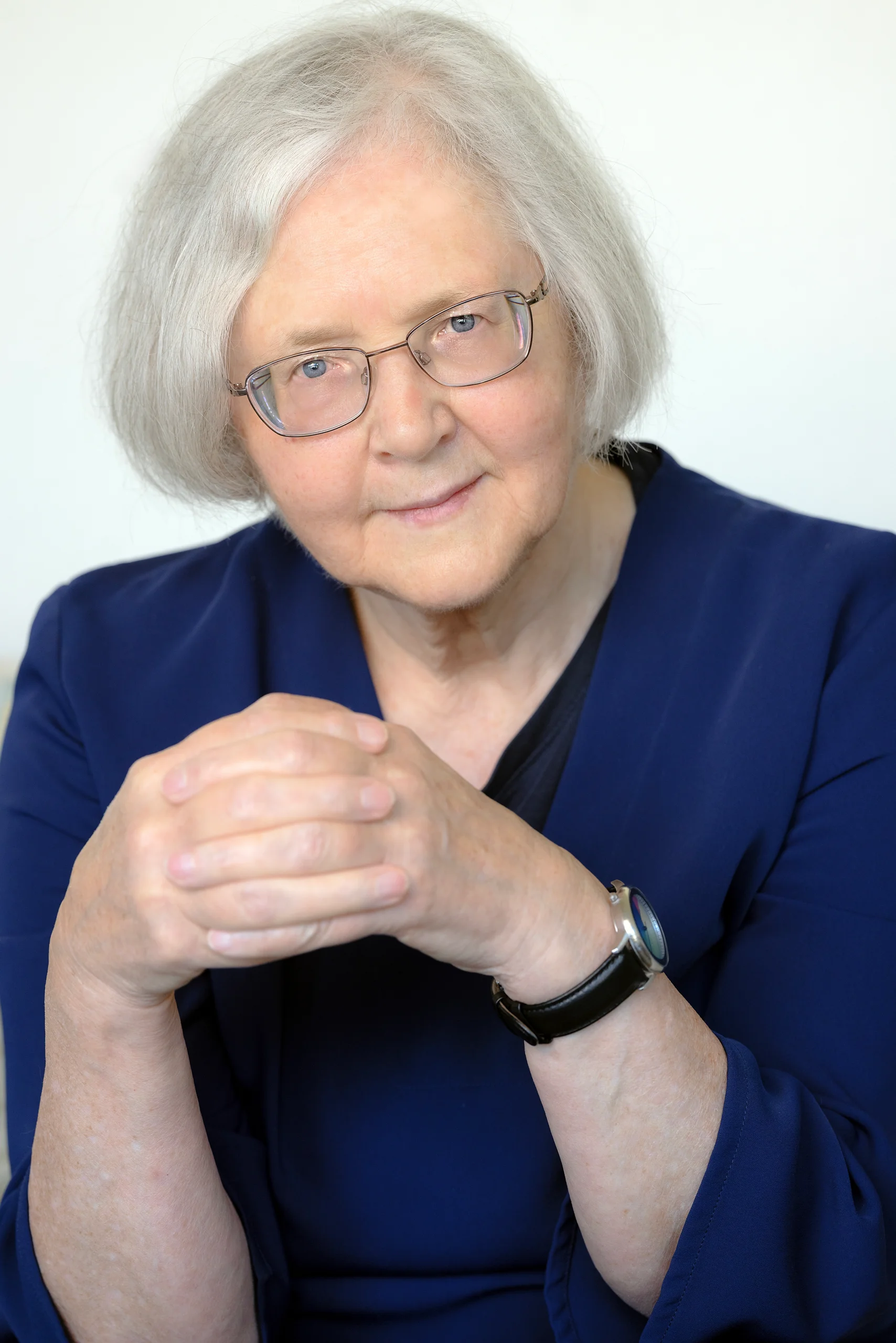
Elizabeth Blackburn
 Australia
biologist•molecular biologist•biochemist
Also known as: Elizabeth Helen Blackburn
Birthday
November 26, 1948
Birth Sign
Sagittarius
Birthplace
Hobart, Tasmania, Australia
Age
77 years old
About
Elizabeth Blackburn is an Australian-American molecular biologist whose discoveries reshaped how scientists understand cellular aging and cancer. She holds dual citizenship and is widely recognized as one of the most influential biologists of her generation. She served as president of the Salk Institute for Biological Studies, and her research on the ends of chromosomes, known as telomeres, made her a Nobel laureate.
Today, Blackburn is a distinguished professor emerita at the University of California, San Francisco, and remains active in scientific leadership and public advocacy. She is celebrated not only for her laboratory discoveries but for her principled stand on scientific integrity. Her work has inspired a generation of researchers, particularly women in science, and she continues to speak publicly about the importance of persistence, truth, and inclusion in research.
Early Life & Background
Elizabeth Helen Blackburn was born on November 26, 1948, in Hobart, Tasmania, into a family of physicians. Her father and mother were both doctors, and the household was filled with scientific talk and curiosity. She developed an early fascination with animals and the natural world, often exploring the outdoors and asking questions that would later define her career.
She pursued her undergraduate studies at the University of Melbourne, earning a Bachelor of Science degree in 1970. Her academic excellence took her to England, where she completed a PhD at the University of Cambridge in 1975 under the supervision of Frederick Sanger, a pioneer in DNA sequencing. Her doctoral work focused on the DNA sequences of bacteriophages, viruses that infect bacteria.
Following her PhD, Blackburn moved to Yale University for postdoctoral research with Joseph Gall. There she began studying the chromosomes of Tetrahymena, a single-celled freshwater organism with an unusually large number of chromosomes. This organism proved ideal for investigating chromosome ends, and Blackburn noticed strange repeated DNA sequences there. These observations laid the groundwork for her later discovery of telomerase, though the full significance would not become clear until years later.
Career Growth
Blackburn's breakthrough came in 1984, when she and her graduate student Carol W. Greider discovered telomerase, the enzyme that replenishes telomeres, the protective caps on chromosome ends. This finding, made at the University of California, Berkeley, fundamentally changed the field of cellular aging and cancer research.
In 1990, she moved to the University of California, San Francisco, where she continued her groundbreaking work. Her contributions earned her numerous accolades, including the Lasker Award, the Gruber Prize in Genetics, and the Louisa Gross Horwitz Prize, culminating in the 2009 Nobel Prize in Physiology or Medicine, shared with Greider and Jack W. Szostak.
Beyond the lab, Blackburn took on leadership roles. She served as president of the Salk Institute from 2006 to 2011, and later as a distinguished professor. Her tenure on the President's Council on Bioethics during the George W. Bush administration was contentious; her dismissal in 2004 prompted a protest letter signed by 170 scientists, who argued that political disagreements, not scientific merit, led to her removal.
Career Timeline
Public Image & Style
Blackburn is perceived as a pioneering and principled scientist who has bridged fundamental research and public policy. The Nobel Prize organization has described her evolution from a self-described "lab rat" to "an explorer in the realms of health and public policy." She is seen as a champion of scientific integrity, unafraid to challenge political interference in research.
Her advocacy for women in science and inclusion has been a consistent theme in recent interviews. She speaks with a thoughtful, long-view perspective, emphasizing the importance of persistence and truth. She was named to TIME Magazine's 100 Most Influential People in 2007 and featured in the Nobel Prize's "Women Who Changed Science" series. While she has no fandom name, she is deeply respected within the scientific community and beyond, often featured in media as a role model for aspiring researchers.
Fame & Fandom
Elizabeth Blackburn is a name spoken with reverence in laboratories and lecture halls, but her presence in the global fame rankings is a different story. As of August 2026, iFANN's Global Fame Engine has evaluated her profile, yet she does not currently hold a placement in the published rankings, neither in the Global Top 1,000 nor in any Top-100 scope list. That's not a slight; it's a reflection of her domain. Her fame is the quiet, credentialed kind: Nobel laureate, former Salk president, and the scientist who cracked the telomere code. She doesn't trend on social media, and there's no fan club with a clever name, in fact, no documented fandom name exists for her. Her admirers are students, fellow researchers, and public-health advocates who cite her work and pack her lectures. The closest thing to a fan ritual is the academic tradition of referencing her 2009 Nobel-winning research or attending her talks, like her widely viewed TED talk on telomeres and aging. Her inclusion in the Nobel Prize's 'Women Who Changed Science' series and her ongoing public engagement on aging research keep her in the public eye, but always through the lens of science. So, while she may not rank on iFANN's lists, her influence is measured in citations, not clicks, and that's a different kind of fame, one that endures.
Interesting Facts and Legends
Elizabeth Blackburn's list of firsts is impressive: she was the first Australian woman to win a Nobel Prize in any category, and her work on Tetrahymena, a pond-dwelling single-celled organism with numerous chromosomes, was key to unlocking telomere biology. She co-authored The Telomere Effect with psychologist Elissa Epel, bringing the science of aging to a general audience. Her dismissal from the President's Council on Bioethics, due to her dissent on stem cell research restrictions, sparked one of the largest scientific protest letters in modern history, with 170 scientists signing. She holds dual Australian-American citizenship and was featured in the Australian Museum's '200 Treasures' as one of 100 notable Australians.
Beyond the facts, there are stories that have become part of her legend. The most iconic is her Nobel Prize win in 2009, shared with Carol Greider and Jack Szostak, for discovering telomerase and the molecular nature of telomeres, a discovery that fundamentally changed how we understand cellular aging and cancer. Another widely retold narrative is her principled stand against political interference in science, which elevated her from a self-described 'lab rat' to a public champion of scientific integrity. And then there's the popular folklore that she 'unlocked the secret to aging', a simplification that fans of science love to repeat, even though the real biology is far more nuanced. Her legacy is built on these documented moments, not viral stunts, and that's exactly how she'd want it.
Notable Quotes
“Science is all about keeping the long view.”
“I was a lab rat, and I loved it.”
“We must fight for truth, inclusion and the next generation of scientists.”
Family & Personal Life
Blackburn's parents were both physicians, instilling in her a love of science from an early age. She grew up in Hobart, Tasmania, in a household where scientific curiosity was encouraged. Details about her siblings are not publicly documented. Blackburn is married to John Sedat, a fellow scientist and professor at UCSF. The couple has one son, Benjamin. The family has largely stayed out of the public eye, with Blackburn keeping her private life separate from her professional achievements.
Notable Connections
Carol W. Greider, her graduate student and co-discoverer of telomerase, shared the 2009 Nobel Prize with her. Jack W. Szostak, another collaborator, also shared the Nobel. Her husband, John Sedat, is a fellow UCSF scientist. Joseph Gall mentored her at Yale, and Frederick Sanger supervised her PhD at Cambridge. Elissa Epel co-authored The Telomere Effect with her.
Relationships & Dating History
Elizabeth Blackburn is married to John Sedat, a fellow scientist and professor at UCSF. The couple has one son, Benjamin. Blackburn has kept her personal life private, and there is no public information about relationships before her marriage. As of 2026, she remains married to Sedat, and there is no indication of separation or divorce.
- MarriedJohn SedatCurrentFellow scientist at UCSF; they have one son, Benjamin.
Salary, Net Worth In 2026
$5 Million
iFANN Editorial Team estimate
iFANN currently estimates Elizabeth Blackburn's net worth at $5 million. This figure reflects her Nobel Prize winnings, decades of senior academic salaries, book royalties, and speaking fees. Her share of the 2009 Nobel Prize was approximately $470,000. As a distinguished professor at UCSF and former Salk Institute president, her annual salary likely ranged from $200,000 to $400,000. Her lab secured substantial NIH funding, often exceeding $1 million per year. She also earned from speaking engagements, typically $10,000 to $50,000 per event, and from royalties on The Telomere Effect. While no official net worth figure is published, iFANN's editorial analysis places it at $5 million, based on these income sources.
Awards Won (9)
Elizabeth Blackburn has received numerous prestigious awards for her groundbreaking work on telomeres and telomerase. Her most notable honor is the 2009 Nobel Prize in Physiology or Medicine, shared with Carol W. Greider and Jack W. Szostak. She has also won the Albert Lasker Basic Medical Research Award, the Gruber Prize in Genetics, and the Louisa Gross Horwitz Prize, among others.
2009 · Physiology or Medicine
Discovery of how chromosomes are protected by telomeres and the enzyme telomerase
2006 · Basic Medical Research
Telomere and telomerase research
Known For
Discovery of telomerase
1984 · Co-discoverer
Nobel Prize in Physiology or Medicine
2009 · Laureate
Presidency of Salk Institute
2006 · President
Keywords
Sources
Quick Facts
- Profession
- biologist, molecular biologist, biochemist
- Born
- November 26, 1948
- Birthplace
- Hobart, Tasmania, Australia
- Gender
- Female
- Birth Sign
- Sagittarius
- Nationality
- Australian-American
- Spouse
- John Sedat
- Children
- Benjamin
Personal Details
- Full Name
- Elizabeth Helen Blackburn
- Spouse
- John Sedat
- Children
- Benjamin
- Education
- BSc, University of Melbourne; PhD, University of Cambridge
Frequently Asked Questions
How old is Elizabeth Blackburn?
What did Elizabeth Blackburn discover?
Is Elizabeth Blackburn married?
What is Elizabeth Blackburn's net worth?
Did Elizabeth Blackburn win the Nobel Prize?
Similar People
Join the community
fans discussing