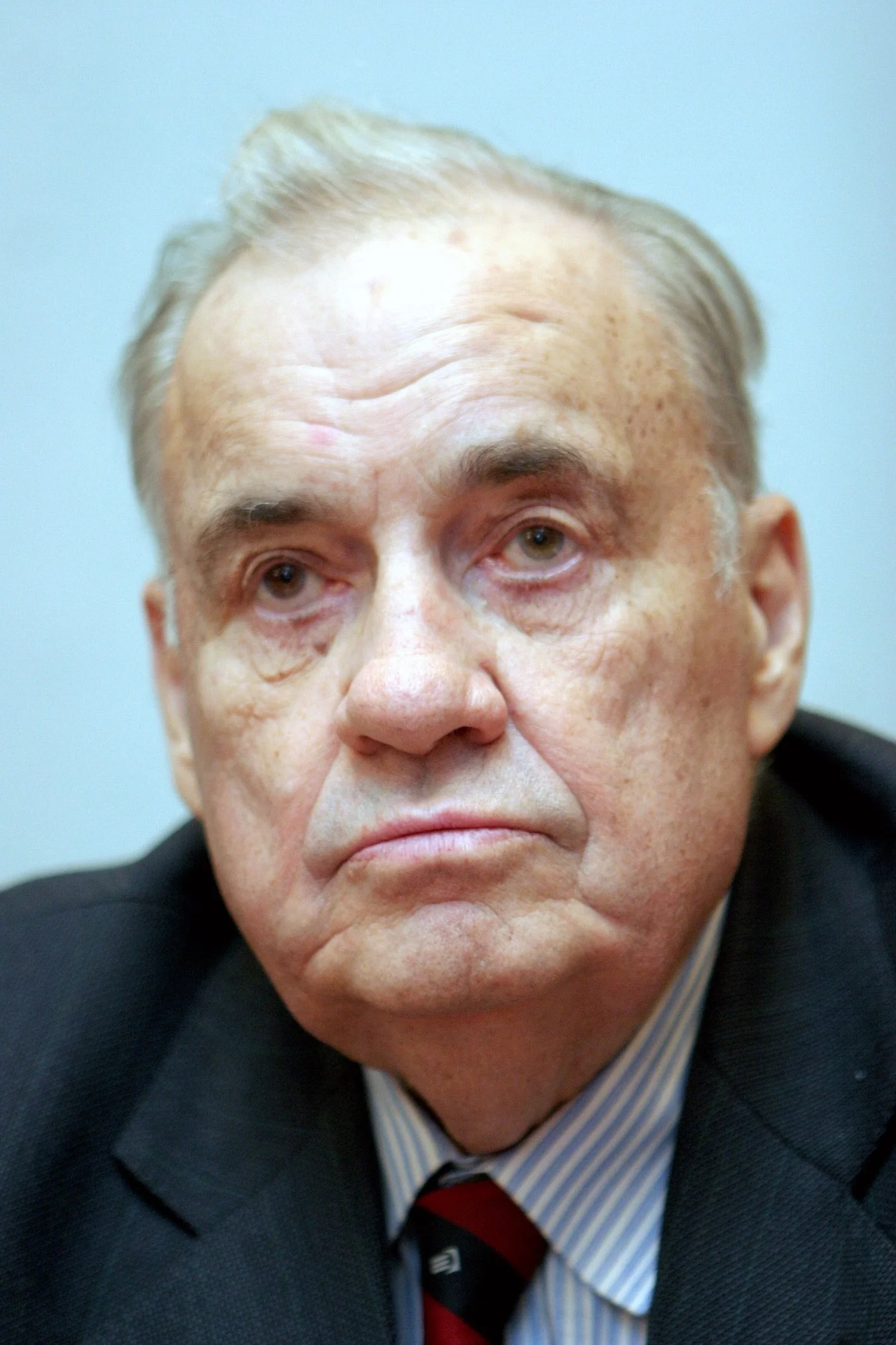
Eldar Ryazanov
 Russia
film director•screenwriter•actor
Also known as: Eldar Ryazanov, Eldar Aleksandrovich Ryazanov
Birthday
1927-11-18
Birth Sign
Scorpio
Birthplace
Samara, Soviet Union
Age
Died at 88
About
Eldar Ryazanov was a Soviet and Russian film director, screenwriter, poet, and actor, widely celebrated as one of the most beloved figures in Russian cinema. His career spanned over six decades, during which he directed more than 20 films and wrote numerous screenplays. He is best known for his signature "sad comedies," which mixed sharp satire with deep humanism, exposing the absurdities of Soviet bureaucracy while warming the hearts of millions.
Ryazanov's films, particularly The Irony of Fate, or Enjoy Your Bath! (1975) and Carnival Night (1956), became cultural touchstones. The Irony of Fate remains a New Year's Eve tradition in Russia, broadcast on major channels every year, and his work continues to be cherished by audiences across the former Soviet Union. His distinctive style blended humor with poignant observations about life, and his comedies were distinguished by witty dialogue, well-drawn characters, and dramatic irony.
Ryazanov passed away on November 30, 2015, at the age of 88, leaving behind a rich legacy that continues to influence Russian cinema and entertain new generations.
Early Life & Background
Eldar Ryazanov was born on November 18, 1927, in Samara, a city on the Volga River. His father, Aleksandr Semyonovich Ryazanov, was a Soviet diplomat who worked in Tehran, and his mother, Sofya Mikhailovna (née Shusterman), was of Jewish descent. His parents chose the oriental name "Eldar" because of their work with the Soviet Trading Representation in Iran. In 1930, the family moved to Moscow, but soon after, his parents divorced, and Eldar was raised by his mother and her new husband, Lev Mikhailovich Kopp. In 1937, his father was arrested by the Stalinist government and spent 18 years in correctional labor camps.
Ryazanov graduated with honors from the Soviet State Institute of Cinematography (VGIK) in Moscow in 1950 as a film director. He spent the first five years of his career making documentaries, including Road of October (1951), Soviet Sport No. 5 (1951), World Chess Championships (1951), Not Far From Krasnodar (1953), and Your Books (1953). These early works honed his craft and gave him a keen eye for observational detail.
In 1955, he joined Mosfilm Studios under the direction of Ivan Pyryev, a major force in Soviet cinema. Pyryev suggested he direct Carnival Night, but Ryazanov initially refused, wanting to make "serious films." Pyryev convinced him by arguing that "anybody could shoot a melodrama, but only a few can create good comedy." That film, released in 1956, became an instant box office hit and a harbinger of the post-Stalin thaw.
Career Growth
Ryazanov's breakthrough came with Carnival Night (1956), a musical comedy starring Lyudmila Gurchenko and Igor Ilyinsky. The film depicted Communist Youth League members trying to organize a fun-filled New Year's Eve party against an overbearing bureaucrat, becoming an instant box office hit and a staple of Russian television. Following this success, he directed Girl without Address (1957) and Hussar Ballad (1962), set during the 1812 Napoleonic invasion.
In 1966, he began a fruitful collaboration with screenwriter Emil Braginsky, starting with Beware of the Car. This partnership produced some of his most beloved films, including Zigzag of Luck (1968), Old Men Robbers (1972), and the Italian co-production The Unbelievable Adventures of Italians in Russia (1974).
His signature work, The Irony of Fate, or Enjoy Your Bath! (1975), originally made for television, became a cultural phenomenon. It remains one of the most watched films in Russian television history and is aired every New Year's Eve. He followed with Office Romance (1977), The Garage (1979), Station for Two (1982), and A Cruel Romance (1984), an adaptation of Ostrovsky's play. His later works included Promised Heaven (1991), Hello, Fools! (1996), and Old Hags (2000).
Career Timeline
Public Image & Style
Eldar Ryazanov was regarded as a master of comedy, but his humor was always tinged with melancholy, earning the label "sad comedy." He had a unique ability to critique Soviet society without being overtly political, making his films beloved by both audiences and authorities. His style was characterized by witty dialogue, memorable characters, and a deep understanding of human nature.
Fans and critics alike admired his warmth and intelligence. The newspaper Novaya Gazeta praised him as a master of every comedic shade, "from lyric to satiric, from slapstick to tragicomic fantasy." His films were known for their quotable lines and have become part of Russian cultural lexicon.
Ryazanov's persona was that of a thoughtful, slightly mischievous observer, and he connected with audiences through his genuine affection for his characters, even when he satirized them.
Fame & Fandom
Eldar Ryazanov's fanbase is less a structured fandom and more a generational cultural phenomenon, spanning generations of Soviet and Russian viewers who grew up with his films. No formal fandom name exists; his audience is simply referred to as Ryazanov fans, united by a shared cultural memory rather than organized campaigns. The most distinctive ritual is the annual New Year's Eve broadcast of The Irony of Fate, a tradition so entrenched that the film is synonymous with the holiday itself. Millions of viewers across Russia and former Soviet states watch the same film at the same time, effectively a synchronized national viewing event. His films, including Carnival Night and Office Romance, remain in perpetual television rotation, and his catchphrases have entered everyday Russian speech.
Ryazanov's relationship with his audience was intimate and enduring. He offered a rare space for shared laughter at the absurdities of Soviet life, and his films featured a repertory company of beloved actors, creating a sense of familiarity across his body of work. While there are no documented fan campaigns or organized projects, the persistent cultural demand has kept his films available on major platforms, reflecting sustained commercial interest. The lack of a formal name or organized fandom does not diminish the depth of his cultural impact.
As of August 2026, iFANN's Global Fame Engine has evaluated Eldar Ryazanov, but he does not currently hold a placement in the published rankings, including the Global Top 1,000 or any Top-100 scope list. His legacy, however, remains a cornerstone of Russian cinema, celebrated through annual broadcasts and national remembrance.
Interesting Facts and Legends
Ryazanov was also a poet, and his poems often appeared in his films. He wrote the lyrics for several songs in his movies, including the famous "Nature Has No Bad Weather" from Office Romance. He was a passionate collector of antique clocks and owned a large collection. Ryazanov loved cats and often kept them at home, and cats appear in several of his films. He was known for his distinctive voice and often narrated his own documentaries. In his later years, he opened the Eldar Club in Moscow, a cultural center that hosted film screenings, concerts, and literary evenings.
One of the most enduring legends surrounding Ryazanov is the New Year's tradition of The Irony of Fate. Since its release in 1975, the film has been broadcast every New Year's Eve in Russia, a ritual that continues to this day. Many Russians can quote the entire film from memory, and its iconic lines have become part of the national lexicon.
Another legendary film, The Garage (1980), is a darkly comic satire about a housing cooperative meeting. The production itself became lore: Ryazanov shot it quickly with a sense of urgency, and the ensemble cast, drawn from his regular troupe, delivered intense performances. The film is often cited as one of the sharpest satires of Soviet collective hypocrisy.
Ryazanov's death on November 30, 2015, at age 88, triggered an outpouring of national grief. International outlets reported his passing as the loss of a "Soviet comedy film giant," and his funeral was attended by thousands, confirming his status as a national cultural figure.
Notable Quotes
“Life is as short as the reading of a play, / But if you believe, you live. / Theater is a sweet attempt / To go back and make a change.”
“Anybody could shoot a melodrama, but only a few can create good comedy.”
“Comedy is a serious matter.”
“The audience is the best critic.”
“I never wanted to make people laugh, I wanted to make them think.”
Family & Personal Life
Ryazanov's parents were Aleksandr Semyonovich Ryazanov, a diplomat, and Sofya Mikhailovna Shusterman, of Jewish descent. They chose his unusual name because of their work in Iran. After his parents divorced, he was raised by his mother and stepfather, Lev Mikhailovich Kopp. His father was arrested in 1937 and spent 18 years in labor camps, a painful chapter in the family's history.
Ryazanov was married to Zoya Fomina, who is listed as his spouse. They had a daughter, Olga, who worked as a film editor. The family lived in Moscow, and Ryazanov was known to be devoted to his wife and daughter.
Notable Connections
Relationships & Dating History
Eldar Ryazanov was married to Zoya Fomina, who is listed as his spouse. They had a daughter, Olga. Details about their courtship and marriage are not widely documented, but they remained together until Ryazanov's death in 2015. There are no public records of other significant relationships.
- MarriedZoya Fomina? - 2015Ryazanov's wife, with whom he had a daughter, Olga. They remained married until his death.
Death & Aftermath
Died
2015-11-30 (aged 88)
Death Place
Moscow, Russia
Cause of Death
Heart failure
The announcement of Eldar Ryazanov's passing triggered an immediate and profound outpouring of grief across Russia and the former Soviet Union, where he was widely hailed as a giant of Soviet comedy and a moral voice of his era. Tributes poured in from high-ranking officials, including President Vladimir Putin, who described him as a classic of Russian cinema whose works defined a generation, while peers and actors expressed deep sorrow over the loss of a filmmaker whose films like Carnival Night, Office Romance, and A Railway Station for Two were integral to the cultural fabric of the nation.
Spontaneous gatherings and moments of silence occurred among fans outside cinemas and cultural institutions showing his work. Ryazanov died on November 30, 2015, in Moscow at the age of 88 after a brief illness, with the official cause reported as heart failure by major news outlets citing hospital or family sources. The death was treated as a natural event consistent with his age and health history. His funeral took place on December 3, 2015, at the prestigious Novodevichy Cemetery in Moscow, where thousands of mourners attended a public affair featuring readings from his poetry and screenings of clips from his most beloved films before his ashes were interred following cremation.
In the posthumous period, several of his films remained staples of Russian television, particularly during New Year holidays, maintaining their commercial viability and cultural relevance without the release of new directed works. Various institutions dedicated special programming to his memory in 2016, and his name was frequently invoked in discussions about Russian cultural heritage.
Net Worth (Estate Value)
Eldar Ryazanov's net worth is not publicly documented, and as a deceased figure, no estate value estimates are provided in available sources. During his career, he earned income from directing films, writing screenplays, and later from royalties and television broadcasts. His films, particularly The Irony of Fate, continue to be broadcast annually, generating ongoing royalties for his estate.
Ryazanov also received state honors and awards, including two Orders of the Red Banner of Labor and the French Order of Fine Arts and Literature, though these carry no financial value. He opened the Eldar Club in Moscow, which hosted cultural events and likely provided some income. However, without reliable estimates, it is not possible to assign a net worth figure.
Awards Won (2)
Ryazanov won the USSR State Prize in 1977 for 'Office Romance' and the Nika Award for Best Director in 1991 for 'Promised Heaven'. He was named People's Artist of the USSR in 1984 and received the French Order of Fine Arts and Literature. He also held two Orders of the Red Banner of Labor.
1991 · Best Director
Promised Heaven
1977 · State Prize
Office Romance
Known For
The Irony of Fate, or Enjoy Your Bath!
1975 · Director, Screenwriter
Carnival Night
1956 · Director
Office Romance
1977 · Director, Screenwriter
The Garage
1979 · Director, Screenwriter
Station for Two
1982 · Director, Screenwriter
Keywords
Sources
Quick Facts
- Profession
- film director, screenwriter, actor
- Born
- 1927-11-18
- Birthplace
- Samara, Soviet Union
- Died
- 2015-11-30
- Death Place
- Moscow, Russia
- Gender
- Male
- Spouse
- Zoya Fomina
- Birth Sign
- Scorpio
Personal Details
- Full Name
- Eldar Aleksandrovich Ryazanov
- Spouse
- Zoya Fomina
- Education
- Soviet State Institute of Cinematography (VGIK), 1950
Filmography
25
Total
20
Film
5
TV
Frequently Asked Questions
How old was Eldar Ryazanov when he died?
What is Eldar Ryazanov best known for?
Is Eldar Ryazanov still alive in 2026?
What was Eldar Ryazanov's net worth?
Who was Eldar Ryazanov's wife?
Similar People
Join the community
fans discussing