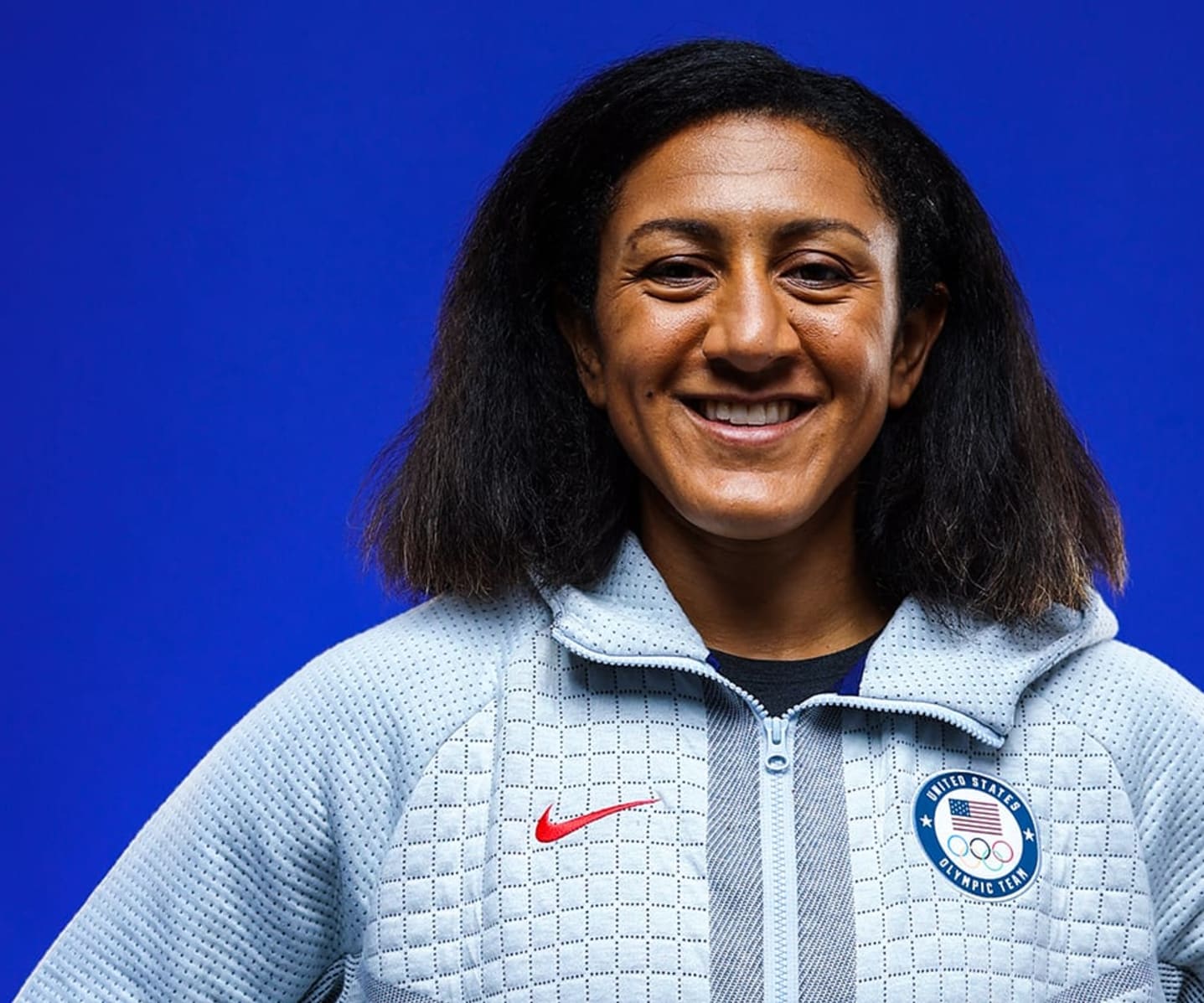
Elana Meyer
 South Africa
Birthday
October 10, 1966
Birth Sign
Libra
Birthplace
South Africa
Age
60 years old
About
Elana Meyer is a South African former long-distance runner who earned international acclaim during the 1990s. She is best remembered for winning the silver medal in the 10,000 metres at the 1992 Barcelona Olympics, a race that became iconic when she and Ethiopia's Derartu Tulu embraced at the finish line. That image, symbolizing African unity and the post-apartheid era, remains one of the Games' most powerful moments.
Meyer's career spanned track and road, with world records in the half marathon set in 1991, 1997, 1998, and 1999, and a gold at the 1994 IAAF World Half Marathon Championships. Her versatility and consistency made her a trailblazer for South African women's distance running, and she is celebrated for helping reintroduce her country to global athletics after apartheid. Her legacy endures in the rich distance-running tradition she helped build.
Today, Meyer is remembered as a pioneer and a symbol of hope, with her 1992 embrace with Tulu still resonating as a defining moment of sportsmanship and unity.
Early Life & Background
Elana Meyer was born on 10 October 1966 in South Africa, during a time when the country's athletes were largely isolated from international competition due to apartheid-era sanctions. Details of her childhood and early training are sparse, but she emerged as a promising distance runner in the late 1980s, competing domestically and setting national marks. The lifting of sporting bans in the early 1990s opened the door for her to test herself against the world's best.
Her breakthrough came in November 1991, when she ran 46:57 for 15 kilometres in Cape Town, setting an African record that would stand for nearly two decades. That performance, along with her first half marathon world record that same year, announced her arrival on the global stage. By 1992, she had qualified for the Barcelona Olympics, where South Africa made its return to the Games after a 32-year absence.
Career Growth
Meyer's defining moment arrived at the 1992 Barcelona Olympics, where she led the 10,000 metres for most of the race before being overtaken by Derartu Tulu. The two ran stride for stride in the final lap, and their embrace at the finish line became a symbol of African sportsmanship. Meyer's silver medal was South Africa's first Olympic track medal since its return.
She continued to excel on the roads, winning gold at the 1994 IAAF World Half Marathon Championships and setting world records in the half marathon in 1991, 1997, 1998, and 1999. In January 1999, she ran an African half marathon record of 1:06:44 in Tokyo, which stood until 2009. She also competed in major marathons, earning strong finishes without a title. Her career wound down in the early 2000s, leaving a legacy of records and medals.
Career Timeline
Public Image & Style
Meyer is remembered as a gracious competitor and a pioneer for South African women's sport. The 1992 finish-line embrace with Tulu defined her public image, casting her as a symbol of hope and unity. In South Africa, she is a respected figure, often cited in discussions of the country's sporting history. Her style was characterised by relentless front-running, a trait that endeared her to fans who appreciated her fearless racing.
Fame & Fandom (iFAMOUS Rankings)
Elana Meyer commands a steady, enduring presence in global sports history, recognized primarily for her pivotal role in the 1992 Olympic Games and her dominance in long-distance running during the 1990s. Her legacy is anchored by specific historical achievements rather than current viral trends or mass-market celebrity status. The iFANN Global Fame Engine has evaluated this profile and determined that she does not currently hold a placement in the published rankings, including the Global Top 1,000 or any Top-100 scope list. This absence of a numeric rank reflects a career that concluded decades ago, leaving her with a reputation defined by archival significance rather than contemporary ranking metrics. Consequently, no ordinal position can be assigned to her current fame level. Regarding her audience, there is no documented formal name for her fanbase. Supporters are generally categorized under broader umbrellas such as South African sporting history enthusiasts or track and field historians, but no organized group or specific fandom designation exists in available records. Her public image remains tied to the iconic embrace with Derartu Tulu and her status as a pioneer for women in distance running, sustaining interest through historical documentation rather than active fan campaigns.
Interesting Facts and Legends
Meyer's 1992 Olympic embrace with Derartu Tulu is often cited as one of the greatest moments in Olympic history, and the two have remained friends. She was awarded the Order of Ikhamanga in Silver, a South African national honour, for her athletic achievements. Meyer's 15-kilometre African record of 46:57 stood for 18 years, and her half marathon world record in 1991 was the first of four. She is said to have trained on the hilly roads of the Western Cape, but she never ran a sub-31-minute 10,000 metres on the track, despite her road prowess. A widely retold story from her career involves her relentless front-running style, which became a defining trait for fans who admired her fearless approach to racing. This strategy often left competitors chasing her lead, cementing her reputation as a competitor who dictated the pace of major events. Her ability to maintain world records across multiple years in the half marathon further illustrates her consistency during an era when women's endurance sports were rapidly gaining recognition globally.
Family & Personal Life
Little is publicly known about Elana Meyer's family. She has not shared details about her parents, siblings, or any children in the available sources. As of 2026, she appears to keep her personal life private, with no confirmed spouse or partner. Her focus has largely remained on her athletic career and its legacy.
Notable Connections
Elana Meyer is most closely associated with Derartu Tulu of Ethiopia, her rival and friend from the 1992 Olympic 10,000 metres. Their embrace at the finish line is one of the most enduring images of the modern Olympics. Meyer also competed against other greats of the era, including Mary Keitany and Tirunesh Dibaba, who later broke her records.
Relationships & Dating History
Salary, Net Worth In 2026
$2 Million
iFANN Editorial Team estimate
As of 2026, Elana Meyer's net worth is estimated at $2 Million, a figure derived from research by the iFANN Editorial Team. Her earnings accumulated primarily from her competitive career, which spanned the late 1980s to the early 2000s, a period when prize money for women's distance running was modest. She likely earned from race prizes, appearance fees, and sponsorship deals with South African brands. After retirement, she may have earned from coaching, speaking engagements, or appearances, but no specific ventures are known. Her financial profile is modest compared to modern athletes, reflecting the era in which she competed.
Awards Won (2)
Elana Meyer won an Olympic silver medal in 1992 and a gold at the 1994 IAAF World Half Marathon Championships. She also set multiple world records in the half marathon, a remarkable achievement that places her among the greatest distance runners of her era.
1992 · 10,000 metres
Barcelona Olympics
1994 · Half marathon
IAAF World Half Marathon Championships
Known For
Olympic silver medal in 10,000 metres
1992 · Athlete
World records in half marathon
1991 · Athlete
IAAF World Half Marathon Championships gold
1994 · Athlete
Keywords
Sources
Quick Facts
- Profession
- Long-distance runner
- Born
- October 10, 1966
- Birthplace
- South Africa
- Gender
- Female
- Birth Sign
- Libra
- Nationality
- South African
- Olympic Medal
- Silver (10,000m, 1992)
Frequently Asked Questions
What is Elana Meyer famous for?
How old is Elana Meyer?
Did Elana Meyer win an Olympic gold medal?
What records did Elana Meyer set?
Is Elana Meyer married?
Similar People
Join the community
fans discussing