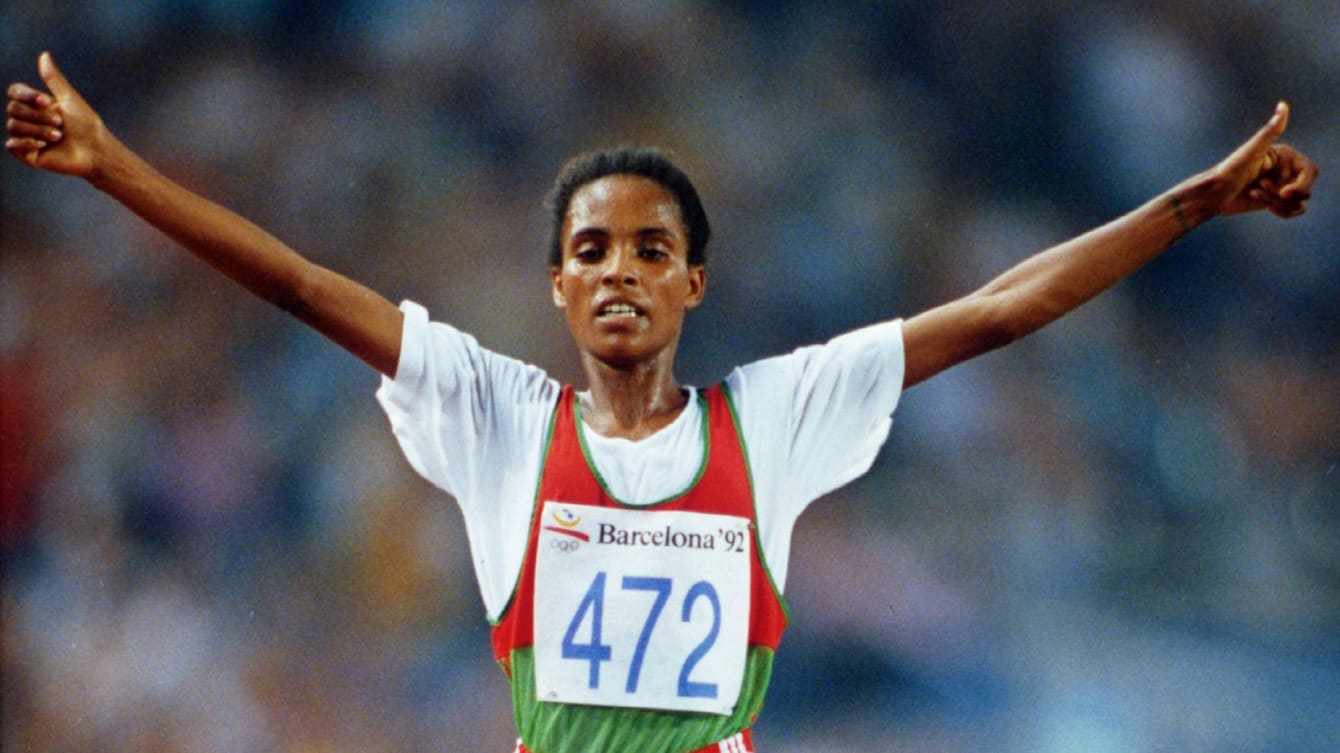
Derartu Tulu
 Ethiopia
long-distance runner•marathon runner•athletics competitor
Also known as: Derartu Tulu
Birthday
March 21, 1972
Birth Sign
Aries
Birthplace
Bekoji, Ethiopia
Age
54 years old
About
Derartu Tulu is an Ethiopian long-distance runner who made history as the first Ethiopian woman and the first Black African woman to win an Olympic gold medal. Her victory in the 10,000 meters at the 1992 Barcelona Games was a watershed moment for African athletics, and she followed it with a second Olympic gold in the same event at the 2000 Sydney Games. She also claimed a bronze in the 10,000 meters at the 2004 Athens Olympics, showing remarkable staying power across three Olympic cycles.
Beyond the Olympics, Tulu collected a World Championship gold in the 10,000 meters in 2001, a silver in 1995, and three IAAF World Cross Country titles in 1995, 1997, and 2000. Her versatility extended to the marathon, where she won the 2009 New York City Marathon. As of 2026, she remains a respected figure in the sport, having served as president of the Ethiopian Athletics Federation from 2018 to 2024. Fans admire her for breaking barriers and inspiring a generation of East African female runners.
Early Life & Background
Derartu Tulu was born on March 21, 1972, in Bekoji, a small town in the Arsi highlands of Ethiopia. She grew up in the Oromo community, herding cattle and running long distances to fetch water and firewood. Those daily treks built the endurance that would later define her career. Bekoji sits at high altitude, and its rugged terrain naturally prepared local children for distance running.
Tulu's talent emerged in school races, where she outpaced older girls. She joined local athletics clubs and caught the attention of coaches who saw her potential. Her first major international appearance came at the 1989 World Cross Country Championships, where she finished 19th as a junior. That performance put her on the map, and she quickly moved up the ranks. By 1991, she had won her first senior medal at the African Championships in the 10,000 meters, signaling that a breakthrough was imminent. The 1992 Barcelona Olympics would be her coming-out party, but the years of running in the Ethiopian highlands had already forged her into a champion.
Career Growth
Tulu's breakthrough came at the 1992 Barcelona Olympics. She won the 10,000 meters, edging out South Africa's Elana Meyer in a dramatic finish. Their victory lap together, with Tulu draping an Ethiopian flag over Meyer's shoulders, became a symbol of African unity. Tulu was just 20 years old, and her win shattered stereotypes about African women in distance running.
She built on that success with a silver medal at the 1995 World Championships and the first of her three World Cross Country titles that same year. In 1997, she added a second cross country crown. The 2000 Sydney Olympics brought her second Olympic gold, again in the 10,000 meters, where she outkicked the field in a thrilling final. A bronze at the 2004 Athens Olympics followed, proving she could still compete at the top level in her early 30s.
Tulu transitioned to the marathon later in her career. She won the 2009 New York City Marathon, and in 2018 she took on a new challenge as president of the Ethiopian Athletics Federation, a role she held until 2024. Her leadership helped shape the next generation of Ethiopian runners. In 2022, she reunited with Meyer in Barcelona for the 30th anniversary of their historic race, and in 2025, Ethiopia announced plans to feature her on national stamps.
Career Timeline
Public Image & Style
Derartu Tulu is celebrated in Ethiopia as a national hero and a pioneer for African women in sport. Her 1992 Olympic victory is often cited as a turning point, proving that Black African women could dominate long-distance running. Fans admire her humility and her dedication to giving back to her community. She is frequently invited to lead community runs and mentorship programs, and her presence at events draws large crowds.
Her public image is one of grace and determination. She rarely seeks the spotlight, but when she speaks, people listen. She has used her platform to advocate for gender equality in athletics and for better training facilities in Ethiopia. In 2023, World Athletics formally acknowledged her contributions, and in 2026 she led a community run in Bahrain, showing that her influence reaches beyond Ethiopia.
Fame & Fandom (iFAMOUS Rankings)
Derartu Tulu's fanbase has no formal name. There is no organized club, no chant, no codified identity. What exists instead is something rarer: a diffuse, reverent admiration that spans a continent. Her supporters are the thousands who line up for community runs she leads, the spectators at World Athletics retrospectives, the schoolchildren in Bekoji who know her story by heart. She does not court celebrity; she shows up, runs alongside everyday people, and lets her legacy do the talking.
iFANN's Global Fame Engine has evaluated Derartu Tulu but she does not currently hold a placement in the published rankings, whether the Global Top 1,000 or any Top-100 scope list. That absence says less about her renown than about the engine's focus on contemporary media saturation. Her fame is not built on trending hashtags but on a moment frozen in Olympic history: the 1992 Barcelona victory lap with Elana Meyer, hand in hand, a black Ethiopian and a white South African running together as apartheid crumbled. That image, replayed every anniversary, remains her most powerful currency.
Her fandom, if it can be called that, is participatory. In 2023 she led a master running class at a WHO event; in 2026 she led a community run in Bahrain. These are her fan interactions, direct and health-oriented. No fan-funded campaigns exist, no billboards, no streaming pushes. Instead, her life inspired Circus Abyssinia's theatrical tribute, an artistic homage rather than a fan project. Her true gift to her admirers is her example: a girl who tended cattle in Bekoji became the first Black African woman to win Olympic gold, and she has spent her post-racing years giving back to the sport that made her.
Interesting Facts and Legends
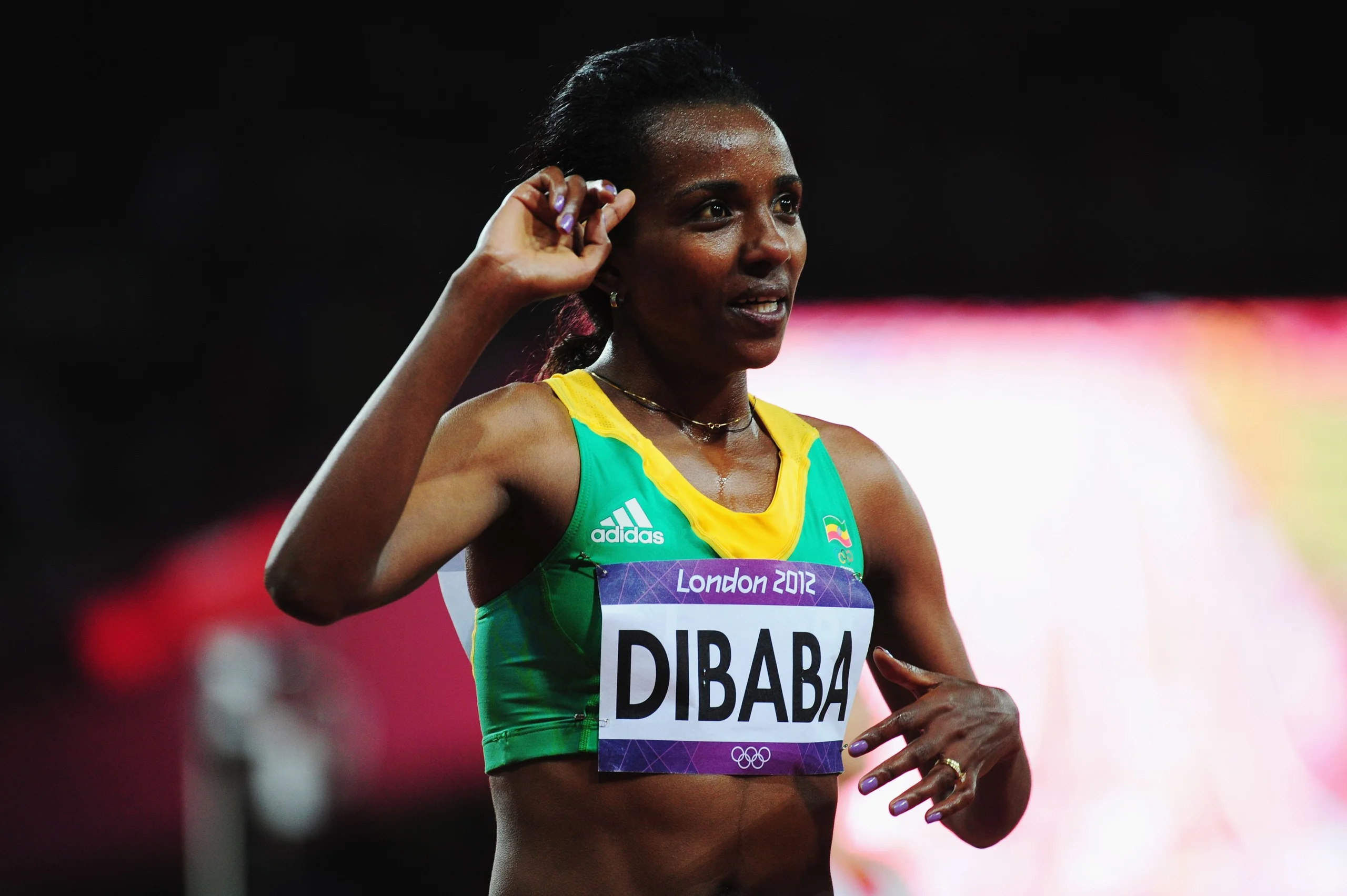
Derartu Tulu's hometown of Bekoji is nicknamed the "Town of Runners" because it has produced several Olympic medalists, including Tirunesh Dibaba and Kenenisa Bekele. Tulu's own cousins, Tirunesh, Genzebe, and Ejegayehu Dibaba, are all elite runners, making athletics a family affair. Tulu is known for her relaxed running style and a powerful finishing kick. She once said that the 1992 Barcelona race with Elana Meyer showed the world that African women could compete at the highest level. In 2009, she won the New York City Marathon at age 37, becoming one of the oldest women to win a major marathon. She has also been a vocal advocate for clean sport and youth development in Ethiopia.
The 1992 victory lap with Elana Meyer is the most retold story in her legend. After winning the 10,000 meters, Tulu and Meyer, a white South African, ran a lap together, arms raised, in a moment that symbolized a united, post-apartheid Africa. World Athletics has called it "the victory lap that united Africa." The two women reunited in Barcelona for the 30th anniversary in 2022.
Tulu's origin story is central to her mythology: born in 1972 (some sources say 1969) in Bekoji, the seventh of ten children, she grew up tending cattle. Her rise from rural poverty to Olympic champion is a tale fans still retell, and in 2021, Circus Abyssinia staged a theatrical tribute inspired by her life.
Notable Quotes
“In Ethiopia, every time people mention the Barcelona 1992 final, it brings back memories of unity and hope.”
“I wanted to show that African women can run and win at the highest level.”
“My victory was not just for me, but for all African women.”
“Running is my life, and I want to inspire the next generation.”
Family & Personal Life
Derartu Tulu grew up in a large family in Bekoji, Ethiopia. Her parents were farmers, and she helped with cattle herding as a child. She comes from a remarkable athletic lineage: her cousins Tirunesh, Genzebe, and Ejegayehu Dibaba have all won Olympic or World Championship medals. The Dibaba sisters grew up in the same region and followed in Tulu's footsteps.
Tulu has kept her personal life private, and details about her spouse or children are not widely public. She remains close to her family, and her success has inspired younger relatives to pursue running. She has spoken about the importance of family support in her career, especially during the early years when resources were scarce.
Notable Connections
Derartu Tulu is closely associated with Elana Meyer, her rival and friend from the 1992 Olympic 10,000 meters. Their post-race victory lap together became a symbol of unity across Africa. Tulu also shares a deep connection with her cousins, Tirunesh, Genzebe, and Ejegayehu Dibaba, all elite runners. Within the athletics community, she is respected by peers and officials alike, and her leadership at the Ethiopian Athletics Federation brought her into contact with many international sports figures.
Relationships & Dating History
Derartu Tulu has kept her romantic life largely out of the public eye. There are no widely documented relationships from her career, and she has not shared details about a spouse or partner. As of 2026, her relationship status remains private, and she appears to focus on her family and her role as a mentor in athletics. Her public persona is centered on her sport and her community, rather than her personal relationships.
Salary, Net Worth In 2026
$10 Million
iFANN Editorial Team estimate
iFANN currently estimates Derartu Tulu's net worth at $10 million. Her wealth stems from a long career as a professional athlete, including prize money from major marathons and track events, appearance fees, and sponsorship deals. The 2009 New York City Marathon victory came with a substantial purse, and her Olympic medals have boosted her earning potential through endorsements. Since retiring from competitive running, Tulu has earned income from speaking engagements, coaching clinics, and her role as president of the Ethiopian Athletics Federation. She has also been involved in community development projects in Ethiopia. While exact figures are private, her financial standing reflects a successful career that bridged track and road racing, and her legacy continues to generate opportunities.
Awards Won (8)
Derartu Tulu's trophy cabinet includes two Olympic gold medals, an Olympic bronze, a World Championship gold, and three World Cross Country titles. Her 1992 and 2000 Olympic victories are her most celebrated achievements, marking her as a trailblazer for African women in distance running.
2000 · 10,000 meters
Sydney Olympics
1992 · 10,000 meters
Barcelona Olympics
2004 · 10,000 meters
Athens Olympics
Known For
Olympic Gold Medal - 10,000m
1992 · Athlete
Olympic Gold Medal - 10,000m
2000 · Athlete
World Championship Gold - 10,000m
2001 · Athlete
New York City Marathon
2009 · Winner
Keywords
Sources
Quick Facts
- Profession
- long-distance runner, marathon runner, athletics competitor
- Born
- March 21, 1972
- Birthplace
- Bekoji, Ethiopia
- Gender
- Female
- Birth Sign
- Aries
- Olympic Gold Medals
- 2 (1992, 2000)
- World Cross Country Titles
- 3 (1995, 1997, 2000)
Personal Details
- Full Name
- Derartu Tulu
Frequently Asked Questions
What is Derartu Tulu famous for?
How old is Derartu Tulu?
What is Derartu Tulu's net worth in 2026?
Is Derartu Tulu still active in 2026?
Where is Derartu Tulu from?
Similar People
Join the community
fans discussing