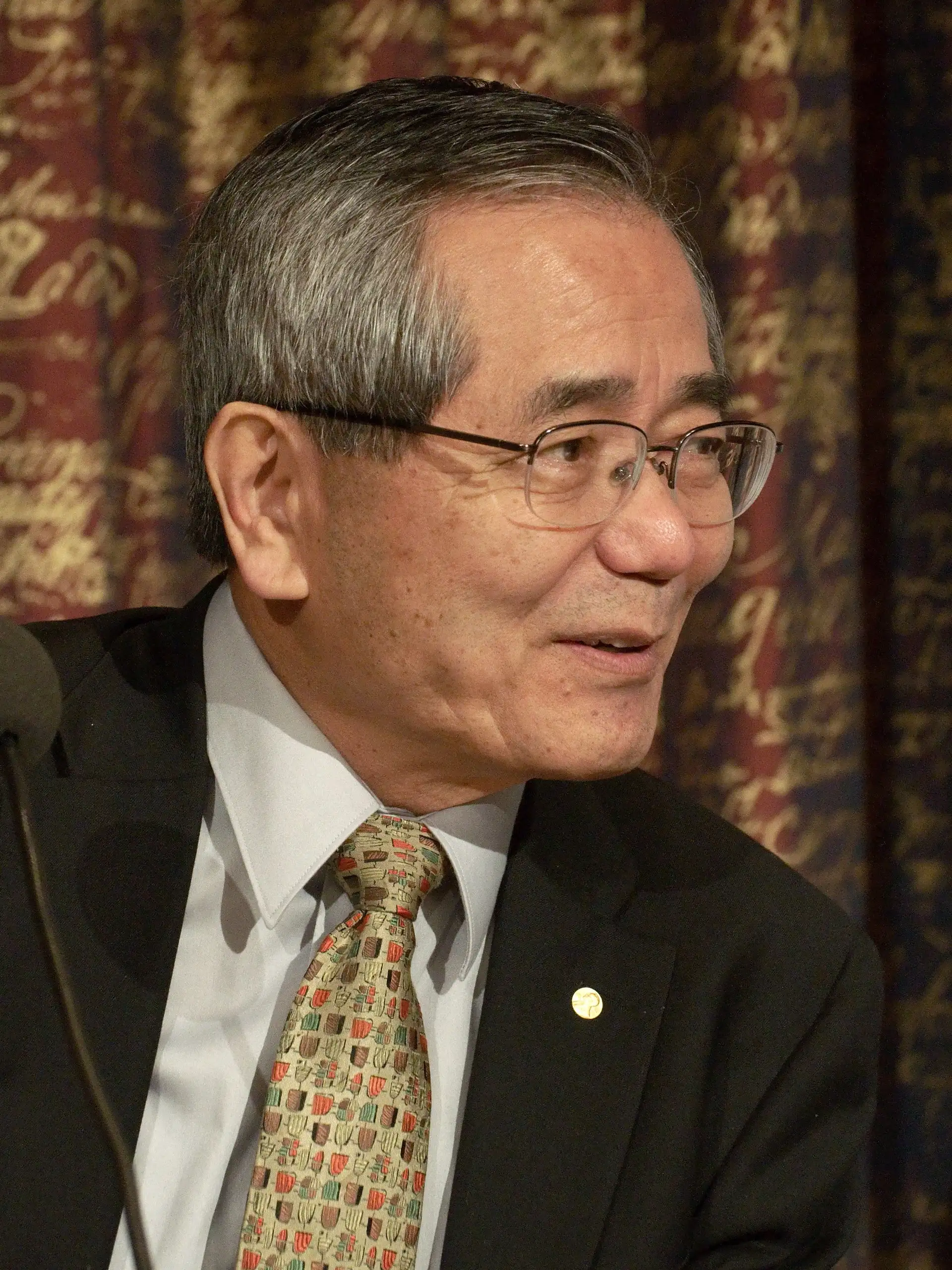
Ei-ichi Negishi
 Japan
JapanAlso known as: Eiichi Negishi, 根岸英一
Birthday
July 14, 1935
Birth Sign
Cancer
Birthplace
Hsinking, Manchukuo (now Changchun, China)
Age
Died at 85
About
Ei-ichi Negishi was a distinguished Japanese chemist whose pioneering work in organometallic chemistry fundamentally transformed the synthesis of organic molecules. He is best known for discovering the Negishi coupling, a palladium-catalyzed reaction that uses organozinc reagents to form carbon-carbon bonds. This method revolutionized how pharmaceuticals, polymers, and advanced materials are constructed. A Nobel Laureate who spent over forty years at Purdue University as the Herbert C. Brown Distinguished Professor, Negishi passed away at age 85 in Indianapolis, Indiana. His legacy is defined not by celebrity or commercial pop culture, but by his profound scientific impact on global research and industry. He was recognized globally for making art in a test tube through the precision and elegance of the molecular architectures he could create.
Early Life & Background
Ei-ichi Negishi was born on July 14, 1935, in Hsinking (now Changchun), Manchukuo, where his father worked as an engineer for the South Manchuria Railway. At the time of his birth, Negishi held Japanese citizenship. His early life was marked by the upheaval of World War II and geopolitical shifts in East Asia. When he was one year old, his family moved to Harbin, China. Two years later, they relocated to Seoul, Korea, where he spent his formative childhood years before returning to Japan in 1947 following the end of the war and the subsequent repatriation of Japanese citizens from occupied territories. Growing up in post-war Japan, Negishi faced significant hardship. He attended high school in Tokyo, where he developed a deep interest in chemistry. Despite the economic devastation of the era, his academic brilliance shone through. He enrolled at the University of Tokyo, graduating with a Bachelor of Science degree in 1959. During his undergraduate years, he conducted research under the supervision of Professor Kenkichi Fukui, who would later win the Nobel Prize in Chemistry himself, fostering a collaborative and rigorous academic environment. After earning his bachelor's degree, Negishi pursued graduate studies at the University of Tokyo, receiving his Master of Science in 1960 and his Doctor of Science in 1963. His doctoral thesis focused on organometallic compounds, specifically the chemistry of zinc and magnesium reagents. Following his PhD, he served as a research associate at the University of Tokyo until 1966. In 1966, Negishi received a postdoctoral fellowship that brought him to the United States. He joined Purdue University in West Lafayette, Indiana, initially as a postdoctoral researcher in the laboratory of Herbert C. Brown, another future Nobel Laureate. This move proved pivotal; the mentorship of Brown provided Negishi with the resources and freedom to explore the potential of organozinc compounds in catalytic reactions.
Career Growth
Negishi's career is defined by his relentless pursuit of efficient methods for synthesizing complex organic structures. While palladium-catalyzed cross-coupling reactions were emerging in the late 1960s, Negishi identified a critical limitation: the use of organotin and organoboron reagents often required harsh conditions or produced toxic byproducts. By 1967, he had been appointed as an Assistant Professor of Chemistry at Purdue, beginning a career that would span more than four decades. Throughout the 1970s, he developed the foundational methodology for the Negishi coupling, publishing key papers on the reactivity of organozinc reagents. In 1977, Negishi published a landmark paper describing the use of organozinc halides in palladium-catalyzed cross-coupling reactions. This method, now universally known as the Negishi coupling, offered superior functional group tolerance and milder reaction conditions compared to its predecessors. Throughout the 1980s and 1990s, he expanded the scope of the reaction, applying it to the synthesis of natural products, pharmaceuticals, and liquid crystals. He was appointed Herbert C. Brown Distinguished Professor, a title recognizing his exceptional contributions to the field. In 2010, he was awarded the Nobel Prize in Chemistry, sharing the honor with Richard F. Heck and Akira Suzuki for their work on palladium-catalyzed cross-couplings in organic synthesis. The Negishi coupling is now a staple in the chemical industry, used in the production of drugs like losartan and various agrochemicals. Negishi remained active in research and teaching until his health declined in his mid-80s, retiring from active research duties prior to his death in June 2021.
Career Timeline
Public Image & Style
Negishi is portrayed as the archetypal gentle genius, humble, dedicated, and deeply committed to education. Media portrayals emphasize his kindness, his mentorship of students, and his ability to remain optimistic despite personal tragedies. He is not associated with controversy or scandal, but rather with the quiet dignity of scientific discovery. Known for his humble demeanor and formal attire, often seen in suits or lab coats, he maintained a quiet, unassuming presence that contrasted with the flamboyance of some celebrity scientists. His reputation rests entirely on his intellectual contributions and the respect he commanded within the global scientific community. He was a member of the National Academy of Sciences and a Foreign Member of the Royal Society, further cementing his status as a figure of immense professional respect. His signature style was one of modesty, avoiding the limelight while leading the Negishi-Brown Institute.
Fame & Fandom (iFAMOUS Rankings)
Ei-ichi Negishi currently holds no placement in the published Global Top 1,000 or any Top-100 scope list maintained by iFANN. The evaluation indicates that while his contributions to organic chemistry remain foundational, he does not register within the specific numerical tiers of the current global fame rankings. This absence of a ranked position reflects the nature of his legacy, which resides firmly within the specialized domain of scientific achievement rather than broad pop-culture consumption. Unlike entertainment figures who generate measurable waves of fan engagement, Negishi's influence is measured by the adoption of his chemical methods across laboratories worldwide. The concept of a fandom in the traditional sense does not apply to him; there is no documented name for a collective following, nor are there organized campaigns, birthday tributes, or fan-funded projects associated with his memory. His admirers are primarily students, colleagues, and researchers in the field of organometallic chemistry who revere his work through the practical application of the Negishi coupling. While the scientific community paid formal tributes upon his passing, including the unveiling of a bronze bust at Purdue University in 2014, these acts were institutional honors rather than expressions of a celebrity fanbase. No viral incidents, inside jokes, or ritualistic behaviors characterize his posthumous presence. The reverence he commands is strictly academic, defined by the enduring utility of his discoveries in synthesizing complex pharmaceuticals and materials.
Interesting Facts and Legends
Ei-ichi Negishi famously articulated a philosophy of life consisting of four conditions: I am happy if I can eat, I am happy if I can sleep, I am happy if I can work, and I am happy if I can see others happy. This quote was widely circulated after his death and reflects his eternal optimism. Born in Manchukuo as a Japanese citizen, his multicultural background and displacement during WWII shaped his resilience and perspective on peace and cooperation. He received the Order of the Rising Sun, Gold Rays with Neck Ribbon, one of Japan's highest honors for distinguished service. He was also the recipient of the Japan Academy Prize in 1983 and the American Chemical Society Award in Organometallic Chemistry in 1990. In 2014, Purdue University unveiled a bronze bust of Negishi in the Lyles Center for Chemistry, cementing his status as a cornerstone of the institution. Additionally, he received honorary doctorates from the University of Tokyo in 1989 and the University of Paris-Sud in 1994. These accolades highlight his standing as one of only two Nobel laureates associated with Purdue University, alongside Herbert C. Brown.
Notable Quotes
“I am happy if I can eat, I am happy if I can sleep, I am happy if I can work, and I am happy if I can see others happy.”
“Science is a team sport.”
Family & Personal Life
Ei-ichi Negishi was married to Miyoko Negishi. Their relationship was characterized by a shared dedication to science and family, though details of their private life were kept largely out of the public eye. They met during his early years in Japan or shortly after his arrival in the United States, though specific anecdotes regarding their meeting are not widely documented in public sources. The couple lived together in West Lafayette, Indiana, for most of their adult lives. Tragically, their final years were marked by personal hardships. In March 2018, Negishi was found wandering alone on a rural road in a dazed state near his home in Indiana. It was reported that his wife, Miyoko, was nearby at the time but had died shortly after the incident. Reports indicated that she suffered a medical emergency, possibly related to confusion or a fall, and passed away days later. There are no publicly confirmed records of children from either marriage or any other union. The lack of public discussion regarding offspring suggests he may have had no children, or that such matters were kept strictly private. This event was attributed to medical complications rather than foul play and deeply affected Negishi, who continued to live in the area until his own passing.
Notable Connections
Relationships & Dating History
Ei-ichi Negishi was married to Miyoko Negishi. Their relationship was characterized by a shared dedication to science and family, though details of their private life were kept largely out of the public eye. They met during his early years in Japan or shortly after his arrival in the United States, though specific anecdotes regarding their meeting are not widely documented in public sources. The couple lived together in West Lafayette, Indiana, for most of their adult lives. Tragically, their final years were marked by a series of personal hardships. In March 2018, Negishi was found wandering alone on a rural road in a dazed state near his home in Indiana. It was reported that his wife, Miyoko, was nearby at the time but had died shortly after the incident. Reports indicated that she suffered a medical emergency, possibly related to confusion or a fall, and passed away days later. This event was attributed to medical complications rather than foul play, and it deeply affected Negishi, who continued to live in the area until his own passing. There are no publicly confirmed records of other romantic relationships, engagements, or divorces. Negishi remained married to Miyoko until her death in 2018. As of his death in 2021, he was widowed.
- MarriedMiyoko Negishi? - 2018Wife until her death in 2018; married until her passing.
Death & Aftermath
Died
June 6, 2021 (aged 85)
Death Place
Indianapolis, Indiana, USA
Cause of Death
Natural causes
Tributes poured in from the scientific community and major institutions following the confirmation of Ei-ichi Negishi's passing. Purdue University President Mitch Daniels described him as a great and gracious man who made a difference in lives. The American Chemical Society and Chemistry World published statements highlighting his pivotal contributions to palladium-catalyzed cross-coupling reactions, while Nature and the New York Times released obituaries commemorating his legacy as a carbon-carbon bond-maker whose research enabled the synthesis of complex organic molecules essential for modern pharmaceuticals. Negishi died on June 6, 2021, at the age of 85 in Indianapolis, Indiana, where he had served as a professor at Purdue University for over four decades. Official confirmation came via a press release issued by Purdue University on June 14, 2021, which stated he passed away at his home or within the Indianapolis area without specifying a medical facility. No specific medical cause was detailed in available records beyond natural causes associated with his advanced age. Details regarding funeral arrangements or memorial services remain unreported in the available sources, leaving the nature of the gathering private. Posthumously, his status as one of only two Nobel laureates associated with Purdue University remains central to his recognition, alongside his induction into the Nobel Hall of Fame. His Four Conditions of Happiness continue to be cited in retrospectives about his life philosophy.
Net Worth (Estate Value)
$10 Million
iFANN Editorial Team estimate
Ei-ichi Negishi passed away in 2021. As a tenured professor and Nobel Laureate, his financial status was substantial but not the subject of public speculation like entertainment figures. Research by the iFANN Editorial Team puts his fortune at around $10 million based on estimates for university professors of his stature, particularly Nobel winners. Estimates typically range between $5 million and $15 million depending on real estate holdings, pension, and royalties. Academic salaries for distinguished professors at institutions like Purdue are high, often exceeding $200,000 annually, plus significant grant funding and speaking fees. There is no public record of a massive estate valuation or ongoing revenue streams from licensing deals comparable to pop stars. The primary value lies in his intellectual property, which are likely managed by Purdue University or the patent holders, generating royalties for the university and potentially the inventor's estate. Given the lack of commercial ventures, endorsements, or a celebrity brand, his wealth was derived from salary, grants, and the prestige of his position. Any net worth figure is speculative. The estate value is likely modest compared to entertainment moguls, focusing on assets accumulated over a 40-year academic career.
Awards Won (3)
Ei-ichi Negishi received the Nobel Prize in Chemistry in 2010, shared with Richard F. Heck and Akira Suzuki. He also won the Japan Academy Prize in 1983 and the American Chemical Society Award in Organometallic Chemistry in 1990. He was inducted as a Fellow of the Royal Society of Chemistry and received multiple honorary doctorates from universities worldwide.
2010 · Chemistry
Palladium-catalyzed cross couplings in organic synthesis
1983 · Science
Outstanding contributions to chemistry
Known For
Negishi Coupling
1977 · Chemical Reaction Discovery
Nobel Prize in Chemistry
2010 · Laureate
Keywords
Sources
Quick Facts
- Profession
- chemist, professor, researcher
- Born
- July 14, 1935
- Birthplace
- Hsinking
- Died
- June 6, 2021
- Death Place
- Indianapolis
- Gender
- Male
- Birth Sign
- Cancer
Personal Details
- Full Name
- Eiichi Negishi
- Spouse
- Miyoko Negishi
- Children
- Education
- University of Tokyo (B.S., M.S., D.Sc.)
Frequently Asked Questions
How did Ei-ichi Negishi die?
What is the Negishi coupling used for?
Where was Ei-ichi Negishi born?
Who was Ei-ichi Negishi married to?
What is Ei-ichi Negishi famous for?
Similar People
Join the community
fans discussing