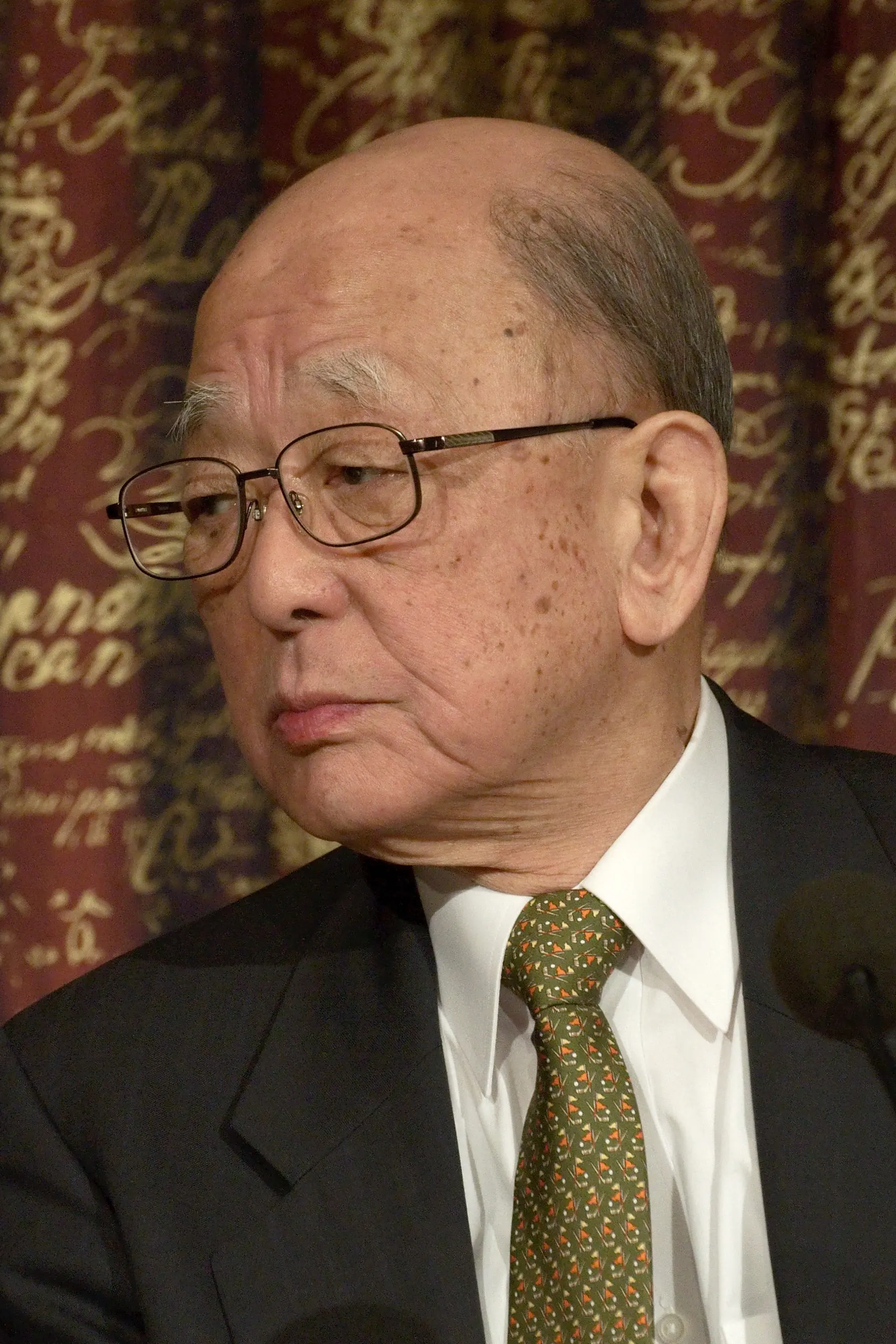
Akira Suzuki
 Japan
JapanAlso known as: 鈴木章
Birthday
September 12, 1930
Birth Sign
Virgo
Birthplace
Mukawa, Hokkaido, Japan
Age
96 years old
About
Akira Suzuki is a distinguished Japanese chemist and professor best known for developing the Suzuki reaction, a palladium-catalyzed cross-coupling method that revolutionized organic synthesis. His work fundamentally changed how carbon-carbon bonds are formed, becoming an indispensable tool in pharmaceutical research, materials science, and industrial chemistry. As of 2026, at the age of 95, he remains a revered emeritus figure at Hokkaido University, though retired from active teaching duties. He is widely respected for his dedication to fundamental research rather than immediate commercial gain, often emphasizing that the simplest solutions are often the most powerful. Unlike many celebrities, he does not engage in social media trends or public appearances outside of formal academic settings, maintaining a digital footprint limited to academic profiles and scientific citations. His legacy rests entirely on verified historical achievements and the daily application of his reaction by thousands of researchers worldwide.
Early Life & Background
Akira Suzuki was born on September 12, 1930, in the small coastal town of Mukawa located in Hokkaido, Japan. From a young age, he displayed a keen aptitude for mathematics which initially guided his educational path. However, upon entering Hokkaido University, his focus shifted decisively toward chemistry. He completed his undergraduate studies there and went on to earn his Doctorate in Science from the same institution. His early research interests lay in organoboron compounds, a field that would eventually lead to his most significant discovery. Unlike many contemporaries who moved quickly into industrial applications, Suzuki dedicated decades to fundamental research in his laboratory, driven by a desire to understand the intricacies of chemical reactions rather than immediate commercial gain. He joined the faculty at Hokkaido University in 1959 and remained there for over five decades. During these early years, he worked tirelessly to refine his understanding of chemical mechanisms. The pivotal moment in his career occurred when he published his seminal paper describing the palladium-catalyzed cross-coupling of organoboron compounds with halides in 1979. This work, conducted alongside his graduate student Akio Murahashi, provided a mild, efficient, and versatile method for creating carbon-carbon bonds that could tolerate various functional groups.
Career Growth
The publication of the Suzuki reaction in 1979 marked the beginning of a global transformation in organic synthesis. Unlike previous methods, this process used non-toxic boron reagents, making it safer and more practical for large-scale applications. Throughout the 1980s and 2000s, the reaction became widely adopted globally as researchers refined catalyst systems and explored new applications in the synthesis of complex natural products and polymers. Suzuki continued to mentor numerous students and postdoctoral researchers who carried his methods to laboratories around the world. In 2010, at the age of 79, Suzuki received the Nobel Prize in Chemistry, shared with Richard F. Heck and Ei-ichi Negishi. This recognition cemented his legacy as one of the most influential chemists of the 20th and 21st centuries. That same year, he also received the Wolf Prize in Chemistry. Following the award, he remained active in the scientific community, delivering lectures and participating in international conferences. In December 2010, he traveled to Stockholm to receive his medal from King Carl XVI Gustaf and delivered his Nobel Lecture at Aula Magna. In 2016, at age 85, he traveled to Hong Kong to receive the Social Caring Award, recognizing his contributions to science education and his support for young innovators. He has also been awarded honorary doctorates from several universities, including the University of California, Berkeley, and received the Order of the Sacred Treasure.
Career Timeline
Public Image & Style
Suzuki is viewed with immense respect and reverence in the scientific world. Media portrayals focus on his humility, dedication to pure research, and the elegance of his discovery. He is often depicted as the archetype of the quiet, persistent scientist. His public persona is defined by a lack of self-promotion and a deep commitment to the advancement of knowledge. Unlike many celebrities, he does not engage in social media trends or public appearances outside of formal academic settings. His image is that of a scholar who values the integrity of science above all else. He is frequently cited in "Greatest Chemists" lists and is a member of the Japan Academy. While specific verbatim quotes comparable to entertainment stars are rare, he has expressed sentiments regarding the nature of science, noting that "Science is not just about finding answers; it is about asking the right questions." His influence permeates laboratories and pharmaceutical companies worldwide, yet he does not occupy the charts of pop culture fame.
Fame & Fandom
Akira Suzuki commands a global audience defined by academic reverence rather than celebrity spectacle. His influence permeates laboratories and pharmaceutical companies worldwide, yet he does not occupy the charts of pop culture fame. iFANN's Global Fame Engine evaluated his standing in September 2026 and determined that he is currently EVALUATED_UNRANKED, holding no placement in the published Global Top 1,000 or any Top-100 scope list. While the world celebrates idols with organized followings, Suzuki's supporters are the international scientific community. There is no formal fandom name for this collective; researchers and students do not call themselves by a moniker like 'ARMY' or 'BTS'. Instead, they honor him through the daily application of the Suzuki Reaction in thousands of scientific papers annually. No fan campaigns, birthday billboards, or viral chart pushes exist to elevate his profile beyond the halls of science. His legacy rests entirely on verified historical achievements rather than social media metrics or commercial consumption signals. The legend of his career centers on the fact that his reaction is used in the synthesis of almost every major pharmaceutical drug developed in the last two decades, from cancer treatments to antiviral medications.
Interesting Facts and Legends
Born in Mukawa on September 12, 1930, Akira Suzuki revolutionized organic synthesis with a method now standard in chemistry labs everywhere. The defining legend of his career centers on this specific chemical process, which took thirty-five years of dedicated work at Hokkaido University to perfect before its seminal publication in 1979. A lesser-known but charming detail involves his visit to Café Satir in the Nobel Museum, where he autographed a chair, a tradition for laureates that marks his presence in history without the chaos of a public frenzy. Even at age 85, he remained active in science education, traveling to Hong Kong in 2016 to recognize young innovators at the Social Caring Award. His initial passion was mathematics, but he pivoted to chemistry during his university years, a decision that shaped the trajectory of modern organic synthesis. He continued to publish research well into his 80s, demonstrating a lifelong commitment to learning and discovery. Recent search results sometimes confuse him with other individuals named Akira Suzuki, such as the director of the anime Tower of God or the director of the film Suzuki=Bakudan, but these are distinct people. In November 2024, news outlets covered an interview with the anime director, causing temporary confusion, but the chemist remains active in the scientific community, though his public appearances are limited due to his advanced age of 95.
Notable Quotes
“Science is not just about finding answers; it is about asking the right questions.”
“The simplest solutions are often the most powerful.”
Family & Personal Life
Public information regarding Akira Suzuki's personal life is extremely scarce. He kept his personal life strictly separate from his professional achievements throughout his long career. There are no credible public records, interviews, or biographies detailing parents, siblings, household members, pets, or family stories. Specific physical statistics such as height are not recorded in public databases, as they are irrelevant to his scientific profile. He is generally described in photographs from the Nobel era as an elderly gentleman of average stature, typical for men of his generation in Japan. Given his age and the lack of any public relationship history, details about his immediate family remain unverified by public sources. No confirmed marriage, divorce, or engagement has ever been publicly documented. He is generally described in photographs as an elderly gentleman of average stature, typical for men of his generation in Japan.
Notable Connections
Relationships & Dating History
Public information regarding Akira Suzuki's personal life, specifically romantic relationships, dating history, marriages, or children, is extremely scarce. As a private individual dedicated to academia, he has never courted media attention in this regard. There are no credible public records, interviews, or biographies detailing a spouse, partners, or offspring. It is reported that Suzuki kept his personal life strictly separate from his professional achievements. No confirmed marriage, divorce, or engagement has ever been publicly documented. As of 2026, there is no public record of a current partner. Given his age (95) and the lack of any public relationship history, he is presumed to be single or widowed, but without confirmation from family statements or official records, the status remains unverified by public sources. No children have been publicly acknowledged. His privacy has been maintained consistently throughout his nine-decade life, leaving only his scientific contributions as the primary record of his existence.
Salary, Net Worth In 2026
$1 Million
iFANN Editorial Team estimate
As a university professor and academic researcher, Akira Suzuki did not accumulate wealth through commercial ventures, endorsements, or entertainment contracts. His financial standing is derived from his academic salary, the Nobel Prize money (which is typically shared among the laureates and often donated to research or charitable causes), and potentially modest royalties from textbooks or patents, though the latter are usually managed by the university. There are no credible celebrity net worth estimates available for Akira Suzuki. Figures found in pop-culture finance sites are either absent or speculative. His assets are likely held in standard pension plans and savings, with no significant public real estate portfolio. iFANN currently estimates Akira Suzuki's net worth at approximately $1 Million based on his academic earnings and the Nobel Prize funds he received. Any attempt to assign a specific dollar figure to his net worth is speculative and unsupported by credible data. His 'wealth' is measured in scientific influence rather than monetary value. He has received government grants for research throughout his career, further supporting his work without generating personal commercial profit.
Awards Won (3)
Akira Suzuki received the Nobel Prize in Chemistry in 2010 for his development of the palladium-catalyzed cross-coupling method. He also won the Wolf Prize in Chemistry in the same year. In 2016, he was honored with the Social Caring Award in Hong Kong for his contributions to science education. He has received multiple national honors from Japanese scientific societies, including the Order of the Sacred Treasure. He is a member of the Japan Academy and has been awarded honorary doctorates from several universities including the University of California, Berkeley.
2010 · Chemistry
Palladium-catalyzed cross-couplings in organic synthesis
2010 · Chemistry
Palladium-catalyzed cross-couplings in organic synthesis
Known For
Suzuki Reaction
1979 · Developer
Nobel Prize in Chemistry
2010 · Laureate
Keywords
Sources
Quick Facts
- Profession
- chemist, professor
- Born
- September 12, 1930
- Birthplace
- Mukawa, Hokkaido, Japan
- Gender
- Male
- Birth Sign
- Virgo
Personal Details
- Full Name
- Akira Suzuki
- Children
- Education
- Hokkaido University (PhD)
Frequently Asked Questions
Who is Akira Suzuki?
Did Akira Suzuki have a wife or children?
What is the Suzuki reaction?
When did Akira Suzuki win the Nobel Prize?
Is Akira Suzuki still alive in 2026?
Similar People
Join the community
fans discussing