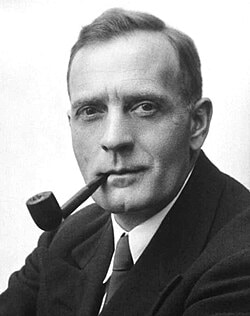
Edwin Hubble
Awards & Honours
4
Awards Won
6
Honours
3
Rankings
2
Covers
3
Records
Edwin Hubble's work earned him some of the highest honors in science, including the Bruce Medal, the Franklin Medal, and the Gold Medal of the Royal Astronomical Society. His discoveries reshaped astronomy and cosmology, and his legacy is honored by the Hubble Space Telescope, one of the most productive scientific instruments ever built. He is widely regarded as one of the greatest astronomers of all time, ranked first in Astronomy magazine's 2008 list of the ten greatest astronomers and listed in TIME's 100 Most Important People of the Century.
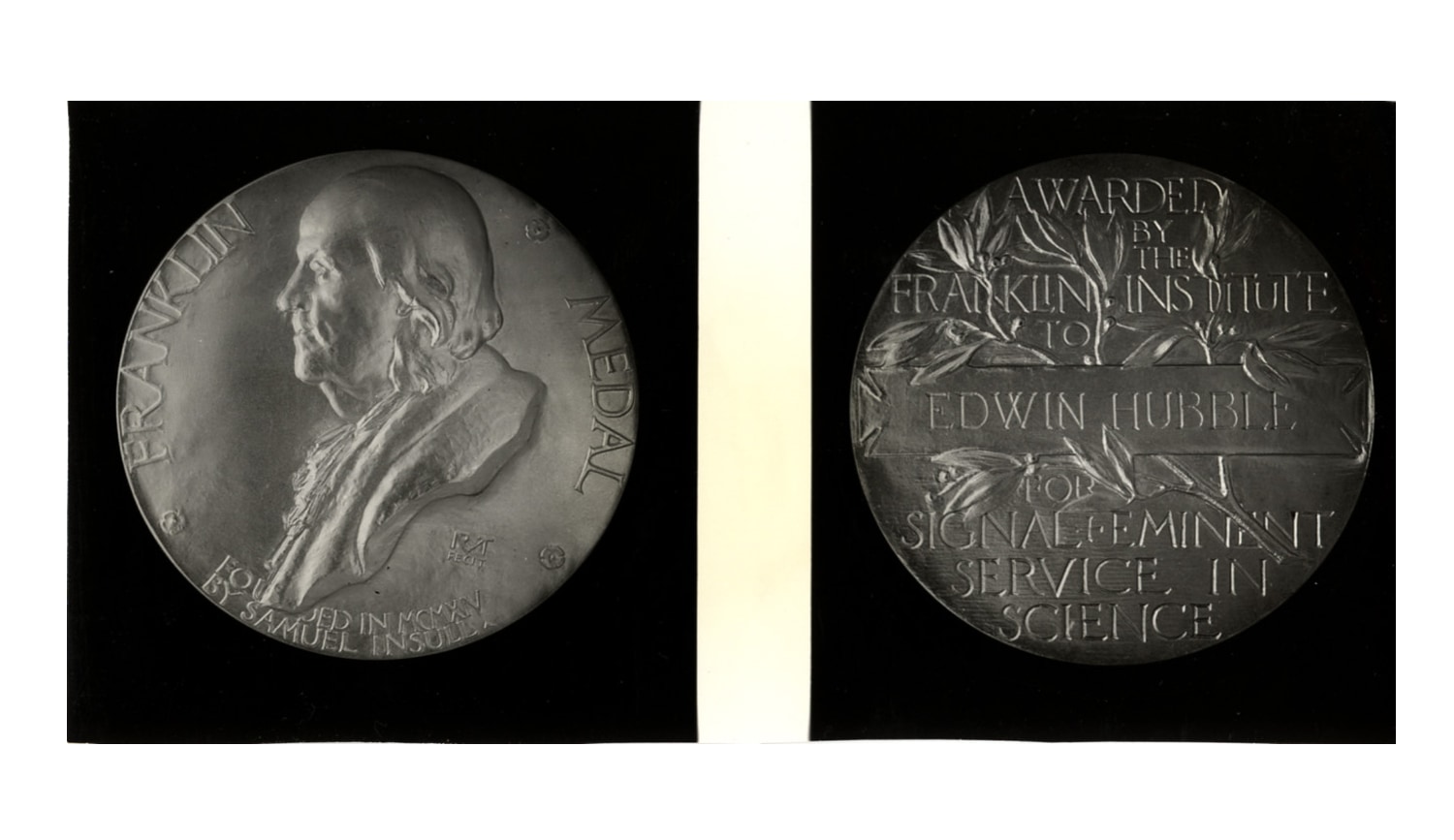
Awards
Honours & Distinctions
Hubble Space Telescope named after him
The telescope, launched in 1990, is named in his honor.
Crater Hubble on the Moon
A lunar impact crater named after Hubble.
Asteroid 2069 Hubble
An asteroid named in his honor.
Edwin Hubble Highway
A section of Interstate 44 in Missouri is named for him.
U.S. Postal Service Stamp
Hubble was featured on a U.S. postage stamp.
International Space Hall of Fame
Inducted into the International Space Hall of Fame.
Rankings & Lists
The 10 Greatest Astronomers of All Time
100 Most Important People of the Century
Top 10 Greatest Astronomers
Magazine Covers
TIME Magazine
February 9, 1948
Cover story on Hubble and the expanding universe
TIME Magazine
March 10, 1930
Featured in a story on Mount Wilson Observatory
Records & Feats
First to prove the existence of galaxies beyond the Milky Way
In 1924, Hubble identified Cepheid variable stars in the Andromeda Nebula, demonstrating it was a separate galaxy, fundamentally changing the perceived scale of the universe.
First to provide observational evidence for an expanding universe
Hubble's 1929 paper showed a linear relationship between galaxy distances and recessional velocities, supporting the Big Bang theory.
Developed the Hubble Sequence galaxy classification system
In 1925, Hubble published the tuning fork diagram that remains a standard tool for classifying galaxies.