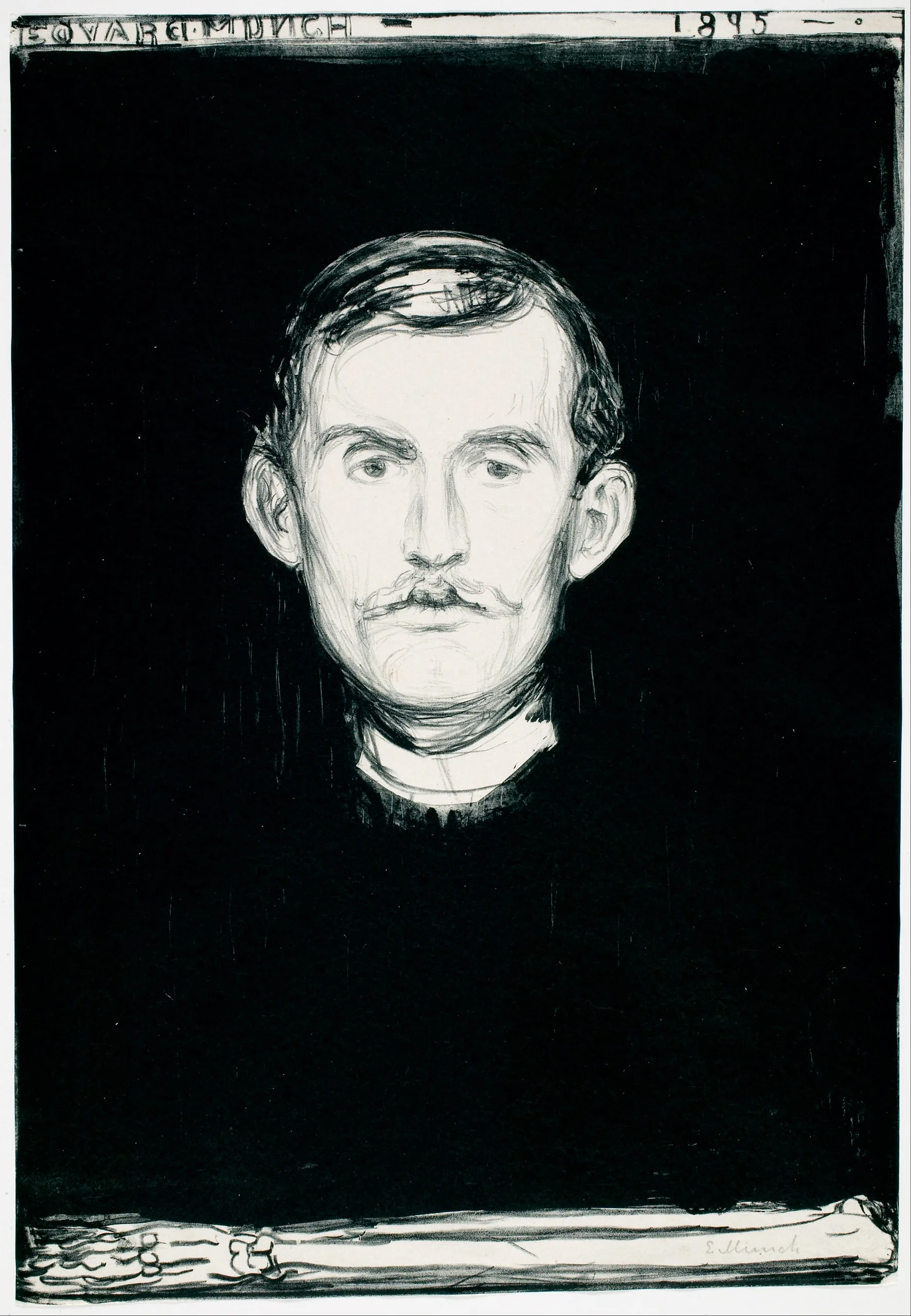
Edvard Munch
 Norway
Also known as: Edvard Munch
Birthday
December 12, 1863
Birth Sign
Sagittarius
Birthplace
Ådalsbruk, Norway
Age
Died at 80
About
Edvard Munch was a Norwegian painter and printmaker, born on 12 December 1863 at Ådalsbruk and dead on 23 January 1944 at Ekely, near Oslo. He is the artist of The Scream, an image so widely reproduced that it has detached itself from the man who made it, and the maker of the loose cycle he called The Frieze of Life, which treats love, jealousy, betrayal and dread as a single subject.
Munch worked in paint, pastel, lithography and etching, and he came to printmaking largely self-taught, engraving directly onto copper from 1894. His output was large and uneven, and he was a difficult, restless man who never married and had no children. The Munch Museum in Oslo, built on his own bequest of the works he still held at his death, is the principal repository of his art, and the 2026 unveiling of his long-hidden Freia factory frieze brought a fresh round of attention to the public-minded side of his career.
Early Life & Background
Munch was born at Löten farm in Ådalsbruk, in the Hedmark region of eastern Norway, the son of a military doctor. The household was strict and pious, and it was also unlucky. His mother died of tuberculosis when he was five, and his sister Sophie died of the same disease nine years later. A brother died young as well. The family's history of mental illness, and Munch's fear that he had inherited it, became the emotional ground of nearly everything he painted.
He enrolled at the Royal School of Art and Design in Kristiania, as Oslo was then called, and fell in with the Kristiania Bohème, the circle around the writer Hans Jæger. Jæger's instruction was blunt: paint your own inner state, not the scene in front of you. The painter Christian Krohg took an interest in him and gave him steady encouragement, and Krohg's support helped carry him through the hostile reception his early work received.
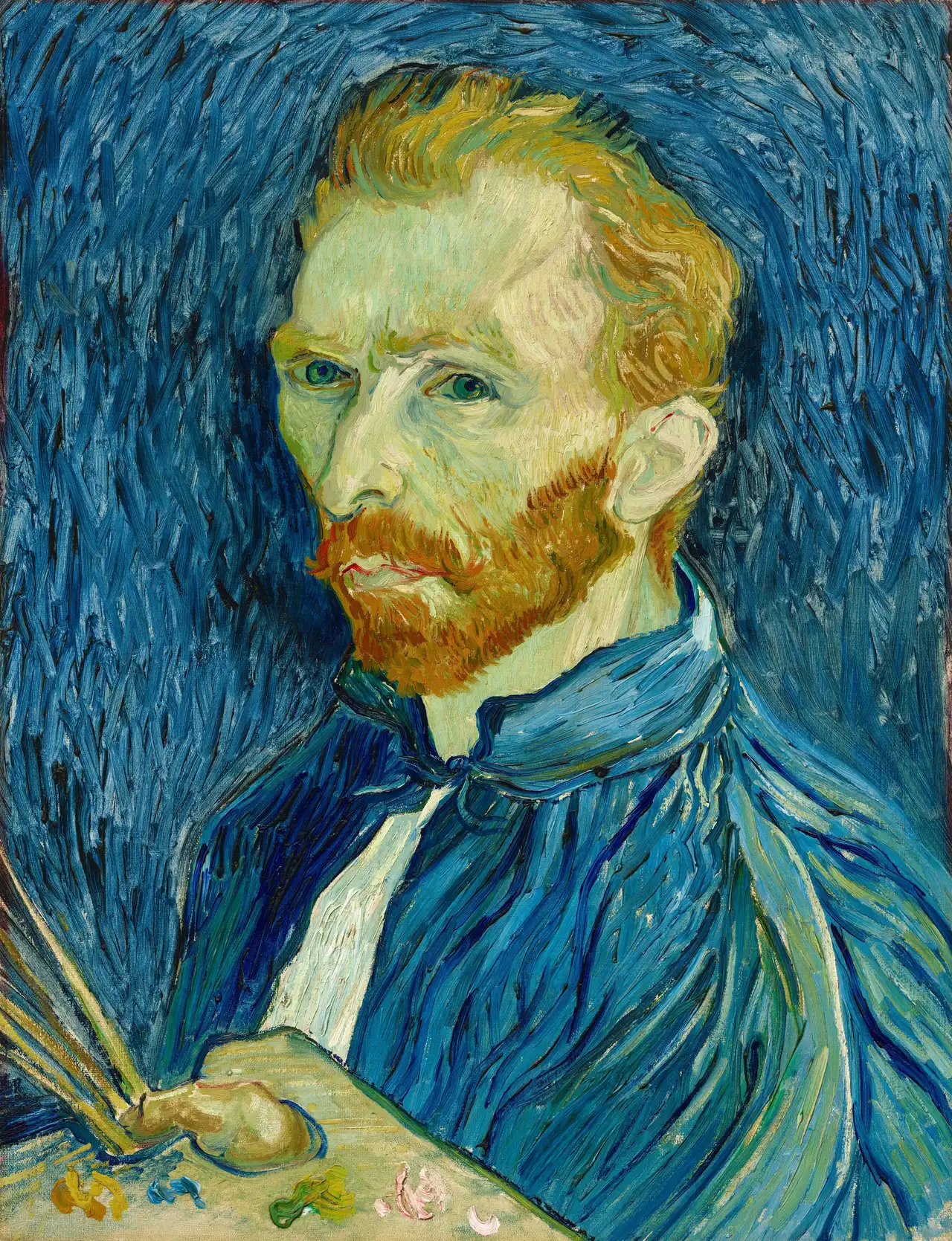
Travel did the rest. In Paris he saw Gauguin, Van Gogh and Toulouse-Lautrec, and their example pushed him toward flat color and visible brushwork. In Berlin, where he spent stretches in the 1890s, he associated with August Strindberg and the city's literary circle, and there he began the sequence of canvases that would later be gathered as The Frieze of Life. By the time he painted the first Scream in 1893, the themes and the method were already in place.
Career Growth
The breakthrough came in 1893 with The Scream, a picture Munch said arose from a sunset walk during which he "heard the enormous, infinite scream of nature." He returned to the motif repeatedly, producing two painted and two pastel versions between 1893 and 1910, along with lithographs. The image spread through reproduction and has never left the culture since.
Printmaking became a second career. From 1894 he worked intensively in etching, drypoint, aquatint and lithography, teaching himself the techniques and often printing his own plates. These prints carried his work to buyers who could not afford a canvas, and they remain the most widely collected part of his output.
A breakdown in 1908 forced him to stop drinking heavily, and the years that followed were quieter and more productive. He settled at Ekely and painted landscapes, portraits and self-portraits at a steady rate. The Nazis banned his work during the occupation of Norway, but most of the paintings survived the war. In 2026 his Freia chocolate-factory frieze, painted for the factory cafeteria and stained over roughly a century by nicotine and cocoa powder, went on public display for the first time, and a major exhibition, Edvard Munch. A Poem of Life, Love and Death, ran at the Musée d'Orsay.
Career Timeline
Public Image & Style
Munch's public image is inseparable from the picture that made him. He is the painter of anxiety, the man whose canvases are said to show the modern mind coming apart, and that reading has followed him through every survey and museum wall label since. His self-portraits reinforce it: gaunt, hollow-eyed, often placed in a bare room or against a sickly light. Less often noticed is the public-minded streak that the 2026 Freia coverage brought forward, the artist who wanted his work seen in factories and communal rooms rather than only in galleries. The two images sit awkwardly together, which is part of why he remains interesting.
Fame & Fandom (iFAMOUS Rankings)
Edvard Munch is among the most famous painters in the Western canon, though iFANN has not yet collected fame data for him, so no ranking is offered here. He does not appear on the September 2026 iFAMOUS Rankings flagship list. His fame is of the museum-and-textbook kind rather than the tabloid kind: schoolchildren know the image before they know the name, and the name, once learned, is rarely forgotten.
The audience around him has no formal name and no organised fan culture in the modern sense. There is no fandom label, no coordinated streaming or chart campaign, and no fan-run institution. What exists instead is a broad, global public of museum visitors, art historians, print collectors and the merely curious, anchored by the Munch Museum in Oslo, which produces exhibitions, films and online material and serves as the practical hub for anyone wanting to see the work in depth. The relationship between artist and audience is therefore mediated by institutions rather than by fandom rituals, and the 2026 Freia unveiling and the Musée d'Orsay exhibition drew attention from that general public rather than from any organised base.
Interesting Facts and Legends
Munch's own account of The Scream remains the most quoted thing he ever said, and it is the line every retelling of the picture's origin begins with. A less familiar story concerns the Freia frieze: the paintings hung in a chocolate factory's staff cafeteria for about a century, absorbing nicotine and cocoa powder, before anyone thought to exhibit them properly in 2026. He was a compulsive re-worker of his own images, returning to the same motifs in paint, pastel and print across decades. He also kept a large personal holding of his own work rather than selling it all, a decision that looks either like vanity or foresight depending on the teller. And his estate at Ekely was famously chaotic, with canvases stacked outdoors and weathered, a detail that has fed the legend of the neglected genius.
Notable Quotes
“I heard the enormous, infinite scream of nature.”
“Without anxiety and illness I should have been like a ship without a rudder.”
“I paint not what I see but what I saw.”
“Nature is not only all that is visible to the eye, it also includes the inner pictures of the soul.”
“The camera cannot compete with the brush and the palette as long as it cannot be used in heaven or hell.”
Family & Personal Life
Munch's father, Christian Munch, was a military physician whose religious severity marked the household. His mother, Laura Cathrine Bjølstad, died of tuberculosis in 1868, when Edvard was five, and his aunt Karen Bjølstad took over the raising of the children. Of the five siblings, only one, Inger, outlived him; Sophie died at fifteen, and a brother died in his twenties. Munch himself never married and left no children, and he lived alone at Ekely in his later years, attended by a housekeeper.
Notable Connections
Munch's circle included the writer Hans Jæger, whose Kristiania Bohème shaped his outlook; the painter Christian Krohg, his early mentor; and the playwright August Strindberg, whom he knew in Berlin. His work is routinely discussed alongside Gauguin, Van Gogh and Toulouse-Lautrec, and his influence reaches later artists such as Paula Rego.
Relationships & Dating History
Munch never married and left no record of a sustained public partnership. He considered marriage at least once and withdrew from it, and the sources document no confirmed engagement or cohabitation. His art returns constantly to love, jealousy and betrayal, and those themes are often read as autobiographical, but the reading is interpretive rather than documented. At the time of his death in 1944 he was unmarried and living alone at Ekely.
Death & Aftermath
Died
January 23, 1944 (aged 80)
Death Place
Ekely, near Oslo, Norway
Cause of Death
Undisclosed
Munch died on 23 January 1944 at Ekely, his estate in the Aker district outside Oslo, at the age of 80. Norway was then in the final winter of German occupation. Sources do not record a cause of death, and it should be treated as undisclosed rather than inferred; nor do they describe funeral arrangements, burial, or any public commemoration, which the occupation would in any case have constrained.
The institutional legacy arrived quickly and has proved durable. The Munch Museum (Munchmuseet) in Oslo rests on his own bequest of the works remaining in his possession to the city, a decision that gives the collection a depth few artist museums can match. In 2026 its director, Tone Hansen, left for Stockholm, and a 2027 programme curated in part by Ali Smith was announced. That same year the Freia chocolate-factory frieze, painted for the factory cafeteria and hung there for roughly a century, went on public display for the first time, drawing coverage from the Smithsonian in April 2026 and the Guardian in July 2026.
His market standing has only hardened since. The Scream versions and pastels rank among the highest prices paid for any painting, and auction surveys in 2026 continued to track strong demand for his prints and oils. The work, in short, outlived both the artist and the regime that banned it.
Net Worth (Estate Value)
$120 Million
iFANN Editorial Team estimate
Munch left no conventional estate in the celebrity sense, and the figures attached to his name today reflect the market for his work rather than a bank balance. The iFANN Editorial Team's analysis of auction results and the value of the collection held by the Munch Museum points to a current estate value of roughly $120 million as of 2026.
His prints are the most liquid part of the market. Etchings and lithographs change hands regularly for five and six figures, and a Munch print found at a Kent estate was scheduled for auction in London in 2026. The paintings are rarer and dearer. Versions of The Scream and his pastels have sold for sums among the highest ever paid for any painting, and those sales anchor the upper end of any valuation. The museum collection itself is not for sale, but its existence underpins the artist's standing and therefore the price of everything else.
Revenue streams tied to the estate are managed through the bequest rather than by heirs, since he left no children. Licensing of images, exhibition fees and publishing income accrue largely to the museum and to rights holders. The trajectory has been upward for decades, with no sign of softening in the 2026 auction surveys.
Awards & Accolades
View 3 records, honours and achievementsKnown For
The Scream
1893 · Painter
The Frieze of Life
1893 · Painter
Madonna
1894 · Painter
Ashes
1894 · Painter
Self-Portrait with Cigarette
1895 · Painter
Keywords
Sources
Quick Facts
- Profession
- painter, printmaker
- Born
- December 12, 1863
- Birthplace
- Ådalsbruk, Norway
- Died
- January 23, 1944
- Death Place
- Ekely, near Oslo, Norway
- Gender
- Male
- Birth Sign
- Sagittarius
Personal Details
- Full Name
- Edvard Munch
- Education
- Royal School of Art and Design, Kristiania (Oslo)
Frequently Asked Questions
What is Edvard Munch most famous for?
What illness did Edvard Munch suffer from?
Did Edvard Munch have children?
Why was Edvard Munch controversial?
Where can I see Edvard Munch's work in 2026?
Similar People
Join the community
fans discussing