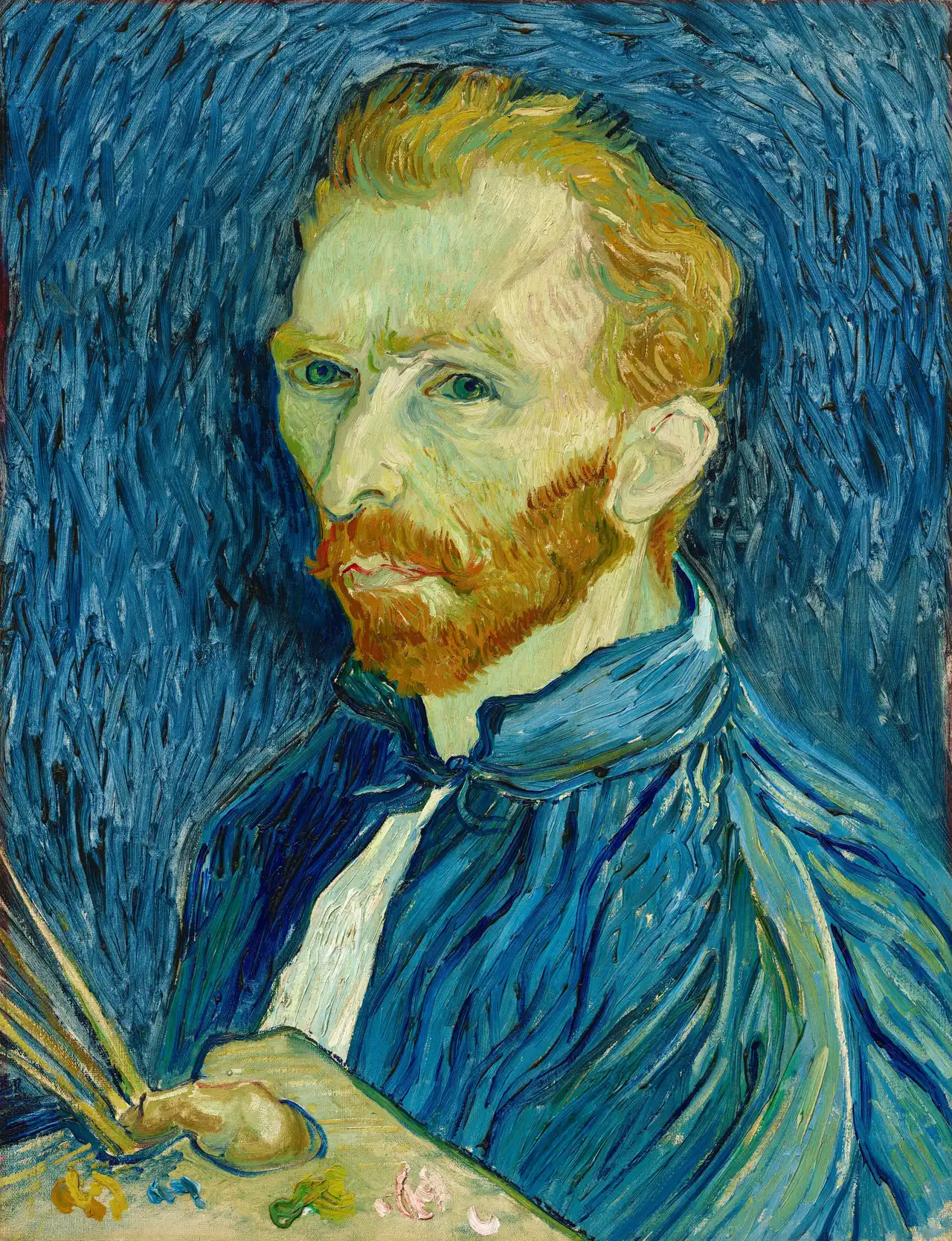
Vincent van Gogh
 Netherlands
painter•botanical illustrator•draftsperson
Birthday
March 30, 1853
Birth Sign
Aries
Birthplace
Zundert, Netherlands
Age
Died at 37
Height
5 ft 8 in (173 cm)
About
Vincent van Gogh was a Dutch Post-Impressionist painter whose work is defined by bold color and emotional intensity. Over a brief but prolific career, he created around 2,100 artworks, including about 860 oil paintings, most in the last two years of his life. His landscapes, still lifes, portraits, and self-portraits feature dramatic, expressive brushwork that laid the groundwork for modern art. Today, he is among the most famous and influential figures in Western art history, with works like The Starry Night and Sunflowers recognized globally.
As of 2026, his legacy continues to thrive through the Van Gogh Museum in Amsterdam, which holds the world's largest collection of his work. Immersive exhibitions like "Van Gogh Alive" draw millions of visitors worldwide, and his paintings regularly fetch tens of millions at auction. Fans connect with his story of artistic dedication amid personal struggle, making him a enduring cultural icon.
Early Life & Background
Born in Zundert, Netherlands, van Gogh was the eldest surviving child of Theodorus van Gogh, a Protestant minister, and Anna Cornelia Carbentus. His birth came exactly one year after the stillbirth of a brother also named Vincent, a fact that haunted him. He was a serious, quiet child who showed early drawing talent. At 11, he attended a boarding school in Zevenbergen, then a middle school in Tilburg, where he studied under artist Constant Cornelis Huijsmans. He left school at 15 to join his uncle's art dealership, Goupil & Cie.
Working as an art dealer in The Hague, London, and Paris from 1869 to 1876, van Gogh became depressed after a romantic rejection in London. He turned to religion, becoming a missionary in the impoverished Borinage mining district of Belgium in 1878. He lived in squalor, gave away his possessions, and was dismissed by church authorities for excessive zeal. In 1880, at 27, he decided to become an artist, studying at the Académie Royale des Beaux-Arts in Brussels and later moving back with his parents in Nuenen in 1883. His pivotal moment came in 1886 when he moved to Paris to live with his brother Theo, discovering Impressionism and meeting artists like Émile Bernard and Paul Gauguin. This transformed his dark palette into vibrant color.
Career Growth
Van Gogh began his career with dark, somber works like The Potato Eaters (1885) in Nuenen. After moving to Paris in 1886, his palette brightened under Impressionist influence. He painted scenes of Montmartre, self-portraits, and still lifes, developing his signature thick brushwork.
In 1888, he moved to Arles, seeking the "light of Japan." This was his most prolific period, producing Sunflowers, The Bedroom, and Café Terrace at Night. He invited Gauguin to join him, but their relationship ended in December 1888 when van Gogh cut off part of his left ear after a violent argument. Following breakdowns, he admitted himself to the Saint-Rémy asylum in 1889, where he painted The Starry Night and Irises. In May 1890, he moved to Auvers-sur-Oise to be near Dr. Paul Gachet, painting over 70 works in 70 days, including Wheatfield with Crows. On July 27, 1890, he shot himself and died two days later.
Career Timeline
Public Image & Style
Van Gogh's public persona is that of the "tortured genius," a narrative shaped by films like Lust for Life (1956) and At Eternity's Gate (2018). His signature style features bold, swirling impasto brushwork and vibrant colors, especially yellows and blues. Fans, sometimes called "Vincentians," make pilgrimages to the Van Gogh Museum in Amsterdam and flock to immersive exhibitions like "Van Gogh Alive." The museum's social media is educational yet engages with modern culture, sharing memes and merchandise. Van Gogh's story of artistic passion amid mental anguish resonates deeply, making him a relatable figure despite his historical distance.
Fame & Fandom (iFAMOUS Rankings)
Vincent van Gogh commands a unique cultural space where the line between artist and icon dissolves into a global devotion that spans over a century. His followers, often called Vincentians in enthusiast circles, do not form a single organized club with chants or official rituals; instead, they are a dispersed community of art lovers who pilgrimage to the Van Gogh Museum in Amsterdam and flock to immersive exhibitions like Van Gogh Alive. This fanbase is defined by a deep, scholarly engagement with his letters and a fascination with the tragic mythology surrounding his life, turning his isolated studio practice into a shared cultural experience. The interaction remains largely one-way, as the artist himself could never meet his admirers during his lifetime, yet his legacy thrives through the intense study of his psyche and the sheer volume of his output. This enduring influence places him firmly among the most recognized figures in human history, a status quantified by the iFANN Global Fame Rankings. These authoritative metrics confirm that he stands as the 365th most famous person in the world, holding steady from the previous cycle. His standing within his region is equally commanding, ranking as the 4th most famous person from Netherlands, while within his specific field, he claims the spot of the 5th most famous person in Art & Design. Such placements reflect a consistent, high-level global presence that has remained stable over time.
Interesting Facts and Legends
Vincent van Gogh only severed the lower portion of his left earlobe rather than removing the entire organ, a detail often lost in popular retellings of the incident at the Yellow House in Arles. He produced an astonishing 43 self-portraits, a higher count than any other artist active during his brief career. A voracious correspondent, he penned over 900 letters, primarily addressed to his brother Theo, offering an intimate window into his mind. During his lifetime, he sold just one painting definitively: The Red Vineyard (1888), purchased by Anna Boch for 400 francs. His artistic vision was deeply shaped by Japanese ukiyo-e woodblock prints, which he collected avidly. While in the asylum at Saint-Rémy, he painted his masterpiece The Starry Night entirely from memory. Beyond these facts, the legend of his death on July 29, 1890, persists as a cornerstone of his mythology. Popular lore depicts him shooting himself in a wheat field and dying alone, though verified accounts suggest he was shot in the chest, stumbled back to his inn, and passed away two days later under his brother's care. Another widely told story involves the recipient of his severed ear, with folklore varying on whether it was delivered to a woman at a local brothel or elsewhere, cementing the image of the tortured genius.
Notable Quotes
“I dream my painting and I paint my dream.”
“The sadness will last forever.”
“I put my heart and my soul into my work, and I have lost my mind in the process.”
“What would life be if we had no courage to attempt anything?”
Family & Personal Life
Van Gogh's father, Theodorus van Gogh, was a Protestant minister. His mother, Anna Cornelia Carbentus, was an artistically inclined woman. He had three sisters: Anna, Elisabeth, and Willemien, and two brothers: Theo and Cor. Theo, an art dealer, was his lifelong financial and emotional supporter; their correspondence is a key source of art history. Van Gogh never married and had no children. His closest family relationship was with Theo, who was at his bedside when he died. Theo died six months later, and his widow, Johanna van Gogh-Bonger, tirelessly promoted Vincent's work, securing his posthumous fame.
Notable Connections
Theo van Gogh, his brother and patron, was his anchor. Paul Gauguin, a fellow artist, had a turbulent friendship with him in Arles. Émile Bernard was a close friend in Paris who influenced his style. Dr. Paul Gachet treated him in Auvers-sur-Oise and was the subject of a famous portrait. Johanna van Gogh-Bonger, Theo's widow, championed his legacy after his death.
Relationships & Dating History
Van Gogh's romantic life was marked by rejection and tragedy. In 1873, while in London, he fell in love with his landlady's daughter, Ursula Loyer, but she rejected him as she was secretly engaged. This sent him into depression. In 1881, he proposed to his widowed cousin, Kee Vos-Stricker, who refused with the line "No, nay, never." He famously burned his hand in a lamp flame to prove his devotion, further alienating his family. From 1882 to 1883, he lived with Clasina "Sien" Hoornik, a pregnant prostitute, using her as a model; the scandalous relationship ended under family pressure. In Paris in 1887, he had a brief affair with Agostina Segatori, an Italian model and café owner, which ended in a dispute over debts. In Nuenen, neighbor Margot Begemann fell in love with him, but their families opposed the match; she attempted suicide, devastating van Gogh. He never married and died single at 37.
- DatedEugénie Loyer1873 - 1874Unrequited infatuation; she rejected his proposal as she was secretly engaged.
- DatedKee Vos-Stricker1881 - 1881Proposed to his widowed cousin; she refused, and his family was horrified.
- DatedClasina Hoornik1882 - 1883Lived with a pregnant prostitute; used her as a model; ended under family pressure.
- DatedAgostina Segatori1887 - 1887Brief affair with an Italian model and café owner; ended in a dispute over debts.
- DatedMargot Begemann1884 - 1885Neighbor who fell in love with him; families opposed; she attempted suicide.
Death & Aftermath
Died
July 29, 1890 (aged 37)
Death Place
Auvers-sur-Oise, Val-d'Oise, France
Cause of Death
Self-inflicted gunshot wound
Theo van Gogh and Dr. Paul Gachet announced that Vincent had succumbed to wounds from a gunshot wound received two days prior. The painter was found injured in his room at the Auberge Ravoux inn in Auvers-sur-Oise after stumbling back from a wheat field where he had fired the fatal shot on July 27, 1890. He lingered for approximately thirty hours before passing away on July 29, 1890, with the bullet lodged in his ribcage. While official records ruled this a suicide based on immediate family statements, a later account by Steven Naifeh and Gregory White Smith suggested an accidental discharge by local teenagers, though this theory remains unproven and disputed without new physical evidence.
The funeral took place just one day after his death on July 30, 1890, as a small, private ceremony attended by Theo, their father, and a few close friends in the cemetery of Auvers-sur-Oise. Public reaction during the early years remained muted given his limited sales and recognition while alive, but his sister-in-law Johanna van Gogh-Bonger soon began promoting his legacy through exhibitions and publications. By the early 20th century, critics and artists reevaluated his work, leading to a surge in interest that transformed him into one of the most celebrated figures in art history.
Today, institutions like the Van Gogh Museum in Amsterdam and the Musée d'Orsay in Paris host frequent tributes, memorial murals, and landmarks dedicated to his memory, including replicas of The Starry Night and various street art installations worldwide. Posthumous releases include major films like Lust for Life and At Eternity's Gate, alongside numerous scholarly works and inductions into halls of fame.
Net Worth (Estate Value)
$300 Million
iFANN Editorial Team estimate
Although Vincent van Gogh died in poverty, his estate today is managed by the Vincent van Gogh Foundation, a non-profit entity overseeing the collection housed at the Van Gogh Museum in Amsterdam. The museum safeguards over 200 paintings, 500 drawings, and 700 letters, with an insured value estimated between $8 and $12 billion. Revenue streams include licensing for reproductions, merchandise sales, and immersive exhibitions like Van Gogh Alive, which generate tens of millions annually. Individual works have achieved record-breaking sums in the auction market: Portrait of Dr. Gachet fetched $82.5 million in 1990, and Sunflowers sold for $39.7 million in 1987. Per iFANN's editorial analysis, the estate's financial value derived from intellectual property and licensing is estimated at around $300 Million as of 2026, while the total value of his known works exceeds $50 billion.
Awards & Accolades
View 7 records, honours and achievementsKnown For
The Starry Night
1889 · Painter
Sunflowers
1888 · Painter
Irises
1889 · Painter
The Potato Eaters
1885 · Painter
Café Terrace at Night
1888 · Painter
Keywords
Quick Facts
- Profession
- painter, botanical illustrator, draftsperson
- Born
- March 30, 1853
- Birthplace
- Zundert, Netherlands
- Died
- July 29, 1890
- Death Place
- Auvers-sur-Oise, France
- Gender
- Male
- Birth Sign
- Aries
Personal Details
- Full Name
- Vincent Willem van Gogh
- Height
- 5 ft 8 in (173 cm)
Frequently Asked Questions
What is Vincent van Gogh's net worth?
Was Vincent van Gogh married?
How many paintings did van Gogh sell in his lifetime?
Did van Gogh really cut off his whole ear?
How old was van Gogh when he died?
Join the community
fans discussing