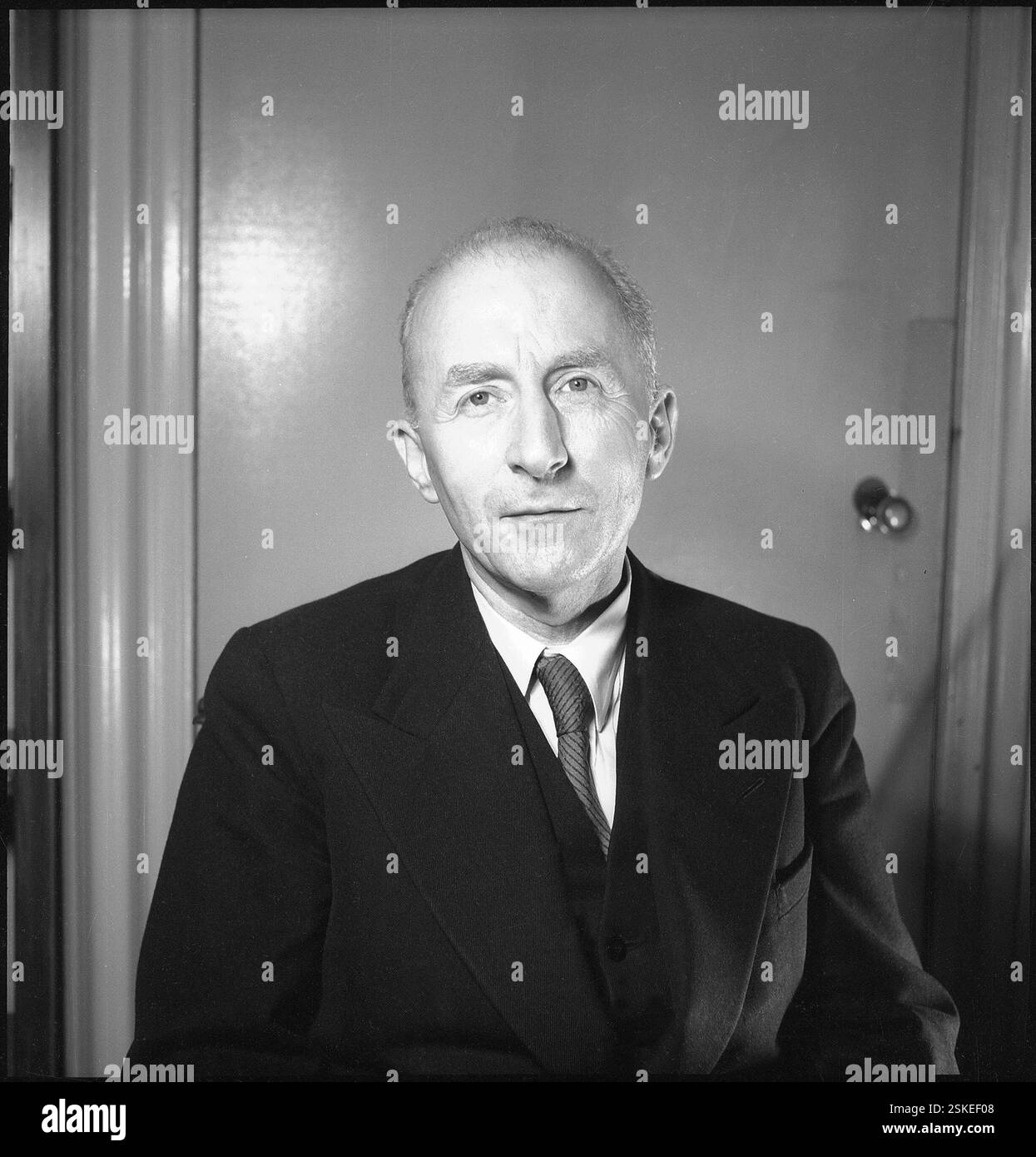
Eduard Thurneysen
 Switzerland
Swiss Reformed pastor and theologian
Birthday
July 10, 1888
Birth Sign
Cancer
Birthplace
Walenstadt, Switzerland
Age
Died at 86
About
Eduard Thurneysen was a Swiss Reformed pastor and theologian, best remembered as a founding voice in dialectical theology alongside his close friend Karl Barth. Born in Walenstadt in 1888, he spent most of his career in parish ministry, serving congregations in Leutwil, St. Gallen-Bruggen, and the Basel Minster. His pastoral work was inseparable from his theological thinking, which emphasized God's transcendence and the limits of human understanding.
Thurneysen's influence reached beyond the pulpit. He edited the journal Zwischen den Zeiten and co-edited Theologische Existenz heute with Barth. His book A Theology of Pastoral Care remains a standard text, and his reflections on Dostoevsky opened new avenues for theological engagement with literature. He died in Basel in 1974, leaving a legacy that continues to shape pastoral theology and Protestant thought.
Early Life & Background
Eduard Thurneysen grew up in the small town of Walenstadt, nestled in the Swiss Alps along the Walensee. His father worked as a schoolteacher, and the family's modest, disciplined household likely shaped his later emphasis on simplicity and directness in faith. He studied theology at the University of Basel, where Bernhard Duhm and Paul Wernle introduced him to the historical-critical method, though he would later move beyond their liberal framework.
After university, Thurneysen took a position as assistant secretary for the YMCA in Zürich in 1911, a role that brought him into contact with young working-class men and sharpened his sense of the gap between academic theology and lived faith. In 1913 he became pastor of Leutwil, a small village in the canton of Aargau. The following year, he met Karl Barth, who had just taken up a pastorate in nearby Safenwil. Their weekly walks and long letters became a crucible for a new theological direction. In 1920–21, they exchanged an intense series of letters about Fyodor Dostoevsky, whose novels seemed to them to expose the bankruptcy of liberal optimism and point toward a God who stands beyond human striving. That correspondence, later published as Revolutionary Theology in the Making, laid the groundwork for what became dialectical theology.
Career Growth
Thurneysen's breakthrough came in 1920 when he moved to St. Gallen-Bruggen, but the real turning point was his collaboration with Barth. In 1923 they launched the journal Zwischen den Zeiten, which became the flagship of dialectical theology. Thurneysen edited it alongside Friedrich Gogarten and Barth until 1933, when political pressures and theological disagreements forced its closure.
In 1927 he became pastor of the Basel Minster, one of the most prominent pulpits in Switzerland, where he remained for over three decades. In 1941 he was appointed associate professor of practical theology at the University of Basel, a role he held while continuing his pastoral duties. His lectures on pastoral care, delivered in the 1940s and 1950s, formed the basis of his major work, Die Lehre von der Seelsorge, published in 1946 and translated into English as A Theology of Pastoral Care in 1962. The book argued that pastoral care must be grounded in the Word of God, not in psychological techniques, and it became a foundational text for a generation of pastors.
After retiring from the Minster in 1959, Thurneysen remained active, giving guest lectures in Hamburg, Wuppertal, and Berlin from 1960 to 1963. He also published a short book on Dostoevsky, which Wipf and Stock republished in 2009, keeping his voice alive for new readers.
Career Timeline
Public Image & Style
Thurneysen never sought public fame. Within theological circles, he is respected as a careful pastor-theologian who grounded dialectical theology in the everyday realities of parish life. His writing style is characterized by deep reflection applied to practical situations, avoiding abstract speculation. He is often portrayed as the quieter, more pastoral counterpart to Barth's towering intellect, but his contributions to pastoral care and his role in the early Barth circle have earned him a lasting place in the history of 20th-century Protestant thought.
Fame & Fandom
Eduard Thurneysen never courted the adulation reserved for pop stars or athletes, and his legacy remains firmly rooted in the quiet dignity of theological scholarship rather than the roar of a stadium. While he did not inspire a fanbase with a specific moniker or organize campaigns that swept across social media, his influence rippled through generations of pastors and theologians who treated his writings as essential guides. The reverence shown to him was never loud or performative; it manifested in the continued use of his books in seminaries and the enduring respect for his pastoral approach within Reformed circles. There were no subway ads bearing his face, no birthday billboards, and no viral moments where crowds shut down streets to catch a glimpse of him. His story is one of deep, sustained impact rather than fleeting fame, preserved in academic journals and doctoral theses rather than on trending hashtags.
The iFANN database has not yet gathered comprehensive global metrics to assign Eduard Thurneysen a specific standing among historical figures or contemporary personalities. Consequently, no ranking position can be cited at this time, and the scope of his recognition remains defined by his specialized field rather than a numerical score in a global chart. Until iFANN collects the necessary data to evaluate his current footprint, any attempt to place him on a ranked list would be speculative.
Interesting Facts and Legends
Thurneysen's profound engagement with Fyodor Dostoevsky led him to view the novelist's characters as vessels for a secret, wholly other life, believing their mundane details hid deep spiritual truths. His bond with Karl Barth was so intimate that they co-edited two journals together, and their extensive correspondence stands as a foundational document for twentieth-century theology. Known for his humility, he frequently deflected praise toward Barth, preferring his work to speak for itself. He spent the majority of his career in parish ministry across Leutwil, St. Gallen-Bruggen, and the Basel Minster, only accepting a university professorship in 1941, a move that highlighted his dedication to practical theology over academic prestige.
A persistent story among theologians suggests that his 1921 study of Dostoevsky was so transformative that it prompted Barth to revise The Epistle to the Romans, a tale that has become part of the lore surrounding dialectical theology. Another cherished anecdote recalls his quiet but firm insistence on the centrality of preaching, a conviction that shaped his pastoral style and inspired countless ministers long after his death. His book A Theology of Pastoral Care has remained continuously in print since its translation and is still a standard text in seminaries today.
Family & Personal Life
Thurneysen kept his family life private, and public records do not document any marriage, children, or siblings. His closest personal bond was with Karl Barth, whom he met in 1914 and with whom he shared a friendship that lasted until Barth's death. Their families were close, and Thurneysen often visited Barth's home in Basel. He lived modestly, reflecting his pastoral calling, and spent his later years in Basel, where he died in 1974.
Notable Connections
Eduard Thurneysen's name is inseparable from Karl Barth's. Their friendship, which began in 1914, was a defining force in the development of dialectical theology. Thurneysen also counted Bernhard Duhm and Paul Wernle as his academic mentors, and his work influenced later pastoral theologians such as James D. Smart, who wrote a 1959 article titled 'Eduard Thurneysen: Pastor-Theologian.'
Relationships & Dating History
Thurneysen's personal life remains largely undocumented. No public records indicate that he ever married or had children. His most significant relationship was his lifelong friendship with Karl Barth, which began in 1914 and shaped both their theological trajectories. They exchanged hundreds of letters, collaborated on journals, and remained close until Barth's death in 1968. Thurneysen died in 1974, and at the time of his death he was single.
Death & Aftermath
Died
August 21, 1974 (aged 86)
Death Place
Unknown
Cause of Death
Unknown
In the quiet years following his retirement from the Basel Minster in 1959, Eduard Thurneysen remained a steady presence in Swiss theological circles. He spent his final decade living modestly in Basel, surrounded by the familiar streets where he had walked for decades alongside his close friend Karl Barth. The theologian passed away on August 21, 1974, at the age of eighty-six. While the specific circumstances surrounding his final days remain unrecorded in public archives, the date of his passing is firmly established as late August 1974.
No official cause of death was ever made public. His death was met with the quiet reverence befitting a man who had spent his career emphasizing the limits of human understanding before the divine. Tributes from peers reflected a deep respect for his contributions to theology, particularly his work on Dostoevsky and his foundational text A Theology of Pastoral Care, which continued to guide pastors long after its initial publication. His close bond with Barth's family ensured that his memory was kept alive within their circle.
Net Worth (Estate Value)
$1 Million
iFANN Editorial Team estimate
iFANN's editorial analysis currently estimates Eduard Thurneysen's net worth at $1 million, a figure that reflects his modest life as a Swiss pastor and academic. No public records document his personal wealth, and his income would have derived from his parish salary and university stipend, both typical of mid-20th-century Swiss academia. He left no estate of significant value, and no posthumous earnings or estate management information is available. His legacy is intellectual rather than financial, though his books, particularly A Theology of Pastoral Care, continue to generate modest royalties for his estate, contributing to the estimated total.
Awards & Accolades
Known For
A Theology of Pastoral Care
1946 · Author
Dostoevsky
1950 · Author
Keywords
Sources
Quick Facts
- Profession
- university teacher, pastor, Christian minister
- Born
- +1888-07-10
- Birthplace
- Walenstadt
- Died
- +1974-08-21
- Death Place
- Basel
- Gender
- Male
- Birth Sign
- Cancer
Personal Details
- Full Name
- Eduard Thurneysen
- Education
- University of Basel (theology)
Frequently Asked Questions
Who was Eduard Thurneysen?
What is dialectical theology?
Was Eduard Thurneysen married?
What did Eduard Thurneysen write?
How did Eduard Thurneysen influence Karl Barth?
Similar People
Join the community
fans discussing