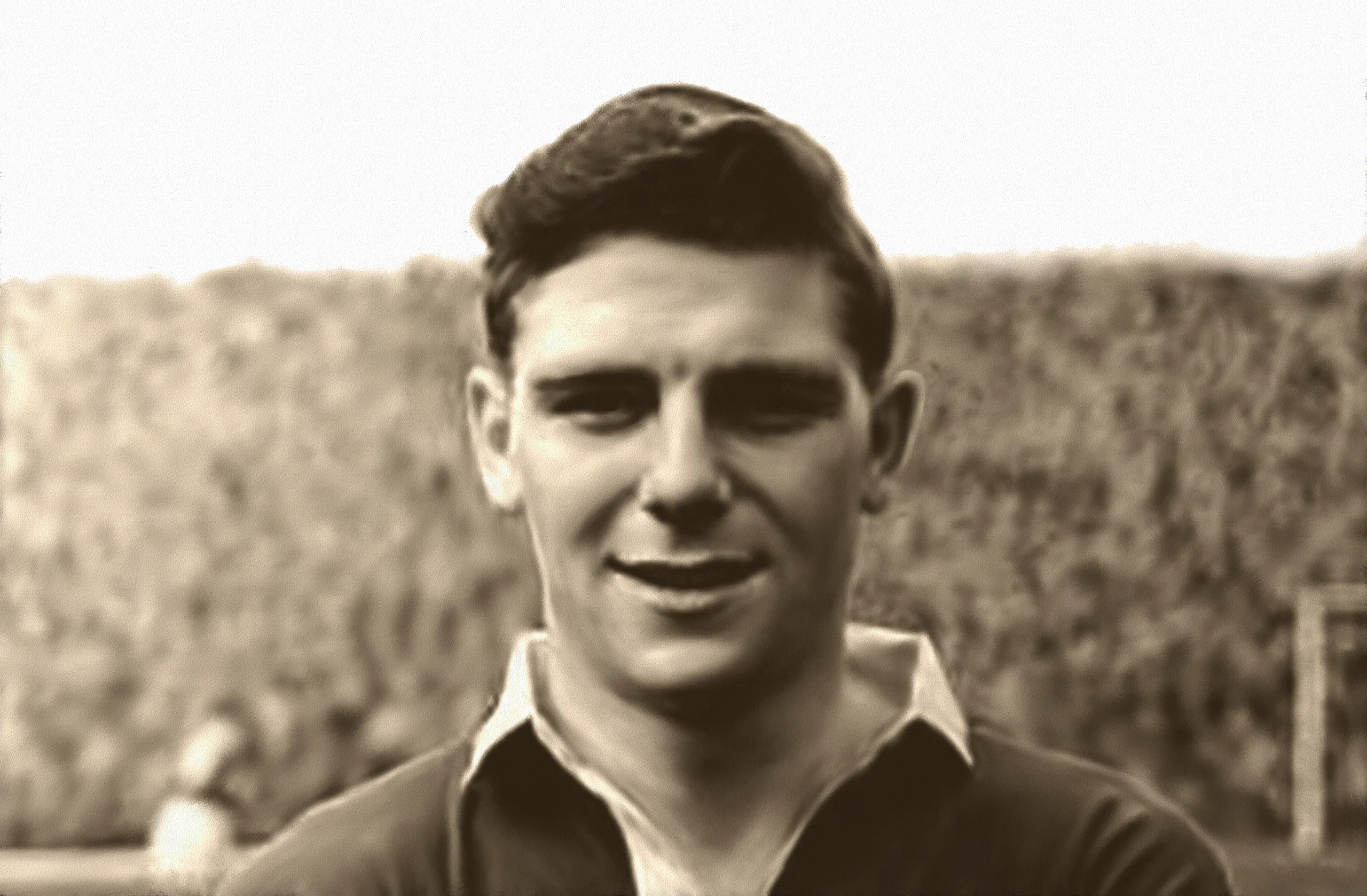
Duncan Edwards
 United Kingdom
Also known as: Big Dunc, The Busby Babe, Edward Duncan Edwards
Birthday
October 1, 1936
Birth Sign
Libra
Birthplace
Woodside, Dudley, England
Age
Died at 21
Height
5 ft 10 in (1.78 m)
About
Duncan Edwards entered the world on October 1, 1936, in Woodside, Dudley, and quickly became one of English football's most formidable talents. He joined Manchester United as a teenager to play left-half for the legendary Busby Babes squad under manager Matt Busby. His physical strength and commanding presence on the pitch earned him a reputation as one of the toughest players ever to grace the game. During a professional career spanning less than five years, Edwards appeared in 177 matches for the club. He helped United secure two Football League championships and two FA Charity Shields while guiding the team to the semi-finals of the European Cup. At just 18, he became the youngest player to appear in the Football League First Division and held the record for England's youngest player since World War II with 18 caps.
His life ended tragically on February 21, 1958, when he succumbed to injuries sustained in the Munich air disaster. The plane crash claimed the lives of eight members of the United squad, yet Edwards survived the initial impact only to die two weeks later in a hospital bed. Many teammates and rivals alike described him as perhaps the best player they ever encountered. His potential seemed limitless at age 21, leaving behind a legacy of raw power and leadership that continues to resonate within the sport.
Early Life & Background
Duncan Edwards grew up in a working-class family in the Black Country, an area defined by its industrial heritage and tough character. Born in Woodside, Dudley, he attended King Edward VI School where he balanced his education with intense football training. Despite starting as a small child, he developed into a physically imposing teenager, standing approximately 5 feet 10 inches tall and weighing around 14 stone by his early teens. His natural aptitude for the game caught the eye of schoolboy coach Billy Wright, the future England captain, who recognized his exceptional talent while Edwards was still at school.
Edwards' first steps toward a professional career began in 1952 when he joined Manchester United's youth system at the age of 15. This move came after being recommended by his school coach, marking the start of a rapid ascent through the ranks. He quickly adapted to the higher level of competition, showcasing a maturity and skill set that belied his youth. By November 1953, just a year after joining the academy, he had progressed enough to make his debut for the first team against Stoke City at the age of 17. This early breakthrough signaled his readiness to become a cornerstone of the emerging squad.
Career Growth
Edwards' breakthrough arrived swiftly, establishing him as a regular starter in the heart of midfield by the 1954–55 season. His performance in the 1955–56 campaign was pivotal; he played every minute of the season to help United secure their first league title in nine years. The following season, 1956–57, saw him reach the peak of his powers, leading the team to another league title and guiding them to the semi-finals of the European Cup, where they were defeated by Real Madrid. During this period, he was also a key member of the England national team, earning his first cap in 1954 against Wales and eventually accumulating 18 caps.
In 1957, at just 20 years old, Edwards finished third in the Ballon d'Or voting behind Alfredo Di Stéfano and Raymond Kopa, a testament to his standing among Europe's elite. His final match for Manchester United occurred in February 1958 against Partizan Belgrade in the European Cup semi-final. Over the course of his brief career, he made 177 appearances for the club, winning two Football League First Division titles and two FA Charity Shields. His versatility allowed him to play almost any position, though he excelled primarily as a left-half known for his stamina and leadership.
Career Timeline
Public Image & Style
Duncan Edwards is portrayed in the media as the ultimate tragic hero of English football. His image is one of raw power, humility, and immense potential cut short. He is often depicted as the "heart" of the Busby Babes, embodying the spirit of the team that defined an era. His story is told with reverence, focusing on his achievements and the tragedy of his death rather than any controversies. Peers frequently described him as the toughest player they ever encountered, a reputation built on his physical strength and unwavering commitment to the game.
Fame & Fandom (iFAMOUS Rankings)
iFANN has not yet collected fame data for this person. While there is no formal fandom name documented in iFANN data, Edwards is revered by Manchester United supporters and football historians worldwide. Fans often refer to him as "Big Dunc" or "The Busby Babe." Notable fan campaigns include the annual commemoration of the Munich Air Disaster, where supporters gather to pay tribute to Edwards and the other victims. The "Duncan Edwards Scholarship" is a key project supported by fans and the club to honor his memory, continuing the tradition of recognizing his impact on the sport.
Interesting Facts and Legends
Edwards captained the England schoolboys team before turning professional, a rare distinction for someone so young. Although he died before George Best joined the club, the two are often linked in the club's history as part of the "Busby Babes" lineage due to their shared era and style. Fans and teammates nicknamed him "Big Dunc," a moniker reflecting his imposing physical presence and leadership qualities. A story fans still retell involves his performance in the 1957 European Cup semi-final against Real Madrid, often cited as one of the greatest individual displays by a British player in Europe at the time. Additionally, he held the record for the youngest England player since World War II until it was broken decades later.
Notable Quotes
“He was the heart of the team.”
“Duncan was the only player who made me feel inferior.”
“He was the greatest player I ever played with.”
Family & Personal Life
Duncan Edwards was born to Thomas and Alice Edwards in a working-class household in Dudley. He maintained a close relationship with his parents throughout his life, and his mother was present at his bedside during his final days. Historical records indicate he had a deep bond with a woman named Nancy Hewitt, who was his fiancée at the time of his death. They did not marry before he passed away. Edwards was not known to have any children or siblings mentioned in public records. His personal life remained largely private, overshadowed by his rapid rise to fame and the tragedy that cut his life short.
Notable Connections
Matt Busby, Tommy Taylor, Roger Byrne, Bobby Charlton, Nancy Hewitt, Billy Wright
Relationships & Dating History
Duncan Edwards was known to be a private individual regarding his romantic life. Historical records indicate he had a close relationship with a woman named Nancy Hewitt. They were engaged at the time of his death in February 1958, though they did not marry before he passed away. There are no other publicly documented romantic relationships or marriages. Edwards was not known to have any children. His personal life was largely overshadowed by his rapid rise to fame and the tragedy of his death. Nancy Hewitt remained single for some time after his passing before eventually marrying someone else, but her relationship with Edwards remains a poignant part of his story.
- EngagedNancy Hewitt1956 - 1958Fiancée at the time of his death; they never married.
Death & Aftermath
Died
February 21, 1958 (aged 21)
Death Place
Birmingham, England
Cause of Death
Injuries from Munich air disaster
The Manchester United left-half survived for fifteen days following the plane crash on February 6, 1958, suffering severe internal trauma including a collapsed lung and fractured ribs before his condition deteriorated rapidly on the night of February 20. He passed away at approximately 1:45 AM on February 21, 1958, at the Queen Elizabeth Hospital in Birmingham after reportedly asking for his mother and his wife-to-be, Nancy, during his final moments of consciousness. Tributes poured in immediately from peers and institutions, with manager Sir Matt Busby describing him as the heart of the team and fellow player Bobby Charlton noting that Edwards was the only player who made him feel inferior. The England national team wore black armbands in subsequent matches while the sporting world observed moments of silence, cementing his status as a martyr for English football.
The funeral took place on February 27, 1958, at St. Mary's Church in Dudley, where thousands of mourners gathered to watch the coffin draped in club colors carried by fellow players. Posthumously, Edwards has been inducted into the National Football Museum Hall of Fame and the English Football Hall of Fame, featured in the documentary The Munich Air Disaster, and honored with a statue unveiled in Dudley in 2016. His legacy endures through the Duncan Edwards Scholarship and various charitable foundations supporting young footballers, ensuring his memory remains central to the Busby Babes narrative.
Net Worth (Estate Value)
$0
iFANN Editorial Team estimate
As Duncan Edwards died in 1958, he left no personal net worth to report in the traditional sense. His estate was minimal at the time of his death. However, his legacy has generated significant value over the decades through licensing, merchandise, and media appearances related to the Munich Air Disaster and the Busby Babes. Specific figures for annual earnings from his estate are not publicly disclosed, but the commercial value of the "Busby Babes" brand is substantial. No active business ventures or real estate holdings are attributed to him personally, as his estate is managed by his family and charitable foundations.
Awards Won (3)
Although Edwards died before many modern awards existed, his posthumous recognition has been extensive. He was inducted into the National Football Museum Hall of Fame, the English Football Hall of Fame, and the Manchester United Hall of Fame. In 1957, he finished third in the Ballon d'Or voting. A statue commemorating his life was unveiled in Dudley in 2016, and the Duncan Edwards Scholarship was established to support young footballers from the Black Country.
2004 · Hall of Fame
Career Achievement
2002 · Hall of Fame
Career Achievement
Known For
Manchester United FC
1953 · Player
England National Team
1954 · Player
Keywords
Sources
Quick Facts
- Profession
- association football player
- Born
- October 1, 1936
- Birthplace
- Woodside, Dudley, England
- Died
- February 21, 1958
- Death Place
- Birmingham, England
- Gender
- Male
- Birth Sign
- Libra
Personal Details
- Full Name
- Edward Duncan Edwards
- Height
- 5 ft 10 in (1.78 m)
- Children
- Education
- King Edward VI School, Dudley
Frequently Asked Questions
Who was Duncan Edwards?
How old was Duncan Edwards when he died?
What caused Duncan Edwards' death?
Did Duncan Edwards win any major trophies?
Is Duncan Edwards in the Hall of Fame?

Join the community
fans discussing