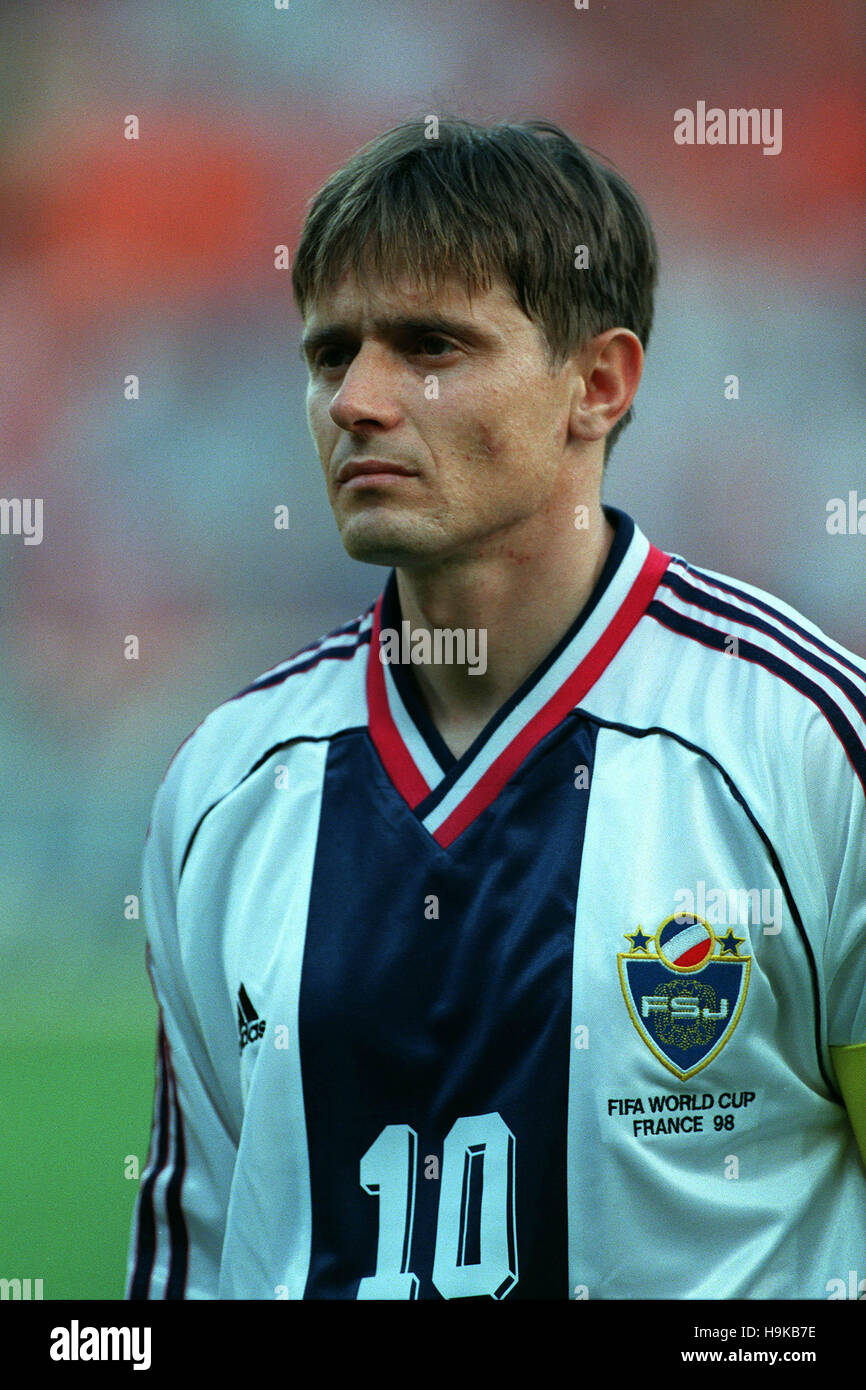
Dragan Stojković
 Serbia
association football player•association football coach
Also known as: Piksi
Birthday
March 3, 1965
Birth Sign
Pisces
Birthplace
Niš, Serbia
Age
61 years old
Height
1.75 m (5 ft 9 in)
About
Dragan Stojković, universally known as Piksi, is a Serbian former professional footballer and manager, widely regarded as one of the greatest midfielders to emerge from Yugoslavia. Born on March 3, 1965, in Niš, he captained both the Yugoslavia national team and Red Star Belgrade during a playing career that spanned two decades. His technical elegance, vision, and dead-ball expertise earned him a place on the 1990 World Cup All-Star Team and a lasting reputation in European and Japanese football.
Today, Stojković is best known for his recent tenure as head coach of the Serbia national team, a role he held until his resignation in October 2025. He guided Serbia to the 2022 World Cup and Euro 2024, and his tactical approach drew both praise and criticism. In Japan, where he played for Nagoya Grampus Eight, he remains a celebrated figure, and his nickname Piksi is synonymous with creative playmaking across the football world.
Early Life & Background
Dragan Stojković was born in Niš, a city in southern Serbia, and grew up in a football-loving family. His father, a factory worker, introduced him to the game at an early age, and Stojković spent countless hours kicking a ball in the streets with his older brother. He joined the youth system of local club Radnički Niš, where his natural talent quickly stood out. By his late teens, he was already playing for the senior team, making his debut in the Yugoslav First League in 1981 at just 16 years old.
His performances for Radnički caught the attention of bigger clubs, and in 1986 he moved to Red Star Belgrade, one of the most successful clubs in the country. The transfer fee was a then-record for a Yugoslav club, reflecting his growing reputation. At Red Star, he developed into a complete midfielder, known for his dribbling, passing, and ability to score from free kicks. He also represented Yugoslavia at youth levels, winning the 1987 World Youth Championship with the under-20 team, a tournament that showcased his potential on the international stage.
Career Growth
Stojković's breakthrough came at Red Star Belgrade, where he won two Yugoslav First League titles and one Yugoslav Cup between 1986 and 1990. He was awarded the Star of Red Star, an honor given to only five players in the club's history, alongside legends like Dragan Džajić and Vladimir Petrović. In 1990, he captained Yugoslavia at the World Cup in Italy, where his performances earned him a place in the tournament's All-Star Team, despite Yugoslavia's quarterfinal exit on penalties to Argentina.
After the 1990 World Cup, Stojković moved to French club Marseille, but his time there was marred by injuries and political turmoil in Yugoslavia. He struggled to find consistent form and eventually left in 1992. He then joined Nagoya Grampus Eight in Japan, where he became a fan favorite and helped raise the profile of the J.League. He played there until 1994, and later returned for a second stint from 1995 to 1996, before finishing his career with a brief spell at Red Star in 1999.
Internationally, Stojković earned 84 caps for Yugoslavia, scoring 15 goals. He was a key player in the 1998 World Cup, where he captained the team, and also played in Euro 1992, though Yugoslavia was disqualified due to UN sanctions. After retiring as a player, he transitioned to management, taking charge of Nagoya Grampus Eight in 2008, then the Serbian national team in 2021. He led Serbia to the 2022 World Cup and Euro 2024, but resigned in October 2025 after a home defeat to Albania in World Cup qualifying.
Career Timeline
Public Image & Style
Stojković is widely respected for his elegant playing style and calm demeanor, both on and off the pitch. As a player, he was known for his precise passing and ability to control the tempo of a game, earning comparisons to some of the great playmakers of his era. As a coach, he has been characterized as a pragmatist, often favoring a defensive approach in big matches, which drew criticism from some fans and pundits. In Serbia, he is a national icon, with his nickname Piksi being a household name. In Japan, he is revered for his contributions to Nagoya Grampus, and his legacy there is honored with a statue outside the club's stadium. His public persona is that of a thoughtful, intelligent football man, respected by players and colleagues alike.
Fame & Fandom (iFAMOUS Rankings)
Dragan Stojković stands as the 15th most famous person from Serbia, a standing confirmed by the 15th most famous person from Serbia in the iFANN Global Fame Rankings, holding steady from the previous cycle. This placement reflects his enduring legacy across decades of football and coaching, capturing global attention through media coverage and cultural consumption worldwide. While there is no formal, organized name for his fanbase, supporters universally identify with him through his nickname "Piksi," a moniker that has transcended his playing days to define his managerial era. His devotees are historically rooted at Red Star Belgrade, where he is revered as a club legend, often referred to as "Zvezda's fifth star" alongside the club's four European Cups. In Japan, the affection runs equally deep; fans remember him not just for his goals but for his sportsmanship during his tenure with Nagoya Grampus Eight. A defining chapter of this lore is his retirement match on July 14, 2001, where he scored a golden goal before stepping away from the game, an event widely commemorated as a fairytale ending. More recently, his dramatic resignation as head coach of the Serbian national team in October 2025 following a defeat to Albania added a layer of intense public debate to his story, transforming his narrative into one of high-stakes political and sporting pressure. Though some reports mention personal tensions in 2026, the core of his legend remains tied to his elegant playmaking and the emotional connection he forged with fans in both Serbia and Japan.
Interesting Facts and Legends
Dragan Stojković's nickname Piksi originated in childhood when a friend's father called him that after a character in a popular Yugoslav comic strip. He is one of only five individuals to ever receive the Star of Red Star, a rare award given by the club. In Japan, his legacy is so profound that a street near Nagoya Grampus's stadium bears his name, and he is still affectionately remembered as Piksi. Known for his love of chess, he frequently played with teammates during training camps. He holds the record for the most appearances for the Yugoslavia national team as captain, totaling 32 matches. Beyond these facts, a cherished story among Japanese fans recounts his final professional match in the J.League Cup final against Kashima Antlers. After the game went to penalties, Stojković calmly scored the decisive kick before immediately retiring, creating a perfect narrative arc that illustrates his composure and class. Another tale often told to newcomers involves his performance for the Rest of the World side at Wembley in 1987, which cemented his reputation as a global talent even before his move to Europe's top leagues. The drama of his career also includes his sudden resignation as Serbia's head coach in October 2025, an event that sparked intense media scrutiny and fan debate regarding the circumstances of his departure after a crucial qualifier loss.
Notable Quotes
“I always tried to play with joy and creativity, because football is an art.”
“The fans are the heart of this club, and I never forget that.”
“When I step on the pitch, I feel free.”
“We must respect the game, because it gives us so much.”
“My philosophy is simple: work hard, stay humble, and enjoy the moment.”
Family & Personal Life
Stojković prefers to keep his personal life private, but it is known that he is married to his wife, Snežana, and the couple has two sons. His family has largely stayed out of the spotlight, though his sons have occasionally been seen at matches. Stojković has mentioned in interviews that his father was a major influence on his career, instilling discipline and a strong work ethic. He grew up with an older brother, who also played football at a local level. As of the latest reports, Stojković resides in Belgrade, where he continues to be involved in football through various projects.
Notable Connections
Stojković is closely associated with Red Star Belgrade, where he earned the Star of Red Star, and with Nagoya Grampus Eight, where he is a club legend. He also has strong ties to the Yugoslavia and Serbia national teams, having served as captain and later as coach. His former teammate and fellow playmaker, Dejan Savićević, is a longtime friend, and they were part of the golden generation of Yugoslav football in the late 1980s and early 1990s.
Relationships & Dating History
Dragan Stojković has been married to his wife, Snežana, for many years, though the exact date of their marriage is not publicly known. The couple has two sons, and they have maintained a low-key family life away from the media. There are no public records of Stojković having any other high-profile relationships, and he has kept his personal life largely out of the spotlight. As of 2026, he is still married to Snežana, and they continue to live together in Belgrade.
- MarriedSnežana Stojković1988 - presentCurrentMarried for decades, has two sons.
Salary, Net Worth In 2026
$5 Million
iFANN Editorial Team estimate
As of 2026, Dragan Stojković's net worth is estimated at $5 million, a figure derived from iFANN's editorial analysis. His wealth primarily accumulates from a long career spanning two decades as a player and coach, including lucrative contracts in France and Japan. During his playing days, he earned significant salaries, particularly at Marseille and Nagoya Grampus Eight, where he was one of the highest-paid players in the J.League history. As a coach, his positions with the Serbia national team and various clubs have further added to his income. Stojković has also benefited from endorsement deals and public appearances, though he has consistently kept his financial affairs private. The net worth total for 2026 reflects a steady accumulation from decades in football, with no major reported investments or business ventures outside the sport recorded in available data.
Awards Won (4)
Dragan Stojković's playing career was decorated with team honors, including two Yugoslav First League titles and a Yugoslav Cup with Red Star Belgrade. Individually, he was named to the 1990 World Cup All-Star Team, a rare distinction for a midfielder. He also received the Star of Red Star, an exclusive club honor. As a coach, he has not won major trophies, but he guided Serbia to major tournaments, which is considered a significant achievement.
1990 · Team Selection
1990 FIFA World Cup
1991 · League Title
Red Star Belgrade
1990 · League Title
Red Star Belgrade
Known For
Yugoslavia national team
1990 · Captain
Red Star Belgrade
1986 · Midfielder
Nagoya Grampus Eight
1992 · Midfielder
Serbia national team
2021 · Head Coach
Keywords
Sources
Quick Facts
- Profession
- association football player, association football coach
- Born
- March 3, 1965
- Birthplace
- Niš, Serbia
- Gender
- Male
- Birth Sign
- Pisces
- Height
- 1.75 m
- Nickname
- Piksi
Personal Details
- Full Name
- Dragan Stojković
- Height
- 1.75 m (5 ft 9 in)
Frequently Asked Questions
Who is Dragan Stojković?
When was Dragan Stojković born?
What is Dragan Stojković's net worth in 2026?
Why did Dragan Stojković resign as Serbia coach?
Is Dragan Stojković still active in 2026?
Similar People
Join the community
fans discussing